Former Snohomish County engineers describe dysfunctional development approach
Published 1:30 am Saturday, March 28, 2026
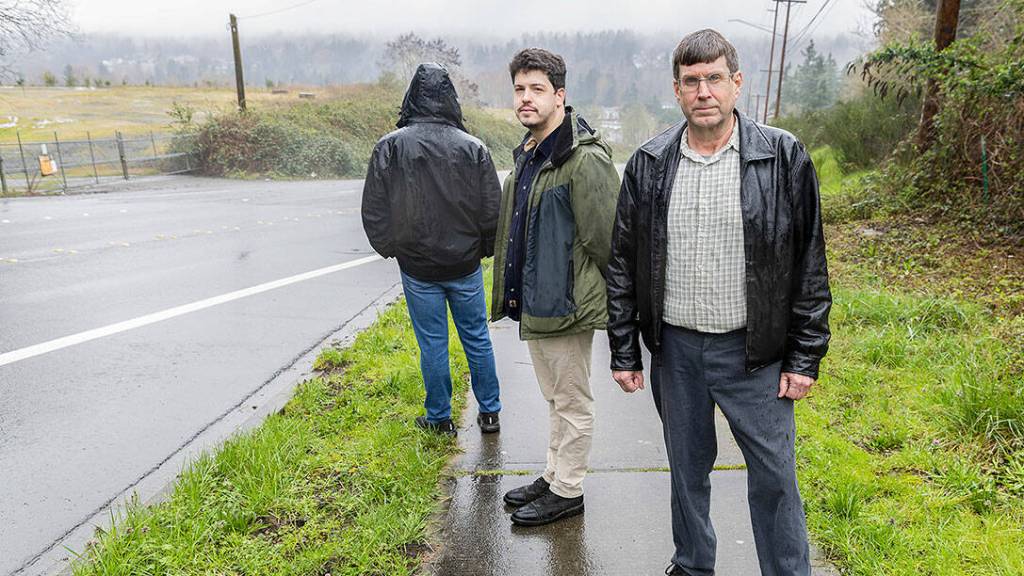
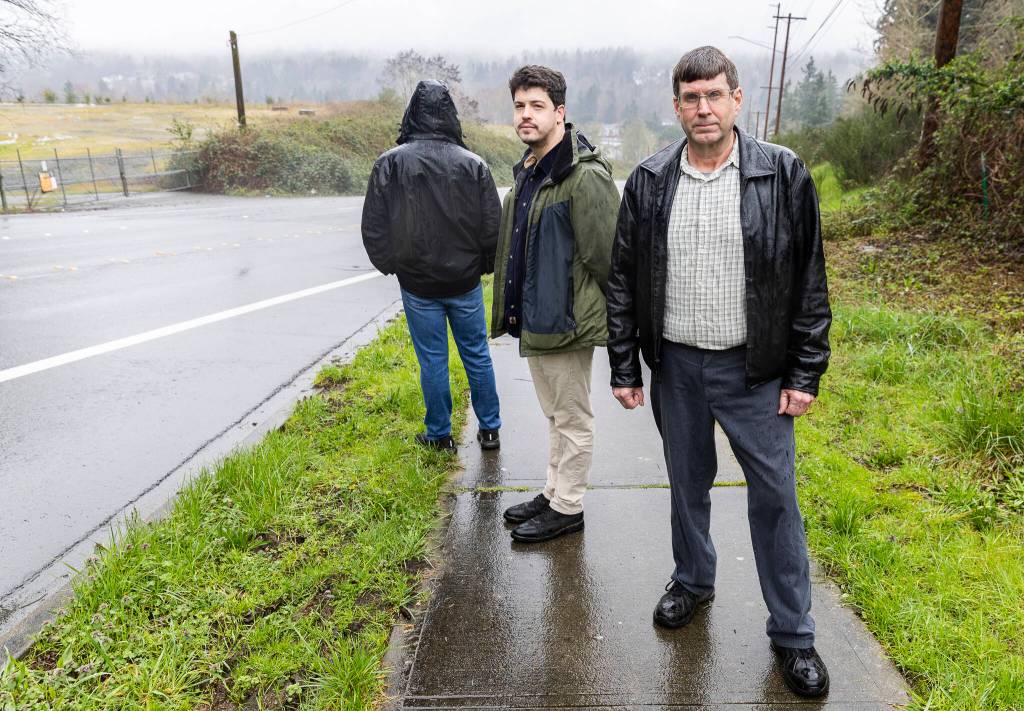


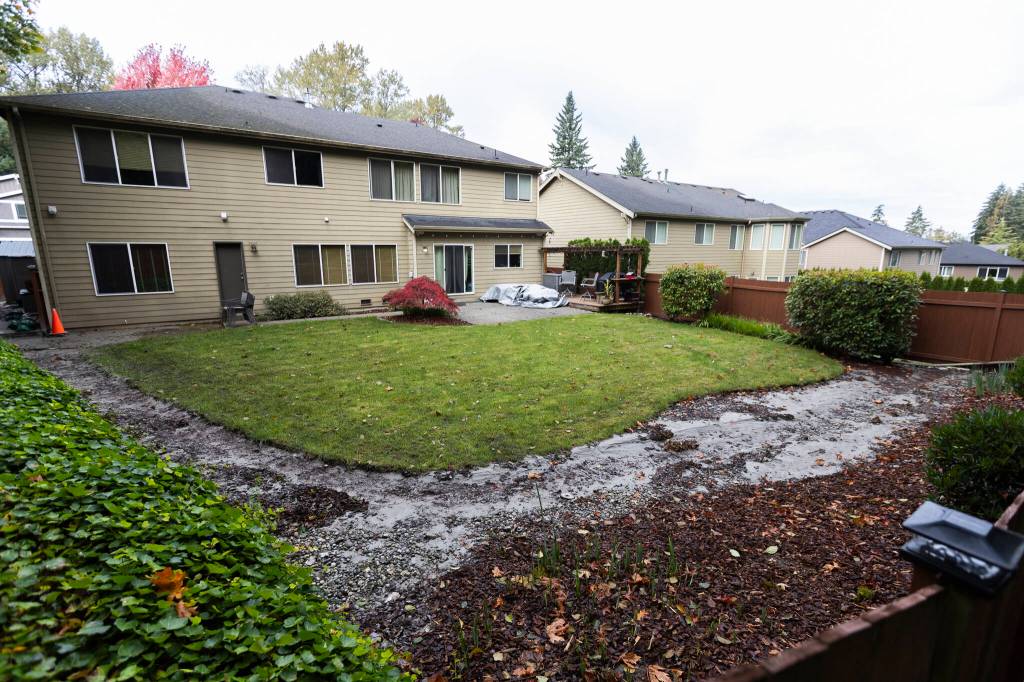
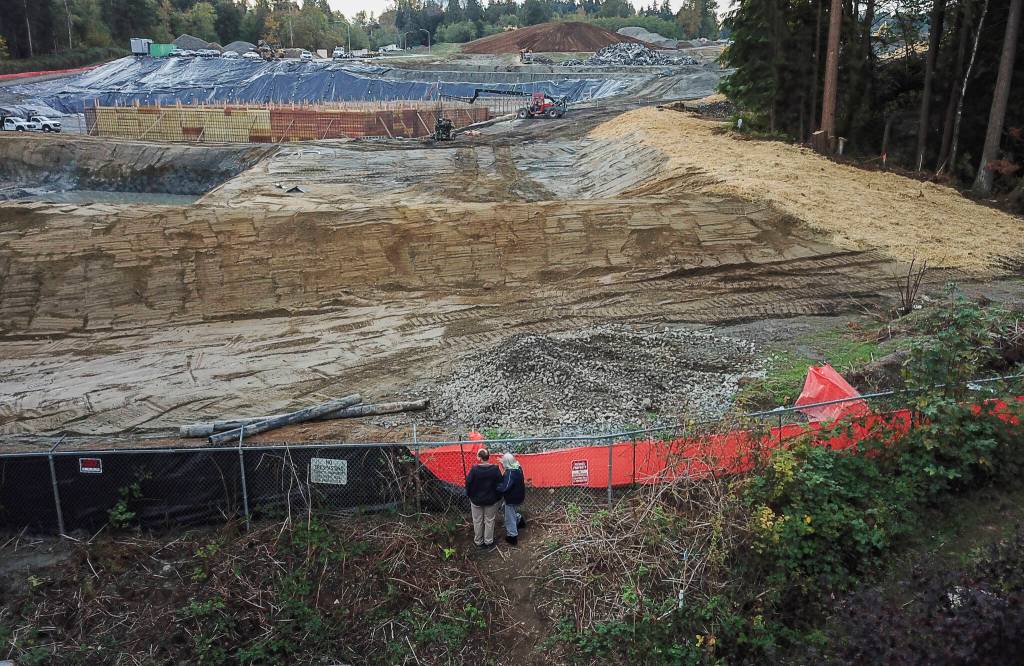


EVERETT — Silt, an inch deep in some spots, covered the residential street of 79th Avenue.
On Oct. 12, 2025, the first autumn rains of the year reached Snohomish County. Mike and Kathy Putt had lived in their house in unincorporated Snohomish for over 20 years, but this was the first time an evening of rain showers resulted in a deluge of water and mud running down their gently sloped hill.
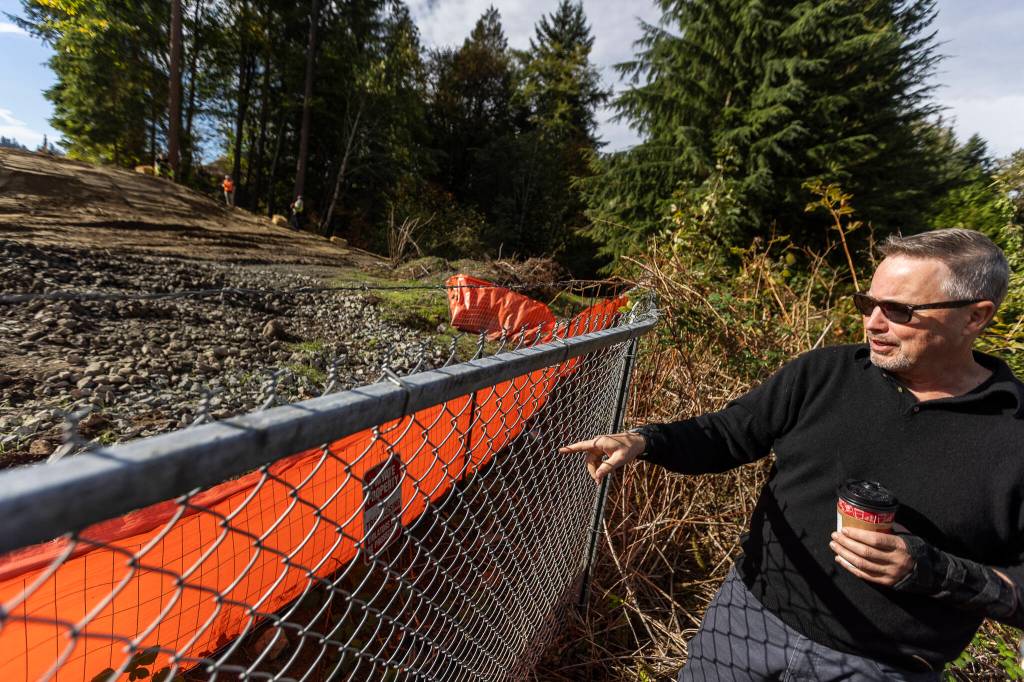
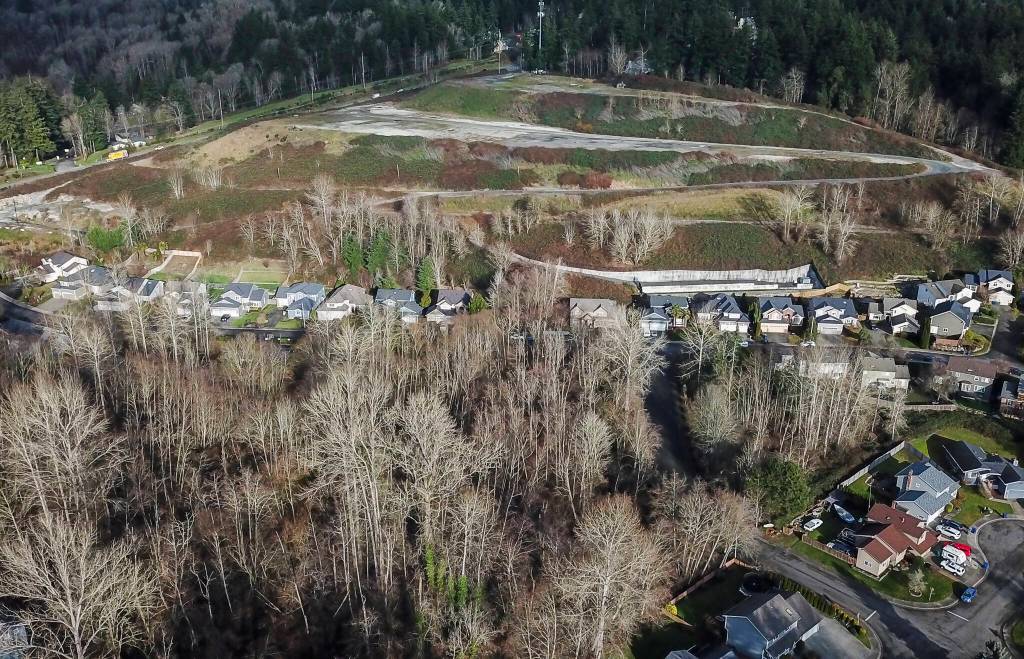
The stream of mud flowed from underneath the temporary metal fence at the end of the Putts’ cul-de-sac, which separated the existing neighborhood from the approximately 145-acre site of the planned Eastview Village development.
An Oct. 16, 2025, inspection report from the Washington Department of Ecology stated the country’s largest homebuilder and owner of the project, D.R. Horton, had failed to comply with permit conditions and county codes requiring unworked land to be covered within two days during the rainy season.
When the rain hit, over 100 acres of dirt were left exposed, and a temporary dam built on the site intended to catch stormwater eroded and collapsed. The negligence resulted in sediment flowing down from the saturated hillside for over two hours, damaging neighbors’ yards and homes, the inspection report stated.
Residents said the incident exemplifies their claims of how the county prioritizes new development over existing communities.
“The county just threw us under the bus, they don’t care,” Kathy Putt said, standing in her driveway bundled in a black puffer jacket. “They need density, and I understand they need to provide density, but it shouldn’t be at the expense of an existing neighborhood.”
The Putts haven’t been alone in their public critiques of the project.
Since developers first proposed the project in 2022, residents and some members of the county’s own planning and development department have raised concerns. They allege the county bypassed state environmental laws, planned unsafe traffic intersections and failed to mitigate the impacts the project would have on downhill neighbors like the Putts.
Former employees of the Snohomish County Planning and Development Services Department say the issues with Eastview Village are indicative of a larger pattern of dysfunction within the department, which has struggled with chronic understaffing over the last decade amid growing pressure to build new housing.
During interviews with The Daily Herald, former county engineers said they felt dismissed and, in some cases, punished by their superiors for raising safety or policy concerns. Additionally, the former engineers said that certain developers’ relationships with county leadership led to projects being expedited in ways that put them on edge.
Snohomish County Planning and Development Services Director Mike McCrary and Division Manager Steve Phillips declined to be interviewed.
Jacob Lambert, a spokesperson for the planning department, wrote in an email that “because this involves ongoing legal and personnel matters our staff is not able to comment on at the advice of counsel.”
Snohomish County Council members and executives also declined to comment on the matter, citing active litigation.
‘I’m gonna have my career, and I’m not gonna kill anybody’
In January 2022, Snohomish County Planning and Development Services received an application for the 228th Apartments, an eight-building apartment complex with 544 proposed units and 992 parking spaces owned by NorthPoint Development, a Kansas City-based development group.
The project site is roughly 26 acres, equal to 20 Seattle city blocks, and is planned to be built over the old Fruhling Gravel Pit, west of I-405 near Bothell along 228th Street.
Peter Landry, a lead stormwater and geotechnical engineer for the county at the time, said he found significant issues with the plans when he was assigned to the project.
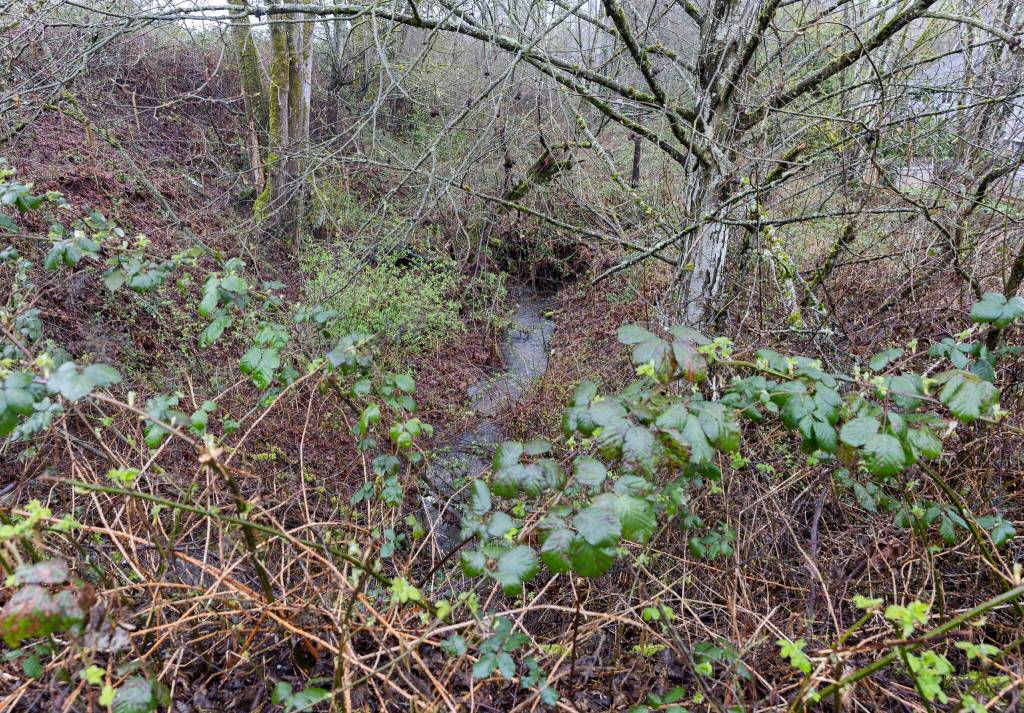
NorthPoint’s analysis of the site’s impervious surface — hard surfaces where water can’t seep into the ground, such as cement — was way off base, he said. The site is on a steep hill, directly above already established neighborhoods and surrounded by acres of wetlands draining into Swamp Creek.
An inaccurate analysis meant the designs wouldn’t properly account for how development would change the landscape without mitigation, Landry said. If concrete parking lots replace dirt without adding proper drainage, runoff could flood downhill neighbors, destabilize foundations or pollute nearby waterways, he said.
NorthPoint did not respond to multiple requests for comment.
Landry went out to the site, documenting ground the developer’s staff had categorized as impervious, photographing the clearly penetrable areas covered in grass and shrubs.
When McCrary, the director of the planning department, asked Landry why the project hadn’t moved forward for approval, Landry explained the issues with the application, showing his boss his site analysis.
Landry recalled McCrary telling him that if the developer does an analysis, it’s not the county’s responsibility to double-check it by doing their own.
The director’s response shook Landry. What was the point of having county engineers if they couldn’t ascertain project requirements, he had asked himself.
Snohomish County code states that the county can require modifications to a project application to ensure compliance and consistency with building requirements.
In November 2023, Landry resigned from his county position. During an interview with The Herald in June 2025, he said he resigned because he felt his superiors ignored the ethical and safety concerns he repeatedly brought to their attention.
When neighbors appealed the county hearing examiner’s approval of the NorthPoint project in May 2024, Landry submitted testimony for the case, explaining why he left his county position and detailing the discrepancies between the developer’s analysis of the site versus his own.
“I chose to seek other employment because of the inappropriate pressures from PDS Director Mike McCrary to approve this project, despite my documentation that the project did not meet at least two minimum requirements,” Landry said in his testimony. “He made it clear to me my sense of duty in a proper review was not something that he shared, and he then forbid me from doing independent analysis in my reviews.”
Landry told The Herald in June 2025 that multiple other development projects during his time at the county worried him. He feared there would be grave consequences.
“I’m a licensed engineer and a licensed geologist. The stormwater stuff is concerning,” he said. “But truly, the thing that I was terrified about was how the geotechnical things were being done. When I started to be an engineer, I was like, ‘I’m gonna have my career, and I’m not gonna kill anybody.
“And I’m serious, that was my one goal, I’m not gonna kill anybody,” he repeated.
‘A mass exodus’
An internal planning department investigation published in May 2025 sheds light on the working conditions of the department. David Irwin, a former county traffic and transportation engineer who resigned the year before, asked for the investigation after alleging he had been discriminated against by his superiors, McCrary and Phillips, during his employment.
The investigation, which involved interviews with seven planning department staff members, concluded that Phillips violated the county’s discrimination policies by repeatedly making “unwarranted” and “deeply negative” comments toward Irwin.
One such comment came after a department-wide meeting that County Council member Jared Mead attended, where Irwin discussed the department’s difficulty filling vacant engineer positions. In the investigation, Phillips conceded that after the meeting, he said he wanted to “punch [Irwin] in the throat.”
In addition to documenting Irwin’s personal experience within the department, the investigation discussed how chronic understaffing and the loss of a highly regarded manager contributed to tension between staff and leaders.
Before 2009, the transportation group in the planning department had as many as seven staff members, the investigation stated. But with the 2008 financial crisis affecting development and county finances, the number of transportation review engineers dropped to three a year later.
By the early 2020s, however, the economy had improved, and development had significantly increased in the county. Between 2009 and 2020, the county’s population grew by 122,000, according to data collected by the state’s Office of Financial Management. Since 2020, another 42,000 people have moved to Snohomish County.
In 2021, a year before the application was submitted for the 228th Apartments, McCrary became the new director of the planning department while continuing his role as the county’s fire marshal, a position he held since 2008. He still holds both positions.
In 2023, Phillips left “an extensive career in private business” to become a surveyor at the department, according to the investigation. Phillips took over as a division manager in 2024 when former manager Ken Crossman retired. As a manager, Phillips sits directly below McCrary on the department’s organizational chart, serving as one of the first points of contact and direction for staff.
“At the end of 2023, the work group effectively collapsed with Irwin remaining as the sole experienced Engineer as of January 2024,” the internal investigation stated.
In the months leading up to Crossman’s retirement in March 2024, and the aftermath of his departure, records show six engineers exited the department, either transferring departments or leaving the county altogether.
“Never has one witnessed a mass exodus of this magnitude in PDS in recent history,” said Will Rugg, a county GIS analyst and union shop steward, in an April 2024 email to the Snohomish County Council. “What does our department say to the customers we serve about permitting backlogs?”
As of Feb. 1, the department has a complete engineering staff, according to a department chart.
‘I waved red flags. They cut me.’
A few months before Crossman left, the planning department hired Robert Endsley.
Endsley was originally hired to do stormwater review, making sure new developments met environmental regulations for runoff, erosion and water pollution. But when three transportation engineers left, management pushed him to cover and review other portions of project applications as well, he said in a June 2025 interview.
In the spring of 2024, Endsley was managing two contracted consultants brought on to cover for the departed engineers who were reviewing a housing project named Hawksmoor RCS. The 32-acre project is planned just east of Lake Goodwin in rural Snohomish County and is owned by local developer Marty Robinett.
At the time, the Hawksmoor application didn’t meet code requirements that covered when and how new roads needed to be integrated with existing roads, Endsley said.
Concerned about the noncompliance, Endsley said he brought up the issue in a meeting with Phillips on Nov. 19, 2024.
Endsley said Phillips told him the county was going to rewrite code to allow the project to be approved without requiring Robinett to comply with the current road connections code.
Endsley, frustrated with management, sent an email that day to planning department staff, Phillips, McCrary, Robinett and the two consultants. Endsley addressed the consultants, expressing his concerns about how they could be affected by approving the project as it stood.
“From this morning’s meeting, I realize the County is breaking current code for this project (Hawksmoor) due to the specific applicant and ‘politics’…,” Endsley’s email stated. “This is not the first time I was told and heard about preferential treatment for particular developer’s, especially the ones in constant communication with our director and executive office.”
“You two are external consultants assigned to review a county project that is not following the law from my analysis — I recommend contacting your firm’s PM,” he added.
“The claim that Hawksmoor received preferential treatment is baseless,” Robinett said in a March 9, 2026, response email to whether or not the project may have received special treatment.
Robinett added that the application materials showed the project meeting the current code at the time.
On Nov. 20, 2024, Endsley received a termination letter from Phillips.
“They want the bodies there, but they don’t want anyone to actually make waves or do work that would impact the developers,” Endsley said in June 2025 during an interview with The Herald. “I waved red flags. They cut me.”
‘Additional tweaks’
A series of emails obtained by The Herald through a public records request illustrates the relationship between Snohomish County planners and certain developers.
SCC 30.24 establishes county road network requirements to “promote vehicular and pedestrian safety.” It is the code that Endsley claimed the Hawksmoor project wasn’t meeting, and the code he was told would be changed to cater to Robinett’s plans.
On Aug. 22, 2024, Planning Department Long-Term Planner Michael Saponaro sent an email with the subject line “RE: Roads & Access Code Updates,” to McCrary, Phillips and other county staff.
In the email, Saponaro relayed that the county planning department and public works department had a good meeting with the Master Builders Association about changing SCC 30.24. The Master Builders Association of King and Snohomish counties is a development-focused government advocacy group with over 2,400 member companies.
In the second sentence of the email, Saponaro said, “I think most appreciated our code project, however some developers, particularly Marty Robinett, requested additional tweaks to grant more flexibility and infrastructure exemptions.”
In the email, Saponaro went on to relay specific requests from the Master Builders Association and Robinett.
Robinett’s requests centered around expanding exemptions for requiring pedestrian facilities, the infrastructure that supports a safe walking environment, such as sidewalks, curb ramps, traffic controls, crosswalks and paved road shoulders.
“Marty R likes the flexibility in ped facility exemptions,” Saponaro said. But Robinett asked why the exemptions were only possible if the road was shorter than 150 feet and had less than an average of 200 cars driving on it a day, Saponaro wrote in the email.
Robinett “wants to remove the 150’ phrase and still have ped facility exempted,” Saponaro said.
“Marty R requested shoulder on only one side of the road in rural areas in certain circumstances,” Saponaro continued, adding that other county staff objected to that request because cars need the space on both sides in case of emergency.
The same day, Saponaro sent another email to a wider group of county staff, Master Builder members and Robinett.
The title of the invite was “Meeting to review and discuss amendments to chapter 30.24 SCC before it is made available to the public.”
Robinett declined to comment when asked about his direct engagement with county staff regarding code changes and his push for more exemptions and flexibility on pedestrian facility requirements.
“It’s important for planning and development staff to talk about planning topics with stakeholders from all sides of an issue to inform the work. If a developer is concerned their feedback or concerns are not represented by the groups or individuals who are providing input, we welcome their engagement,” said planning department spokesperson Lambert in a March 26 email. “The PDS webpage and Planning Commission webpage have information on where planning topics are discussed or advanced, and where people can learn more and participate in the process.”
Thousands of emails obtained by The Herald show continued collaboration between the county’s planning department, public works department, Master Builders Association and a few developers through 2024 and into 2025 on SCC 30.24.
“The MBA [Master Builder Association] folks are getting an advanced screening before it is formally put out on the street,” said a Sept. 18, 2024, email from county public works employee Jed Gonzales to another employee asking for clarification on next steps of the code-amending process.
The planning department gave a briefing of proposed code changes to the county’s Planning Commission in February, said department spokesperson Lambert in a March 5 email. He provided a copy of the staff report.
The report summarized several proposed changes, which included no longer requiring pedestrian facilities in urban growth areas with an average of 200 daily vehicle trips or fewer, and no longer requiring pedestrian facilities outside of urban growth areas.
“Master Builders is one example of a group that is understandably interested in planning decisions, but there are other examples of proactive engagement to help inform planning work, such as input from community groups and tribal partners that contributed to the development of the county’s first Urban Tree Canopy sub-element,” Lambert said in a March 26 email responding to questions of why the Master Builders were able to request and review possible changes to development code before public hearings. “If input from stakeholders is incorporated, the public will see that reflected in the proposal and briefing materials when it advances to Planning Commission and then to County Council.”
On March 24, the Planning Commission met and approved sending proposed SCC 30.24 code changes to the County Council.
‘Out of concern for the public safety and welfare’
Eastview Village was one of the last projects Irwin reviewed before resigning from the county’s planning department in March 2024, and the second largest he had ever reviewed in his 17 years at the county, he said.
While reviewing D.R. Horton’s application, Irwin said he immediately identified major concerns with the plan — unsafe intersections for schoolchildren, underestimated traffic issues and a bypassed environmental review.
Just east of Glacier Peak High School and Little Cedars Elementary School, D.R. Horton plans to build an intersection where 11 lanes of traffic, not including additional bike lanes, will converge. In the submitted plan, the intersection will only have stop signs.
Irwin also believes the development doesn’t meet the county’s design standards, which should have required more traffic routes to not overload intersections and streets surrounding the project.
The county approved the plan, along with granting Eastview an exemption from the State Environmental Protection Act review because it considers the project to be infill development, or development filling urban growth areas in the county.
Infill development projects can be exempt from the state environmental review, but Irwin said he doesn’t think Eastview meets the requirements to forgo the review.
Irwin told his bosses and D.R. Horton officials that he believed the issues he found in the project application were clear violations of county and state law. But department management and the developers didn’t listen to him, he said.
Once the planning department approves a developer’s plans for a project, the application is sent to the county hearing examiner for final approval. During that time, the public can formally raise questions and concerns about the plans during the hearing.
Community groups testified about their concerns during Eastivew’s hearing, including the nearby flood district and the Greenleaf Homeowners Association.
But in February 2025, and again in April 2025 after a round of reconsideration appeals, County Hearing Examiner Peter Camp approved the Eastview application.
Over 40 community members, including Irwin, who continues his attempt to hold the county accountable to its own regulations, filed an appeal, which sent the project to the Snohomish County Council.
In July 2025, the council denied the appeal, in part, stating that the council doesn’t have jurisdiction over State Environmental Protection Act exemptions.
Critics of the project then filed an appeal to the Skagit County Superior Court under the state’s Land Use Appeal Act. Land use petition appeals are allowed to be filed in the county where a land use is being challenged or in a neighboring county.
Before the land use appeal hearing in January, former council legislative analyst and long-term planner for the county, Ryan Countryman, submitted testimony.
Countryman had recently left his three-decade career at Snohomish County to move across the country to Pennsylvania with his family, but told The Herald he provided testimony “out of concern for the public safety and welfare” of the community he grew up in.
During his time at the county, Countryman had been instrumental in creating the very codes that the Eastview critics claim the project was sidestepping. In his testimony, he laid out how he agreed with Irwin that the county wasn’t following its own laws.
In January, the community members argued their case in court, bolstered by two former county employees’ testimonies. Since then, they’ve been waiting for a decision.
‘It will be you next’
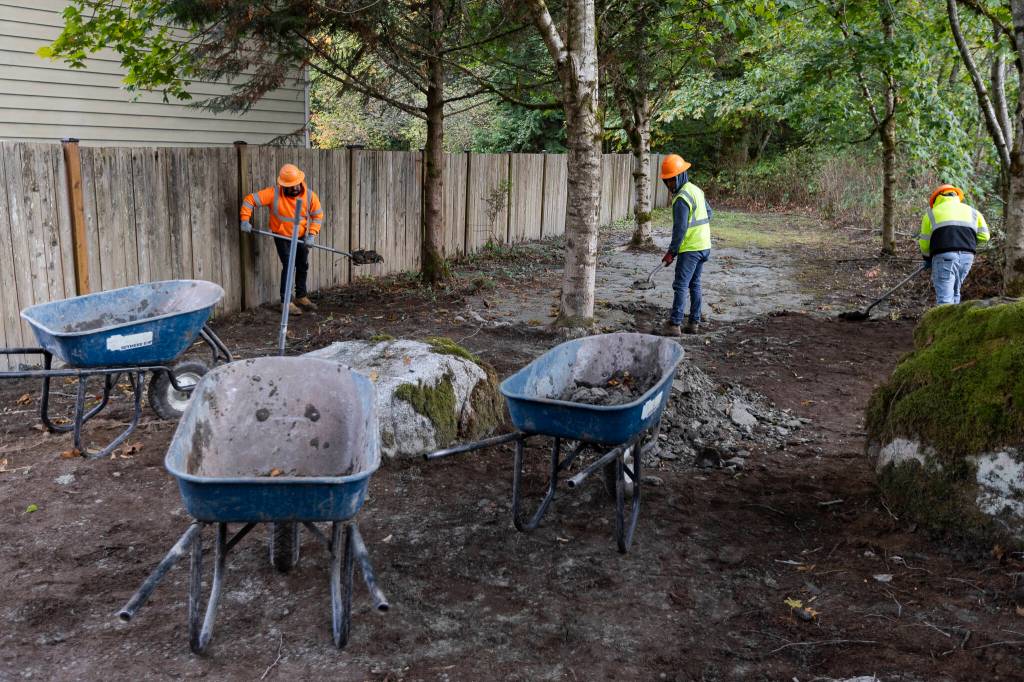
The continual beeping of reversing bulldozers cut through birdsong at the end of 79th Street on Feb. 27. Black plastic tarps, laid over mounds of dirt after October’s flooding incident, flapped in the wind that blew through the gaping hole in the treeline, clear-cut to make way for Eastview Village.
A patch of new asphalt ran down the center of the quiet residential street in Greenleaf. Once the development project is finished, the county predicts this street to be a new shortcut through the established neighborhoods to Cathcart Way, averaging 2,755 daily vehicle trips. Right now, the county estimates the road sees 235 daily trips.
Kathy Putt repeated her sentiment that it’s not the general practice of development that she opposes — Greenleaf is a developed neighborhood itself — it’s how the county has allowed D.R. Horton to proceed without care or mitigation that frustrates her, and the precedent it sets for other neighborhoods.
After more than 20 years living in their house, Kathy Putt said she and her husband plan to move to avoid the traffic consequences of Eastview. A handful of other households along the street plan to do the same, she said.
“It will be you next,” she said, looking toward the fence separating her from the construction site. “Because this is the county’s approach.”
Eliza Aronson: 425-339-3434; eliza.aronson@heraldnet.com
Eliza’s stories are supported by the Herald’s Investigative Reporting Fund.