Everett reactivates Flock camera network after passage of new law
Published 1:27 pm Wednesday, April 22, 2026
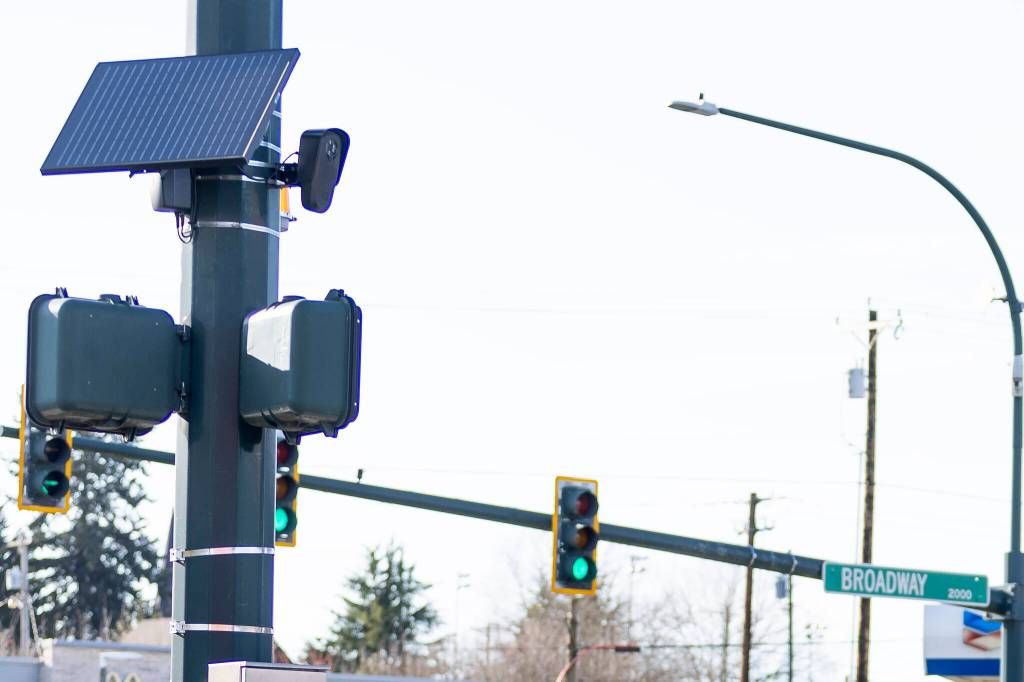
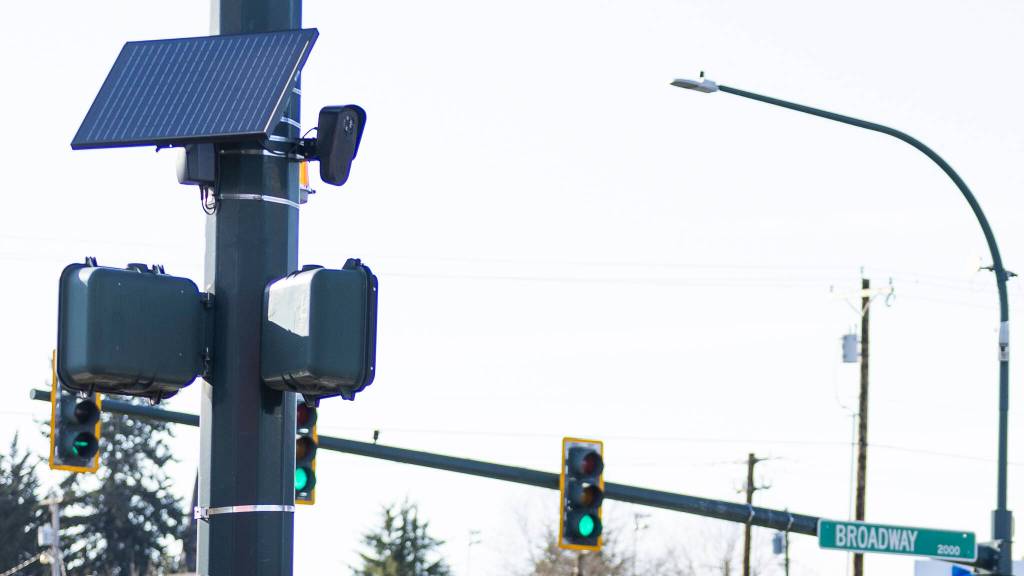


EVERETT — The city of Everett reactivated its Flock Safety cameras earlier this month, a city spokesperson confirmed in an email to The Daily Herald on Tuesday.
The decision stemmed from the signing of a new state law March 30 that explicitly exempts automated license plate reader footage from the Public Records Act.
“This new state law ensures that we can protect the privacy of residents – including victims of domestic violence, harassment, and stalking – from anyone who may have had the intention of misusing this information,” city spokesperson Simone Tarver said in a statement Wednesday.
Everett Mayor Cassie Franklin directed the police department to reactivate the cameras in early April, just after Gov. Bob Ferguson signed Senate Bill 6002, Tarver said. Most of the cameras came back online by April 7, Tarver said.
The city has not made a public statement on the reactivation. As of Wednesday, the city’s Flock transparency portal — a webpage that provides data on the city’s Flock cameras — showed that the cameras detected more than 500,000 vehicles in the past 30 days.
Tarver said the city has been communicating about the reactivation of its cameras through ongoing community engagement.
“The strategic and responsible use of technology remains a priority for the City, and you can expect to see that reflected in future public communications,” she said.
Flock Safety cameras are a type of automated license plate reader that uses artificial intelligence to analyze vehicle footage, allowing police officers to search for a vehicle by license plate or vehicle characteristics — such as a car’s make, model or color. Many law enforcement agencies across the country have implemented the technology as an investigative tool to assist with solving crimes, including vehicle theft.
In February, the city paused its Flock network after a Snohomish County judge ruled the city’s automated license plate reader footage is considered public record. The city had argued the footage should be exempt for privacy reasons. At the time, Franklin said the city would “consider next steps” if SB 6002 went into effect.
On March 5, the city filed an appeal of the public records ruling. On April 3, the city filed a motion in Snohomish County Superior Court to vacate the ruling in light of the new law. A hearing on the motion to vacate is scheduled for May 14.
The city of Stanwood is appealing a similar ruling in Skagit County Superior Court. On Friday, a Skagit County judge denied the city’s motion to vacate the ruling.
On April 1, Stanwood announced its decision to reactivate its Flock network after a 10-month pause in light of the new law.
Flock Safety has been under scrutiny over the past year after reports found the company allowed federal agencies to directly access thousands of networks throughout the country. The company had engaged in a pilot program with U.S. Customs and Border Protection and Homeland Security Investigations.
In the fall, reporting from the University of Washington and The Daily Herald found that those agencies, along with other federal agencies, accessed multiple Flock networks throughout the state, including several in Snohomish County. Many agencies, sometimes unknowingly, had enabled Flock’s “nationwide lookup” tool, which allowed any participating agency in the U.S. to search their network. In return, they could search any participating network in the country.
Records show that federal agencies accessed local networks from April to June 2025. Everett had its nationwide lookup feature enabled until July 2025.
“While national look up feature was enabled, outside agencies would have had the ability to query all networks with the feature enabled en masse, including Everett’s,” Everett Police Department spokesperson Natalie Given said in a February statement to The Herald.
The Everett Police Department requires every agency that has access to its Flock network to sign a user agreement, which states that the technology will only be used for legitimate law enforcement purposes, and not for civil immigration enforcement or free speech protected activity, former Everett Police Chief John DeRousse told the council in November. The department has also increased its internal audits of the network, including an AI-assisted audit that flags suspicious searches, DeRousse said.
Other cities have since opted to end their contracts with the company entirely.
In December 2025, Mountlake Terrace canceled its contract with Flock before its cameras were installed, citing community division and public records concerns.
In February, Lynnwood canceled its contract with Flock — seven months after it first installed cameras — in light of significant concern from residents. Lynnwood Mayor George Hurst had asked the council to wait for SB 6002 to make its way through the Legislature, but many council members expressed their distrust of Flock, regardless of the legislation.
SB 6002 places additional restrictions on how agencies can use automated license plate readers, including a 21-day data retention limit. It also limits the types of crimes departments can use ALPRs to investigate, prohibits sharing data with federal agencies and places restrictions on where agencies can collect data, such as near schools or health care facilities.
The city reviewed the locations of its cameras and determined they comply with the new law, Tarver said.
The city signed a two-year, $550,000 contract for 68 Flock automated license plate readers in June 2024. The contract is fully grant funded and began when Everett launched its Flock network in October 2024. Since then, the system has helped the police department make more than 250 arrests, return stolen vehicles and find missing persons, Franklin said in a February interview.
Jenna Peterson: 425-339-3486; jenna.peterson@heraldnet.com; X: @jennarpetersonn.