New museum links Scandinavians in Washington to their history
Published 1:30 am Sunday, July 1, 2018


Cattle die,
kinsmen die,
you yourself die;
I know one thing
which never dies;
The judgment of a dead man’s life.
He is truly wise who’s traveled far
and knows the ways of the world.
— From the “Havamal,” a collection of Old Norse poems
During one of the short films showing at the new Nordic Museum, a woman says that we are all links in a chain connecting backward in time to our ancestors. For many of us in America, that chain extends across mountains and seas, to a homeland our hearts will never consider home, but our blood fully recognizes as family.
For me, that land is Norway. I’m half Norwegian and, growing up, I was regaled with wild tales of hardy and stern Norsemen — on both sides of my mother’s lineage — making a new life in a new land. Husbands, wives, sons, daughters, all sailing giant steamers across the Atlantic Ocean to make a better life in America. They became farmers and fishermen here, eventually settling in the Pacific Northwest, a place that conjured memories of home.
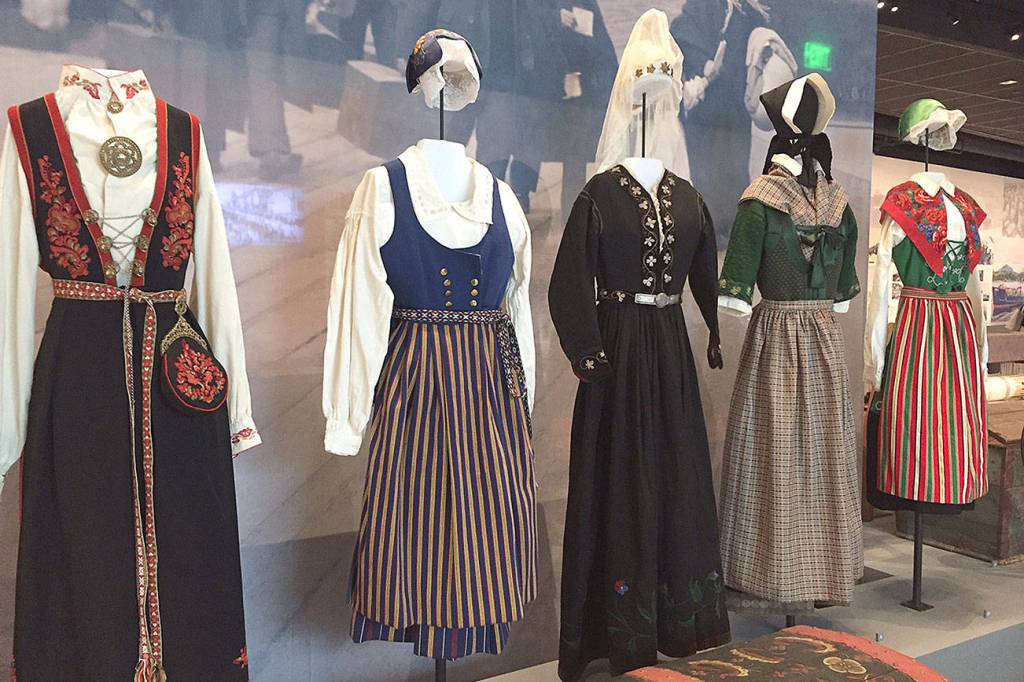
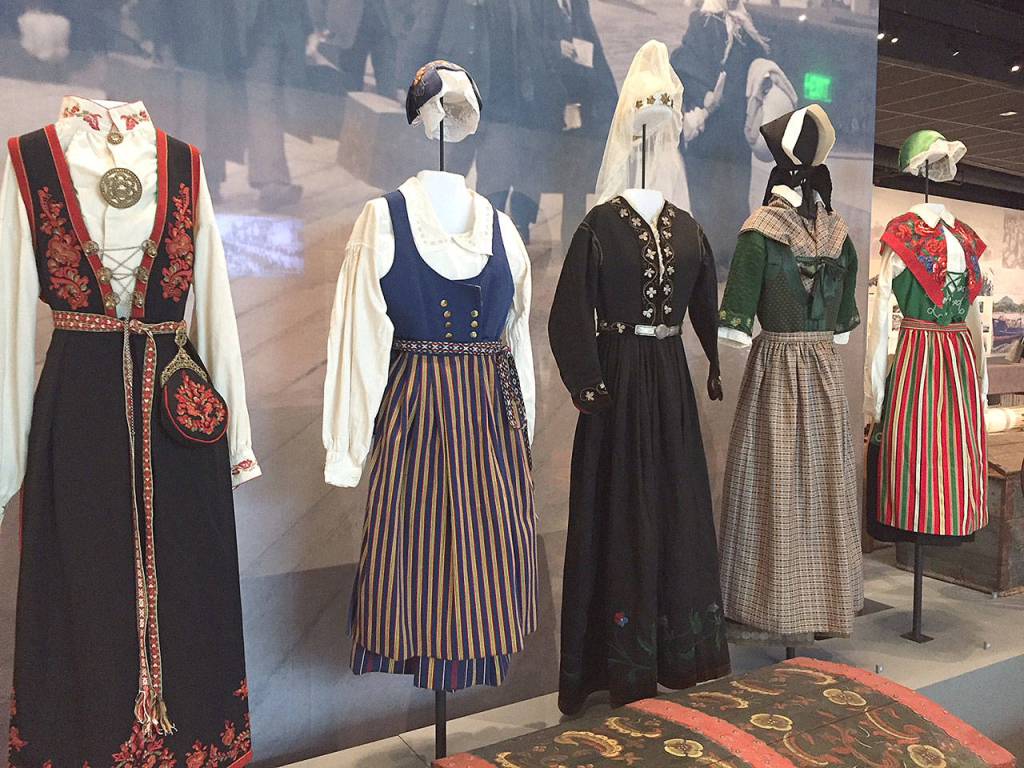
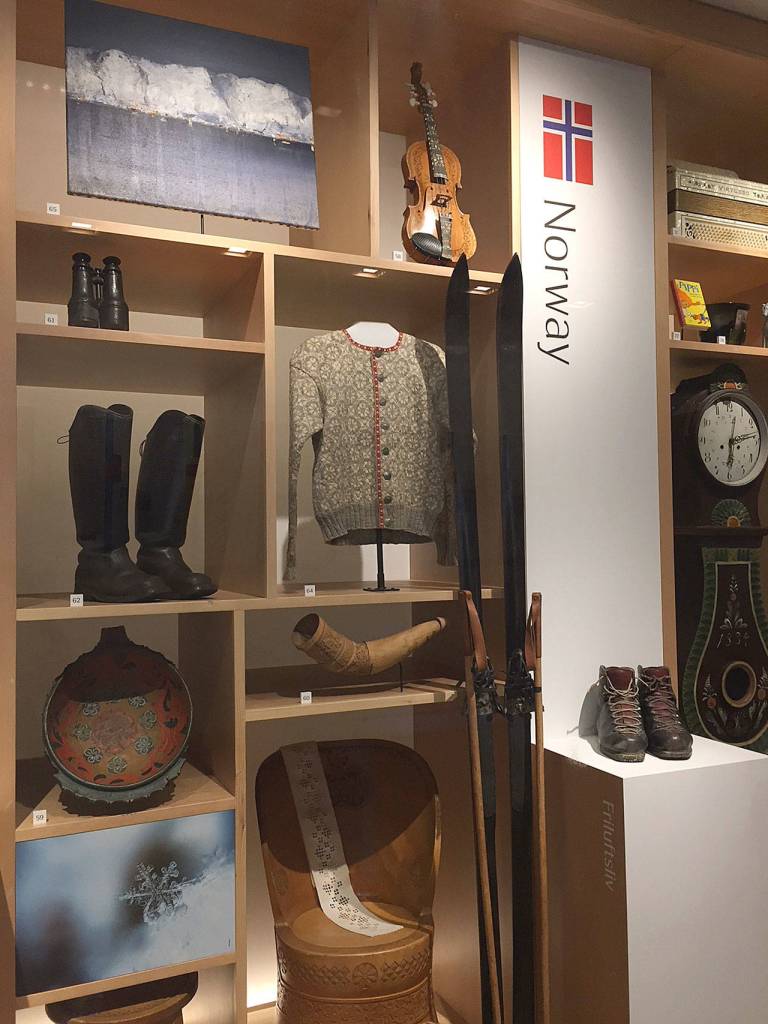
I am not alone. The sheer impact of the Scandinavian people on America, and more significantly the Pacific Northwest, is on full display at the new Nordic Museum in Ballard, Seattle’s Scandinavian enclave. Moving from its sparse environs down the street, the museum’s collection is larger and more significant, and is housed in a gorgeous building that is appropriately simple and minimal in its design. Full of Scandinavian art, clothing, technology and exhibits chronicling Viking history and Scandinavians on both sides of the Atlantic, the new museum is a testament to the Nordic people, their spirit, nature and way of life.
•••
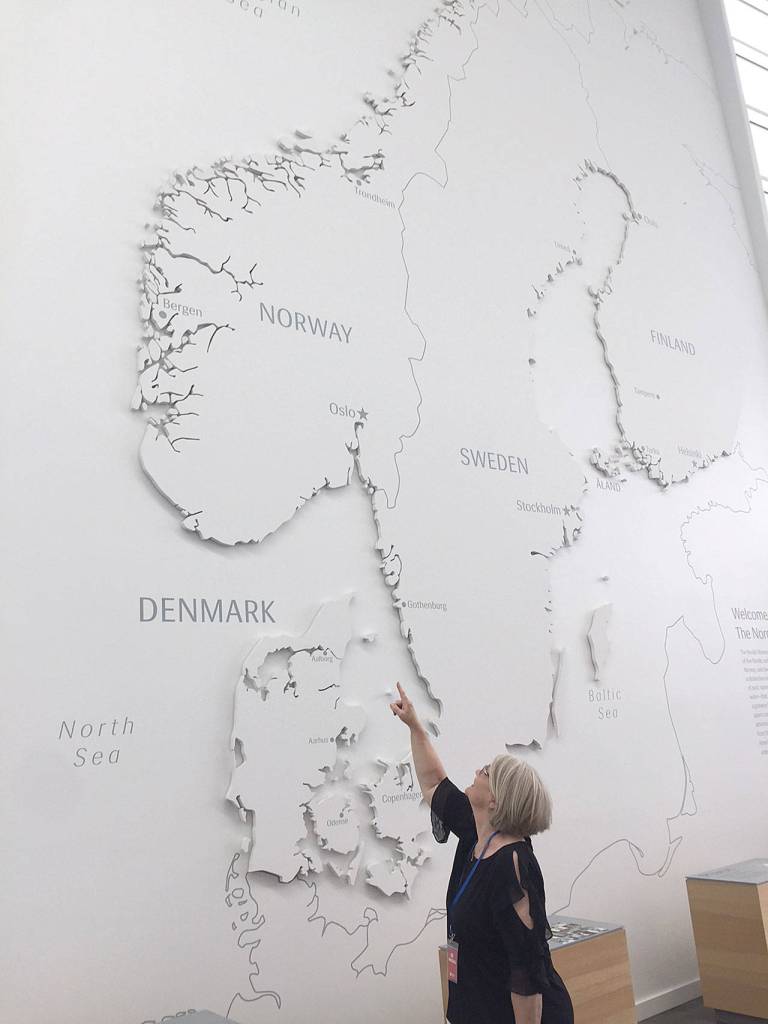
On a second floor wall in the museum, a large line of text states that more than 10 million Americans are descended from immigrants from the Nordic countries of Iceland, Norway, Sweden, Denmark and Finland. My mother is one of them. Her mother’s grandparents escaped hard times on the farm near Bergen, Norway, to come to America and build a farm in North Dakota.
Ole and Anne, her grandparents, left North Dakota and followed a brother to Canby, Oregon, and then the siren song of free land to Enchant, Alberta. Her father’s family were fishermen in Nesna, Norway, close to the Arctic Circle, before settling on Vashon Island. They built a farm in 1910 that remains the home of my mother’s uncle, Tom Lorentzen, and fished for halibut in Alaska on boats docked in Ballard.
My mom grew up in Seattle and then Edmonds, the family moving because my grandfather wanted to get out into the country. Her father was a true longline halibut fisherman. Hard-bitten and no-nonsense, he served in the Coast Guard and looked like Popeye. I never met him, as he died long before I was born, but I remember vividly the stories of his fishing in tiny dories in the Bering Strait and the photo of him with a baby black bear he and friends adopted as a pet in Alaska.
I recall the bizarre names of relatives: Sigrid, Uncle Inky (short for Ingvald), Johannes, Ole, etc. Then there was the annual lutefisk dinner at the Sons of Norway. The lefse and Swedish meatballs were good. The lutefisk? As a kid, I never had the stomach for it. Same as an adult. Though, some strong aquavit does make everything better.
I figured the only way to truly experience the new Nordic Museum was to take my mom and let her rekindle those memories as we walked through the exhibits. In all honesty, my recollections have become dull over the years. I don’t tread close to those Scandinavian fault lines like my mom did, and most of the folks in those old black-and-white photos I used to pore over as a small child are long dead, taking with them the stories of old Seattle and Norway.
As we drive to the museum, my mother flashes back to 1950s Seattle, pointing out the long-ago location of Playland, a children’s amusement park she visited near Bitter Lake, her family’s former north Seattle home and Ballard’s Evangelical Free Church on 80th Avenue she attended as a girl. As we drive down Holman Road on our way to Ballard, she says the trees are much taller than she remembers.
•••
One doesn’t have to think hard to connect Scandinavian influence to Seattle. The obvious: Ivar’s, Larsen’s Bakery, Nordstroms, the maritime industry and shipyards that dot Seattle’s waterways. But there are more esoteric influences: both the city’s social justice bent and love of nature are very much Scandinavian traits.
Early in a visitor’s tour of the Nordic Museum, the question is posed: What does it mean to be Nordic? Shipbuilding. Cold weather. Love of nature. Social justice. Sense of stewardship. These descriptions are intertwined with images juxtaposing landscapes of Scandinavian countries with those of Washington. It’s hard to tell the difference.
Much of the museum presents how Scandinavians connect with the arc of world history. Viking ships, bronze ornaments, iron swords. Exhibits display Norse poetry and gravestones with beautiful etchings. Scandinavian artists, including writers of Norwegian folk stories, a Finnish composer and, of course, Hans Christian Andersen, are shown their proper respect.
The largest exhibits help explain Scandinavian immigration and furniture. There’s a large display of old luggage and steamer trunks married with stories of immigrants coming to America. A few feet away, curvy chairs and pared-down tables and couches created by popular Scandinavian designers linger, waiting for someone to sit down.
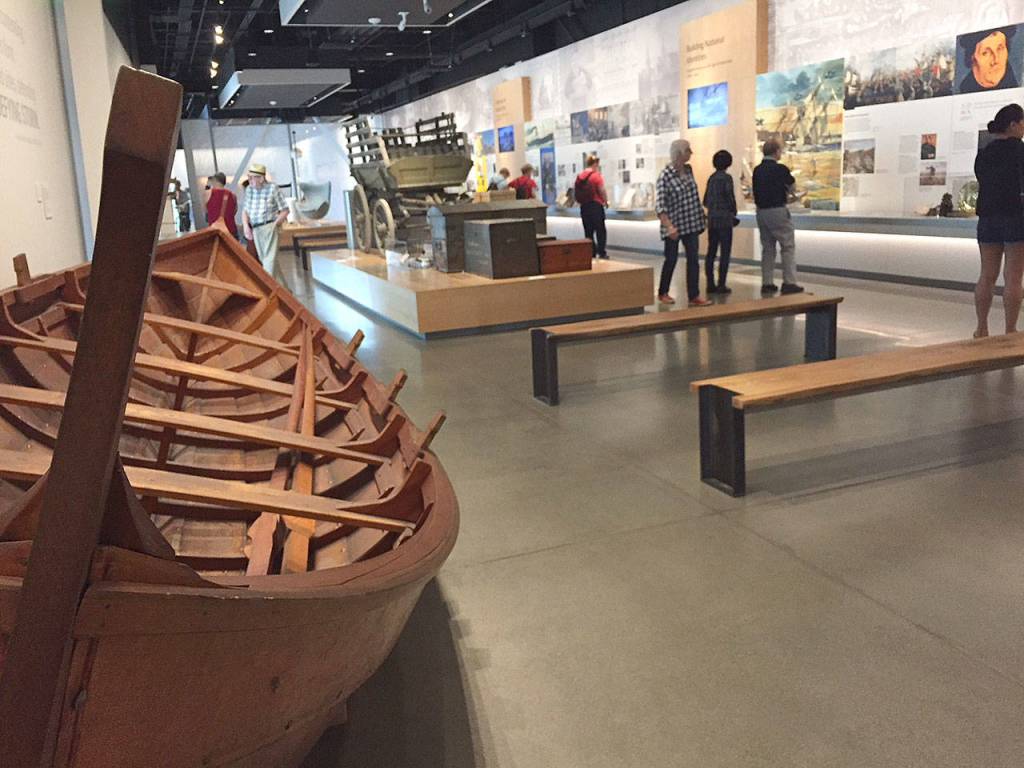
Later, my mother wanders through the extensive Scandinavians in America exhibit. The small wooden dories on display look very much like the century-old, wooden Viking ship at the beginning of the tour. There are fishing equipment and farming implements from a bygone era, and a look at Scandinavian inventors (rabbit ears, who knew?), prominent businessmen like Nordstroms and Frederick & Nelson, and national politicians like Henry “Scoop” Jackson. Even Leif Erickson and his Canadian longhouse get a shoutout.
Toward the end of the exhibit, a video shows local families discussing why their relatives came to America and ultimately settled in Washington. A woman describes her family’s immigration from Scandinavia to the Evergreen State, and before she can finish her sentence on why they stayed here, my mom does it for her: “They felt like they came home,” my mom says, tears in her eyes.
•••
We check out the final exhibit, a small display of Scandinavian contributions to modern culture (Minecraft, Angry Birds, etc.) and stop to have lunch at the small Nordic-inspired cafe attached to the museum, Freya.
Over French press coffee and a smorgasbord of salmon and colorful, fermented veggies, we chat some more about my mom’s family. She remembers going to Vashon Island, where both sets of her grandparents eventually settled, and thinking the place was made up entirely of Norwegians. She mentions her auntie Gracie lived just over in Loyal Heights, and that we should check out her old house. She hasn’t been back in years.
My grandmother is long gone. She died soon after I graduated high school. In my mom’s packet of memories she brought was a list of all the places her mom lived — Alberta, Vashon Island, Brooklyn, New York, back to Alberta, Saskatchewan — before she married and settled in north Seattle. We talk about the courage of a single woman traveling so much. I remark that it’s a lot like sailing across an ocean to a strange land.
We leave and drive across the Ballard Bridge to Fisherman’s Terminal. There, a tall monument topped with a longline fisherman memorializes the Seattle fishermen lost at sea.
My grandfather died of cancer, but a captain on one of the boats he used to sail had his name etched on a plaque. We find Arne Madsen’s name, and my mom tells me about his boat, Dauntless, which sailed from Ketchikan in 1973 and was never seen again.
It’s popular now to test your DNA, look back at names and trace your lineage through online postings and the percentage of your ancestry. But nothing beats black-and-white photos, journals, rusted old boats, dusty guitars, stories, myths and monuments.
That’s what ultimately links the chain of history back to those who came before you.
If you go
The Nordic Museum is at 2655 NW Market St., Seattle.
Hours are 10 a.m. to 5 p.m. Tuesday, Wednesday, Friday, Saturday, Sunday; 10 a.m. to 8 p.m. Thursday; Monday closed.
Admission is $15 adults, $12 seniors, $10 youth and students, children 4 and younger free.
Current exhibitions include “North Exposure: Contemporary Nordic Art Revealed,” through Sept. 16; “Fridtjof Nansen: Scientist, Explorer, Diplomat, Humanitarian,” through Aug. 5; and Viking Days is July 14-15.
Call 206-789-5707 or go to nordicmuseum.org.