Editorial: Canada’s crude oil pipeline threat to our sea, sky
Published 1:30 am Sunday, June 3, 2018


By The Herald Editorial Board
If Canadian Prime Minister Justin Trudeau felt cloaked in any environmental superiority after his earnest but failed attempts last year to persuade President Trump to remain part of the Paris climate accords, he can now drop that facade.
More than persuade the federal government he leads to streamline environmental reviews of a controversial oil pipeline expansion between the tar sands of Alberta and the marine ports of British Columbia, Trudeau is putting the Canadian taxpayers’ money and the government’s authority behind the effort.
Trudeau’s Liberal Party government announced last week that it would buy the project from Houston-based Kinder-Morgan for $4.5 billion (Canadian) and complete the $7.4 billion (Canadian) project. Kinder-Morgan already had suspended construction and threatened to completely pull out of the project on May 31 over court challenges from the British Columbia provincial government and B.C.’s tribal governments.
Conservatives liked to criticize the Obama administration’s alternative energy research grants as “picking winners and losers” in the energy industry. Canada is skipping that step, buying out the loser and taking over.
Trudeau was transparent about why: “When you shift the ownership of the pipeline from a private corporation to … a federal government that has explicit control over resource projects that go between provinces, a lot of the legal barriers and a lot of the challenge points actually disappear,” he said last week.
Frustratingly, there may be little those in Washington state can do about Canada’s decision. But it should still matter deeply to those who treasure and depend on Washington state waters and the larger Salish Sea that British Columbia and the state share.
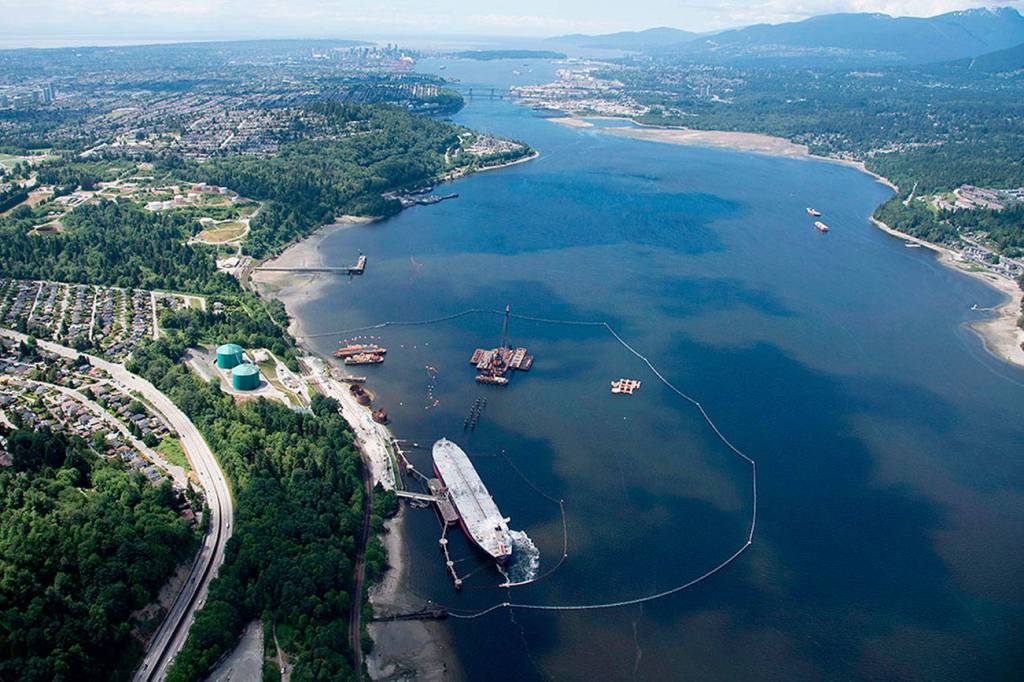
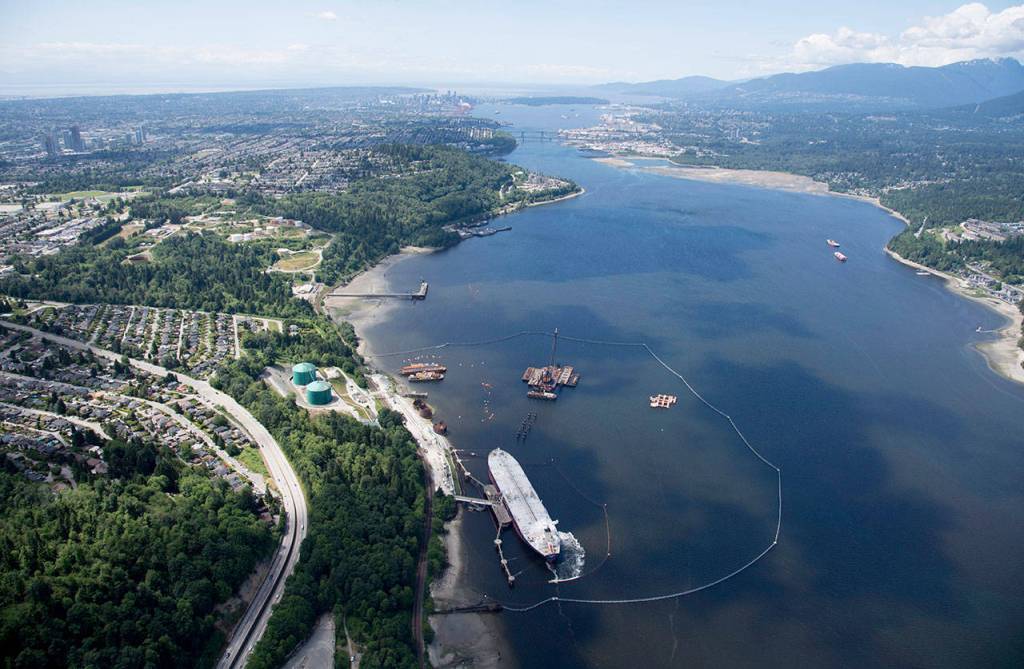
The pipeline project would nearly triple the capacity of the existing 600-mile pipeline that crosses the Canadian Rockies between Edmonton, Alberta, and Vancouver, B.C., allowing the daily flow of bitumen crude to increase from the present 300,000 barrels to 890,000 barrels. Currently, most of the oil goes to U.S. refineries by pipeline and tanker.
That added capacity would allow the Canadian government to sell most of that oil to China — at a higher price. The oil exports are expected to prompt a flood of oil tanker traffic from the current 60 tankers a year to more than 400 vessels each year from Vancouver, south past the San Juan Islands and through the Strait of Juan de Fuca out to the Pacific.
That presents an increased risk of a catastrophic oil spill that would further threaten if not ensure the extinction of native salmon runs from B.C. and Washington rivers and of the Salish Sea orca pods, including the resident killer whales around the San Juan Islands.
Beyond the increased threat of oil spill, the additional tanker traffic also would heap more stress on resident orca pods already struggling because of the dwindling stocks of salmon that they feed on. The orcas of J, K and L Southern Resident pods numbered nearly 100 in 1995, but have decline to 76 whales as of September, according to the Friday Harbor-based Center for Whale Research. The L pod, the largest family group of orcas, has dropped during the same period from 58 to 35 orcas. No new calves have been reported born to the pods since 2015.
Along with declining salmon runs, it’s more clear now that noise from vessel traffic interferes with orcas’ and other cetaceans’ ability to use echolocation to communicate, find mates and feed.
“Even a slight increase in sound may make echolocation more difficult for whales,” Scott Veirs of Beam Reach, who led 2016 research, told The Guardian. “That’s worrying because their prey, chinook salmon, is already quite scarce. Hearing a click off a salmon is probably one of the most challenging things a killer whale does. Hearing that subtle click is harder if there’s a lot of noise around you.”
The noise from a passing ship, The Guardian article said, can reach the equivalent of 111 decibels, comparable to a rock concert. Even at a distance, the noise level drops to the equivalent of 60 to 90 decibels or the sound from a lawnmower or vacuum cleaner.
There are steps to be taken to reduce the noise impacts of existing vessel traffic, including reducing speeds. But we should not be adding to the racket beneath the waves.
Above the water’s surface, the project’s increase from shipping the tar sands oil — among the most energy-intensive oils to refine and with the heaviest release of greenhouse gases — is estimated to produce carbon dioxide emissions equal to adding 3 million cars a year to the road.
Despite those impacts, Washington state officials and residents may have little recourse to fight the project, beyond raising objections. Gov. Jay Inslee was critical of the Trudeau government’s move last week, as were Washington state tribes, who have joined B.C.’s tribal governments in opposing the project.
“We still remain strongly opposed,” Tulalip Tribes chair Marie Zackuse told public radio station KUOW (94.9 FM). “We’ll be talking to attorneys tomorrow about possible recourse.”
The B.C. provincial government and scores of B.C. municipalities and tribes are challenging the project in court. Voices south of the Peace Arch should join that opposition to the Trudeau government’s action.
The orcas can’t speak for themselves; they can barely hear above the din.