Editorial: King would want our pledge to nonviolent action
Published 1:30 am Saturday, January 17, 2026
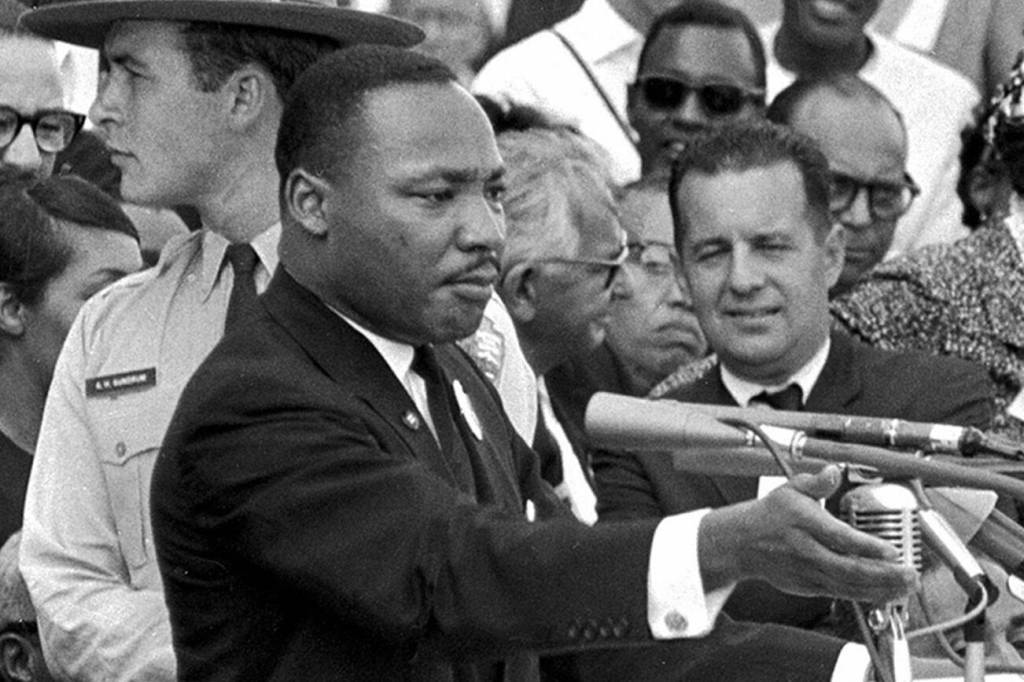
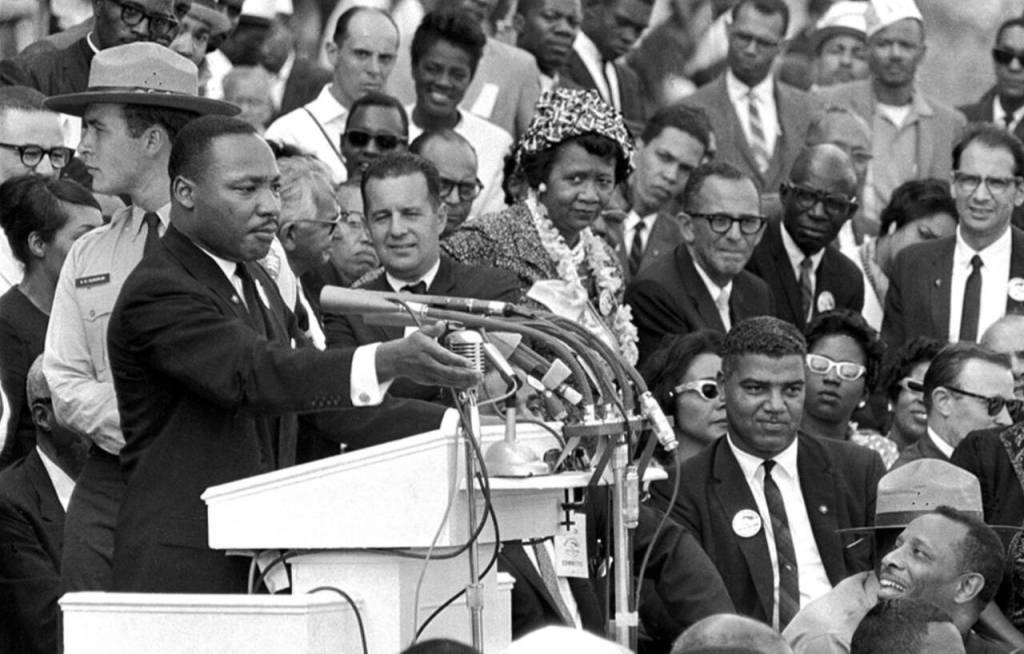
“I am grateful to God that, through the influence of the Negro church, the way of nonviolence became an integral part of our struggle. If this philosophy had not emerged, by now many streets of the South would, I am convinced, be flowing with blood.”
— Martin Luther King Jr., “Letter from a Birmingham Jail,” April 16, 1963
By The Herald Editorial Board
If ever the arrival of a holiday was well-timed for a particular moment of political upheaval, it is Monday’s observance of Martin Luther King Jr. Day.
A reflection on King’s long campaign and the sacrifice of his own life for the causes of the civil rights movement and against war and poverty through his dedication not only to nonviolent protest but to disruptive resistance and activism is now acutely necessary.
In Minneapolis and the rest of this nation. In Iran and throughout the world.
King’s letter — some 6,900 words — was written in response to an open letter in the Birmingham (Ala.) News from eight white clergymen who sympathetically urged King to drop his disruptive efforts to desegregate the city and instead seek change through negotiation and court action. Arrested for organizing “illegal” demonstrations and boycotts, King responded with a defense of nonviolent direct action that challenged unjust laws.
Black Americans at the time had waited “for more than 340 years for our constitutional and God given rights,” King wrote. There was a limit to their patience.
“We know through painful experience that freedom is never voluntarily given by the oppressor; it must be demanded by the oppressed,” he wrote.
Still, in demanding justice, King continued to defend nonviolent action, even in the face of violent responses to such demonstrations that occurred before and after. (Still to come just months later was the bombing of Birmingham’s 16th Street Baptist Church, and the murder of four young Black girls.)
The clergymen’s letter asserted the actions of King and others had to be condemned because they precipitated violence.
“Isn’t this like condemning a robbed man because his possession of money precipitated the evil act of robbery?” King responded.
But King also knew that nonviolence had and would continue to work in instilling hope in the Black community and inhibit a surrender to violent response. It delivered a revolution in attitudes, court victories and legislation and an assurance of civil rights, an arc of the moral universe that was long but did bend toward justice.
Today, there is ample evidence that the Civil Rights Movement was not an outlier regarding the effectiveness of nonviolent direct action.
In “Why Civil Resistance Works: The Strategic Logic of Nonviolent Conflict,” authors Erica Chenoweth, a Harvard University political scientist and colleague Maria Stephan, combed through more than 300 campaigns for regime change or self-determination worldwide between 1900 and 2006.
Chenoweth told a NPR podcast in 2019 that she initially believed that nonviolence was less effective than armed conflict in ushering in such change. But challenged by Stephan, the two examined the histories of those conflicts. They found that major nonviolent campaigns had been successful in 53 percent of the conflicts they reviewed, while violent campaigns were successful only 26 percent of the time.
In a 2019 interview with the Harvard Gazette, Chenoweth further explained that they saw four elements to successful nonviolent campaigns: a large, diverse and sustained effort; outreach to those in government, media and especially among security forces carrying out repression; a reliance on more than protest, including boycotts and strikes; and a commitment not to resort to violence in response to violent action.
Regarding the need for a large, diverse effort, Chenoweth’s and Stephan’s book also found a statistic that was repeated among many involved in last year’s “No Kings” protests: Again, from the campaigns they studied, they found that when active participation in an effort reached 3.5 percent of the population, the likelihood for success was seemingly inevitable.
King had his own principles for success — echoed by the contemporary authors — outlined in an essay on nonviolence by Stanford’s Martin Luther King Jr. Research and Education Institute. King urged:
• A commitment to nonviolence;
• Winning the “friendship and understanding” of opponents, rather than their humiliation;
• Opposing evil itself, rather than those committing evil;
• A willingness to suffer violence without responding in kind;
• Resisting an “internal violence of spirit,” along with rejecting physical violence;
• A “deep faith in the future” and a conviction that the “universe is on the side of justice.”
While those principles may be simple to accept philosophically, they are more difficult to commit to in practice, especially in the face of conflict and injustice.
With divisions deep in our nation — over principles of personhood and equity, citizenship and residence, public safety and personal freedom, rights and responsibilities, religion and belief — how we make our case for what we believe to be right should follow the example of King and others.
But none of that should prompt us to avoid the tension such conflicts present.
“I must confess that I am not afraid of the word ‘tension,’” King wrote from his Birmingham cell. “I have earnestly opposed violent tension, but there is a type of constructive, nonviolent tension which is necessary for growth.”
That growth is what bends the arc of the moral universe toward justice.