Viewpoints: Gratitude for ‘trail angels’ and volunteers
Published 1:30 am Sunday, October 15, 2017
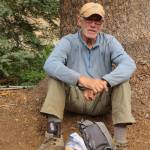


By Glenn Jolley
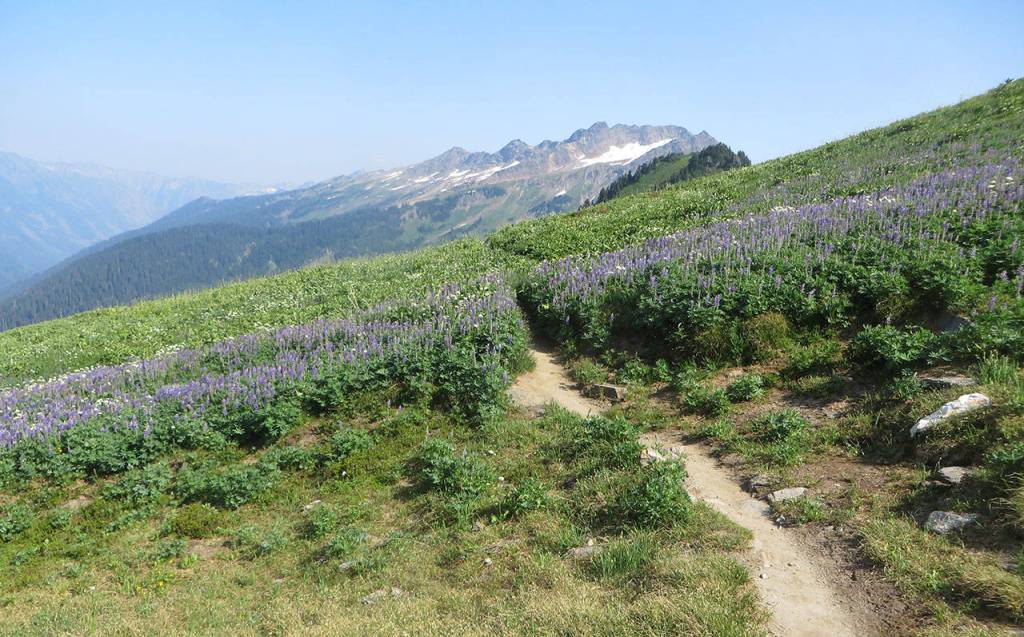
The drizzle came just as I crossed Pumice Creek in the latter part of August, 70 miles into my Pacific Crest Trail hike to Stehekin, the small community on the shores of Lake Chelan that is reachable only by boat or trail.
Eight days previously, I had started on the Pacific Crest Trail at its Stevens Pass trailhead. Though late afternoon and earlier than I would typically end a day of hiking, I felt certain I could make up the time if I stopped. The drizzle had turned to a downpour so I set up camp and hunkered down for the night. The next morning was still cloudy and drizzly so I stayed in the tent and waited. Three hours later the sky had cleared slightly, so I made haste, packed up and headed north towards Micah Lake about six miles away. What I forgot from the last time I had hiked this section of the Pacific Crest Trail was how steep and treacherous the switchbacks were to Fire Creek Pass and how dangerous it was down the two miles to the lake.
A half-hour into the hike, the downpour began. Instincts and 60 years of backpacking experience told me to turn back and set camp again, but I soldiered up the steep switchbacks, figuring I could still make it to Micah Lake before dark. I shivered, the wet cold beginning to sink in, and I began to worry. But there was no cover and no place to camp so I continued on.
It took another two hours to reach the top of the 6,500-foot pass. By then I was shaking uncontrollably, the earliest stage of hypothermia. I knew I had to get under my tarp and create some heat, but I could barely get the latches on my pack undone and I was becoming increasingly confused and disoriented. But once under my tarp and huddled against a rock and soaked through, I waited in a fetal position hoping for deliverance, and beating myself up for letting my ego trump common sense. Now all I wanted to do is lie down and let sleep take me out of my misery.
Trail angels: Then a miracle: Hikers coming up the trail, the first I had seen all day. I ripped the tarp off of me and called out to them. One of them called back, “You OK?” I yelled back, “No, I’m in bad shape!”
They ran toward me and as if their presence had been carefully choreographed, and without fanfare, one unhooked my tent from the pack and walked 20 feet into the meadow to set it up, another rifled through the pack, found my stove and began to heat water for tea, and the other grabbed my sleeping bag, wrapped it around my soaked body along with the tarp. Together they walked me to the tent, took off my wet clothing, stuffed me into the bag, and held a cup while I drank, because I was shaking so violently I couldn’t hold it without spilling tea all over me. Then they huddled around the tent with words of encouragement as I calmed.
After an hour of getting me settled in with extra water and food within reach, they left me in good condition with a grateful heart and another example of how trail angels keep hikers safe. I had experienced many such acts of kindness over years of hiking the PCT.
Though cold and shivering and having slept little, the next morning greeted with warm sunshine and blue, cloudless sky. I spread my wet belongings around the meadow and waited until everything was relatively dry. Then I packed up and headed down the trail, but quickly realized I must have wrenched my knee from the frenzied attempt to make haste to the pass the previous day. Every step downwards was met with stabbing pain that nearly buckled me. The trail was steep and rocky, so I proceeded slowly. Finally at Micah Lake, I tossed off my pack and fell in sheer exhaustion. How I could make it the next 30 miles to Stehekin, I thought.
As if in answer, came a voice coming up the trail from the meadow below. With my hat covering my eyes from the bright morning sun, I heard a woman’s voice, “Are you Glenn?”
I opened my eyes, looked up toward her and broke down sobbing. “I have never failed at any hike I have ever taken. … and now this.”
Amy was the trail boss for the U.S. Forest Service and with several others on her crew had spent the hot, dusty days of the summer laboring to repair parts of the Pacific Crest Trail. “The three folks that helped you last night told me about what had happened and wanted me to check on you today.” We sat quietly on the ground while I worked through the emotions that had begun the night before but came pouring out only at that moment.
Pride and rational decisions: Looking at me squarely, Amy thoughtfully said, “No one wants to fail, Glenn, but this isn’t failure. This is you making a rational decision about taking care of yourself and not putting yourself in harm’s way. I think it’s probably the right choice to leave the mountain. The next 30 miles are the most difficult and I don’t think in your condition you’ll make it.”
I listened but shook my head. I couldn’t accept the possibility of quitting.
“How about this?” Amy said, “Come down to our camp, stay the day, rest and get some food and then we’ll make a decision about calling for the rescue helicopter. It’s free.”
I didn’t respond but on the way down to the camp, with Amy walking behind me, my knee buckled several times, and I fell twice. When we reached the camp she looked at me and smiled, “You really think you’re getting over all those passes in this shape?”
Yet our agreement was that I would spend the day at their camp then make my decision. It took me only two hours to choose. Time to go home.
The next morning a helicopter from Snohomish County Search and Rescue arrived, a five-person crew to haul me out of the wilderness. They hovered above as one of the crew dropped down to get me ready. As I was lifted to the helicopter, I looked down at the waving trail crew then looked up to the open door of the helicopter. Two men crouched with arms extended to pull me inside and into the empty seat behind the pilot. Then came my backpack followed by the man who had been on the ground fitting me into the harness.
Volunteers’ “day off”: As I began to apologize for my lack of common sense and poor judgment, they told stories of their own mishaps with equally embarrassing results. They put me at ease and assured me I had done them a favor. “A great training opportunity,” one shouted. “Besides we love this job. It’s what we live for!”
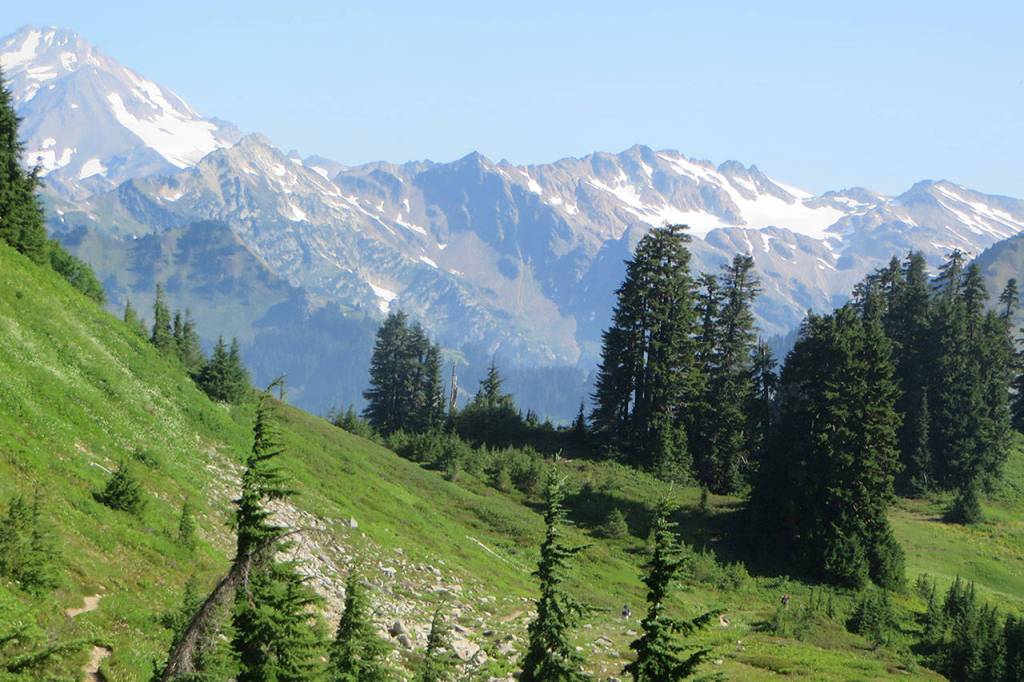
The half-hour ride took us over the tops of Glacier Peak and Mount Pilchuck. Once we landed, they introduced themselves. All were volunteers who had left their jobs that morning for this rescue. In a way, they assured me, I had given them the day off.
As I reflect on the series of events that came together to save me from myself, I shake my head. Three trail angels who found me huddled fighting against hypothermia, the trail boss from the U.S. Forest Service who guided me back to a sensible decision to end my hike, and five volunteers in a Snohomish County Search and Rescue helicopter who returned me home, humbled but healthy. It was like a scripted play.
Lessons learned: And were there lessons worth learning? Yes. That even at 75 years of age with over 60 years of backpacking experience, a person cannot take the mountains for granted. The wilderness can be unforgiving and harsh and even if a plan is well made, a person can even still meet with near disaster. But more importantly, I learned again how generous people can be when given the opportunity.
It’s as if in the wilderness we become our best and most generous selves. Huddled under my tarp, shivering and wondering if I was going to make it to the next day, I thought about those I love and who loved me. I wanted to live another day to made sure they knew the depths of that love.
Over the past five summers, Glenn Jolley has section-hiked the Pacific Crest Trail and the John Muir Trail. His book, “Almost There: Stories and Musings along the Pacific Crest Trail,” recounts his hike along the Washington section of the PCT. He lives on Whidbey Island with his wife and two cats.