No need to travel far for fishery unique to Northwest
Published 1:30 am Wednesday, September 5, 2018
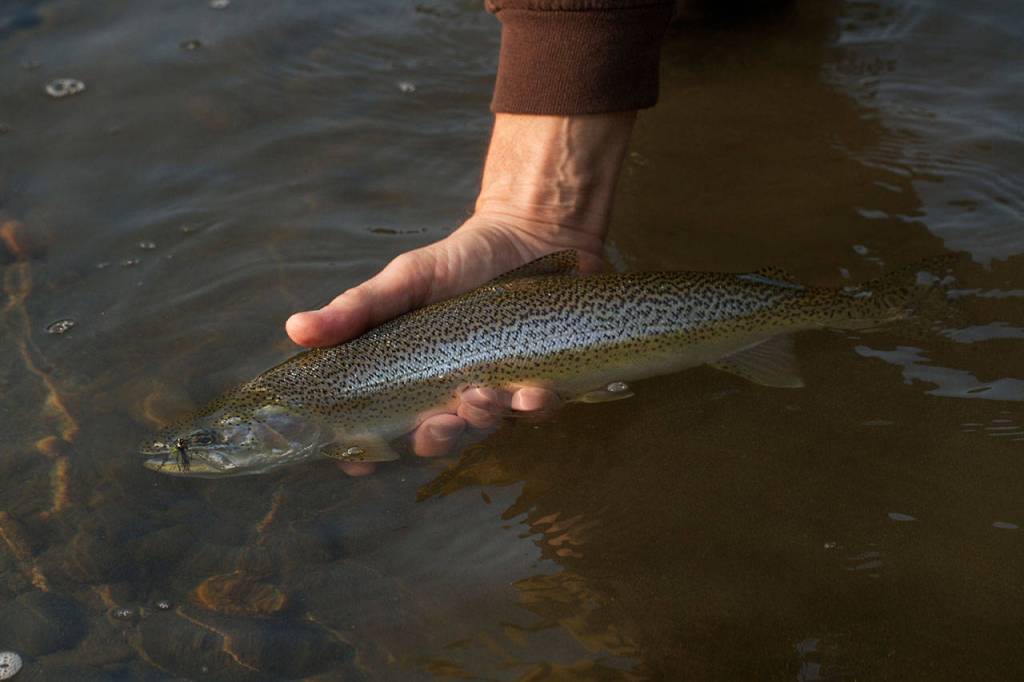
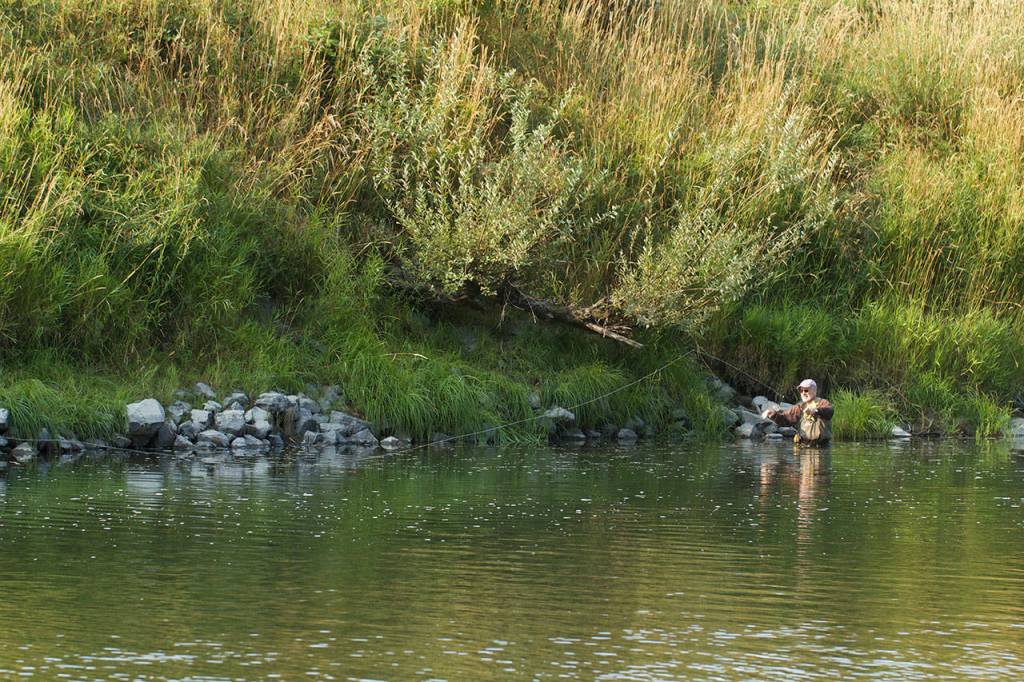
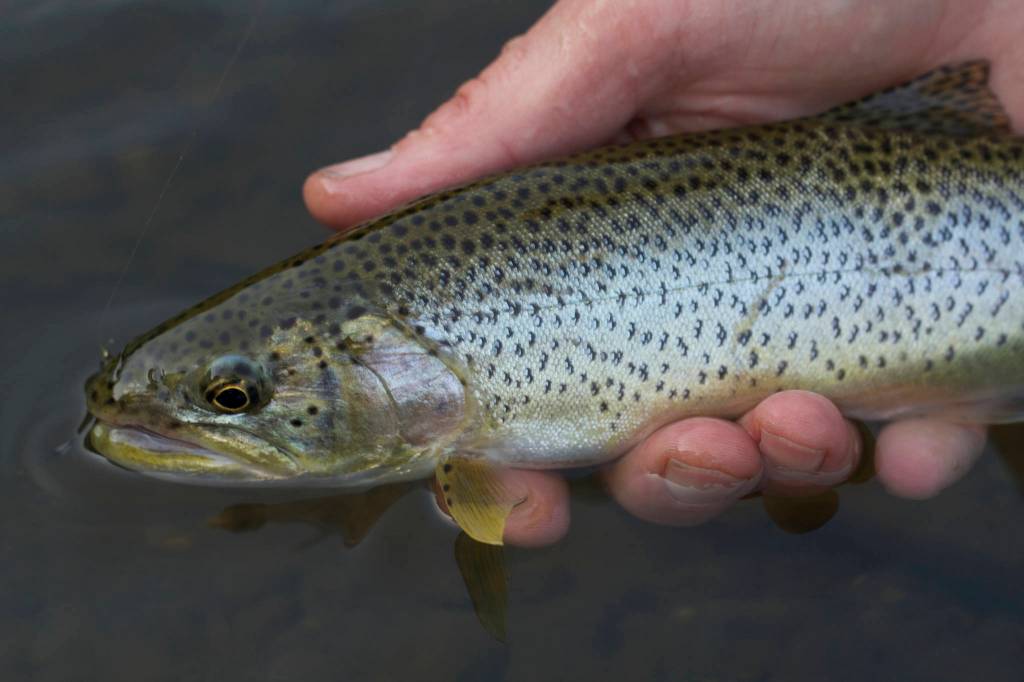


It seems a little odd for me to be excited about the waning days of summer, but I can’t help myself.
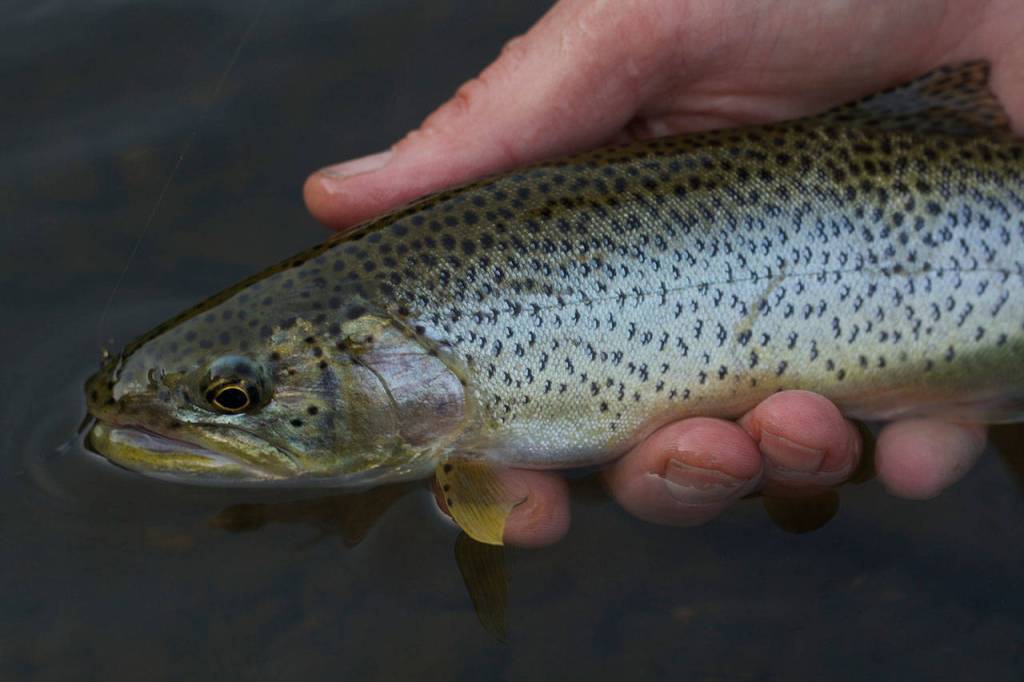
Now is the time that sea-run cutthroat trout return to their home rivers and creeks. And fishing for sea-runs in the Stillaguamish River has always been one of my favorite things to do.
I’m not alone.
“They’re so unique to the Northwest,” said Dale Dennis, who works in the Fly Shop at the Cabelas store in Tulalip. “And they’re becoming an increasingly popular fishery.”
Dennis said more of his customers are asking about fishing for sea-runs. He’s been fly fishing for them since he was in high school in the 1960s.
Sea-runs can be found in saltwater estuaries in the spring and summer and in freshwater in fall and much of the winter. They’re great sport fish in either location.
“They’re extremely aggressive to the fly,” Dennis said.
He noted that sea-run cutthroat are one of the few local fisheries that aren’t threatened or endangered, partly because anglers must release any they catch in saltwater.
The fact that sea-run coastal cutthroat, also called harvest trout, are a freshwater fish that spend a great deal of their life in saltwater is what makes them unique in the Northwest. They range from coastal rivers in Southern Alaska to Northern California.
Cutthroat in the Northwest started spending time in the saltwater because coastal rivers don’t have enough food. Cutthroat typically don’t go long distances at sea, but instead spend time feeding in the estuaries near their local rivers. They return to the rivers in August, September and October, following spawning salmon and eating errant eggs.
The cutthroat lay their own eggs in January and February before returning to saltwater.
Steve Gobin of Tulalip, an avid angler who has fly fished for sea-runs since he was a young boy, noted that cutthroat typically spawn in “virtually every small tributary of the river, including roadside ditches.”
That makes sea-run cutthroat more accessible to more anglers, which is OK to Gobin, who enjoys catching and releasing the aggressive, scrappy fighters.
“They’re like hooking a steelhead, but they’re a smaller fish,” he said. “It’s a nice feeling. I’d rather fish for cutthroat any day of the week.”
Last year, the Washington State Department of Fish and Wildlife closed the entire Stillaguamish River to fishing in an attempt to aid returning salmon. This year, the main stem of the Stillaguamish, basically the portion of the river downstream from Arlington, is open for trout fishing.
The regulations allow anglers to keep two trout, including sea-run cutthroat, if they are over 14 inches in length.
I use barbless hooks and release all the sea-runs I land because I enjoy catching them so much. And Dennis would recommend that others do the same just to try to keep the fishery in healthy numbers.
Gobin, Dennis and I all have the same favorite fly for sea-run cutthroat — a pattern called the Knudson spider. Although we all like a different color. For Gobin, it’s claret; for Dennis, it’s red; and for me, it’s orange. The pattern, which is popular throughout the Northwest, was created by the late Al Knudson of Everett, who designed it originally to fish for steelhead in the Stillaguamish River. His original color was yellow.
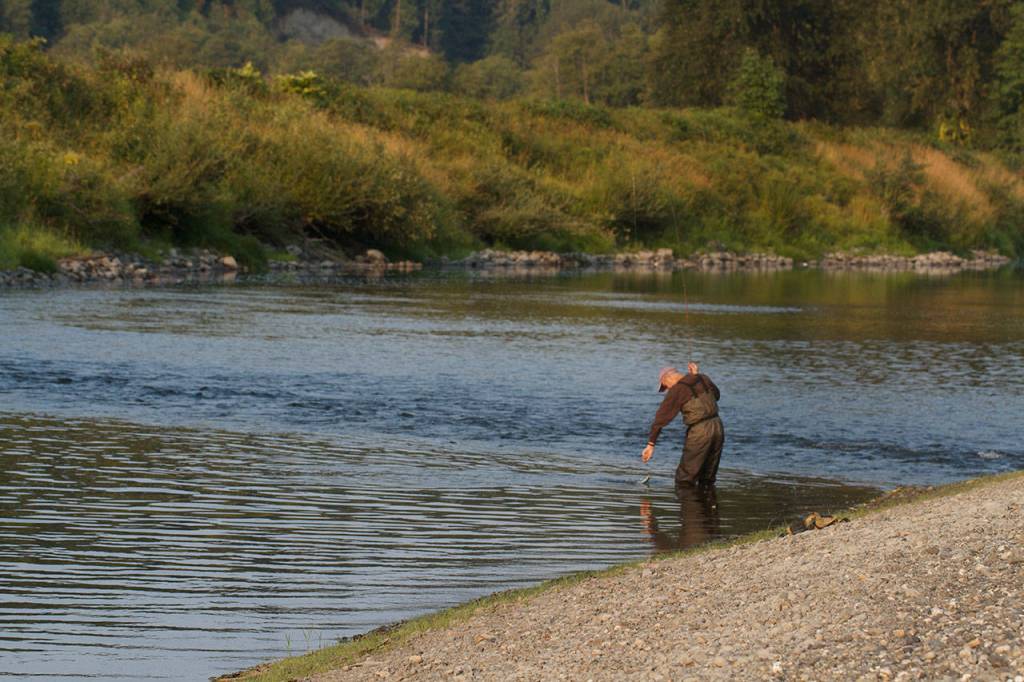
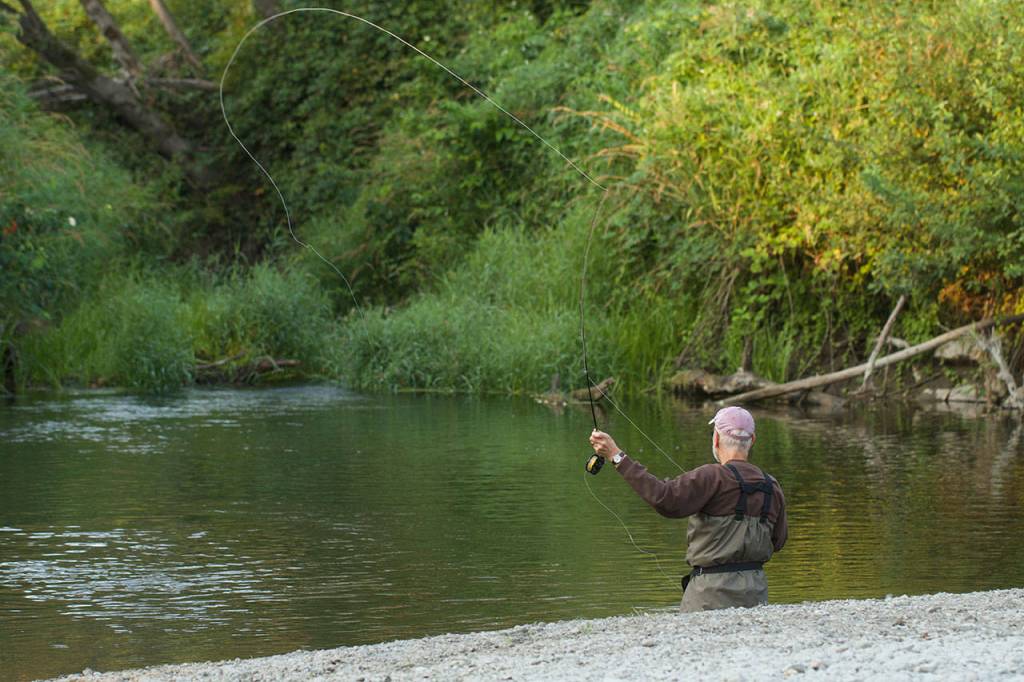
If you’ve never fished the Stillaguamish for sea-runs, finding access to the river is probably the most difficult thing. People with boats can usually find launching spots in Arlington, under I-5, and off Marine Drive south of Stanwood. Waders have more access by following the roads along the lower river and walking in.
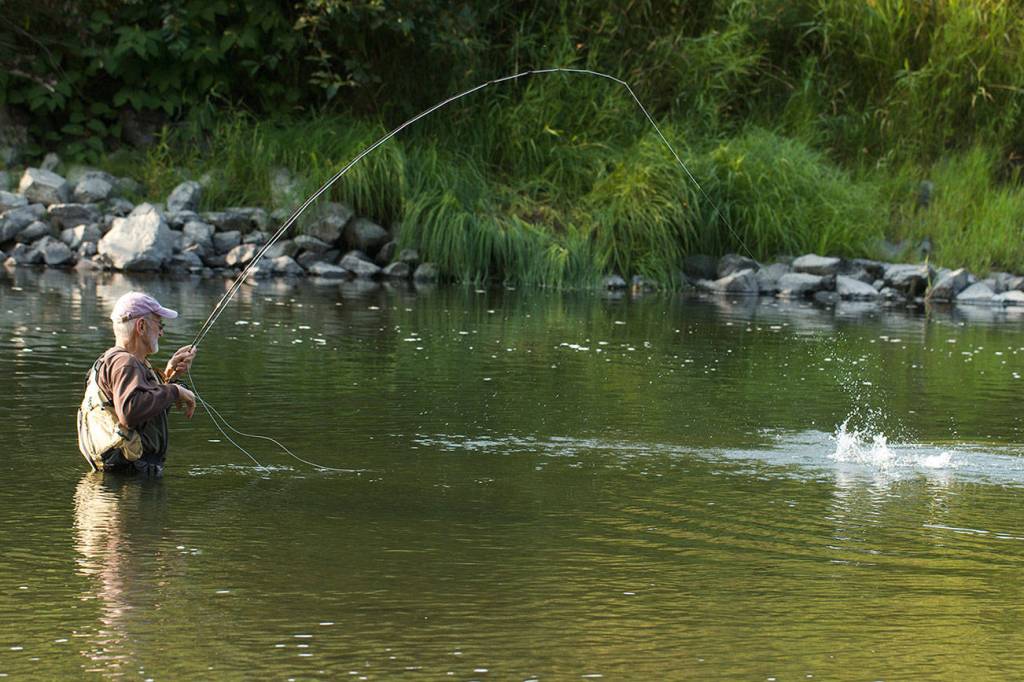
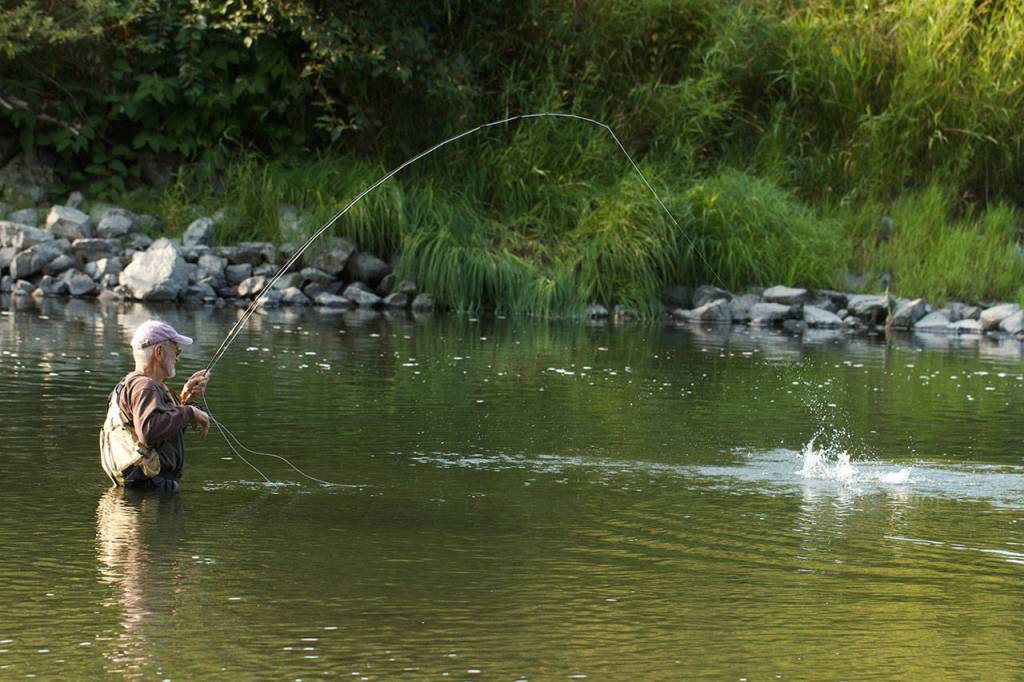
I typically walk along the gravel bars and fish the deeper channels or holes along the river.
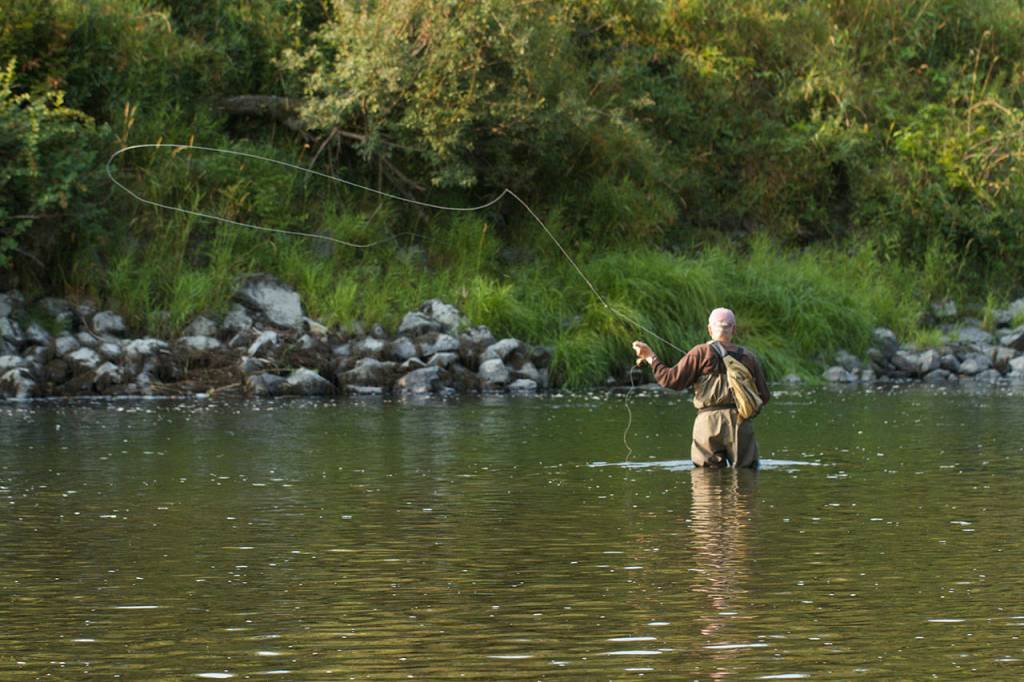
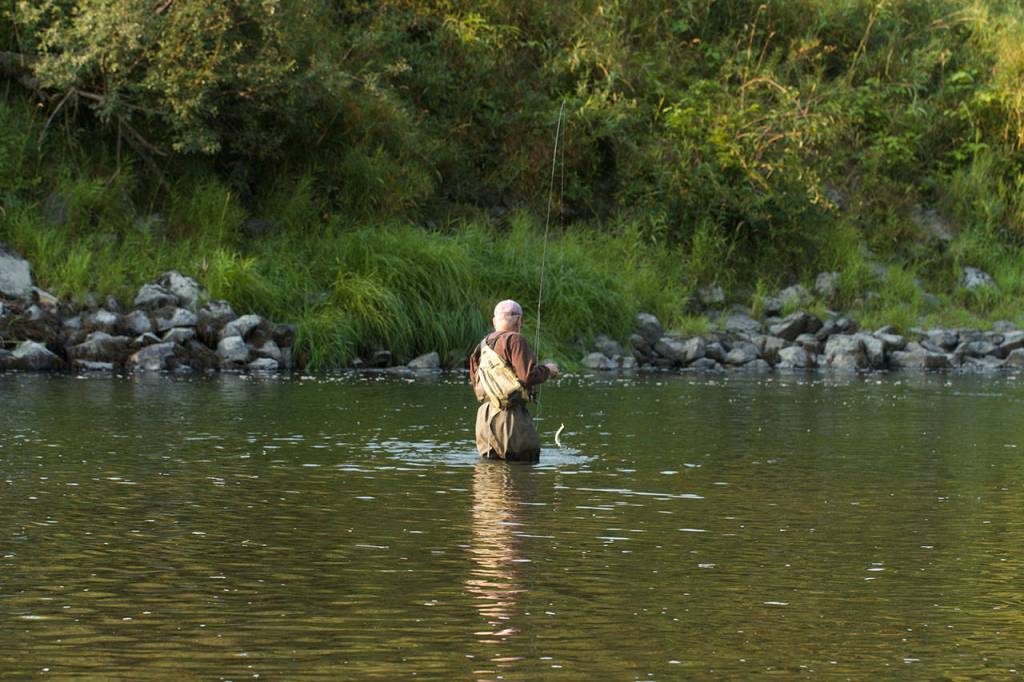
Sea-runs are often found along some form of structure — fallen logs, stumps or boulders. They also will hide below trees and bushes on the water’s edge and along rip-rap rocks used to stabilize the riverbank.
On cloudy days, a floating fly line can work well. But a line with a five- to ten-foot sinking tip is usually more effective in getting down to where the fish lie.