‘Julius Caesar’ star has commanding presence
Published 9:00 pm Thursday, February 22, 2007
Have you ever wanted to interview Cleopatra?
Who could resist an invitation like that, so here we are in a reception room at Seattle’s McCaw Hall talking to the striking Canadian soprano who is singing the role of the famous queen of Egypt in Seattle Opera’s production of Handel’s “Julius Caesar.”
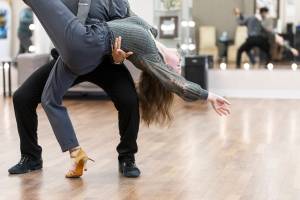
Alexandra Deshorties is tall – 6 feet to be exact – lean and lithe like a dancer. She’s athletic, strong and a devotee of daily yoga classes, which mean she can do just about anything that’s called for on stage. In “Julius Caesar,” which opens Saturday, she even flies in a kind of dream sequence in this modern adaptation of Handel’s 18th century masterpiece.
She’s dressed in black, with a dancing mane of silver hair and fingernails painted a red so deep it’s almost black. There’s a tall cup of iced coffee at the ready – “I need my caffeine” – that remains mostly untouched. No swooping eye makeup a la Cleopatra eyes here, but a modern woman who, in the course of a wide-ranging interview, reveals a spirit and keen intelligence that would make the real Cleopatra proud.
She’s here because she can sing, and with Handel, it’s all about the singing. “Julius Caesar,” in which Cleopatra and Caesar meet, connect and a triumph through three acts of betrayal and murder, is an orgy of sumptuous, ornate arias that call for voices of extraordinary control, agility and virtuosity.
“People underestimate baroque,” Deshorties said. “It has so much variety.” So if you thought Handel was just about “Messiah,” think again.
“Julius Caesar” was written for a variety of voices – Deshorties likens it to a “musical free-for-all” – and the lead role of Caesar is traditionally sung by a woman. Ewa Podles, the fabulous Polish contralto (who alternates the part with Anna Burford) has a voice like no other, creating a sensation every time she performs in Seattle. In Handel’s time, these lead roles were written for the high voice and sung by castrati singers, young male singers who were surgically altered so their voices remained high. Today, countertenors – men trained to sing in a high falsetto voice – are available and Seattle Opera has cast two for this production.
But Cleopatra is firmly in the gender-specific camp, and Alexandra Deshorties, who made her Seattle Opera debut in 2006, brings her beauty and sense of drama to the part, a role that made a star of Beverly Sills more than 40 years ago and helped to usher in a new era of Handel popularity.
Deshorties, 31, was born in Montreal. Both her parents are French born. She’s a Canadian citizen, but loves living in New York. Not one to be pigeon-holed, she rejects the notion of being identified by such things as nationality, observing, “I wish we all had passports that just said Earth.”
She grew up listening to Mozart and Beethoven and could always sing, a talent that gave her a sense of self and security. She started training at age 12, was singing on stage at age 15 and at 18 “packed up a suitcase, a cat and moved to New York.” It’s a tiny place, she said, and one she still calls home.
“I sang for some people at the Met and they said, ‘you are not ready, go here.’ ” “Here” turned out to be the Manhattan School of Music and more study. “By the time I was 23 I was in the Met,” she said, and she proudly produces her original Metropolitan ID card.
She’s a graduate of the Metropolitan Opera’s Lindemann Young Artist Development Program and has sung in a variety of roles at the Met and at Houston Grand Opera, Cincinnati Opera and Seattle Opera. She’s also sung a lot of Mozart in France, Spain and Switzerland.
An opera career is not easy, and like many young women she says she has to balance work with the tug of wanting to settle down, to have a family. “Bottom line, it’s a business,” she said, and one whose rewards are not evenly distributed. “There are many great singers who are just scraping by.”
As her voice has matured, she’s worked to “enrich the center to make it as even, as versatile as I could” rather than struggle to hold on to the top notes and risk hurting her voice. “It’s easy to maintain the high notes, but you risk damage by your 40s.”
Cleopatra, with a half dozen show-stopping arias, is a wonderful role for a soprano and, Deshorties said, well-suited to her voice. Plus, she gets to change costumes eight times, which pleases this young singer, who admits she likes clothes.
And what of Cleopatra?
“She’s smart, educated, powerful, a bit of brat,” Deshorties said. “She was a brilliant woman of state who desperately tried to save her country.” She did what she did to get things done, the singer adds.
Not unlike the life of an opera singer. As the interview winds down and rehearsal is about to be begin, a company official catches her attention and gently reminds the singer, “The maestro is waiting to see you.”
Bill Mohn photos
Dancer Ty Alexander Cheng and Alexandra Deshorties at a staging rehearsal for “Julius Caesar.”
Ewa Podles (Caesar) and Alexandra Deshorties (Cleopatra) at a “Julius Caesar” staging rehearsal.