
Rick Steves’ Europe: The gravity of war can be felt at Verdun in France
Published 1:30 am Saturday, October 28, 2023
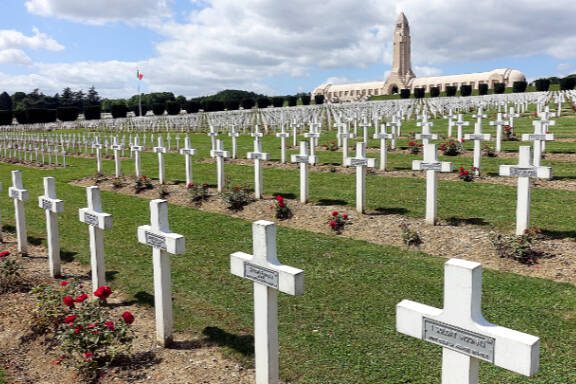
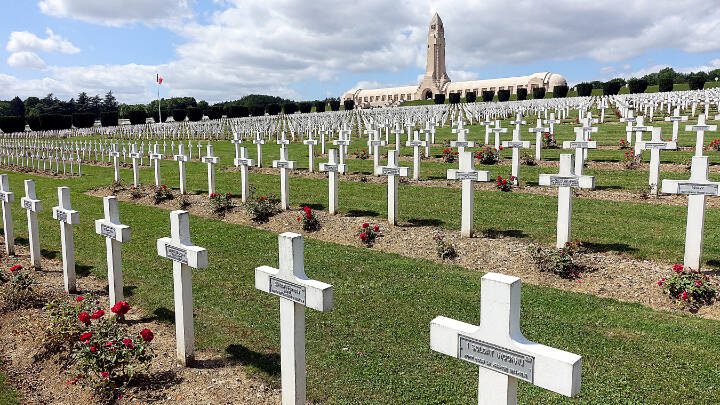


World War I, once heralded as “the war to end all wars,” ended on Nov. 11, 1918, which is why we (and many other countries) celebrate veterans on this day. Many millions died during the horrific war of 1914 to 1918. The battlefields of Verdun in France provide a poignant tribute to the 800,000 casualties suffered there.
Verdun is in northeastern France, not far from the Champagne region, in a strategic location between Paris and the German border. In 1916, after two years of trench warfare, the Germans decided to strike a powerful knockout punch at the heart of the French defense; it would demoralize the enemy and force a quick surrender. They decided that Verdun would be the perfect target since it was almost surrounded, but the French fought to the bitter end. France eventually prevailed, but at a terrible cost.
Just over a century later, soft, forested lands hide the memories of World War I’s longest battle, which raged here for more than 300 days. It’s difficult to imagine today’s lush terrain as it was generations ago…a gray, treeless, crater-filled landscape, smothered in mud and littered with shattered stone. But the countryside still has its memories. Millions of live bombs are scattered in vast cordoned-off areas; it’s not unusual for French farmers or hikers to be injured by until-now-unexploded mines.
The town of Verdun is not your destination, but a starting point for your visit to the nearby battlefields. A good plan is to drive a car or ride in a taxi through the eerie moguls surrounding the town, stopping at melted-sugar-cube forts and plaques marking spots where villages once existed. For most travelers, a half-day is enough, though historians could spend days here. Concentrate on three important sights: Mémorial de Verdun, Fort de Douaumont, and L’Ossuaire de Douaumont. Each offers a different perspective on the war.
Start at the Mémorial de Verdun for an overview. It’s built near the site of a village (Fleury) destroyed during the fighting. The museum provides a helpful visual presentation of this “modern” war – machine guns, flamethrowers, poisonous gas, and airplanes were all first used in World War I. Displays include weapons, uniforms (note the French colonies’ contributions), models, and photos. Its centerpiece is the re-creation of a battlefield, built by veterans of the battle. The museum’s model of the nearby Fort de Douaumont before it was bombed makes a visit to the fort especially poignant.
Fort de Douaumont was the most important stronghold in the network of forts built to defend Verdun. Soldiers were protected by a thick layer of sand (to muffle explosions) and a wall of concrete up to seven feet thick. In spite of this, German shelling rocked the structure, leaving it useless. Inside, there’s little to see except two miles of cold, damp hallways. Walking these corridors will help you sympathize with the soldiers who were forced to live here like moles.
L’Ossuaire de Douaumont, an ossuary and cemetery, is the final resting place for 130,000 French and Germans whose last homes were the muddy trenches of Verdun. The artillery shell-shaped tower and cross design of this structure symbolizes war and peace. The building has 22 sections with 46 granite graves, each holding remains from a different sector of the battlefield. Look through the low windows for a bony memorial to those who were asked to make the ultimate sacrifice for their countries.
I make a point to visit war cemeteries in my travels. They always seem to come with a healthy dose of God – as if dying for God and country makes a soldier’s death more meaningful than just dying for country. This one is an extremely moving sight, with an eerie buzz of silence and peace. The cemetery has rows of more than 15,000 tombstones – Christian, Jewish, and Muslim (oriented toward Mecca) – decorated with roses. Moroccan soldiers were instrumental in France’s ultimate victory at Verdun, a fact often overlooked by anti-immigration, right-wing politicians in France today.
You can read about the carnage as German and French soldiers slaughtered each other day after day on the Western Front. Or you can wander silently through fields of white crosses and headstones at the vast cemetery at Verdun – realizing that a century ago, a horrific war left more than 11 percent of the population of France dead or wounded. You’ll come away with a deeper understanding of why to this day, France – and all of Europe – truly comprehends the gravity of war, a feeling shared by the veterans we honor every November 11.
Edmonds resident Rick Steves (www.ricksteves.com) writes European guidebooks, hosts travel shows on public TV and radio, and organizes European tours. This column revisits some of Rick’s favorite places over the past two decades. You can email Rick at rick@ricksteves.com and follow his blog on Facebook.


