‘A full-circle moment’: A Marysville mother’s addiction journey
Published 1:30 am Saturday, January 10, 2026
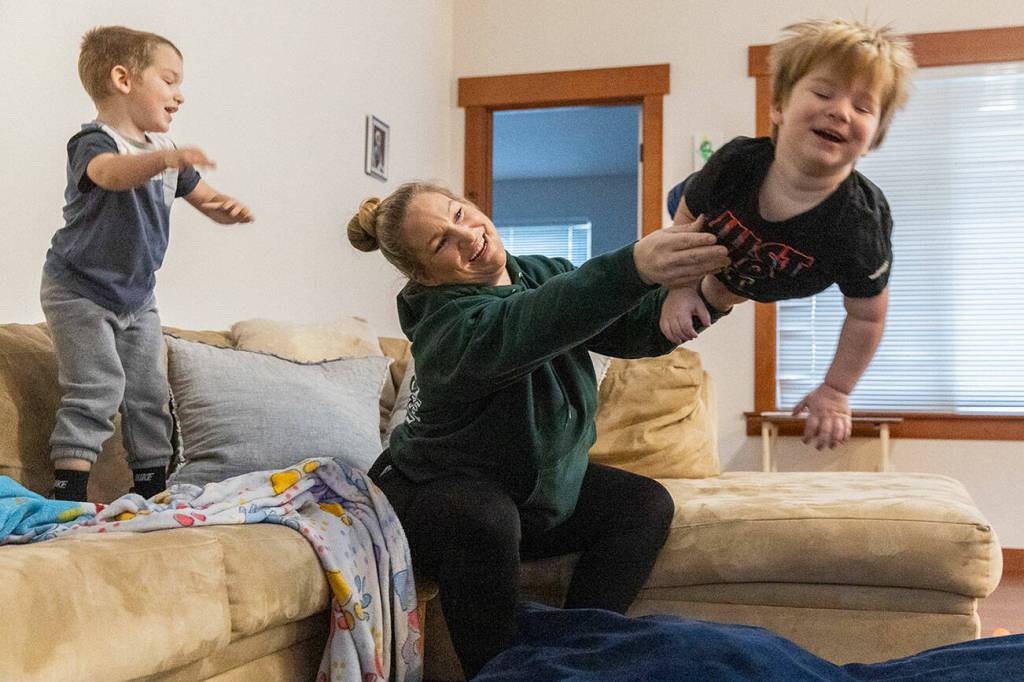
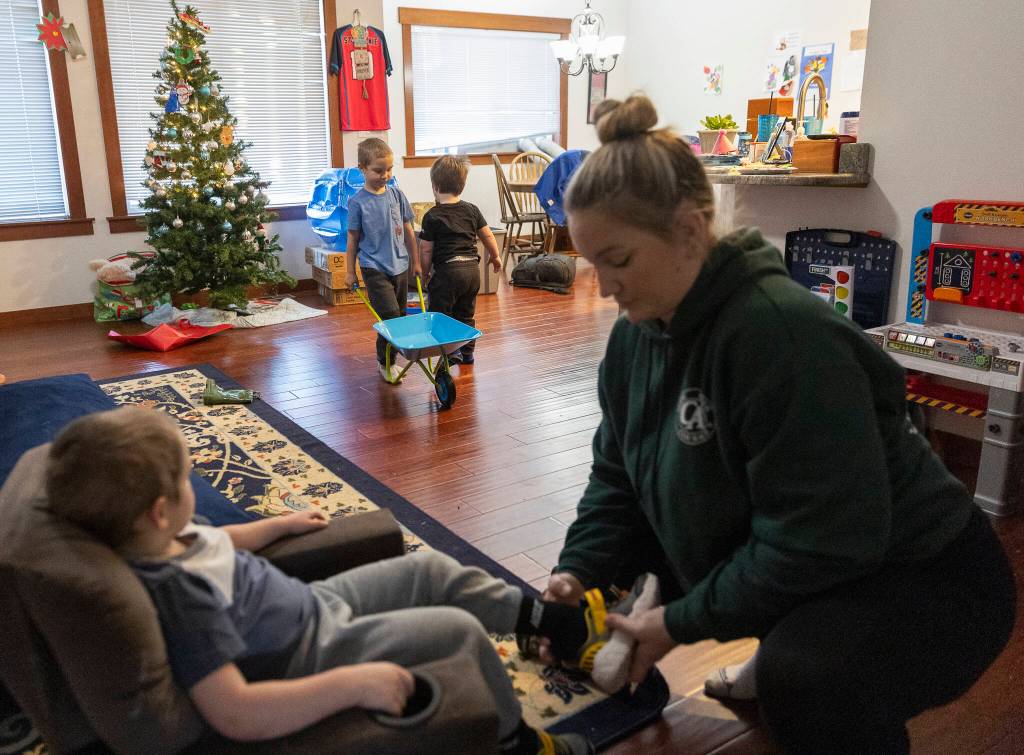


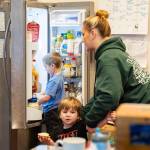


MARYSVILLE — Stephanie Boyle will soon return to the addiction recovery center from which she received treatment more than three years ago.
This time, she won’t go there as a patient.
In March 2023, Boyle left the Evergreen Recovery Centers in Everett. She moved into the Housing Hope emergency shelter and called 211, the state’s social services hotline, which can help vulnerable individuals find housing, if eligible.
She was referred for a YWCA housing voucher that fully covered rent. However, it took months to move into permanent housing.
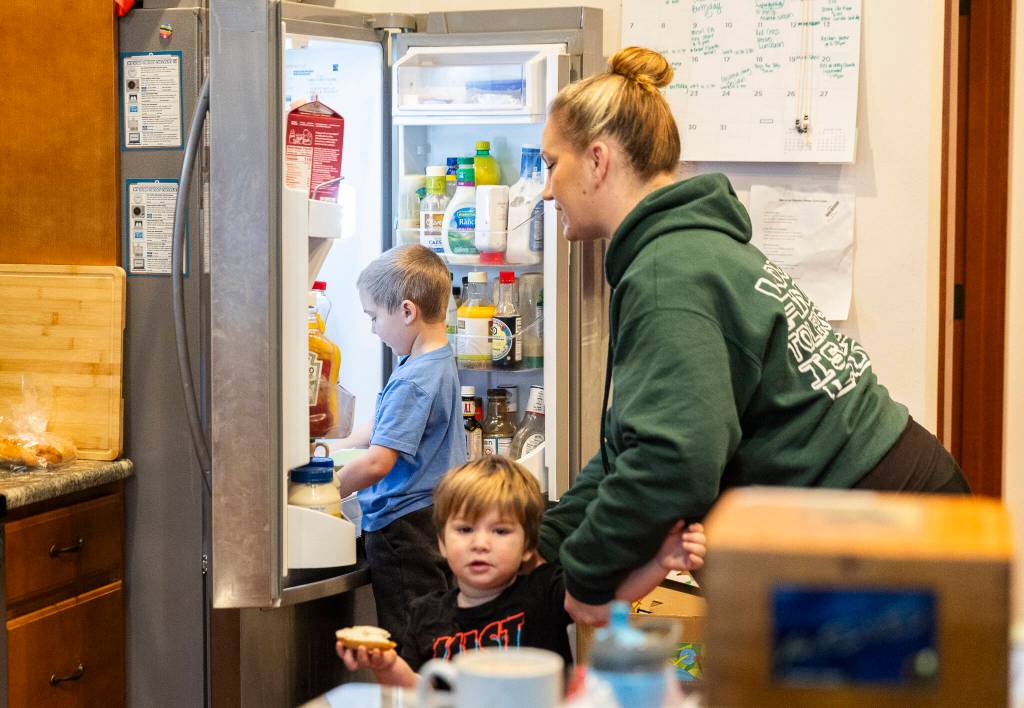
When The Daily Herald spoke with Boyle in November 2023, she was moving from the Everett shelter to a Marysville apartment. In 2026, she lives with her three youngest sons in a Marysville house, still with help from the YWCA. Now she receives subsidized rent support based on her monthly income.
The housing resource is the only support she is still eligible for, other than some help she received this Christmas from organizations such as Toys for Tots.
“I have housing through YWCA and, to be honest, as of November, I’ve pretty much been kicked off of everything,” Boyle said last month.
For three years, she would check in regularly with a case manager from the University of Washington’s Parent-Child Assistance Program, a program that helps pregnant and parenting mothers with substance use disorders.
She did her exit interview in September. The program is designed to provide support for three years.
“I give many, many praises to PCAP. They were absolutely paramount in just knowing that I had somebody,” Boyle said. “Whether it’s figuring out if you wanted to start school, that’s fine. But for me it was getting my license back, getting to the store, getting to take a shower. You know, anything that I needed, I knew that I had somebody.”
She is no longer eligible for Temporary Assistance for Needy Families, a Washington state program that provides financial assistance to eligible families. While receiving temporary assistance, she was required to participate in the WorkFirst program, Boyle said.
WorkFirst helped her find a job with the Red Cross. However, as her eligibility for assistance ran out, so did her Red Cross position.
“Once I was no longer eligible to receive TANF, I could no longer participate in the jobs program,” Boyle said. “It is a good feeling though, like I’m not really eligible for a lot of stuff anymore — and that’s the way it’s supposed to be.”
In the past, events such as losing a job may have triggered a relapse for Boyle — like when she wasn’t able to get custody of her first son in 2016 or after she gave birth to her second son. She could have found any excuse to use, Boyle said.
“You use because it’s a holiday. You know, you need to go to sleep. You use because you need to wake up. You use because something good happens or use because something bad happens,” she said.
These days, Boyle relies on her network of people for help. After losing her job with the Red Cross, Boyle utilized her connections to find a part-time assistant position for a friend while she reached out to the Evergreen Recovery Centers.
“I kind of shamelessly talked to everyone that I know,” Boyle said. “Now, the opportunity to do the one thing that I am really passionate about might be right there.”
An Evergreen Recovery Center director told Boyle that they “would love nothing more than to be able to tell the story of you coming back and working here.”
It’s a full-circle moment, she said in a text. She’ll be working as a residential specialist starting in early February. She’ll work with the residents and help with their child care, as the specialists did for her more than three years ago.
“No idea what addiction was”
Boyle first used drugs after graduating from high school and attending Everett Community College.
“I had no idea what addiction was,” she said. “No understanding whatsoever. Not one iota of understanding that if I did drugs that there was a possibility that I might not be able to stop doing drugs.”
She went to prison for the first time at 23. She was pregnant with her oldest son, Charlie, who is now 12, when she went to jail for the third time. When she got out in 2016, she wasn’t able to get custody of Charlie, which played a large part in a relapse.
Afterward, she and a partner lived with family, or sometimes in cars and tents. They camped along the Interurban Trail and around Silver Lake.
In January 2025, 1,140 homeless individuals were counted in Snohomish County’s annual Point In Time Count. Eighty-eight homeless families had children; 17 families were made up of only children. However, this tally doesn’t account for everyone.
During the 2024-25 school year, Everett Public Schools served over 1,100 homeless students. Boyle’s children would have been too young to catch in this stat.
The 2026 Point In Time Count will take place 8 a.m. to 8 p.m. on Jan. 26.
While pregnant with her second son, Declan, 5, she lived with her mom and stayed sober, but relapsed shortly after giving birth. Her third son, Raiden, 4, was born with drugs in his system, which triggered a Child Protective Services case.
To get custody, she needed to go to treatment.
While in treatment, Boyle’s brother took care of Declan and Raiden. They later joined her in treatment. She was pregnant with her fourth son, Oaklen, 2.
Charlie lives with his grandmother. In 2023, Boyle started mending their relationship and regularly spent time with him.
The Child Protective Services case was dismissed.
“The days that I don’t think I’m good enough, I’m still the best person in the world to my kids, and that is everything,” Boyle said.
“I refuse…”
“A life in recovery can be so meaningful,” marriage and family therapist Lucinda Rowley told The Herald. “They’ve been through worse suffering than most of us can ever imagine going through, and they’ve made meaning from it.”
The family’s role in the recovery process is so important, she said.
“It’s a relationship, it’s somebody that you know. If they are sincerely expressing care and concern for them, it’s something that gives them an anchor in the same way that the substance is, so it can start to compete a little bit with the positive effects that they’re getting from the substance,” Rowley said.
When a member is on the road to recovery, it heals the entire family, she said. Kids can experience the family milestones they may not have been able to celebrate before. Other family members can focus on their own lives rather than the person dealing with addiction.
Her kids are the reason she got sober, Boyle said.
“They tell you all the time that you cannot get clean for someone else, right? If you get clean for someone else it’s not going to work. You have to get clean for yourself,” Boyle said. “I didn’t have any self-worth at that time, but my kids mattered. Without question, my kids got me sober.”
Using drugs these days is “so not an option,” she said. “I refuse to put them through any more pain than I already have.”
Boyle has been sober since 2022.
“…and it was OK”
Boyle started Christmas Day feeling melancholy. Her mother died on Oct. 14, 30 days before her 73rd birthday.
“Mom was the one person that was unconditionally there for me,” Boyle said. “At least she got to see me get my life back together.”
Recently losing her job and other minor life issues — including her truck breaking down — added to the stress of trying provide a happy holiday for her three sons.
“I messaged my brother and I was like, ‘I feel like shit today and I hate it. I don’t know if it’s mom — I don’t know what it is but I’m trying to not ruin the kid’s day,’” Boyle said. “My brother showed up a couple hours later, and it got better.”
Her stepfather arrived later, and then her oldest son Charlie.
“And it was better — and it was OK,” Boyle said.
She did not celebrate New Year’s. The kids needed to be in bed, and it felt like any other day, “except there’s a six instead of a five now,” she said.
“The marker for me is more in March because that’s when I got out of treatment and I feel like that’s when life really had to start again,” Boyle said. “March is kind of like the new year for me.”
Taylor Scott Richmond: 425-339-3046; taylor.richmond@heraldnet.com; X: @BTayOkay
Resources are available:
Call 211, the statewide social services hotline, or 360-VOA-HELP for local services.
Everett Gospel Mission Family Shelter (also called the Women and Children’s Shelter) – (425) 740-2501
Housing Hope – apply for the housing waitlist
Interfaith Family Shelter – 425-200-5121
Babies of Homelessness – provides diapers, wipes and formula
Homeward House – provides support for parents dealing with substance use disorder while below the federal poverty line.
PCAP Eligibility — Susan Stoner, sastoner@uw.edu