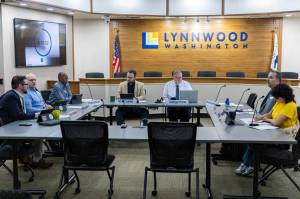
Family sues Edmonds schools for hindering access to transition services
Published 1:30 am Saturday, January 17, 2026
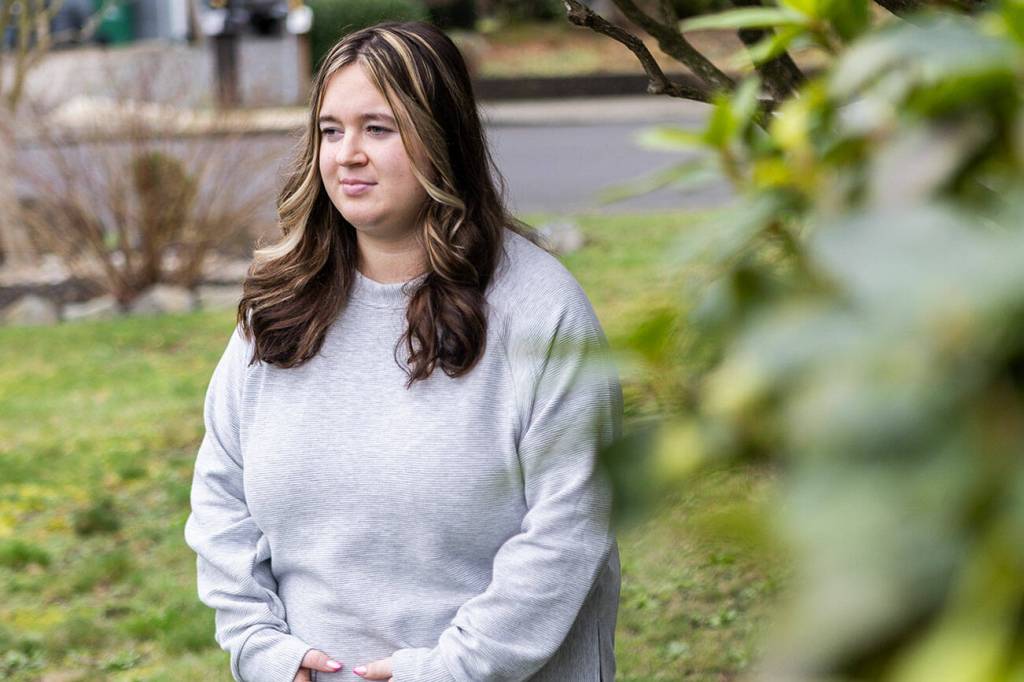



LYNNWOOD — When Makena Simonsen graduated from Lynnwood High School in 2022, she and her family didn’t know her diploma would disqualify her from special education transition services.
Now, the family pays $43,000 in overall expenses per year for Simonsen to attend Bellevue College’s Occupational & Life Skills program, which helps students transition to the workforce and independent living. Without a high school diploma, she could have attended a nearly identical program for free through the Edmonds School District.
Last year, Simonsen, 21, filed a lawsuit in Snohomish County Superior Court against the district. She alleges the district failed to provide her with a basic education, allowing her to graduate without meeting state learning standards. The Seattle Times first reported on the lawsuit.
Simonsen has an unspecified neurodevelopmental disorder, ADHD, dyslexia, dyscalculia and dysgraphia. Her IQ is 67, which is in the first percentile and qualifies as an intellectual disability, according to neuropsychological testing she received in 2021. Despite earning a 3.87 GPA in high school, she was performing at a first-grade reading level her senior year, according to standardized testing results.
Simonsen said she completed nearly all of her school work with significant help from her family and peers. In some classes, teachers would give her an A without testing her on key concepts, she said.
In one math class, students were tasked with working the cash register at the student store. But Simonsen has trouble with cash transactions, and she doesn’t know how many quarters, nickels or dimes make up a dollar. Instead, the teacher had Simonsen warm up corn dogs and make Italian sodas for the other students, the complaint alleges.
In biology, students mostly worked in groups, Simonsen said. While her peers described the inner workings of cells, Simonsen was responsible for drawing pictures and gathering online images, she said.
State law grants all students the right to a basic education, which includes graduating with a “meaningful diploma.” Simonsen’s attorneys argue the district failed to provide such an education.
“By giving Makena a diploma that, frankly, we believe she did not earn, she missed out on another four years of free education that would have better prepared her to either live alone or live in a less structured environment,” said Alex Hagel, one of Simonsen’s attorneys.
Edmonds School District does not comment on pending litigation, district spokesperson Curtis Campbell told the Herald. In a court filing, the district denied any wrongdoing and denied that it failed to provide Simonsen with a basic education.
In addition to general education classes, Simonsen took special education classes in high school. She had an individualized education program, which is a special education plan that outlines annual goals and services.
Individualized education programs must include a post-graduation transition plan by the time a student is 16 years old, according to the state Office of Superintendent of Public Instruction. Simonsen’s plan stated she would pursue nursing at a two- or four-year college after high school.
“We swept it under the table because I knew she wasn’t going to be able to do that, but I didn’t know about any kind of transition program,” said Debbi McHugh, Simonsen’s mother.
Simonsen’s individualized education program meetings would largely consist of teachers saying Simonsen was doing well in classes, McHugh said. The goals on her individualized plan stayed exactly the same throughout high school, McHugh said.
“Everybody praised Makena because she’s a bright light,” McHugh said. “There was no working on goals or any of that kind of stuff.”
After Simonsen graduated, McHugh learned about the district’s Vocational Opportunities in Community Experiences program, which teaches independent living and vocational skills to students over the age of 18. It sounded like the perfect program for Simonsen, McHugh said.
She asked Simonsen’s case manager if she could enroll in the program and was referred through the system until she reached OSPI. Representatives told her Simonsen couldn’t enroll because she had a high school diploma, no exceptions.
McHugh said no one from the district told her that if Simonsen graduated with a diploma, she would be ineligible for the program.
“I trusted the system because what I don’t know, I don’t know,” McHugh said. “What I don’t know, I can’t ask questions about.”
After contacting advocacy groups, McHugh and Simonsen decided to take legal action.
In 2023, Simonsen and McHugh went through administrative litigation, arguing that Simonsen didn’t get the special education support she was entitled to. In that case, the district prevailed.
McHugh and Simonsen hope this case turns out differently.
“I’m just so incredibly angry,” McHugh said. “And all we’re asking for in this lawsuit is to pay for Makena’s tuition and my lawyer’s fees. There’s nothing more.”
After posting the Seattle Times article in local Facebook groups, McHugh received hundreds of comments and messages from parents with similar experiences, she said.
“IEP support is the best shot our kids with disabilities have in the public school system,” one comment read. “It has so much potential, but there’s so little education for the average parent to know what they’re up against & what our rights are.”
Hagel said his office has received similar complaints from several parents.
“We see this as very much a test case,” Hagel said. “I have not seen a case like this in Washington.”
At the Bellevue program, Simonsen is thriving, she and McHugh said. She lives on campus with other students in the occupational and life skills program. She’s learning more about her disability and how her brain works, she said.
“They get on my level, where I can actually understand what I’m learning,” Simonsen said. “In high school, that was the complete opposite.”
Simonsen is a junior in the program. Next year, she’ll be placed in an internship with a local business that aligns with her skills. In the summers, she works at Kamp Kookamunga in Lynnwood. She loves working with kids and would love to continue working with kids in the future, she said.
“I love seeing them happy and playing and knowing in their little minds that they don’t know much about life, and knowing how much I have learned about my life, like just connecting with them on that level,” Simonsen said. “It brings out joy. I love them and they love me. It’s awesome.”
Clarification: Story has been clarified to show that Makena Simonsen’s family pays $43,000 in overall expenses, above and beyond tuition, to attend Bellevue College’s Occupational & Life Skills program.
Jenna Peterson: 425-339-3486; jenna.peterson@heraldnet.com; X: @jennarpetersonn.