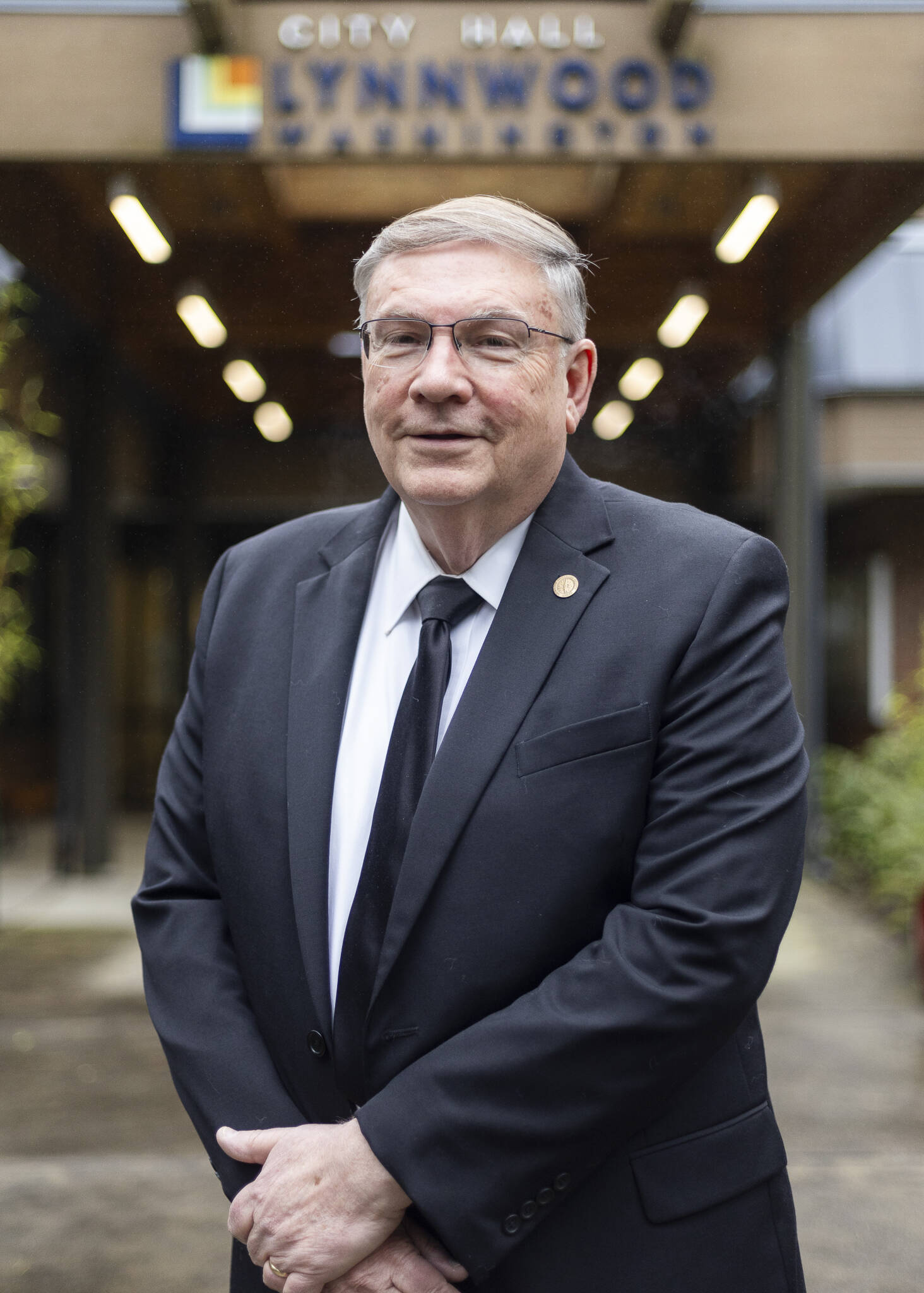
The Herald asked Hurst several questions Wednesday about his first mayoral term. Questions (in bold) and answers have been edited for length and clarity.
Question: Let’s start with the budget, which you said was a main motivator for you to run for mayor. Even after the city made a series of cuts, tax increases and policy changes, the budget gap for 2026 currently sits at about $5 million. In November, you urged the council to let a new administration take a look at the budget situation before raising taxes and fees and voted against raising utility taxes, permit fees and business license fees. What are the steps you’ll take to address the shortfall that will be different than the previous administration?
Answer: First of all, I’m going to meet with all the directors on Monday and really just lay it out there and say, “We’ve got to work together. We’ve got to figure this out.” I know they did some budget cuts. They did some limited layoffs. We’re going to have to figure that out more for the year, so I want their input. I’ve heard they didn’t have a lot of input with the budget, and then they were asked to do some across-the-board cuts. I don’t think that’s the way I’m going to operate. I’m going to ask each department to look at if they still have programs that are not functioning well or maybe are not essential services. We need to look at that to see if we can reduce expenditures that way.
I do believe that we have a lot of money in vehicles, in our fleets. I think there are ways to combine those instead of every department having its own cars. In fact, I just sat in the new electric car that this executive department has — we’re going to share that car. It’s that type of stuff.
But I also talked with Mike Bailey, who’s a financial consultant. He’s the interim finance director now for the city of Everett. He used to be the finance director for Lynnwood, so he’s agreed as a consultant to come on board. I have to figure out the cost, but it’s going to work out. I want him to focus on 2026: After talking to our finance director and directors, where does he think we can attack this? It’s going to be a team effort, and that’s, I think, something different than what has happened before. I have no promises yet.
I’ll say I was disappointed in the council in some of the decisions they made. I know their heart was, “We’ve got to find some revenues.” There are housing advocates on our council, and they voted for fees, impact fees, a collection of things that are going to increase the cost of housing as far as construction. I was hoping they wouldn’t do that, but, like you said, I voted against it, but it’s passed and now I have to deal with it.
Q: You’ve previously said you’ll appoint a citizen budget committee to help the city navigate the budget shortfall, similar to the Blue Ribbon Panel in Edmonds. Is that still your plan? If so, what would the committee look like?
A: I’m maybe rethinking that. That goes along with hiring Mike Bailey as a consultant. He ran the Edmonds Blue Ribbon Panel, and they did have a community thing. I’m thinking maybe out of the box.
I talked to council leadership on this in November. Four of us ran for office; we all doorbelled. I’m thinking maybe a doorbelling of the community to find out their priorities that way. We do have a survey that was just recently done about the city, so we have that to fall back on. I would like to do some door-to-door stuff, and maybe have a multi-language handout and ask people their top-three priorities of how we should spend. And if they can’t think of anything, there’s a QR code. Give us some ideas if you think of any. Maybe in late March, when the weather’s not so bad. I’m thinking of heading more toward that than just limiting it to a panel. So we’ll just see how that goes.
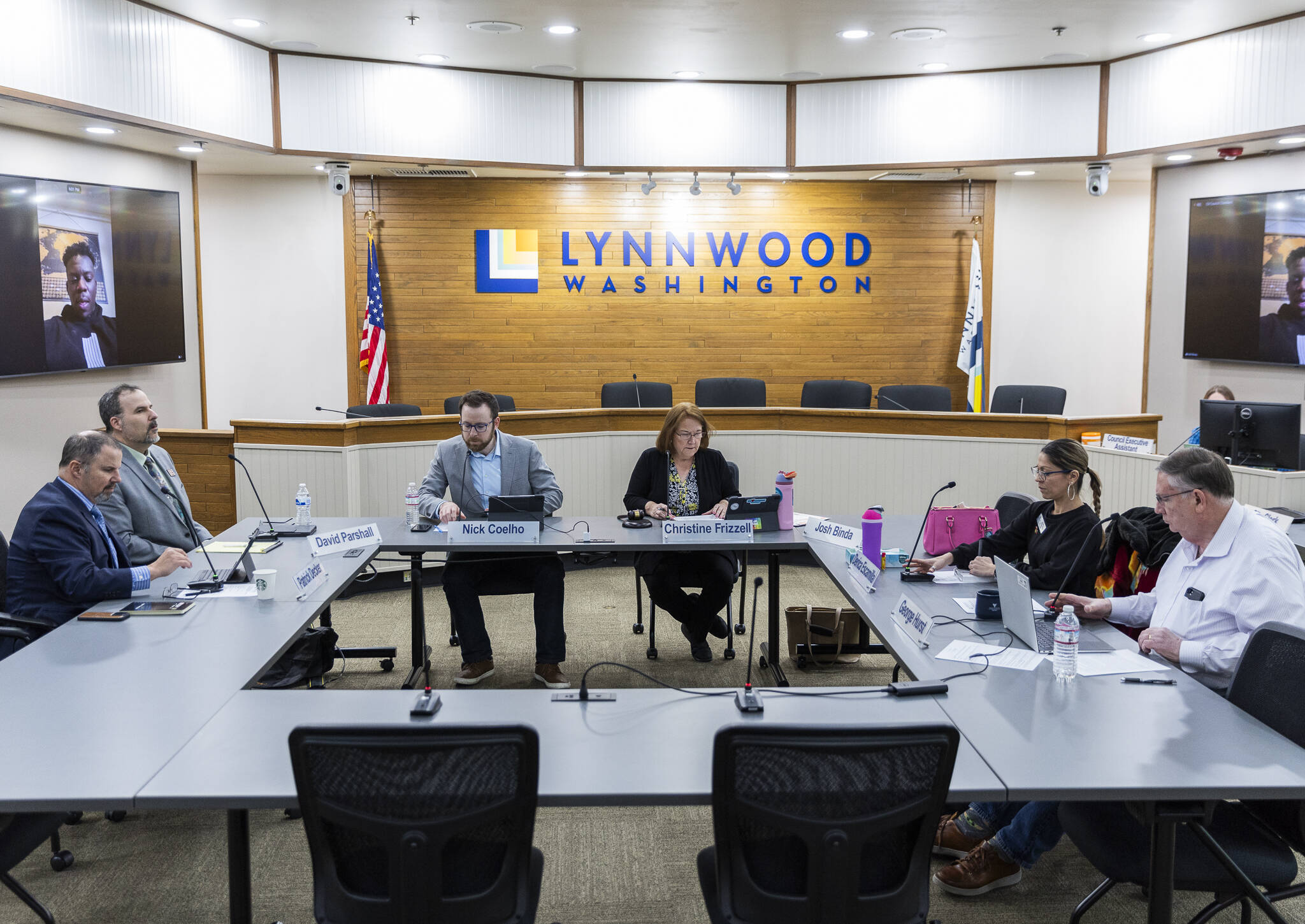
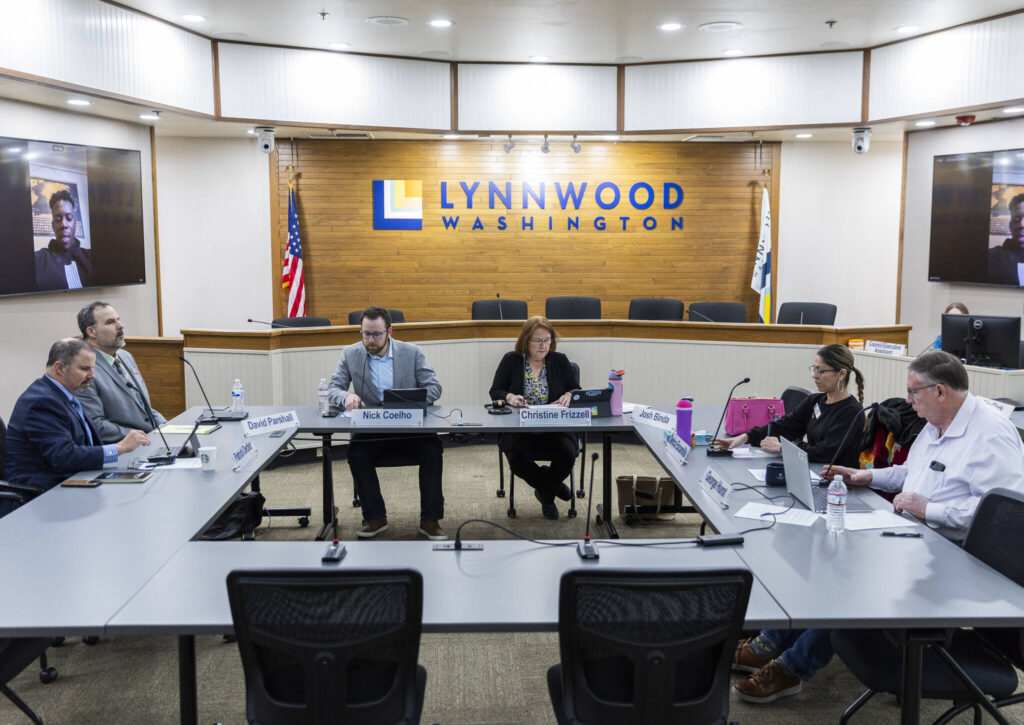
Lynnwood City Council members gather for a meeting on Monday, March 17, 2025 in Lynnwood, Washington. (Olivia Vanni / The Herald)
Q: At the same time, the city will be tasked with creating a new budget for the 2027-29 biennium. What do you think the city should prioritize looking forward? Do you think you’ll get to a place where any service reductions from the latest round of cuts will be reinstated?
A: I’m not sure. I’m telling people I see 2026 as a year of recovery, but also a year of renewal, of looking again at the priorities of the strategic plan of the city.
Initially, the recovery part is, how do we resolve the deficit that’s still there? It’ll be an interesting budget process because the council is going to be really inexperienced. I keep saying that, and I’m not trying to be negative; it’s just a fact. Our two senior members of the council are going into the third year of their first term. They’ve only done one budget. We have two new members, and I don’t know where their priorities are.
So the budget process for the next biennium, I want it to start pretty early, which coincides with the doorbelling to find out priorities. I want departments to come in, maybe in March, and give the council a review of what they do. A lot of the time, when we do a biennial budget in September or October, departments come forward, and they spend an hour telling us what they do. I’d rather in September or October they tell us, “This is why we want to spend things, and these are our priorities.” And by then, the council will know what they do. So I want to educate the council pretty early. I also want to engage the council pretty early and see what their priorities are, see if we can blend them into the budget.
Poor council. They’ve got dual things: dealing with the deficit and creating a budget for the next few years, and figuring out what the basis of that budget is.
In the last third-quarter report I saw for the city, we had more revenue coming in than last year. We had over $2 million more. If that’s the trend, that’s good. It’s just that we’ve got to get rid of this crappy forecast. The reason I focus on the $5 million deficit is that I know that’s the amount of money that the red-light camera forecasting was so off by. We can’t make that up with sales taxes rebounding or large projects coming to the city with permits and fees. That $5 million is false, so we’re gonna have to figure out how to cover that.
Q: One of your campaign priorities was making Lynnwood more affordable for residents. What is your philosophy on balancing affordability with addressing the budget shortfall? What ideas do you have to make Lynnwood more affordable?
A: We haven’t really touched the process of middle housing: building middle housing, building duplexes, building accessory dwelling units. We just haven’t done that. We are still looking at apartments. I really want to build things for home ownership, for entry-level home ownership, which is where ADUs and maybe duplexes come in. I want to make sure our policies are not restricting that type of housing. I think in some ways we do.
My concern with impact fees was that DBS didn’t engage stakeholders in the construction industry because the driver was “let’s get more revenue.” Constantly, master builders would come and say, “You didn’t talk to us, at least let us give you some ideas.” I think that was a fair criticism. Not that we’re going to do everything that’s going to make master builders happy. The realtor association also sent an email saying they were really disappointed in how things were going. I think we need to engage those people, and let’s take a look at how we can have policies that will allow us to build some housing that is attainable, that young families can actually buy, and that’s a real challenge.
Condos are still a question mark. We still have problems with liability on those, as far as developers being secure, or thinking it’s a good investment, because we still have some problems with liability, where they can be sued 10 years down the road for some problems. We’ve got to address that.
The governor is creating a new housing department, and we’d like to see how that’s gonna develop and where we can work with them. It’s gonna be a priority.
But along with that, if we can start building up the household incomes in Lynnwood, maybe that would help people get out of the rental thing and get into home ownership. I’m thinking of a lot of things to protect people, like a wage theft ordinance like Seattle has. I do think that community workforce agreements and project-led agreements through the unions are going to be effective. They have to draw from Lynnwood for those jobs, and construction jobs are well-paid, and they have benefits. God bless the retail industry we have here in Lynnwood, but they’re minimum wage jobs.
Maybe we look at minimum wage. That was brought up by one of the candidates last campaign, and I don’t think it was very effective. It’ll involve outreach to businesses. I look at Tukwila, which has a big mall. They have a minimum wage of 20-some dollars. Everett’s is over $20. We have a strong retail base; maybe we need to look at it. But again, we increased the business fees, and we increased the head tax, so it might have to be a tradeoff with businesses down the road. But that’s long-range. I don’t think that’ll happen in 2026, but certainly the discussion should happen.
Q: Speaking of affordability, you’ve said that focusing on lowering the cost of living could help address the root causes of youth violence. When we last spoke, you said recent incidents of youth gun violence were part of your motivation to run for mayor. Could you explain how you think affordability will curb youth violence? Do you have any additional, specific ideas for addressing youth violence?
I think young people were really impacted by COVID. It’s a whole different world of remote learning and it drove them to, I think, reliance on social media and such, so that’s something we need to address.
Now, as far as how I think housing will help, I think part of the attraction of, say, a gang, is instability at home. If your family doesn’t know if you’re going to be staying in your house because the rent is going up, then there’s that instability. If you have parents who have to work two minimum wage jobs to make sure you have that housing, the parents aren’t home, the kids want some sort of security and they look outside.
The ACCESS Project that’s here is a great tool. It’s got mentor counseling, it’s got a way to bring kids to other resources. I have high hopes for the Neighborhood Center, and a Boys & Girls Club will go there, too. So we’ll have two Boys & Girls Clubs, one over in east Lynnwood and now at the Neighborhood Center, which is in a low-income area.
If we can attack some of the root problems at home, that’s a way to address youth violence more than our police. I love our police, but that’s a reactive solution. I want something that will look at how we can prevent that type of violence.
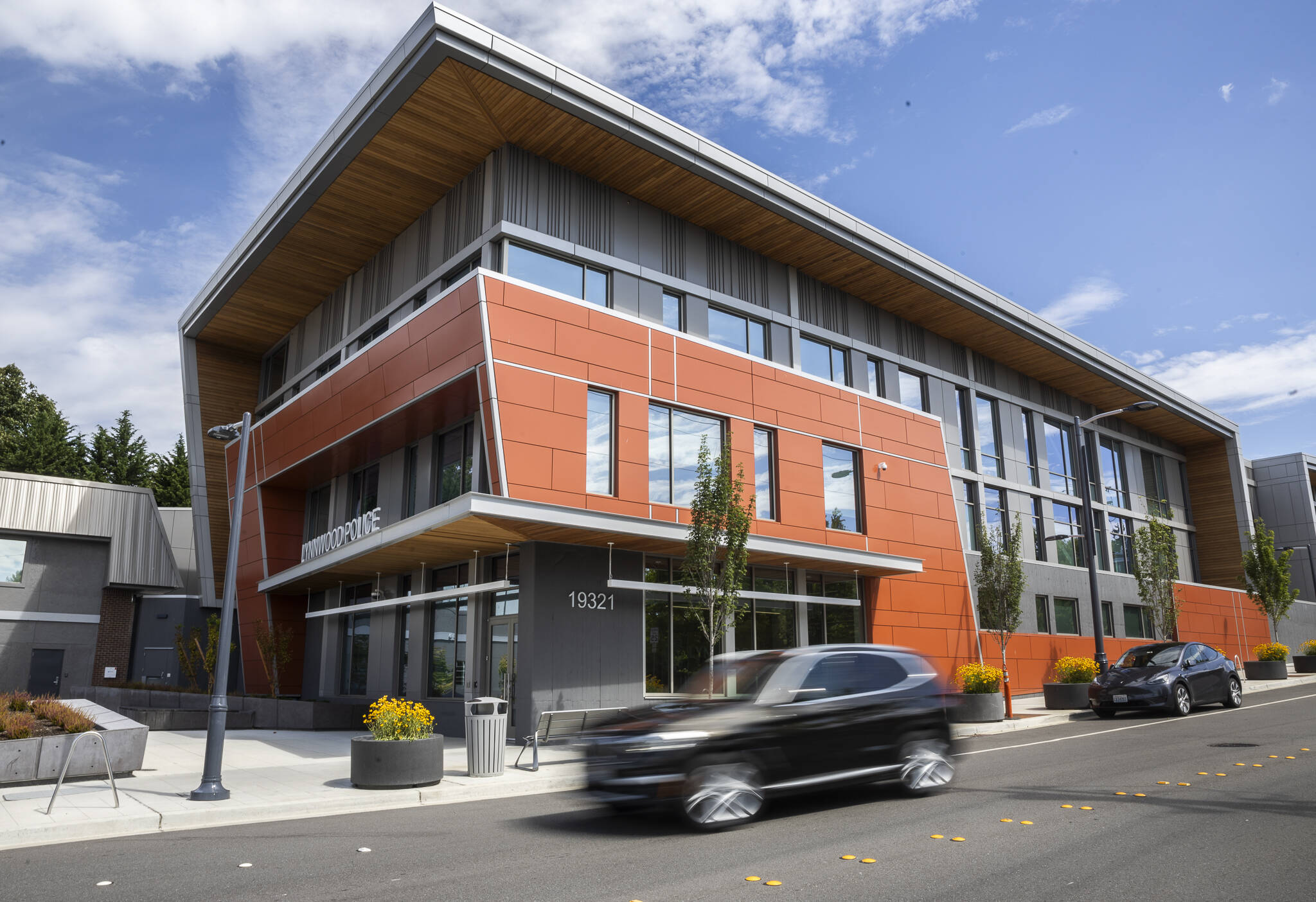
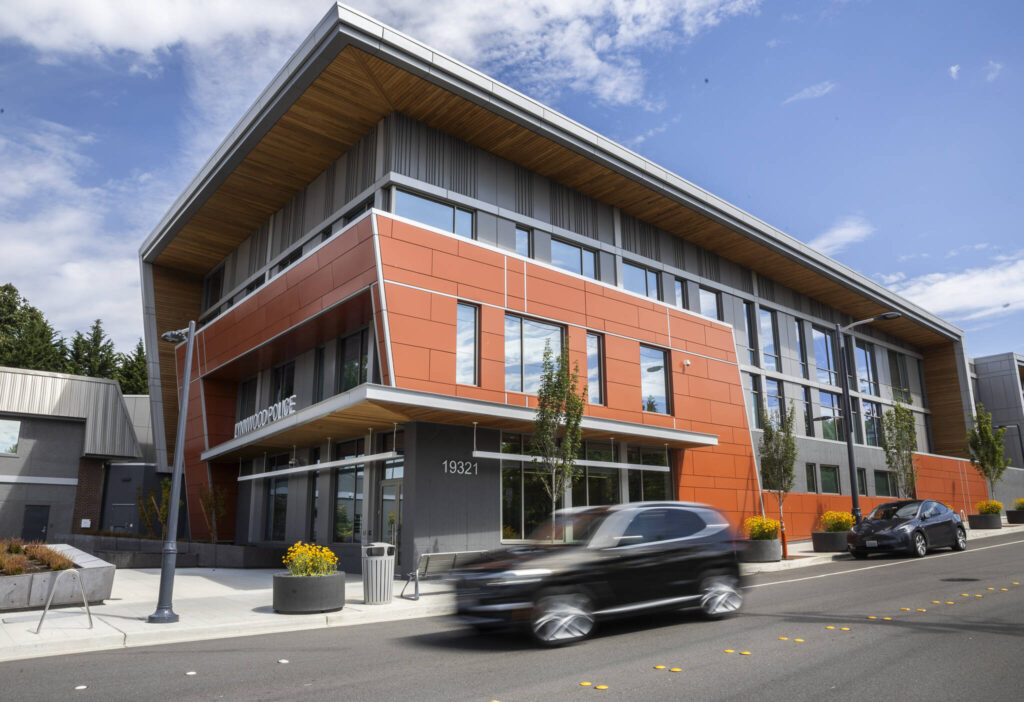
Outside of the Lynnwood Police Department on Tuesday, Aug. 19, 2025 in Lynnwood, Washington. (Olivia Vanni / The Herald)
Q: There’s been a lot of public safety developments in Lynnwood recently, including the construction of a new jail and crisis care center, which is expected to open in 2026. What is your vision for public safety in Lynnwood over the next four years, especially as the police department grapples with cuts and staffing challenges?
A: Yeah, that’s a big challenge.
On Monday, the police chief is going to be in front of the council talking about the public safety sales tax, the 0.1%. The state Legislature tends to have these great ideas, and then they say, “Oh, and you can do it by sales tax.” That’s a challenge, especially for Lynnwood. Right now, we have the highest sales tax in the state, and we’re going to think about increasing it again by 0.1% — then we might have the highest sales tax west of the Mississippi, I don’t know.
I really need clarification on the program because, as I understand it, we’re limited on how we can spend that sales tax. It’s not necessarily on hiring police officers, but it is trying to address things like the cost of public defenders, which is skyrocketing right now due to a court decision. We have to have that sales tax in order to then be eligible for some three-year grants to hire police officers. That’s a hard thing to consider because this sales tax could be permanent. I know the council wants to move on it quickly. I’m not sure it’s worth that speed. I would rather have a stronger conversation with the community on this issue than to again say, “Well, this is the way we’re going to get more revenue, let’s do it.” With the younger council, I really want them to understand the ramifications of what that vote would be. We need to talk to the community. We need to talk to businesses.
We do need to address the crisis of our police force as far as how many commissioned officers we have. I think the chief’s gonna say by the end of January, we’re gonna have 68. We’re supposed to have about 80. We’re losing four officers, as I understand it, in the next few months. I think one’s a lateral transfer, but the others are just family situations and moving out of the area and stuff like that. But that’s what happens. That’s reality. But to be at 68 makes me a little nervous. That means officers are being asked to work overtime. I don’t want to have an officer out there in a crisis situation that’s been working a couple of long shifts. So we do need to address the number of police officers we have.
But you’re asking about my ideas on public safety. I think public safety also involves making sure that we address the homeless situation in Lynnwood.
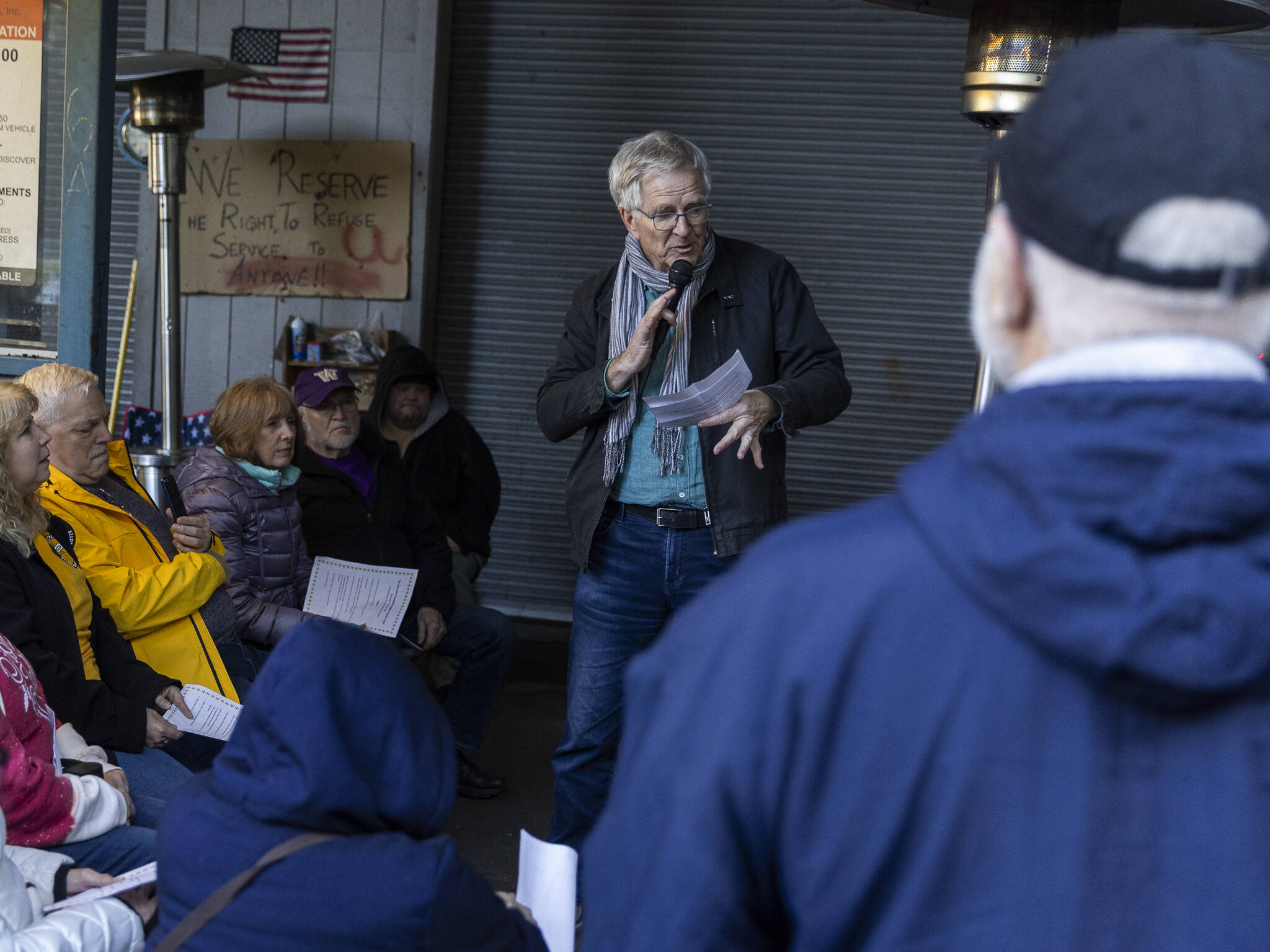
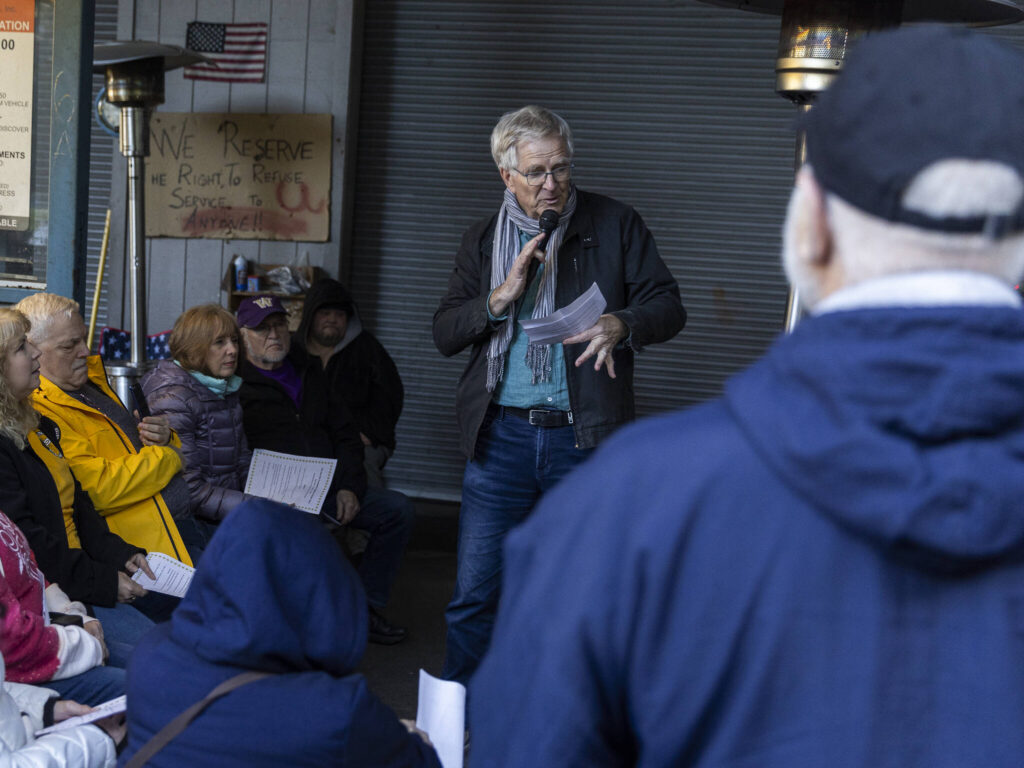
Rick Steves speaks to community members gathered at the Jean Kim Foundation Hygiene Center after announcing he purchased the current property so the center will not have to close on Wednesday, Dec. 17, 2025 in Lynnwood, Washington. (Olivia Vanni / The Herald)
The recent news of Rick Steves buying the hygiene center brings a whole different issue. One afternoon, I got an email from Sandra Mears, the director of the hygiene center, saying, “We need $500,000, can the city do something?” At that point, they did need that money. But that morning, I had gotten an email from one of the neighbors in that area saying that she can’t have her kids go out in her yard because homeless people have come through her yard and talked to the kids. People are scared, but at the same time, they see drug use in Gold Park, which is right next to the hygiene center. So now, we know the hygiene center is gonna be there. I really want to get together with our human services coordinator and the Jean Kim Foundation board. I want our parks people there. I want our police people there. I want the neighbors there. I want the new T&T Market to be part of the discussion. (Anecdotally, I’ve been told the reason Sprouts left was because of the retail theft that they thought was coming out of the hygiene center.) Let’s all talk about how we can make this hygiene center work and how we can make it better.
The regional fire authority has a mental health response team. Since I learned about it last year, I’ve been trying to get it coordinated with the police responses because right now, it’s dispatched as fire, but so many police calls could use that mental health team. Sometimes their responses don’t need a cop showing up. Especially with some of the communities they respond to, fire guys are looked at more as heroes. Sometimes police are seen as threats. I want to really utilize that response team. I’ve heard that we’ll have one dedicated social worker out of the regional fire authority team for Lynnwood. We’ll still have half a social worker we share with Mountlake Terrace. I think that type of response can increase public safety. It’s not just police, it’s working together.
I know our judge wants to have a community court. We do have a second courtroom. Let’s see if we can develop that in the coming year. But again, that one is tied to the budget. She gave me the cost of about $375,000 per year for that court.
We do have some services, like the community crisis center. The 23-hour, seven-day level is going to be ready in the first quarter of 2026. And then the third floor, which has the beds and a higher level of medical assistance, I think their goal is June. I think Sea Mar is hiring a medical director right now. So things are in process. For the community crisis center, we’re just going to be the landlord. Sea Mar has to make it work financially. Rep. Lauren Davis, D-Shoreline, has a focus on substance abuse and mental health. I know the state doesn’t have a lot of money, but I’m hoping we can do that.
And I would say, the county, since 2009, has collected a 0.1% sales tax for substance abuse and mental health. I think they could use that money more wisely than they have. I don’t see those services down here in Lynnwood, and maybe we can draw on that to provide some other services.
So that was a long answer on public safety. But I think public safety is not just cops. It’s more, how do we make the community safe? People need services.
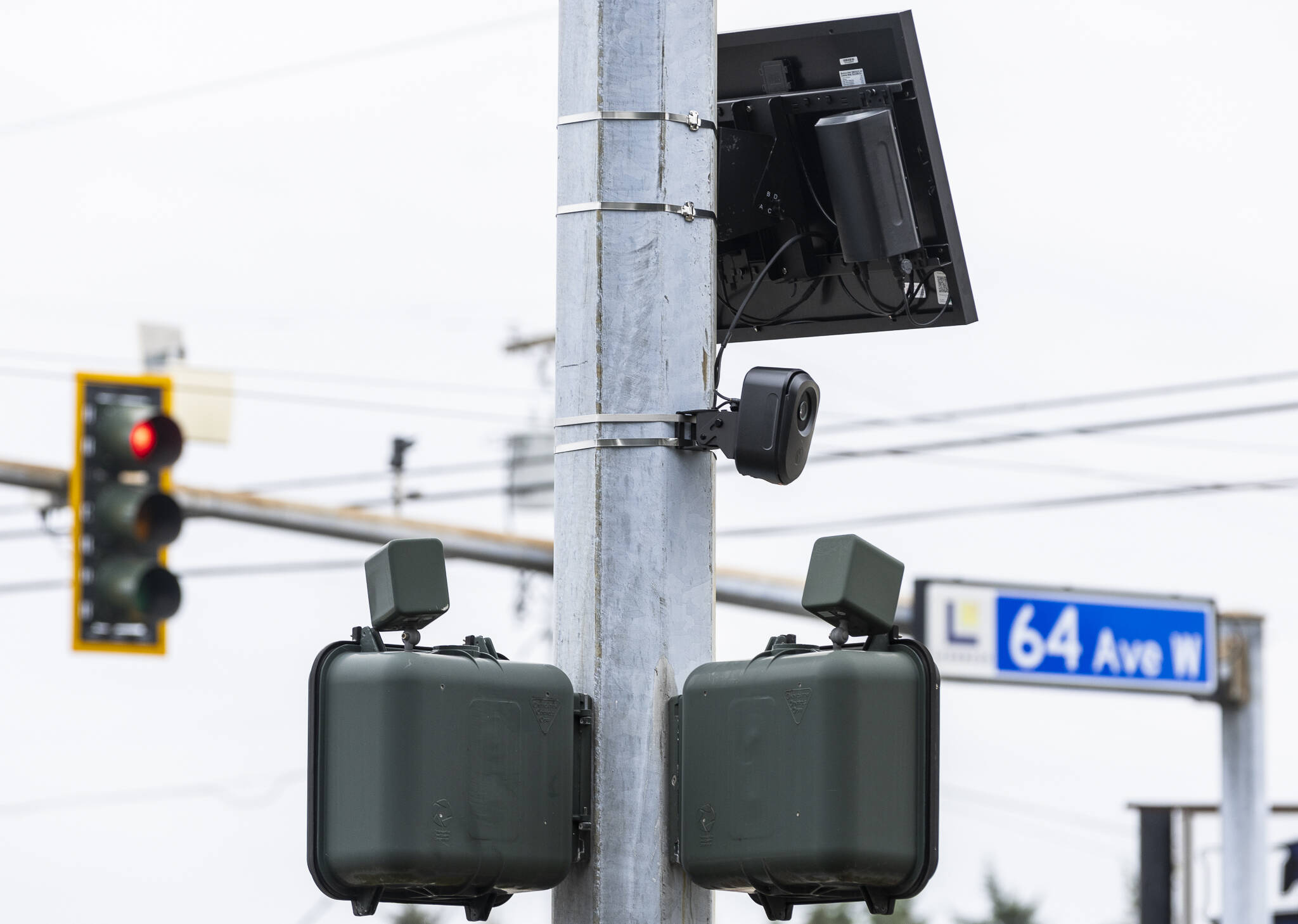
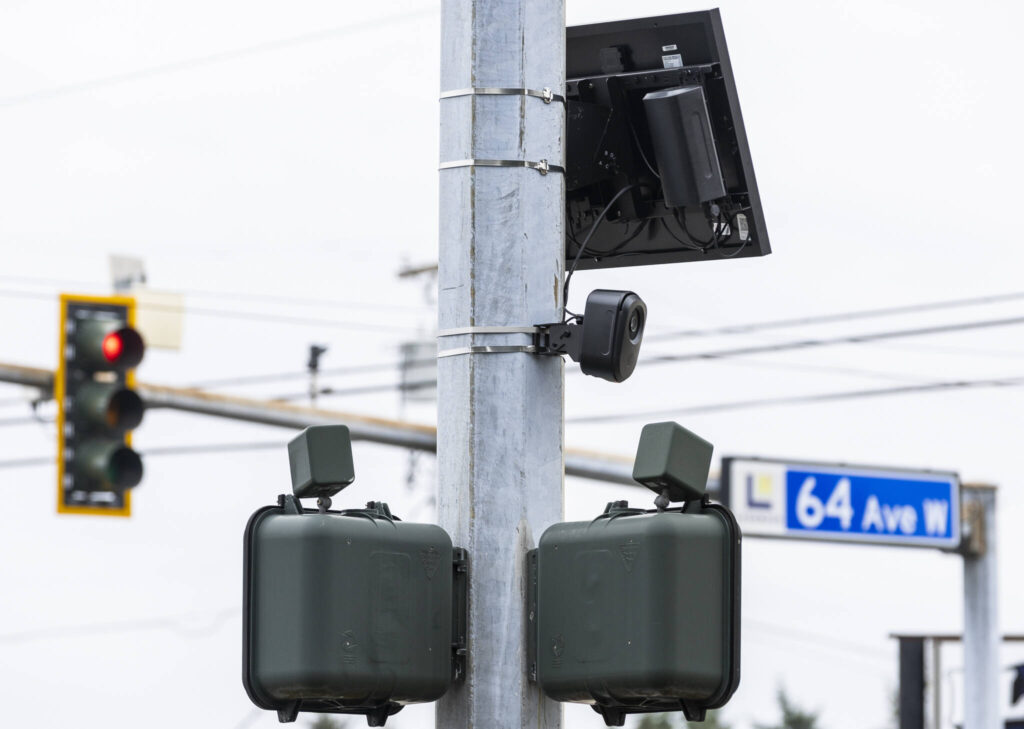
A Flock Safety camera on the corner of 64th Avenue West and 196th Street Southwest on Oct. 28, 2025 in Lynnwood, Washington. (Olivia Vanni / The Herald)
Q: Another public safety issue that’s come up since the election is the use of Flock Safety cameras. In November, the City Council unanimously voted to formalize the police department’s pause of the cameras after reports that out-of-state agencies used the network for immigration enforcement. How do you weigh the risks of privacy concerns with the benefits of the technology? Do you think it’s feasible for the city to cancel its contract with Flock?
A: It is feasible to cancel the contract. The city attorney has weighed in on that. It’s confidential stuff, but I would just say the city attorney has said we could.
For me, I know the police really, really would like to use that tool. They see it as a tool and maybe not as much as the privacy concerns we’ve been talking about. There was just an incident; it was something that the police had reacted well to, but then the chief said, “You know, this would be a great opportunity where Flock could have been used, but our cameras were off.” Ideally, if we all wore ID bracelets and it automatically went into a police database, it would make their lives a lot easier. It’s not a reality. So with Flock, I have concerns. I think Flock would work very well with a different administration in the White House.
Just yesterday, the council and I talked about wanting to discuss the Flock contract in the first quarter. We have a group of people in Lynnwood who want to turn them off completely. I want to study it some more. I’d feel so much safer if Flock would say, “Okay, your data is going to sit at the Lynnwood Police Department and not go into a national cloud.” Make it very specific, and I would trust our police. But when it’s a cloud that can be hacked, shared with ICE or Homeland Security, those are concerns I think people have. So, we’ll get more into if Flock can make it a more local bank where that information will sit, and then the police can control it. If some other agency wants to come in and say, we need this information because this person is missing, there are good uses for it, but we just have to have guarantees that we are the controller of that data, and we’ll find out more.
Q: Another priority of yours has been stopping “brain drain” and retaining city leadership. What are your ideas for encouraging employees to stay with the city?
A: My goal is to communicate to all employees that their ideas are welcome. If they think I’m doing a crappy job, that’s great too; I don’t care. That’s one thing about being on the council for 10 years: You learn people can criticize, and you let it go.
I think the atmosphere at City Hall has been that you have to be very careful about what you say. I wasn’t there, so this is just stuff I’ve heard, but directors didn’t feel that their opinions were welcome. They were told more what to do than actually be asked to share.
Every week, the mayor would meet with all the directors, but I want to meet one-on-one with each one for maybe the first three months, just to make sure we’re communicating. I want them to run their departments. I’m not going to micromanage it, but they’re going to be responsible for what they do and make sure their departments are functioning. I think that’s something that hasn’t been happening, and so I’d like to let them know they’re the directors, they’re going to do it.
We have very new directors. Five out of seven of our directors are new. Some have been at Lynnwood for a while, and some haven’t. Some I voted to confirm, some I didn’t, but that doesn’t matter. Let’s talk together. Let’s get those ideas. I think as long as people know that it’s pretty transparent and it’s going to be okay to express opinions, I’m okay with it.
Q: We’re a bit more than a year into Lynnwood being the end of the light rail line. How has light rail changed Lynnwood so far? How do you think it has the potential to change the city in the next four years?
A: We’re gonna be the end of the line until at least 2037, and there are some challenges.
The positive is that we’re going to have more transit-oriented development. People think we’ve had a lot of apartments, but there’s a lot more that are going to be coming. It’s pretty cool to be able to rely on getting into Seattle without the traffic. It’s not going to empty the freeways, but it’s a tool to allow people to get there.
Light rail is going to be a driver for some housing. I think Housing Hope is still planning on building on the surplus land that’s right next to the station for some low-income housing and some retail space at the bottom, kind of like what the Housing Hope development in Everett has. Northline Village will someday be moving forward, and there’s supposed to be 13 units of housing there. There’s another developer coming in who wants to build some housing for people who make 60% of the area median income or below. That’s awesome. So that impact is positive, and it serves our purpose of helping us concentrate a lot of density within the city center that we’re developing. The Public Facilities District is still moving forward with its development.
Some of the negative impact has been, honestly, the court has seen a lot of retail theft. And the question is, “Where do you live and how did you get here?” and the answer is “I came on the train.” So we have to be able to deal with that. We do now have an agreement with Sound Transit. They gave us some funding for a couple of Lynnwood police officers to focus on the train station and make that a little safer.
But Sound Transit has been a great partner in being able to use that area for events. We had a big event a year or so ago with the opening. I think they envision allowing us to use that area. We used it for the menorah lighting. There are plans for a farmers market in that area. Even though there are some burdens because of people coming in, they seem to be a willing partner to let us use that area for the community. So I think overall it’s been very positive, and that impact will continue for years.
As long as we’re the end of the line, we have to figure out how to get people there. I know the parking garage is an issue because it’s full, it’s hard to find parking. I think we need more emphasis with Community Transit, maybe a park and ride just for the light rail station, where it’s more of a shuttle.
In the future, I’ve always thought about an autonomous shuttle service that goes from, say, around the mall or around apartments, that goes right to the light rail station, it goes back, it’s wonderful. People come off the light rail, they’re shuttled right to Alderwood Mall, I love that. Residents wouldn’t have to use their cars all the time. There are similar programs, and I think it’s something feasible. That’s really long range, but I hope we could do something like that.
Q: How do you envision the city of Lynnwood at the end of 2029, when your term is over? What are the main things you hope you’ll have accomplished?
A: Well, for one thing, I hope we’re on stable financial ground and that we’ve figured out how to budget well. That’s going to be my focus.
But also, by 2029, I do believe Northline Village will be developed. I have high hopes for that. It’s not just going to be housing. There’s going to be a village green there, and the talk is maybe a movie theater complex.
I think the redevelopment of the Public Facilities District will be done, and that will be an awesome venue for events. Right now, our convention center is pretty limited on what kind of conventions can come in there because there aren’t enough breakout rooms and stuff like that. They’re expanding that, but then they’re going to have an amphitheater and a village green in that area. We could have so many community events. They want to have a hotel there, a parking garage, but also affordable housing up on the north side. And then an emphasis on local businesses being in the retail spaces, maybe “boutique” businesses, you know, a brewery, an ice cream place, just unique things that will draw people to that area.
Plus, I think it’s still in their plans that they’re going to rely on solar power a lot. In an emergency, like an earthquake or some sort of disaster, that could be a gathering place because there would be power there.
By 2029, Lynnwood will be the largest city in south Snohomish County. We will be a center, a hub for the region. I’m ready for that. At the same time, we’re still going to have some residential neighborhoods out there that I do think we’re going to annex by 2029. There’s a lot of growth happening, especially north of the city, that I think we would like to have a word in controlling.
Q: Is there anything else you want to add that we haven’t touched on yet?
A: Part of it was me, but with the emphasis on the budget crisis and the negative news that was coming out, I’d just like to emphasize that I am very positive about Lynnwood’s future. We’re going to overcome this budget crisis once we figure out why we did what we did, as far as economic forecasting.
I don’t think we have the same problem as Edmonds, where they’re so dependent on property tax, and they’re so limited on what they can do as far as increasing property tax, and their levy lift failed because people are tired and don’t want their property tax to go up like that.
We have other revenue sources here in Lynnwood. We do have retail. We have a mall that’s going to stay alive. For the last 10 years, as malls were shutting down, we’ve got a mall, and we built housing there. We’ve got really fun destination restaurants there. We’re not just relying on the shops there to draw people. When I drive by, the lots are full a lot of the time. So I think that revenue stream is there.
My effort to increase the household income, I think, will work. As I said, we haven’t touched the middle housing that’s going to be built. So I’m very positive about Lynnwood’s future. I hope that can be emphasized to people that, no, we’re not a city in crisis. We’re going to deal with the deficit, and then we’re going to move forward because we’re growing. We’re going to build housing, we’re gonna do it, and it’ll be fun.
Jenna Peterson: 425-339-3486; jenna.peterson@heraldnet.com; X: @jennarpetersonn.
Talk to us
> Give us your news tips.
> Send us a letter to the editor.
> More Herald contact information.
Gallery