A small museum with a big impact on northwest art
Published 1:30 am Saturday, December 6, 2025





EDMONDS — It’s a challenge to launch and keep running a nonprofit art museum.
Not many new museums make it past the three-year mark, but in Edmonds, the Cascadia Art Museum recently celebrated its 10th anniversary.
Lindsey Echelbarger, of Woodway, the founder and president of the museum, called the milestone “emotional.”
After an expensive start-up, Cascadia survived pandemic closures and saw slow, steady membership gains.
“We were tested by fire. It’s made us stronger,” Echelbarger said at the museum’s anniversary party in September. “I am moved by all that we’ve done in the past 10 years and by the 50 shows we have exhibited.”
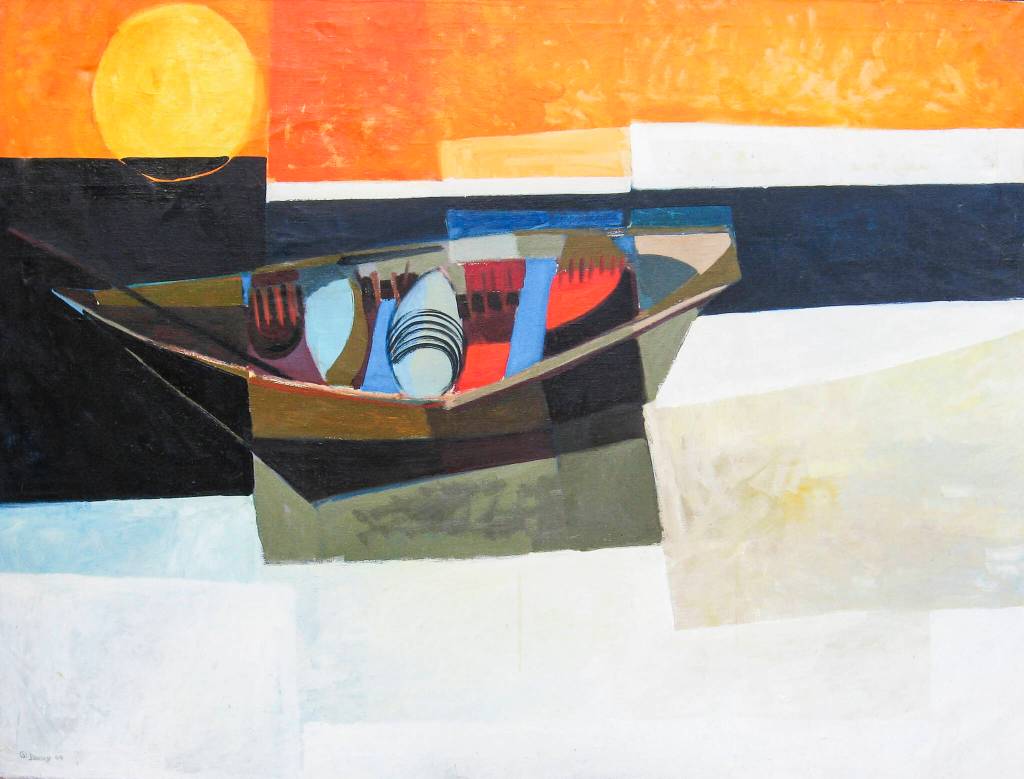
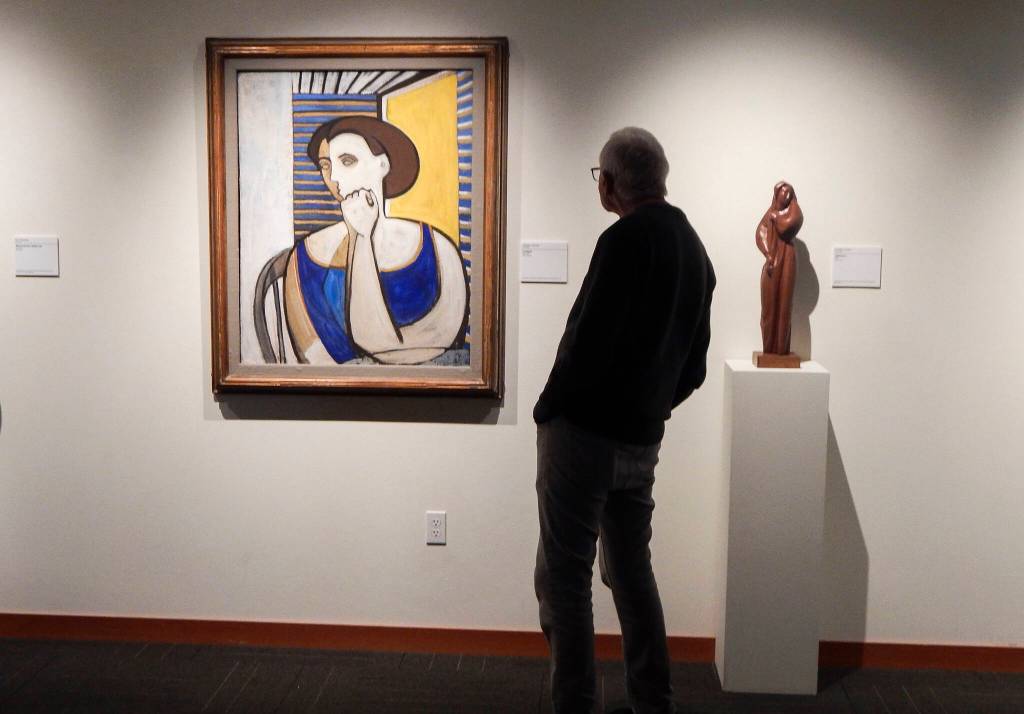
Housed in a renovated mid-century modern grocery store near the Edmonds ferry dock, the museum focuses on Northwest regional art from the late 19th century through 1970.
It’s a period that put Northwest art on the map and launched institutions such as the Seattle Art Museum, Burnley School for Art and Cornish College of the Arts.
In 1953, Life magazine published, “Mystic Painters of the Northwest,” featuring Guy Anderson of Edmonds, Morris Graves of Woodway, Kenneth Callahan of Granite Falls and Mark Tobey of Seattle, four renowned artists.
While the museum owns and exhibits works by the “big four,” Cascadia specializes in elevating the art of lesser-known women and minorities. In fact, Cascadia curator David F. Martin has become an internationally recognized expert on Asian American artists of the Pacific Northwest.
Echelbarger, who grew up in Snohomish County, and his wife Carolyn began buying art as a young couple, much of which is now part of the museum’s permanent collection.
They couldn’t afford work by the “big four,” so the Echelbargers collected works produced during the same period by artists who seemingly had been forgotten.
In the meantime, Martin moved to Seattle and began discovering artists who had “produced beautiful work that had been buried in family collections and museum storage.”
Echelbarger and Martin joined forces a dozen or so years ago with the desire to put those artists “back on the map.”
“We went quickly from talking about creating a museum to doing something about it. I didn’t think it would happen so fast,” Martin said. “But Lindsey bought the former store building and we were off. I wondered what I’d got myself into.”
Cascadia Art Museum has garnered national and international attention.
“We have shown artwork that many people have never seen,” Martin said. “Even some of our museum board members had never heard of some of the artists.”
Martin has written nine books that have coincided with Cascadia exhibits. He has lectured in London. In Paris, he studied the Puget Sound artists who lived in France. He works with curators at major museums.
Cascadia’s collection covers a range that reflects Seattle at at time when the only skyscraper was Smith Tower; it recalls the regional labor strikes, it remembers the hardship Japanese-Americans endured in the World War II concentration camps. And renders the beauty of the volcanoes Rainier and Baker.
“These artists knew each other and supported each other,” Martin said. “I’ve uncovered no instances of jealousy or competition. This sort of community would never have happened in New York or Philadelphia. That’s one reason Northwest regional art from this period is special.”
“I think artists such as Guy Anderson and Kenneth Callahan (if they could be here today) would get such a kick out of seeing this museum,” he said.
Bonnie Hefty, a former Edmonds School District teacher, enjoys each exhibition.
“I love Cascadia and am in awe of David Martin, who has had the foresight and insight to bring to our attention all of these Northwest artists, some obscure and virtually unknown,” Hefty said. “The exhibitions are not only entertaining, they show so much humanity.”
Cal Lewin, of Edmonds, who arranges the live music programs staged at the museum, said Cascadia played a big role in the naming of Edmonds as the state’s first certified creative district.
Along with the concerts, the museum hosts hands-on art workshops during Edmonds’ Third Thursday Art Walks, as well as Coffee with the Curator events, Writers in Conversation and free admission for students.
“The museum has added to our sense of community,” Lewin said. “It offers terrific fun and education.”
As the 10th anniversary of the museum approached, Cascadia received new donations of artwork from various sources.
Recent acquisitions include works by George Tsutakawa, Paul Horiuchi, Kenjiro Nomura, Leo Kenney, Clayton James, Carl Morris, Danny Pierce, Max Benjamin, Lance Wood Hart, Ambrose Patterson, Dorothy Dolph Jensen and Helen Loggie.
In addition, an enormous collection of more than 70 paintings from Mike and Lynn Garvey of Seattle has been given to the museum. Much of the collection is currently on display.
“For the most part, people have expressed their honor to be asked to donate to the museum,” Martin said. “We are fortunate.”
Contact writer Gale Fiege at gfiege56@gmail.com.
IF YOU GO
Opening in December, the museum will feature an exhibition on Elsa Thoresen, a surrealist and abstract artist acclaimed in Europe but later overlooked after moving to the Puget Sound area in the 1950s. The show coincides with David F. Martin’s new book, “Objects of the Elements: The Art of Elsa Thoresen.”
Through March 15, see part two of the Garvey Collection gift exhibition, featuring works from the late 19th and early 20th centuries.
Cascadia Art Museum, 190 Sunset Ave S. in Edmonds, is open 11 a.m. to 5 p.m. Wednesdays through Sundays.
Children and students are admitted free, seniors pay $10 and regular admission is $15.
On the third Thursday of each month, the museum is free to all until 8 p.m.
More: cascadiaartmuseum.org
This story originally appeared in Sound & Summit magazine, The Daily Herald’s quarterly publication. Explore Snohomish and Island counties with each issue. Subscribe and receive four issues for $18. Call 425-339-3200 or go to soundsummitmagazine.com