Wheat wizards: Washington lab baking better bread
Published 1:30 am Sunday, October 21, 2018





When Steve Jones left the rolling wheat fields of Eastern Washington’s Palouse to direct Washington State University’s research lab in Mount Vernon, the crops he thought he’d be working with were cabbage, cucumbers “and maybe even tulips.”
He was in for a surprise. Skagit Valley farmers told him: “We want you to work on wheat and barley.”
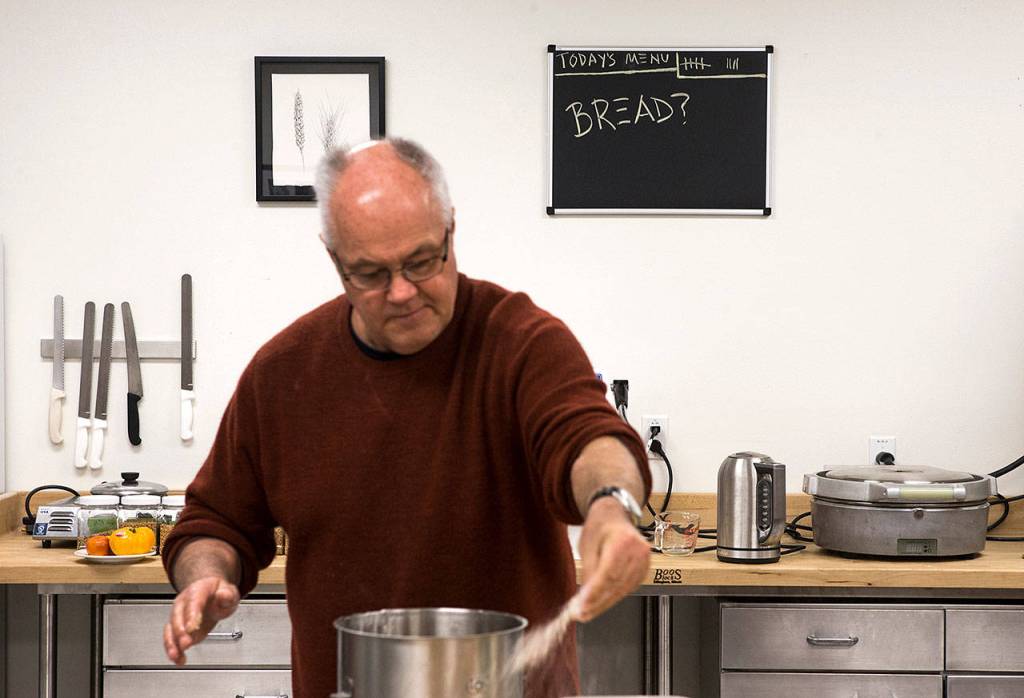
Jones, who had been a wheat breeder on WSU’s main campus for 15 years, said he was thrilled to take on the challenge.
He saw local farmers growing wheat and barley as a rotation crop. It helped return nutrients to the soil, but they were losing money on it.
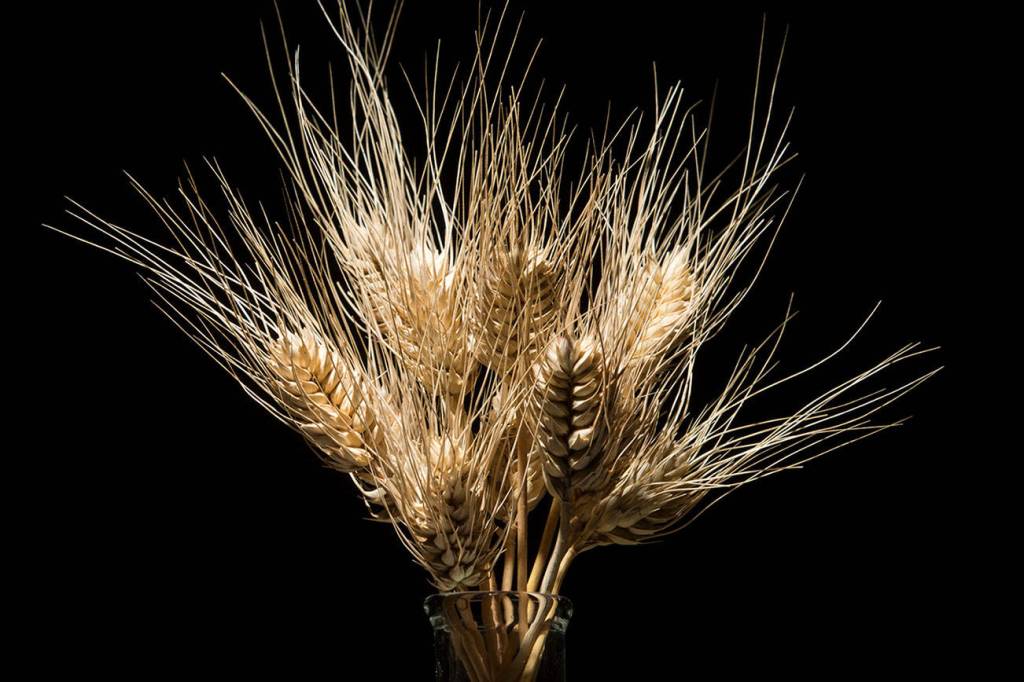
“Wheat is a cool-season grass — that kind of gets forgotten,” he said. “What we determined pretty early on is we can grow wheat really well. In this part of the state, we get four times the yield we get in Kansas.”
The vision of growing commercially viable — and tasty — Western Washington wheat was the spark for development of WSU’s Bread Lab in Mount Vernon in 2011.
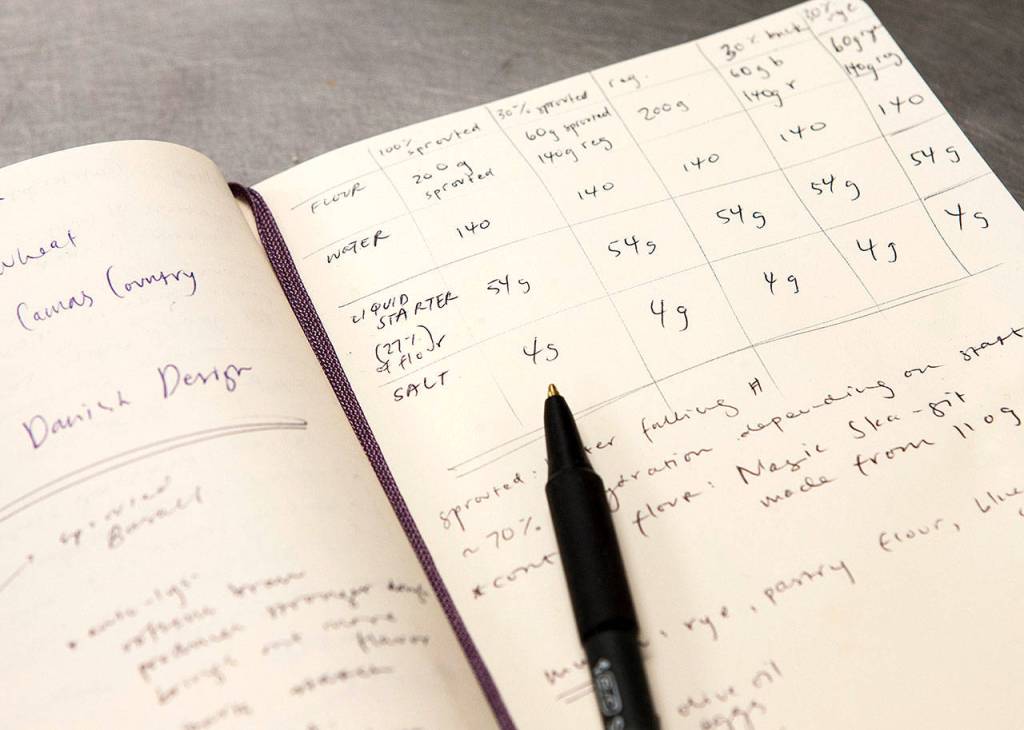
It has since moved to property off Highway 20 in Burlington, with a research and baking kitchen, a lab and a milling facility.
Up to seven varieties of wheat and barley are now being grown on nearby land. The wheat is analyzed at the lab to find out more about its potential uses.
Those now being tested include hard and soft wheats in purple and blue hues. “They’re really beautiful,” said Kim Binczewski, the lab’s managing director.
It could take another two to four years before those varieties will be publicly released. “It takes several years to increase the seeds so there’s enough for farmers to grow on a larger scale,” Binczewski said.
The Bread Lab’s focus on developing nutritious varieties of wheat for use by local farmers and bakers has drawn both national and international attention.
The goal is keeping the economic value in nearby communities where it’s produced.
Microsoft co-founder and philanthropist Bill Gates spent three hours at The Bread Lab last year in part to explore whether this model could be duplicated in other communities.
Grain Gathering, the lab’s annual conference, last year drew participants from 17 states, as well as Canada, Australia, Germany, Hong Kong and the Netherlands.
Tufts and Drexel university students come to The Bread Lab for training.
Tetyana Pecherska is one one of four Tufts graduate students who visited this year.
“What he’s doing is developing certain wheat varieties with flavor and function in mind,” she said. That’s different from most breeding programs, where plant types typically are developed for their yields.
“So it’s a very radical approach to plant breeding, but to us it’s common sense — it tastes better,” Pecherska said.
Just as important is the program’s work to bring together chefs, millers, maltsters and brewers in helping design grains that fit their needs.
“It took a lot of trust in the Skagit Valley over the past 10 years to bring this about into the success that it is now,” Pecherska said.
Jones said one of the best parts of the job is being around people who are so interested in food.
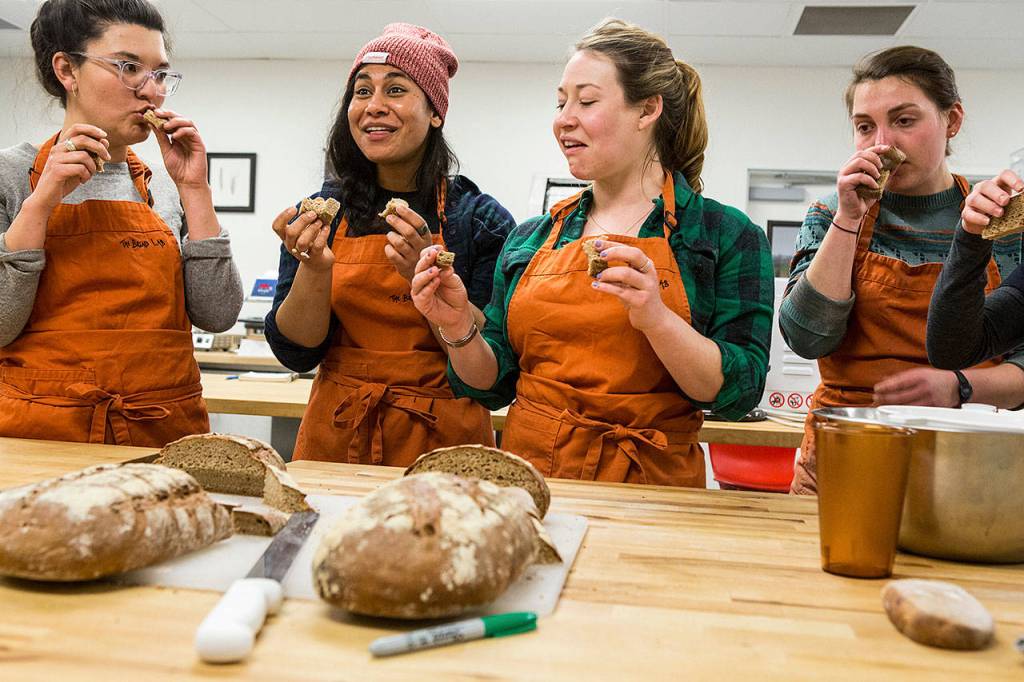
The benefits don’t just go to local businesses. The lab offers classes to the public, such as how to make corn tortillas from scratch, and a portable oven at a local library to show people how to make their own bread. They hope to expand that program to food banks, transitional housing, schools and libraries.
How innovative is The Bread Lab program?
“I think it’s safe to say, I don’t know that there’s another one like it,” Jones said.
What is The Bread Lab?
Scientists at The Washington State University Bread Lab conduct research on thousands of lines of wheat, barley, buckwheat and other small grains to identify those that perform well for farmers, and that are most suitable for craft baking, cooking, malting, brewing and distilling. The lab, at 11768 Westar Lane in Burlington, sponsors an annual three-day conference bringing together bakers, chefs, millers, distillers, farmers and the public for hands-on baking workshops and panel discussions on the regional grain economy. This year’s grain gathering was held in July. The public can sign up for classes through the King Arthur Baking School at the lab. Learn more at thebreadlab.wsu.edu.
The Edison scone
The classic combination of pistachio and orange is the perfect balance to the earthy robust whole wheat flavor of the Edison flour.
For the pistachio filling:
1 cup pistachios
½ cup brown sugar
For the orange glaze:
¼ cup fresh orange juice
2 cups powdered sugar
½ teaspoon pure vanilla extract
For the scones:
2½ cups whole wheat flour
1½ cups all-purpose flour
¼ cup brown sugar
1 tablespoon plus 1 teaspoon baking powder
1 teaspoon baking soda
1 teaspoon sea salt
1 cup unsalted butter, cold
¼ to ½ cup whole milk
4 large eggs
Toast the pistachios, chop coarsely and mix with ½ cup of brown sugar. Whisk orange juice with powdered sugar and vanilla. Set aside.
Measure flours, sugar, baking powder, baking soda and salt into the bowl of a stand mixer or mixing bowl with high sides.
Dice butter in ½-inch cubes. Use your hands or the paddle attachment of a stand mixer to blend butter with dry ingredients on low speed until butter pieces are the size of almonds.
Whisk eggs and ¼ cup milk together and add two-thirds of the mixture to dry ingredients.
Gently mix the dough just until it comes together before adding remaining milk mixture; it will look rough. Scrape
dough from the sides and bottom of the bowl and mix again to incorporate any floury scraps. The majority of the
dough will have collected on the fork or the paddle. Stop mixing. There will be visible chunks of butter and flour. The
dough should come out of the bowl in one piece, leaving some small scraps and flour on the sides.
Turn dough out onto a lightly floured surface and shape press into a rectangle that is about 12 inches across and ½-inch thick. Press pistachios and sugar filling into dough and roll into a log. Slice each round scone ¾-inch thick.
Place scones on a baking sheet lined with parchment paper, leaving 1½ inches between large scones. Bake in the middle of a 375-degree oven, 30 to 35 minutes (20 to 25 minutes for small scones), rotating the pan front to back halfway through the baking time. The finished scones will be golden brown. Glaze immediately and generously.
Makes 18 scones.
More recipes available at www.thebreadlab.wsu.edu/favorite-recipes.
Washington North Coast Magazine
This article is featured in the fall issue of Washington North Coast Magazine, a supplement of The Daily Herald. Explore Snohomish and Island counties with each quarterly magazine. Each issue is $3.99. Subscribe to receive all four editions for $14 per year. Call 425-339-3200 or go to www.washingtonnorthcoast.com for more information.