‘Wolf’ found guilty as kids learn and a federal judge laughs
Published 1:30 am Sunday, November 4, 2018




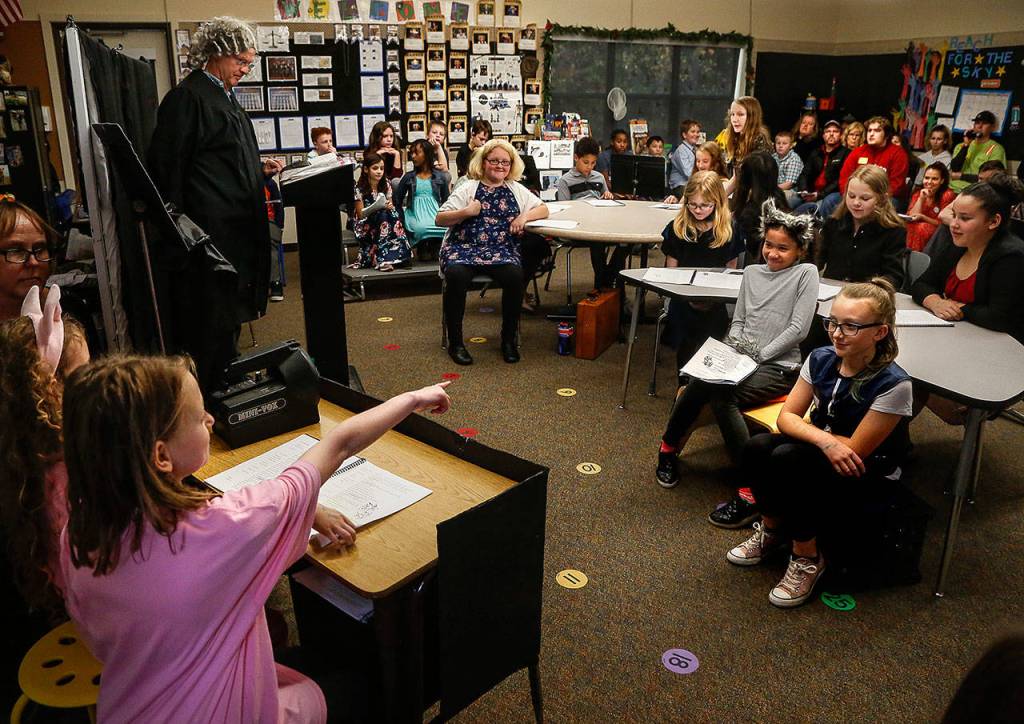
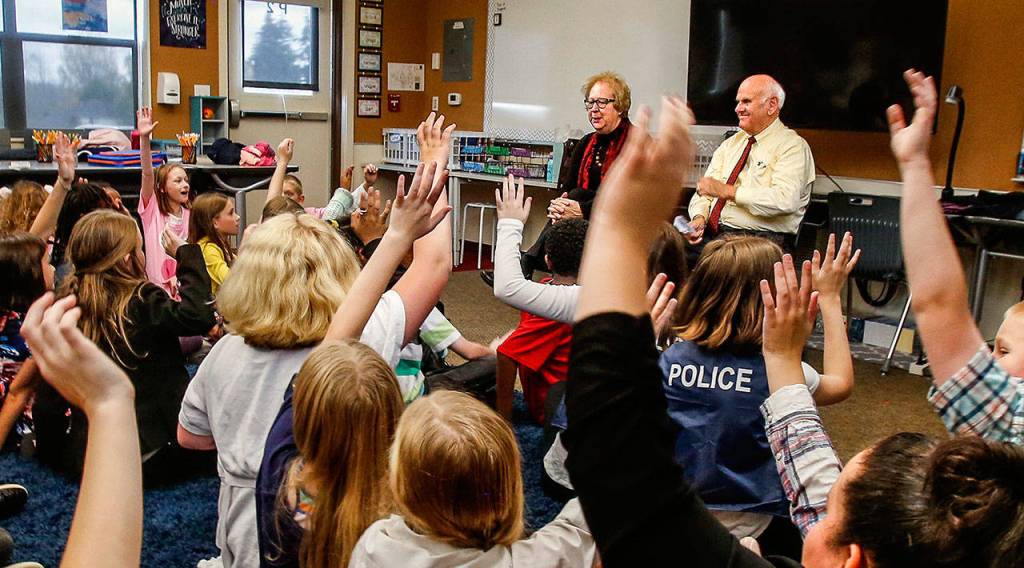


At the front of the classroom, “Sneezy the Wolf” — fifth-grader Sophie McDonald in costume — was on the stand.
Wearing fuzzy ears, paws and a tail, the accused was charged with causing malicious damage to the houses of three pigs, and with breaking and entering by climbing down a chimney.
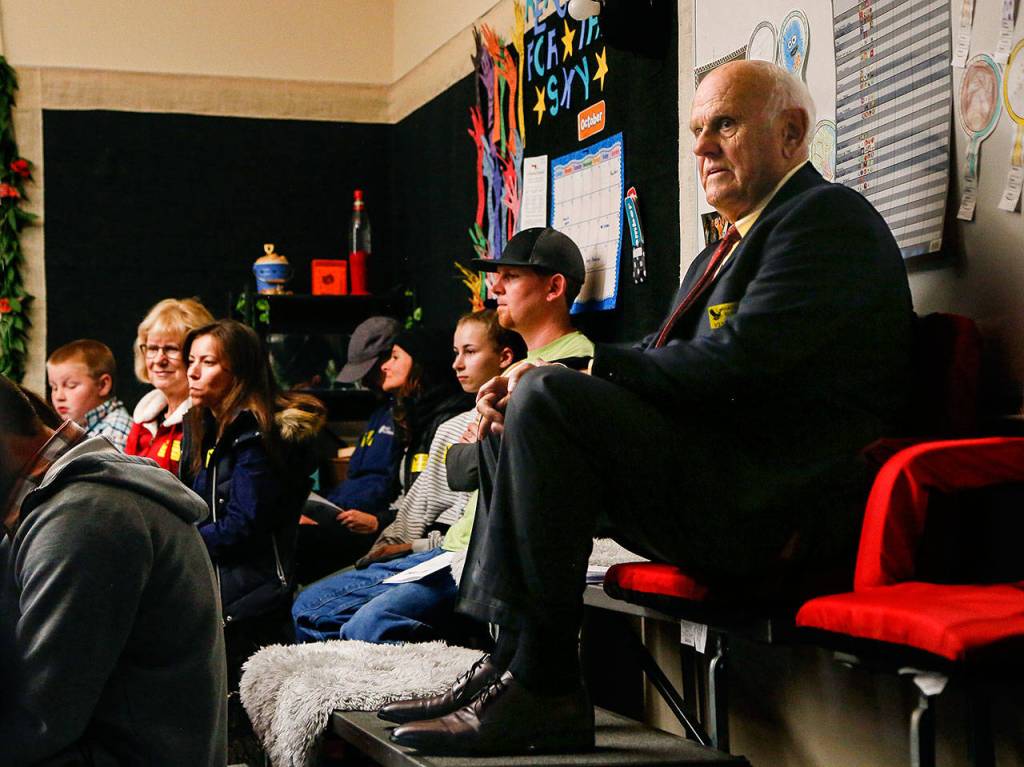
At the back of the classroom, U.S. District Judge John Coughenour — yes, the real federal judge — watched the proceedings. Laughing at times, he appeared to enjoy a trial held not in his usual workplace at the federal courthouse in Seattle.
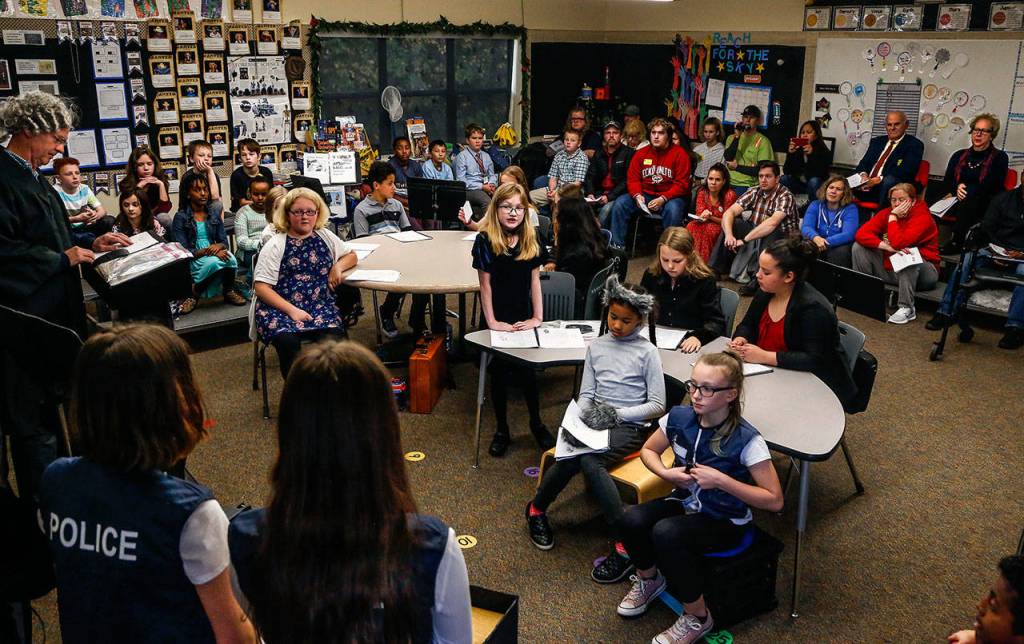
Tuesday’s mock trial, “State of Washington v. Sneezy the Wolf,” was staged in Barbara Bromley’s fifth-grade classroom at Hazelwood Elementary School in Lynnwood. Bromley’s students have been studying forensic science and learning about the court system.
With Hazelwood Principal Tim Parnell acting as judge, in a black robe and British-style judicial wig, fifth-grade prosecutors and defense lawyers argued their case.
Did Sneezy, “by huffing and puffing” as student Cora Weeks described it, deliberately blow down houses of straw and twigs? Or was it, as fifth-grader Runa Lockhart and her partners at the defense table argued, a case of Sneezy suffering from hay fever?
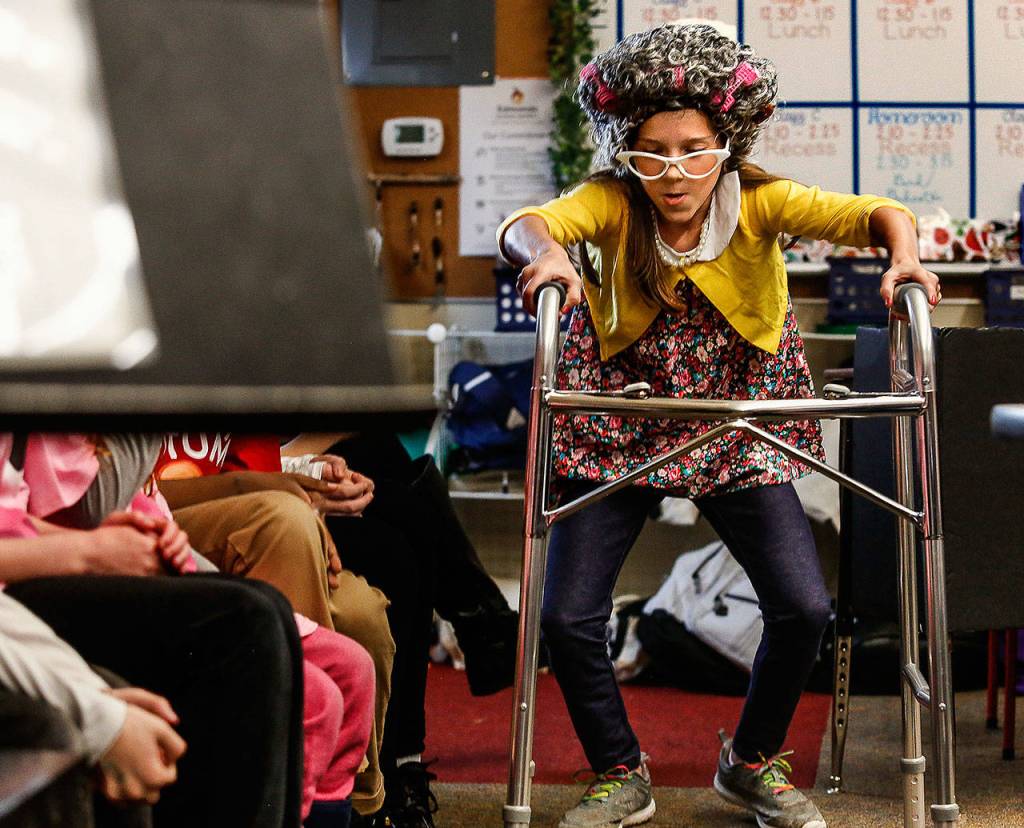
Before the jury made its decision — a guilty verdict — witnesses pleased the crowd with their versions of what happened. “Granny Wolf,” Eden Young with a walker and gray wig, claimed it was well known that Sneezy is “very allergic to all sorts of pollen, as well as straw, dust and smoke.”
Little pigs Burgendey Poole, Caroline Zurybida and Ray Shanahan weighed in, along with “Gingerbread Man” Leule Mekonnen, whose story was that the wolf “gave a great big sneeze and the house of twigs came tumbling down.”
Margaret Fisher, another guest of honor, joined Coughenour in special seating at the back of the room, which was packed with proud parents. Fisher, an attorney, is a distinguished practitioner in residence at Seattle University School of Law.
She has long been involved in legal and civics education, and in 2012 established the Seattle Youth Traffic Court. She has worked to bring a Street Law curriculum to area high schools. “It’s practical information for everyday life,” Fisher said. It also helps students think through issues so they’re better able to “listen to a side they may not personally agree with.”
Fisher is Washington state director for iCivics, an educational program founded by retired U.S. Supreme Court Justice Sandra Day O’Connor. This year, Fisher launched iCivicsWA, a web portal with lessons specific to our state.
Bromley, whose class uses iCivics, met Fisher while attending the Judicial Institute for Teachers in Seattle this summer. Fisher conducts the annual institute in partnership with the U.S. District Court for Western Washington.
In teaching iCivics lessons, Bromley said simulation games and activities are used. So far, her class has covered “Immigration Nation,” “We Are Jury,” “Crisis Nation” and “Win the White House” using iCivics.
The teacher has important goals related to her students’ lives in the civic arena. Not only do kids gain an understanding of government, Bromley said, iCivics has helped “expand their awareness of resources, the importance of language used in a courtroom, appearance and protocol.”
After their mock trial, Bromley’s students were joined by other Hazelwood fifth-graders for an opportunity to ask questions of their distinguished guests.
Judge Coughenour, 77, answered question after question as hands shot up.
Curious kids wanted to know how many people he had sentenced (about 6,000), how long trials last (a couple of days to several months), and what is his favorite thing about being a judge (“Being able to serve my country. I enjoy my work.”)
In his long career — Coughenour has served on the federal bench since age 39 — he has presided over many notable cases, among them the trial of Ahmed Ressam. Known as the “Millennium Bomber,” Ressam was convicted of planning to bomb the Los Angeles airport on New Year’s Eve 1999.
Students gasped when Coughenour said yes after being asked whether he’d ever sentenced someone to death. “I don’t favor the penalty,” he said, then explained that his role is to follow the law, not his personal beliefs.
“I was very impressed with the students’ questions,” said Fisher. “I hope they heard his message, how he interpreted his job as upholding the Constitution and what an honor it is.”
Before their mock trial, Sneezy, the little pigs and other kids were nervous about those two important audience members.
They were “afraid to perform in front of a judge and attorney because they knew they perform this job every day,” Bromley said. “Seeing the judge laugh at parts, and appreciate our work made us relax and enjoy the experience.”
Julie Muhlstein: 425-339-3460; jmuhlstein@heraldnet.com.