Gov. Ferguson launches sustainable jet fuel research center at Paine Field
Published 2:48 pm Thursday, January 8, 2026
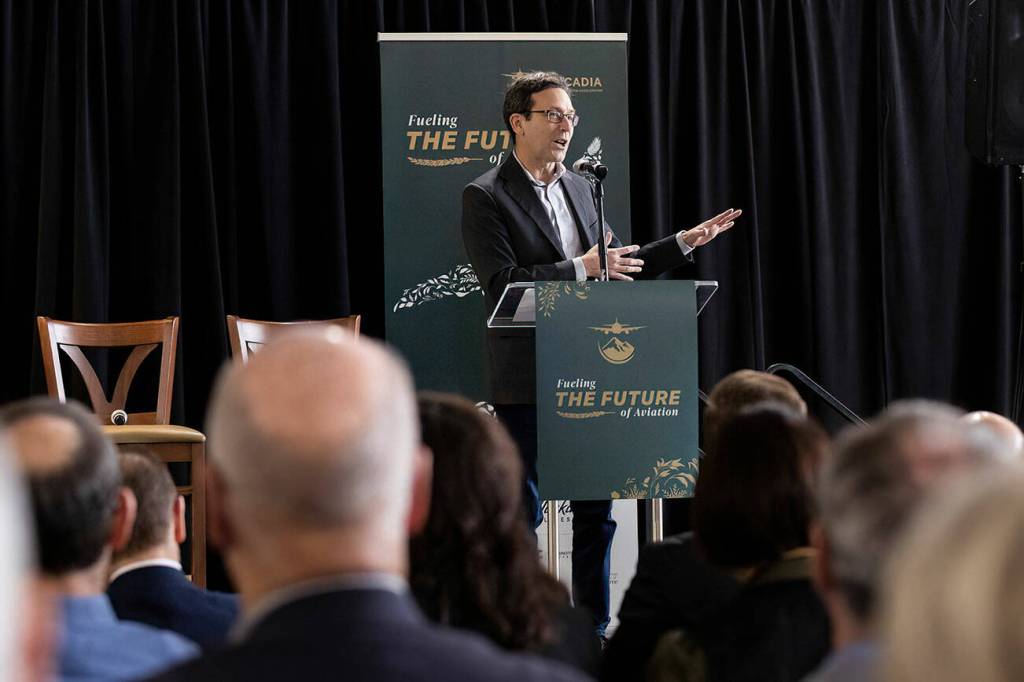
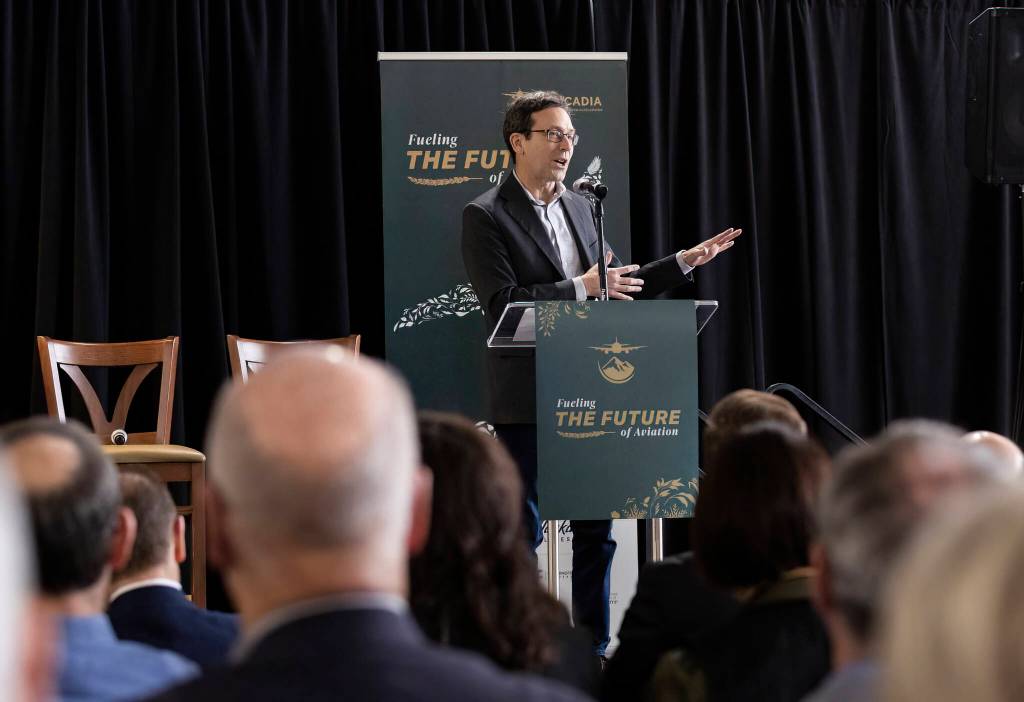





MUKILTEO — Washington Gov. Bob Ferguson joined Snohomish County officials and aviation executives Thursday morning to formally launch a sustainable jet fuel research center at Paine Field.
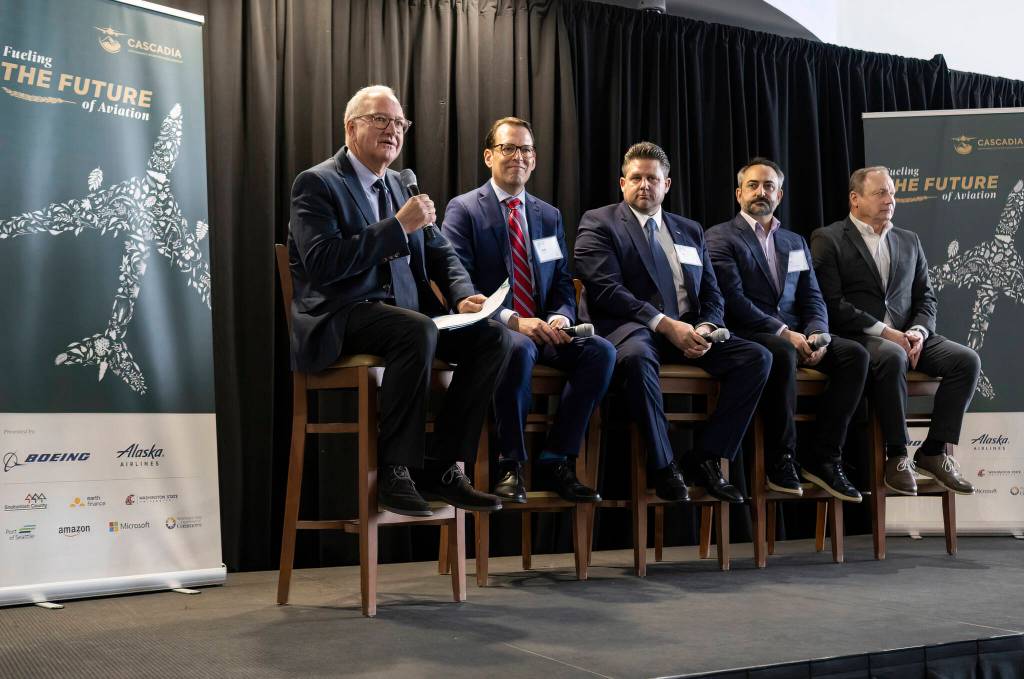
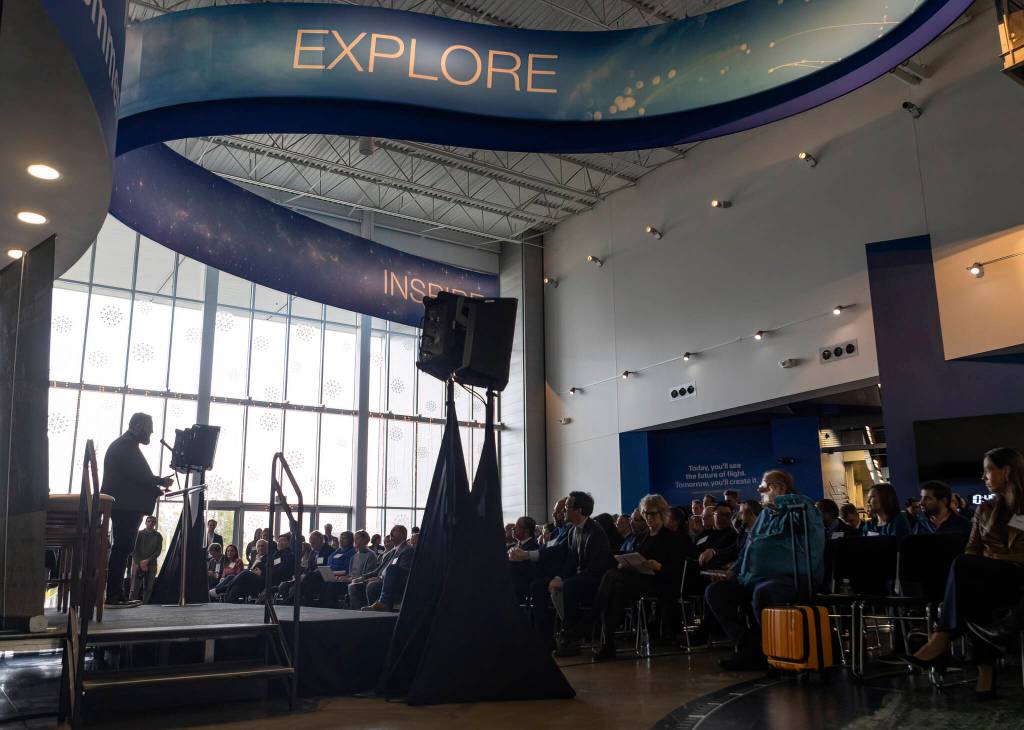
“I think we can all agree that sustainable aviation fuel is literally the future of this (aviation) industry,” Ferguson told the several hundred people gathered at the Boeing Future of Flight museum and tour center.
He said the state was uniquely positioned to host the center because Washington State University has become a key research center for the development of sustainable fuels.
The center, with $10 million in new funding from the state Legislature and $10 million from an anonymous donor, aims to make Snohomish County a global hub for the development of green aviation fuel. It’s scheduled to be built on an 8-acre site south of the main Paine Field runway.
Called the Cascadia Sustainable Aviation Accelerator, the nonprofit would be run in conjunction with Snohomish County and Washington State University.
But Sen. Marko Liias, D-Everett, who helped secure an initial $6.5 million grant from the state Department of Transportation grant for the center back in April 2023, told the audience that the use of sustainable aviation fuel for airlines today accounts for less than 1% of the fuel carriers use.
He said increasing usage will be a difficult proposition.
“This is going to be a tremendous challenge,” he said. “It’s going to be hard. There are still barriers that we need to overcome.”
After the program, Liias said that building a permanent home for the center will require up to $40 million in additional funding.
He said he expects the legislature to be asked to appropriate additional funds in the future, and that a campaign will be mounted to secure additional grants and private funding. Liias said federal funds could also be a possibility but, for now, Congress has let previous sustainable fuel aid programs expire.
Snohomish County Executive Dave Somers, who chairs the Cascadia Accelerator board, said after the program that a temporary facility will open in the next several months in a rented building at Paine Field, with suites for labs and offices. He said several storage tanks will also be built in the next year to house the sustainable fuel.
Somers said funding challenges do remain, but he was confident that the center would be built.
Somers, speaking earlier at the event, said the accelerator’s partnership with Washington State University will establish a “world-class research and development facility.”
“Combined with our region’s aviation industry cluster, these developments ensure we will be a leader in global aviation sustainability and investment well into the future,” he said.
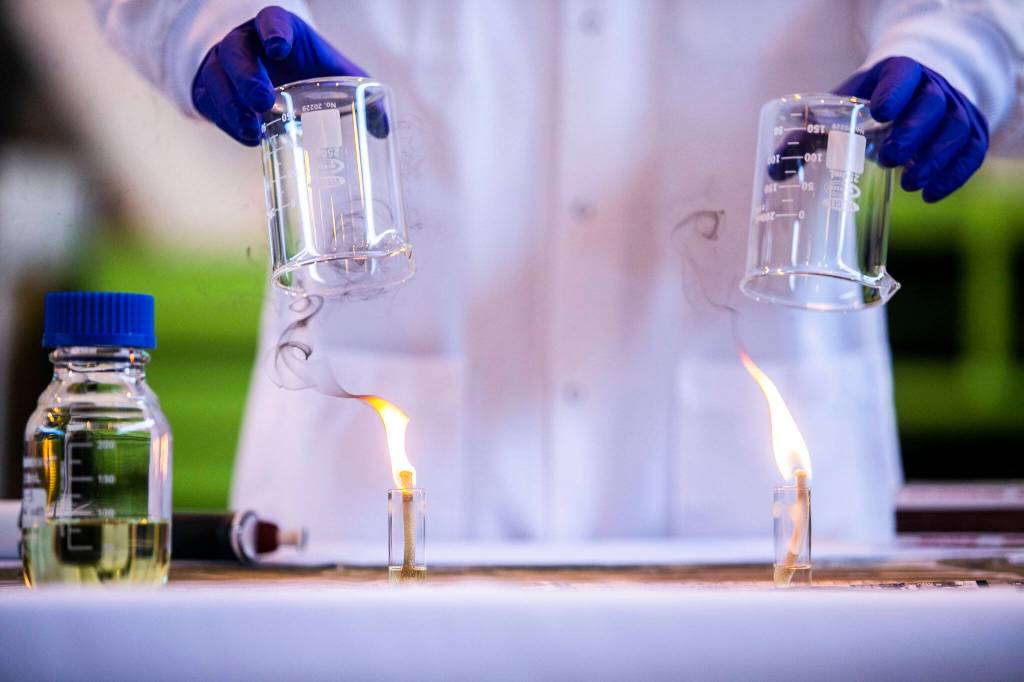
Proponents of sustainable aviation fuel, which is made from plants, sewage and or food, tout it as the future of aviation mobility. However, the current costs for airlines to use the fuel are two to three times the cost of conventional jet fuel, said Joshua Heyne, director of the Bioproducts, Sciences, and Engineering Lab at Washington State University in Pullman.
Heyne, who said he has tested sustainable jet fuel from 40 companies in his lab, said that, currently, the sustainable fuel must be blended with conventional jet fuel to power an airline.
He said more research is needed on fuels that don’t require blending.
Consequently, he said, airlines use very little of the fuel as they aim to be price-competitive with other airlines.
“Fuel costs are a major contributor to airline fares,” he said.
Heyne said that sustainable aviation fuel accounts for a minor share of the fuel airlines use today.
The International Air Transport Association, which represents 300 airlines globally, said its statistics show that SAF production accounted for only 0.3% of global jet fuel production, though it has double the 2023 level.
The association said initial projections for 2024 show that companies had planned to produce more than three times what they estimated.
SAF volumes are increasing, but disappointingly slowly,” the association said in a press release on its website. “Governments are sending mixed signals to oil companies, which continue to receive subsidies for their exploration and production of fossil oil and gas.”
The commercial aviation industry has pledged to transition to 100% sustainable fuel use by 2050.
How the center will work and how many people it will employ is still being worked out, Heyne said. Under the accelerator model being explored, companies could work with the center’s staff to help develop their sustainable fuel products, he said.
Ultimately, sustainable aviation fuel will be the future, said Ray Stephanson, president and CEO of Economic Alliance Snohomish County.
He said the establishment of the center is a positive for Snohomish County, but it’s pretty early in the process and unclear how many jobs it will bring for now.
“We’re going to have to accelerate our learning curve and bring this fuel to market in a way that it could be used in substantial quantities,” he said.
Randy Diamond: 425-339-3097; randy.diamond@heraldnet.com.