Sound Transit weighs possible savings on Everett Link extension
Published 1:31 pm Thursday, September 25, 2025
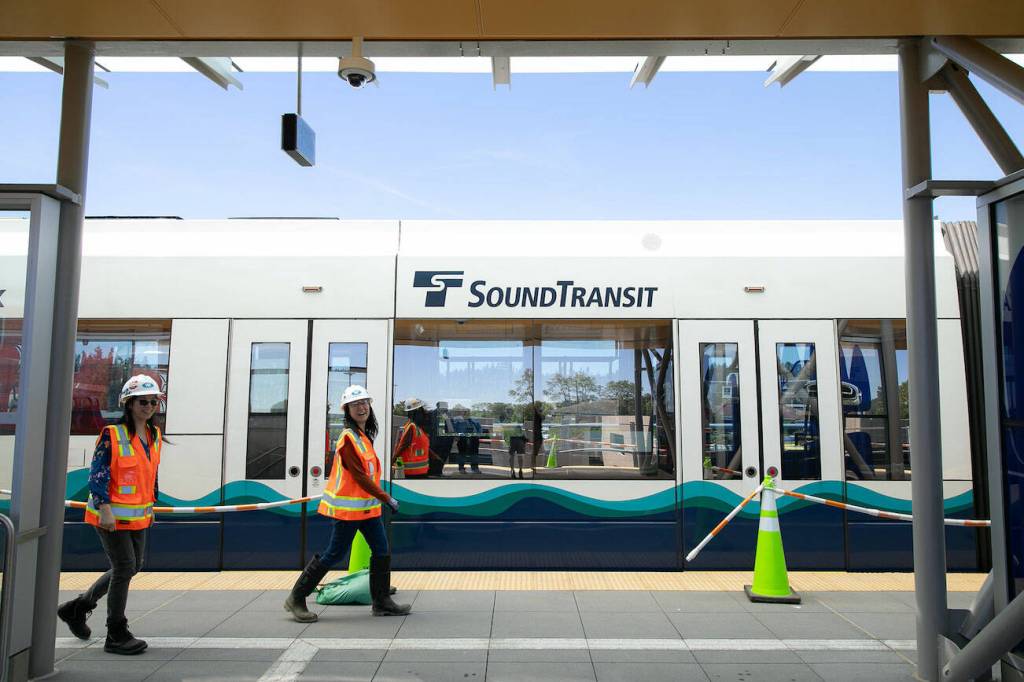

EVERETT — Sound Transit could make early design changes along the Everett Link light rail extension to help save money as the regional transit agency faces rising construction costs.
The potential cost savings come at a tumultuous time for Sound Transit as the agency attempts to navigate a 20 to 25 percent increase in the planned costs of its light rail extensions and ongoing operations. Those increases were due to inflation, tariffs, labor shortages, supply chain disruptions and added right-of-way costs, the agency said in an Aug. 28 presentation.
The cost of the Everett Link extension has grown between $200 million and $1.1 billion, according to Sound Transit estimates, due mostly to increases in construction costs, officials said. The initial Sound Transit 3 finance plan anticipated the project to cost a total of $6.6 billion. It could now cost between $6.8 billion and $7.7 billion.
Sound Transit’s newly presented money-saving methods, however, would be able to bring Everett Link’s costs down to meet the initial estimates presented in the Sound Transit 3 financial plan, the agency said. The transit agency plans to adjust designs to many of the six new stations the regional transit agency hopes to add in Snohomish County through the 16-mile light rail extension. (A seventh provisional station is planned to be built at a future date.)
The Urbanist previously reported on the possible cost-saving measures.
At Ash Way, Sound Transit could change the future station from elevated to ground level, similar to the Shoreline North Link station. It would also bring the station closer to I-5, reducing spending on property acquisitions. Those changes would make construction more complicated, said Manan Garg, the head of the Everett Link extension team at Sound Transit, but could save up to $40 million.
Another cost saving measure could come from the Alderwood Mall station, where Sound Transit could relocate a pocket track — a section of rail dedicated to temporarily holding trains to allow for rest or inspections — at a different, at-grade location. Making that change could save up to $85 million.
Along Highway 526 in south Everett, the agency could build more of the rail line along the state highway, reducing displacement impacts and saving up to $100 million. Near the SW Everett Industrial Center station, set to be built at Paine Field, the agency could build a section of 4,000 foot section of rail at ground level rather than elevated, saving up to $80 million. That section wouldn’t require any at-grade crossings, Garg said.
Sound Transit officials stressed that all of those cost saving options are just options on the table that the agency could implement to make cost savings. The Everett Link extension is still in the very early stages of design.
Everett Mayor Cassie Franklin, also a member of Sound Transit’s Board of Directors, said none of the proposed options were easy decisions. In an email Wednesday, she said the proposed cost-saving measures at Ash Way and West Alderwood “make sense” and “seem compelling.” She said the changes to the Highway 526/Evergreen Way and SW Everett Industrial stations sound good, but she needs to learn more about them as they have potential complexities with design and impacts to the community.
Voters approved the $54 billion Sound Transit 3 ballot measure in 2016, paving the way for the Everett light rail extension. To address the 20 to 30 billion dollar budget gap in its expansion plans, Sound Transit is set to update its system plan, long range plan and long range financial plan by the end of 2026 . The agency is referring to that process as the Enterprise Initiative.
“The Enterprise Initiative is a necessary step to ensure every dollar is spent wisely in today’s tough financial climate. Franklin wrote in an email. “… This initiative gives us the tools to protect ST3, keep the spine on track, and move forward responsibly while keeping our long-term vision.”
Any decisions on how exactly Sound Transit will reset its next long-range financial plan to meet the financial challenges — which could include reductions in scope or project phasing, if necessary — have yet to be made.
Dave Somers, the Snohomish County executive and chair of the Sound Transit Board of Directors, said a delay to Everett Link — the most affordable of the Sound Transit 3 light rail projects — would only increase costs. He said the board “may have leaned on” implementing delays too heavily in previous processes.
“The Board will have to weigh various priorities as it decides how to reset the program,” Somers wrote in an email Wednesday. “These priorities include things like maximizing ridership, maximizing regional coverage, and operational complexity. There will be many trade-offs and decisions to make in the months ahead.”
Franklin said she was concerned that Everett Link could face delays, but thinks that the Enterprise Initiative will provide the information and tools necessary to ensure challenges in other areas don’t delay completion of Sound Transit 3 projects, particularly the north-south “spine” set to connect Everett to Tacoma.
“I believe this actually gives us an opportunity to advance Everett, by expediting our work and making some elements more efficient. I will do all that I can to make that happen and prioritize the spine to Everett,” Franklin wrote in an email Wednesday.
Somers considers Everett Link a high priority, but he added that Sound Transit’s Board of Directors must also be responsive to voters across Pierce, Snohomish and King counties, all of whom deserve to achieve the goals of Sound Transit 3, he wrote.
“Our region has been held back because we don’t have an efficient mass transit system, and the voters of the region deserve the many benefits of a functioning, regional system,” Somers wrote. “The Board may disagree on details and specific priorities, but we will work closely together and ground ourselves in the shared principles that we adopted at our August Board meeting. These include a commitment to regionalism, subarea equity, and maximizing the value of the system to our region.”
Franklin said her top priority is completing the north to south spine.
“Every delay adds costs and prolongs inequities, which is why I will continue to advocate forcefully for Everett Link to move forward as quickly as possible, while working with my colleagues to navigate the financial realities responsibly,” she wrote.
Sound Transit expects to publish a draft environmental impact statement for the Everett extension in early 2026. The transit agency currently hopes to open the first phase of the Everett Link extension — reaching as far north as Paine Field — by 2037. The complete extension, reaching Everett Station, is set to open by 2041.
Will Geschke: 425-339-3443; william.geschke@heraldnet.com; X: @willgeschke.