Editorial: Set deadline for chemical in tires that’s killing coho
Published 1:30 am Tuesday, February 17, 2026
By The Herald Editorial Board
Deadlines can be useful in focusing consideration and effort on a task, perhaps even with nine years of lead time.
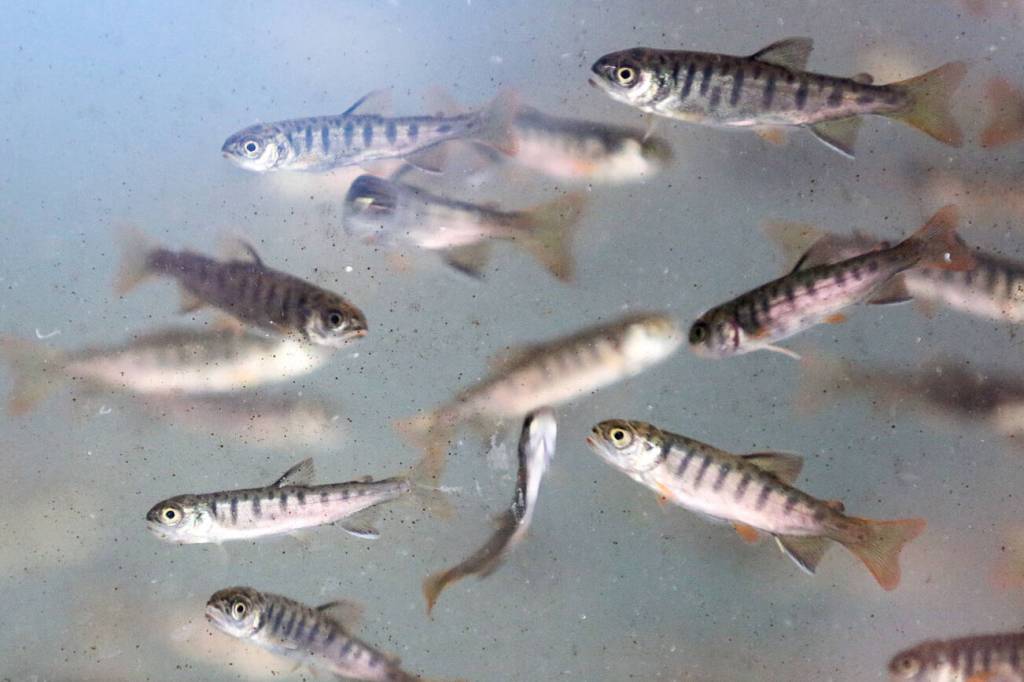
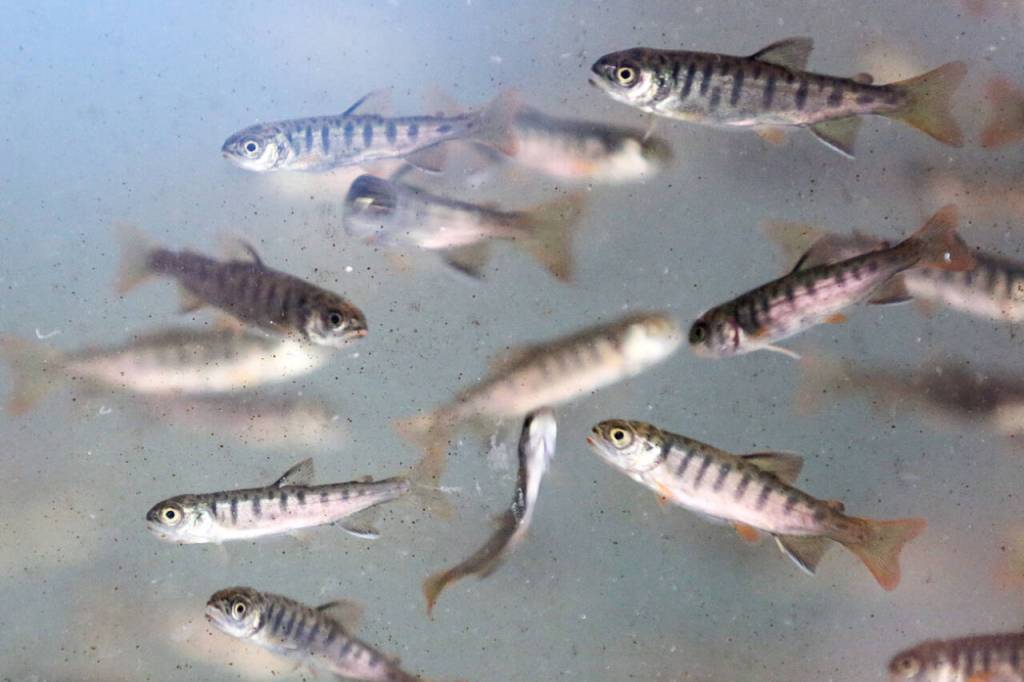
That’s the deadline proposed in legislation that would ban a substance in automotive tires that since 2020 has been identified as contributing to the toxicity of stormwater runoff that is killing coho salmon and other fish in Washington streams and rivers, especially as coho return to streams to spawn in the spring.
For more than 60 years, a chemical known as 6PPD has been used in the production of tires to better assure their safety and their useful life on the road, preventing cracking and degradation from oxidation and exposure to ozone. But as 6PPD is exposed to ozone, and wears off tires as fine particles or dust, it produces a chemical byproduct called 6PPD-quinone, which was identified by University of Washington researchers as lethal to coho salmon.
Legislation in Olympia, House Bill 2421 would prohibit the sale of tires that use 6PPD and so-called “regrettable” substitutes in their production as of Jan. 1, 2035 in the state. Exempt from the ban would be tires used by aircraft and on some federal government vehicles.
Such a deadline — with significant lead time and with a similar concern for toxicity to fish — has been used before, specifically in barring the use of certain materials in the making of brake pads for vehicles. The Legislature adopted the Better Brakes Law in 2010, which initially barred the use of asbestos and several heavy metals in break pads by 2015, then phased out the use of copper in pads by 2025.
Copper in high concentrations in stormwater runoff causes fish mortality and effects survival, growth and reproduction, even reducing the fish’s sense of smell. But as harmful as copper can be, 6PPD-quinone is worse, causing high mortality in coho salmon but is also toxic to rainbow trout and steelhead, chinook and sockeye salmon.
The potential effect of 6PPD-quinone on people and wildlife that consume fish contaminated by the chemical isn’t known.
A response to the threat posed by 6PPD began relatively soon after the UW discovery, with the Legislature designating the chemical in 2023 as a “priority chemical,” which outlines action to address contaminants, including directing the state Department of Ecology to determine regulatory actions and set rules, a process that could be complete by June 2028.
As well, it is possible to filter out 6PPD-quinone, along with other contaminants, by treating stormwater runoff. The city of Mountlake Terrace was awarded a $560,000 grant in 2024 to begin design of a $2 million underground stormwater treatment facility that would treat runoff that flows into Hall Creek and Lake Ballinger. The facility’s design calls for use of a special soil mixture that filters out pollutants, including 6PPD, before it reaches Hall Creek.
Yet, the most effective and cost-efficient method for treating contaminants in stormwater runoff remains keeping those contaminants out of the stormwater in the first place.
And it’s the considerable taxpayer investments like stormwater treatment and the state’s culvert replacement to increase spawning opportunities for salmon that calls for removal of 6PPD from tires.
During a public hearing before the House Environment and Energy Committee, Carl Schroeder with the Association of Washington Cities, said investments such as stormwater treatment, culvert replacement and other habitat restoration work shouldn’t be undermined by the continued release of toxic chemicals.
“It’s really important to ‘swim upstream’ and try to get this stuff from being introduced in the first place,” he said.
Industry representatives at the hearing and one before the appropriations committee, noted that 6PPD remains important to production of tires in preserving their longevity and safety. As yet, there has not been a replacement that is viewed by the industry as effective.
Even while expressing general support for the legislation, Todd Myers, vice president of research for the Washington Policy Center, who also served on the Puget Sound Salmon Recovery Council for a decade, noted alternatives aren’t always reliable solutions.
“In the past, the state has banned chemicals of concern, promising that better alternatives would soon be available, only to find that the replacements were actually more risky,” Myers said.
Yet Myers supported the 2035 deadline as a workable time frame, necessary to allow for discovery and testing of an alternative to 6PPD.
And there is reasonable hope that viable alternatives can do the job in preserving tires’ road life and safety without relying on chemicals that later prove to be toxic.
A 2021 report by public health, chemistry and other researchers at University of California, Berkeley, just months after the University of Washington report, suggested several areas of study in the search for a safe replacement of 6PPD, including lignin, an organic polymer found in the cell walls of plants; or modification of 6PPD, itself, to make it a nontoxic alternative.
Work on alternatives has progressed in the last four years. Flexsys, an advanced-materials research firm for the tire industry, reported in November, that it had identified an alternative to 6PPD that its says is on track to provide short- and long-term protection for tires against degradation that require few changes to the industry’s formula for production, allowing accelerated adoption; meeting benchmarks specifically developed by the Washington state Department of Ecology; and relying on chemistry outside of the PPD family that does not form quinone during use of the product.
“Unlike other attempts across the industry to eliminate 6PPD to date with nascent research on viability, Flexsys’ extensive testing indicates it will achieve its targets, allowing 6PPD to be replaced at a rapid pace, meet tire safety standards, comply with environmental regulations and requirements, and support the sustainability goals of automakers and tire manufacturers,” the company said in a release.
That’s a prediction that will have to be confirmed through further research, study, testing and evaluation, but it makes reasonable a nine-year deadline to end the use of a chemical that is known to be toxic to salmon and other fish species that are consequential to jobs and the state economy, the treaty rights of the state’s tribal nations, other wildlife, the state’s cultural heritage and the investments already made.
The legislation should be moved to a floor vote in The House and on to consideration by the Senate.