Everett proposes law to help close unpermitted food carts
Published 1:30 am Saturday, January 31, 2026
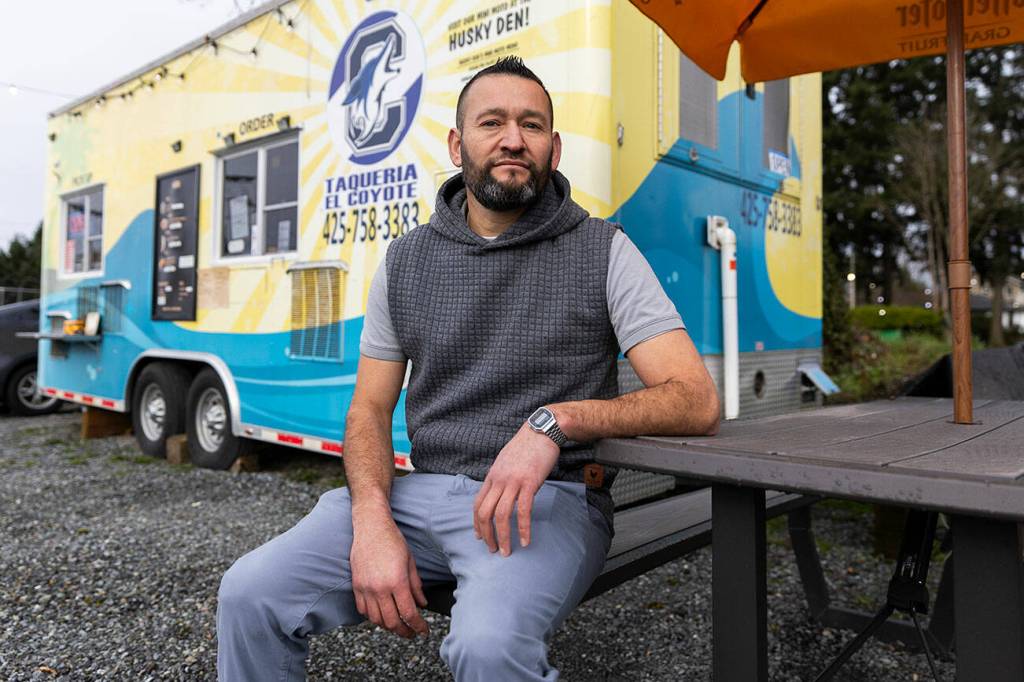
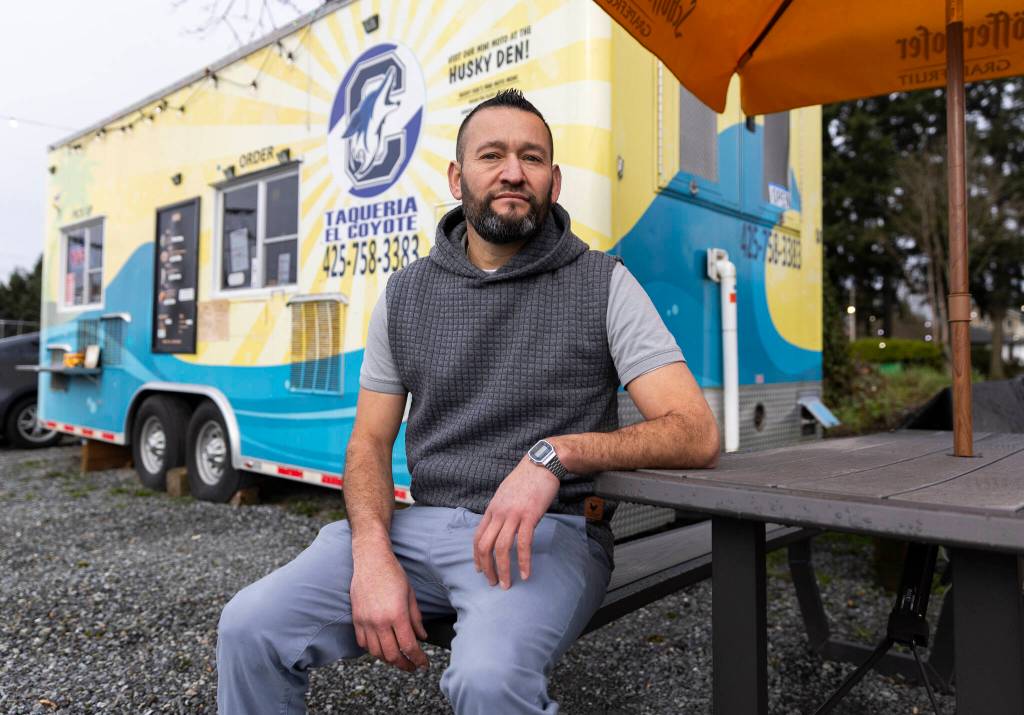




EVERETT — Carlos Cerrato started saving up money for his food truck business in 2011.
Fourteen years later, after raising the funds, applying for a multitude of permits and going through inspections, he finally opened the truck, Taqueria El Coyote, in Lynnwood last year.
But now, on some days his truck is open, he can see another food stand appear across the street. It sets up at night along a sidewalk near a Walmart and a Starbucks, and always seems to draw a crowd.
The problem? The stand isn’t allowed to be there.
It’s one of what officials refer to as unlicensed mobile food vendors that operate across Snohomish County and, more broadly, along the West Coast. Over the past few years, the number of vendors has reportedly risen significantly.
But officials say they have few options as to how to prevent the vendors —some of which have blocked sidewalks, polluted waterways and spread food-borne illnesses, according to the Snohomish County Health Department — from operating.
When the stand shows up, the line outside Cerrato’s taco truck sometimes shrinks, and customers begin to head toward the taco stand less than a block away, he said in an interview Thursday. With no rent or permitting fees to pay, the tent can offer cheaper food.
“The people want good prices,” Cerrato said. “But everything is expensive.”
Everett is now looking to address the problem through legislation. A city ordinance proposed on Wednesday would allow local police to fine or arrest operators at the stands and confiscate their equipment if the stand is operating without proper permits. The proposed change could also inform broader adjustments to local and state law that may show progress in curbing the curbside food stands.
‘They’ll pay nothing and still make the money’
The number of unpermitted mobile food stands has ballooned significantly in recent years, according to the Snohomish County Health Department. In 2022, the department received 16 complaints of roadside food vendors operating without a permit. By 2024, it grew to 32. But in 2025, the amount of complaints shot up to 203.
The sharp rise, far from unique to Snohomish County, drew concern from the department, which has seen a number of the stands operating without proper safety measures. Many of the stands — which usually show up at night under tents or umbrellas, located along the sides of roads — often have no refrigeration to store food and no clean water for employees to wash hands, according to the department.
One example the Health Department noted during a Tuesday presentation to the Snohomish County Council’s Health and Community Services Committee was a stand that was cooking with raw meat stored at an internal temperature of 53 degrees Fahrenheit.
Food safety experts refer to that temperature as being within “the danger zone,” between 40 degrees and 140 degrees, which causes bacteria on food to quickly multiply.
As anyone who has had food poisoning knows, the experience is far from fun. Without going through proper safety practices, food from the carts risks spreading diseases like salmonella, E. coli or norovirus, some of which can lead to serious complications in rare cases.
Tony Colinas, the assistant director of environmental health at the county health department, said Tuesday that five people reported foodborne illnesses associated with the unpermitted stands in 2025. The health department estimates only about 10% of all foodborne illnesses are ever reported.
Applying for a permit from the health department is no small task. An initial application for a permit to operate a mobile food unit requires a $1,100 plan review fee. After the plan is approved and an applicant passes an inspection, they are issued an invoice — between $500 and $1,025 — for the annual permit itself. It can take an estimated 12 weeks for that permit to get approved, sometimes longer. Cerrato said the process to acquire all of his permits took about a year to complete.
“I understand we need to work, we need money for our families, you know,” Cerrato said of the unlicensed vendors. “But some people pay for the business licence, the health department and everything. Then some people come, put that thing down, and they’ll pay nothing and still make the money.”
Health officials require mobile food units, including food trucks or food stands, to include a number of pieces of equipment to maintain food safety. Cold food needs to be refrigerated, hot food needs to be kept hot. There must be a sink for handwashing, proper ways to dispose of garbage and wastewater, and the vendor must have access to a commissary kitchen where they store and prepare food — kitchens that can be hard to find.
Everett City Council member Ben Zarlingo said the multitude of requirements was all the more reason to ensure licensed business owners don’t face competition from unpermitted, potentially unsafe stands.
“There’s a real significant load there, of process and procedure and cost and time delays,” Zarlingo said. “But that’s what we need to do to avoid sickening large numbers of people.”
‘In two hours, they’re coming back’
Even though the unlicensed carts are breaking rules, health officials and police have said getting those carts to actually close down has proven difficult.
“Once you have a permit, there’s all sorts of enforcement things you can do,” Colinas said. “But if you don’t have a permit, there’s not a lot of enforcement set up.”
Dan Templeman, the senior executive director at the city and a former police chief, said numerous groups have identified the problems that arise with unpermitted food stands but haven’t found a way to solve them.
“Neither the Snohomish County Department of Health or the city of Everett have the adequate tools to address this challenge,” Templeman said at a council meeting Wednesday.
Currently, when the health department closes down a mobile food stand, it issues a cease and desist letter. But that method rarely works for more than a few hours, according to Colinas. The stands can just reopen in another location a few blocks away, sometimes in the same night.
Health department officials have issued at least one cease and desist notice to the unlicensed tent near Cerrato’s food truck in the past three months, according to department records. It usually doesn’t deter it for long, Cerrato said.
“In two hours, they’re coming back,” he said.
Other enforcement methods in the department’s tool belt — like taking operators of the stands to court in order to get judicial orders that force them to shut down — are too costly and time-consuming to keep up with the influx of unlicensed vendors, Colinas said in an interview Thursday.
The new ordinance brought forth by the city lists a number of requirements for mobile food vendors. They must obtain valid business and health department licenses, and cannot operate within bus stops, loading zones, parking spaces, near fire hydrants or in a place that blocks city utilities.
If the ordinance is approved, not following those guidelines would now constitute a misdemeanor offense, allowing city police to fine workers and employers at the stand, as well as confiscate its equipment. Workers at the stands could face up to a $1,000 fine and/or up to 90 days in jail. Employers could face tougher consequences — up to a $5,000 fine and/or up to 364 days in jail.
The ordinance includes broad exemptions, however. It does not apply to any government agencies, food trucks, nonprofit organizations, farmers who sell fruits or vegetables, door-to-door salespeople, newspaper carriers, political candidates or vendors at farmer’s markets.
It even has a specific exemption for lemonade stands. Worry not, kids.
“We want to make sure we’re targeting folks who are operating for profit, who are operating a business in the legal sense, and not inadvertently sweeping in things like selling cookies,” said Lacey Offutt, an attorney at the city.
Officials also said Wednesday that they would focus on education and provide warnings to people violating the ordinance before imposing fines or jail time, though the ordinance doesn’t explicitly require a warning before a fine or an arrest.
Council member Paula Rhyne said Wednesday she was supportive of the measure but had qualms over the ordinance giving police the authority to fine or jail workers at the stands, as multiple council members have said many of the workers may be victims of human trafficking. She said she feels that the fines “shouldn’t be a threat on the table for them” as many of the workers may be there against their will.
“At first glance, it does feel like this charming, ‘Look at them working hard to make it,’ type of situation,” Rhyne said of the unpermitted stands. “But it is a huge concern for the people working there who are often being trafficked or being forced into exploitative labor practices.”
Colinas said he is optimistic about the proposed ordinance being put forward in Everett. A vote is expected to take place on Feb. 11. The health department is planning to convene with local jurisdictions to discuss possible solutions to the problem of unpermitted food carts, and Everett’s ordinance is expected to be a major topic of discussion, he said.
Carlos Cerrato and his wife, Rosa, are both supportive of the measure being put forth in Everett and hopeful that it will have a positive impact. Eventually, they hope similar legislation can be approved at the city, county or state level, too, to make sure their food truck and others can keep operating into the future — safely.
“Because it’s not fair,” Rosa Cerrato said. “Other people’s businesses are getting impacted.”
Will Geschke: 425-339-3443; william.geschke@heraldnet.com; X: @willgeschke.
How do you tell if a food stand has a permit?
Food stands operating in Snohomish County are required to display their permits, either visible from the front or available upon request. Food stands or trucks may also have QR codes available on-site where customers can view previous Snohomish County Health Department inspection reports. A list of unpermitted food stands that the health department has closed over the past 90 days is available online: tinyurl.com/yxu35tur.