County to apply high-friction treatment to problem roads
Published 10:00 pm Monday, March 13, 2017
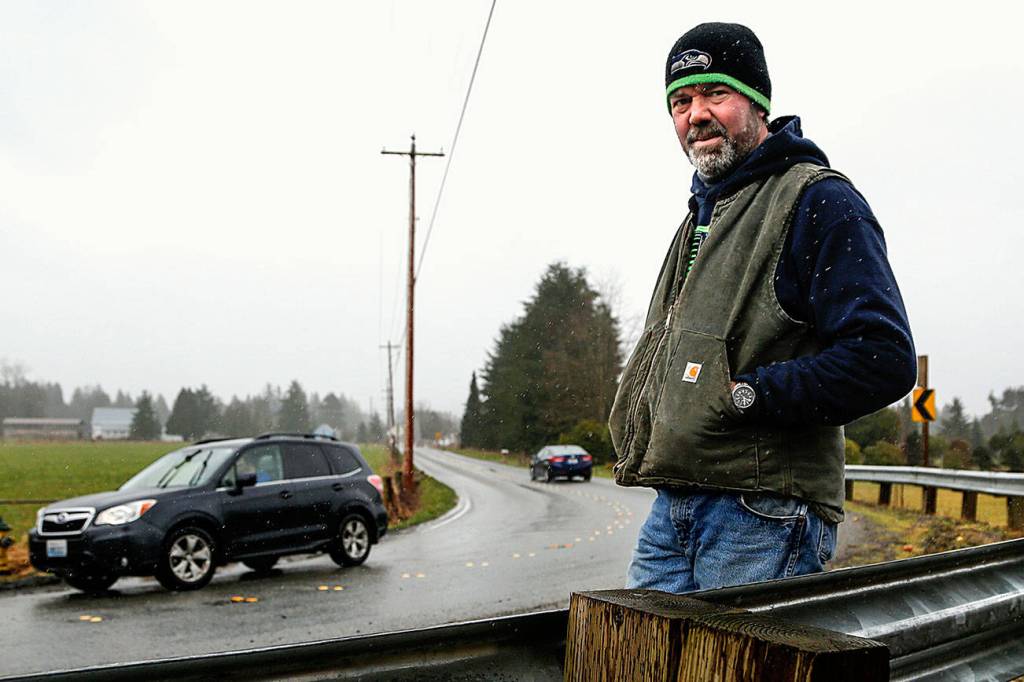
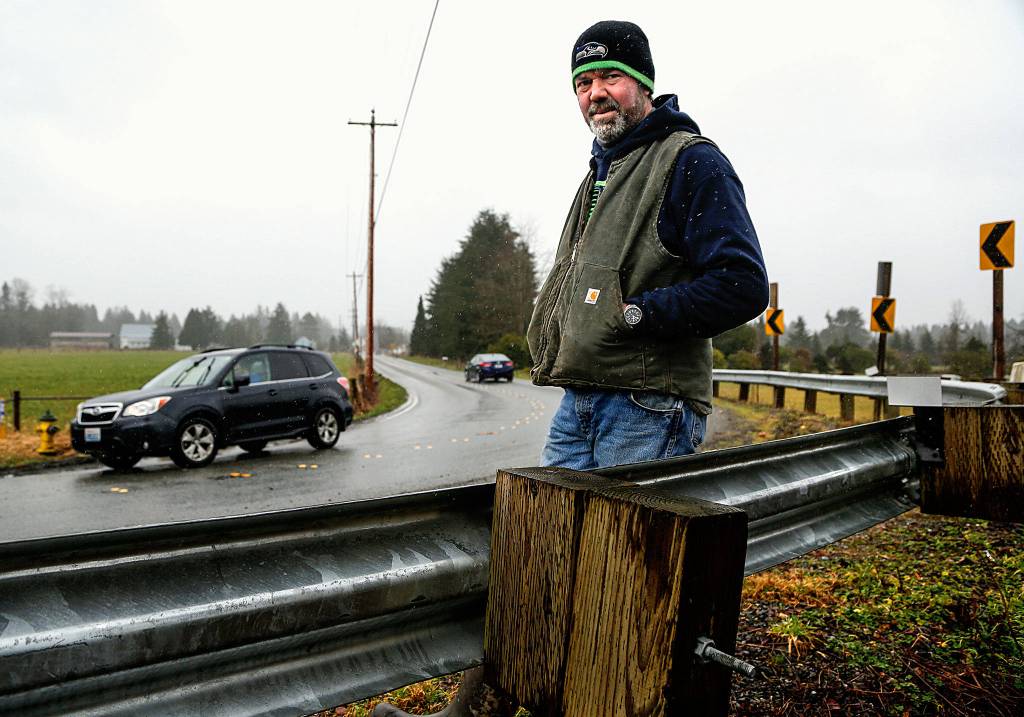
GRANITE FALLS — There was a time when Macomber Farms kept its livestock away from a pasture near the bend in Burn Road.
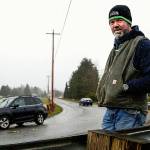
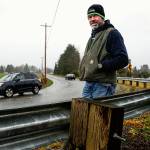
“That really is a bad corner,” said Jackie Macomber, who owns the Centennial Farm with her son, Todd. “You can look at the fences all around there and see how people miss it. It kind of dips, you know. Before they put the guardrail up, it was awful. … Prior to that we couldn’t leave livestock in that pasture at night.”
Beef cattle may be back to grazing near the corner. Yet cars continue to skid off the sharp turn — where Burn Road transitions from 100th Street NE into 159th Avenue NE — and cause damage.
“At the corner, the fence is there (thanks to the guardrail). But 30 feet on either side from where they’ve spun out at the corner, the fencing is all gone,” Macomber said. “It’s just a hit-and-run thing — they hit the fence and take off.”
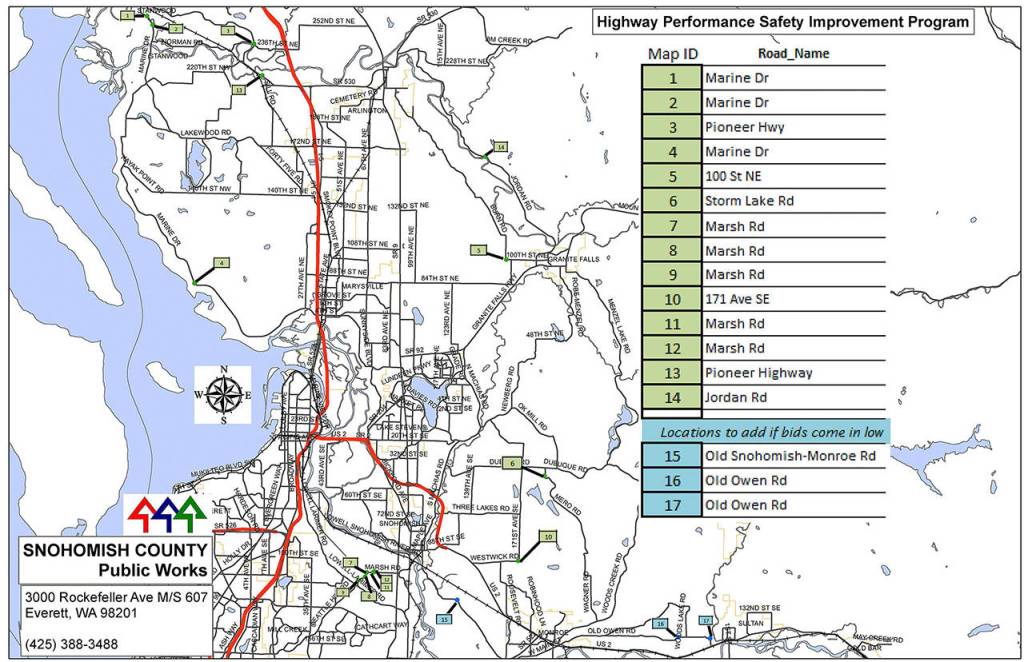
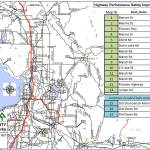
The Burn Road curve is one of 14 problem spots on rural country roads that Snohomish County plans to improve this year with a $1.3 million state grant. Road crews this summer will apply high-friction surface treatment, a gritty roadway surface that gives tires extra traction in both dry and wet conditions.
The targeted curves are spread across the county, some winding through farm fields, others beneath heavy boughs of evergreen trees. They were selected based on crash data and other observations. The county’s study showed they are more susceptible to crashes when the road is wet or when drivers are speeding.
Like many rural roads, the 35 mph speed limit on Burn Road is largely ignored by all but tractors and 4-H trailers. Sheriff’s patrols in the area have helped. But the norm is likely closer to 50 mph, Todd Macomber noted.
“Everybody’s in a hurry,” he said.
Improving traction is not meant to condone speeding or inattentive driving in these areas.
“The Sheriff’s Office would remind all drivers to watch their speed and pay attention to road conditions,” spokeswoman Shari Ireton said.
Other roads targeted for treatment:
–
Five closely clustered sections of Marsh Road where it makes its curve-filled approach to Lowell-Larimer Road
–
Three sections of Marine Drive, two near Stanwood and one in Tulalip
–
Two sections of the Pioneer Highway, near 236th Street NE and Norman Road, and on a spot just north of Highway 530
–
The first curve of Storm Lake Road, south of Dubuque Road
–
Where Westwick Road turns into 171st Avenue SE at 100th Street SE, east of the old French Creek Grange
A section of Jordan Road near 143rd Avenue NE, between Arlington and Granite Falls
If the project comes in under budget, the county also could apply the treatment to two portions of Old Owen Road west of Sultan, and one portion of Old Snohomish-Monroe Road.
Promising fix for cheap
High-friction surface treatment is a relatively low-cost solution that has the potential for dramatic improvements.
The Washington State Department of Transportation started applying the popular new treatment in 2015, including on the curving onramp from eastbound Highway 526 to southbound I-5.
In the first 10 months following the improvement, the Everett ramp saw one wet surface-related crash. That compares to an average of just under 14 wet surface crashes each year in the same 10-month window based on the previous five years of data, according to numbers from WSDOT.
WSDOT in 2016 also applied the treatment to the southbound I-5 ramp to southbound I-405 in Lynnwood.
The crash numbers are early, cautions WSDOT spokesman Tom Pearce. The state likes to have three to five years of data before making a judgment about an improvement’s effectiveness.
But experiences elsewhere show promise.
Bellevue was among the first in the United States to apply the treatment, adding it in 2004 to a steep, sharp curve approaching an intersection. In the five years before application, 21 crashes were reported. In the four years after, that number went down to two.
Kentucky was the first state to widely test the treatment, adding it in 2009 to 30 problem spots. Lane-departure crashes dropped 89 percent in the two years after the project, compared to the two years before.
In addition to Snohomish County, King County in 2015 received a similar grant and plans to apply the treatment starting this month to 24 locations there, including spots in Woodinville and Duvall.
Local work starts this summer
Snohomish County earlier planned to apply the treatment to a similar section of Ben Howard Road, project manager Joyce Barnes said.
“However, we recently learned that construction is being considered for Ben Howard Road in the next few years to address flooding,” Barnes said. “Should this be the case, the surface treatment would be removed during construction. We decided to find other roadways within the county that would benefit from this treatment as it has a lifespan of 10 years.”
The county plans to request contractor bids in May. Construction could start as early as late June.
Macomber was happy to hear about the project. “It’s a good thing that they’re going to work on fixing it.”
Melissa Slager: streetsmarts@heraldnet.com. 425-339-3432.