Comment: Harris can use her joy against Republican mockery
Published 1:30 am Sunday, August 4, 2024



By Duchess Harris / For The Conversation
With Vice President Kamala Harris’ ascent to the top of the Democratic ticket, Republicans are rebuilding a campaign strategy that for months focused on running against President Joe Biden. One emerging theme asserts that Harris laughs too much at inappropriate moments; part of a broader argument that Harris is “weird.”
“I call her ‘laughing Kamala,’” former President Donald Trump said at a rally in Michigan on July 24. “Have you ever watched her laugh? She is crazy. You can tell a lot by a laugh. … She is nuts.”
As a professor of American studies with a focus on race and politics, I know that Black women in the U.S. have a history of struggle against violence and oppression. And too often when we experience joy, and show it, ridicule follows. We are said to be too loud, too emotional; well, too “Black women.”
History shows that this is a familiar dog whistle. Black women have been called out as sexually provocative Jezebels, emasculating Sapphires or servile, nurturing Mammys in popular culture. Those labels clearly don’t fit Harris, so Trump has created a new epithet: “crazy laughing.”
Invisibility has long haunted Black girls and women. In response, their choices, from dress to spirituality to activist groups, often center on making themselves visible. They do this to highlight injustice and to offer a vision of justice based on their experiences.
As I see it, Black women deserve for some of that visibility to be joyful. In this realm, Harris is paving the way.
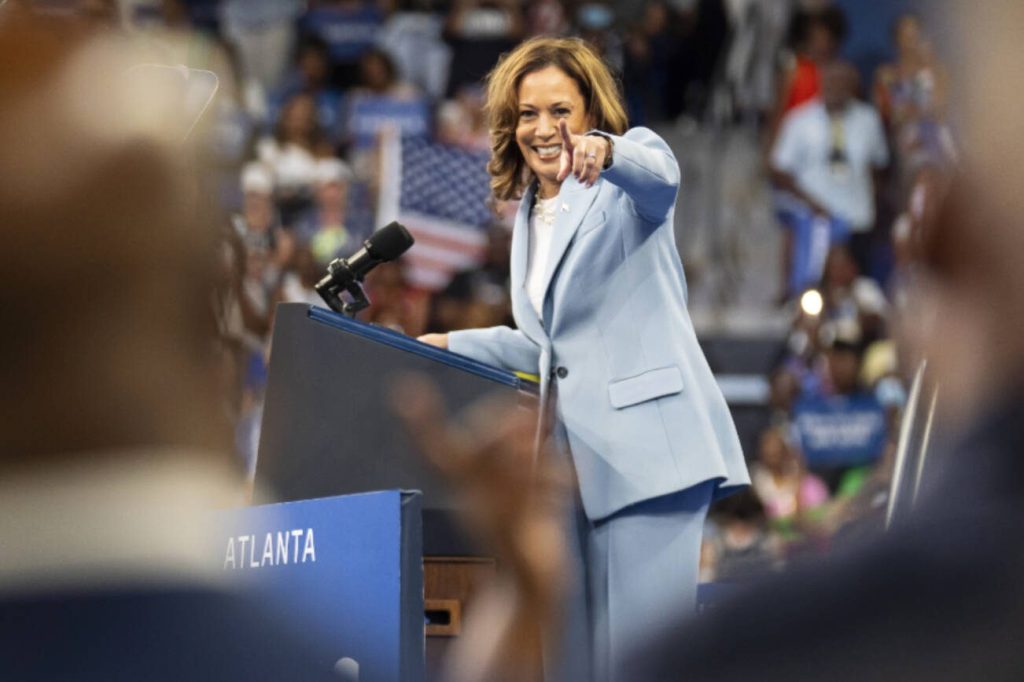
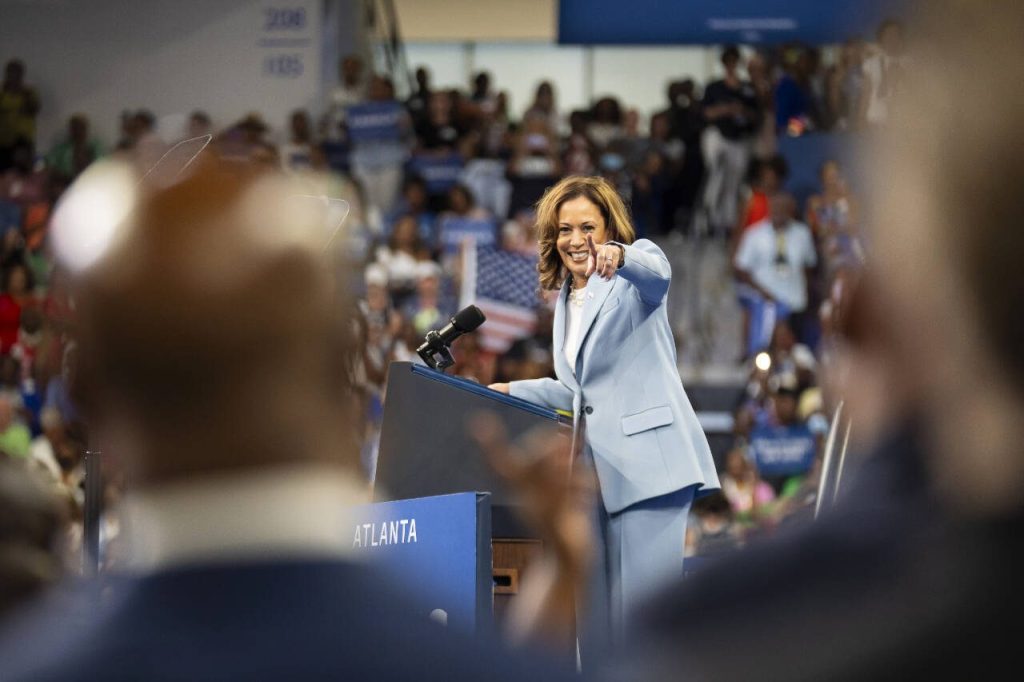
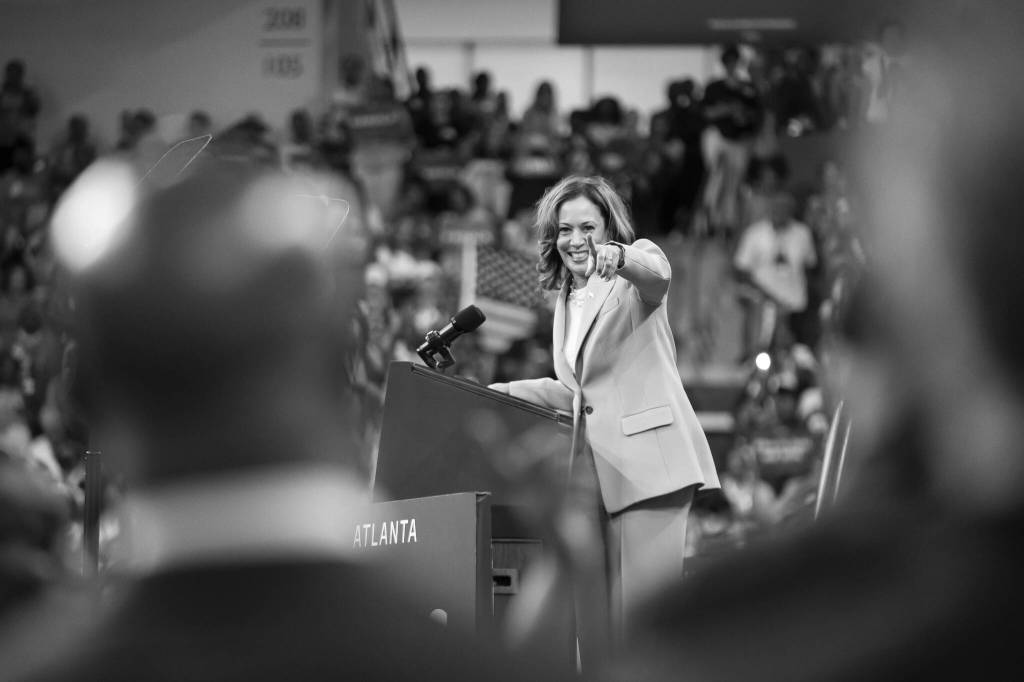
Elation in struggle: Many public views of Harris don’t reflect Trump’s framing. The vice president’s anecdotes, smile, laugh, and even — shocker — dancing in public have inspired a tidal wave of fan posts and videos celebrating her energy and what media scholar Jamie Cohen describes as her “endearing awkwardness.”
For these observers, Harris embodies the idea of Black joy; a national movement that started in 2020 after George Floyd was killed. As NAACP Legal Defense Fund senior writer Lindsey Norward explains:
“Black joy is an essential part of the complete story of Black people in their fight for dignity and reclamation … the unfettered ability to go and enjoy all of the good things about life.”
Act of self-definition: In a book that I co-edited with Wake Forest University political science professor Julia Jordan-Zachery, we examined a related concept: Black Girl Magic. Our book described how Black girls and women maintain their humanity in the face of hostility by fostering community, countering invisibility and creating spaces for freedom.
Sometimes this means drawing attention to their struggles. One essay in the book cites African American Policy Forum executive director Kimberlé Crenshaw, explaining the hashtag #SayHerName, which was coined to raise awareness of Black women victims of police brutality and anti-Black violence.
“Although Black women are routinely killed, raped and beaten by the police, their experiences are rarely foregrounded in popular understandings of police brutality,” Crenshaw wrote. “Yet, inclusion of Black women’s experiences in social movements, media narratives, and policy demands around policing and police brutality is critical to effectively combating racialized state violence for Black communities and other communities of color.”
On July 23, Harris released a statement expressing grief at the “senseless death” of Sonya Massey, a 36-year-old Black woman who was fatally shot in her Illinois home by a sheriff’s deputy who responded to a report of a prowler. The deputy has been fired and charged with murder, based on bodycam footage from another deputy that showed him threatening Massey after she rebuked him and then shooting her.
“Sonya Massey deserved to be safe,” Harris wrote. “The disturbing footage released yesterday confirms what we know from the lived experiences of so many; we have much work to do to ensure that our justice system fully lives up to its name.” In other words, Harris said Massey’s name.
Writing her own story: Our book argued that in the age of Trump, whom Black women almost universally see as hostile to their interests, finding the balance between humanity and magic is more important than ever for Black girls and women.
As then-first lady Michelle Obama said in a speech at the March 2015 Black Girls Rock awards, young Black girls often hear “voices that tell you that you’re not good enough, that you have to look a certain way, act a certain way; that if you speak up, you’re too loud; if you step up to lead, you’re being bossy.”
Around this time, author and social media influencer CaShawn Thompson began tweeting “#BlackGirlMagic” because, she said, “magic is something that people don’t always understand. Sometimes our accomplishments might seem to come out of thin air, because a lot of times, the only people supporting us are other Black women.”
The hashtag went mainstream at the 2016 Black Entertainment Television Awards, where actor and activist Jesse Williams delivered an impassioned discourse about race in America. He ended with a subtle nod:
“(T)he burden of the brutalized is not to comfort the bystander. That’s not our job, alright; stop with all that … the thing is that just because we’re magic doesn’t mean we’re not real.”
Williams was respectfully referencing the #BlackGirlMagic movement, alluding to the fact that Black girls’ and women’s identities include resistance against narratives that exclude them and a willingness to define themselves for themselves.
Inventing herself: Harris has confronted this challenge many times through her career as a district attorney, state attorney general, senator and vice president. Now she has to invent herself again as a presidential candidate. And even with a large campaign staff, Harris will have to do this for herself.
As Nobel laureate Toni Morrison observed, the Black woman has “nothing to fall back on: not maleness, not whiteness, not ladyhood, not anything. And out of the profound desolation of her reality she may very well have invented herself.”
Our book highlighted the emotional fortitude that Black women draw on to accomplish so many feats while breaking unfathomable barriers. It’s no exaggeration to call what they do magic.
Harris will need plenty of support for a successful campaign; from Black women and many others. There will be serious issues to debate, from border security to foreign policy to the economy. But Harris also has a real opportunity to contrast her humor and positive energy with a very dark vision from the GOP; without letting them dictate when it’s OK for her to laugh.
Duchess Harris is a professor of American studies at Macalester College, St. Paul, Minn. She is not related to Vice President Kamala Harris. This article is republished from The Conversation under a Creative Commons license.