‘A hometown person’: Friends and family remember Larry Hanson
Published 12:48 pm Friday, August 29, 2025
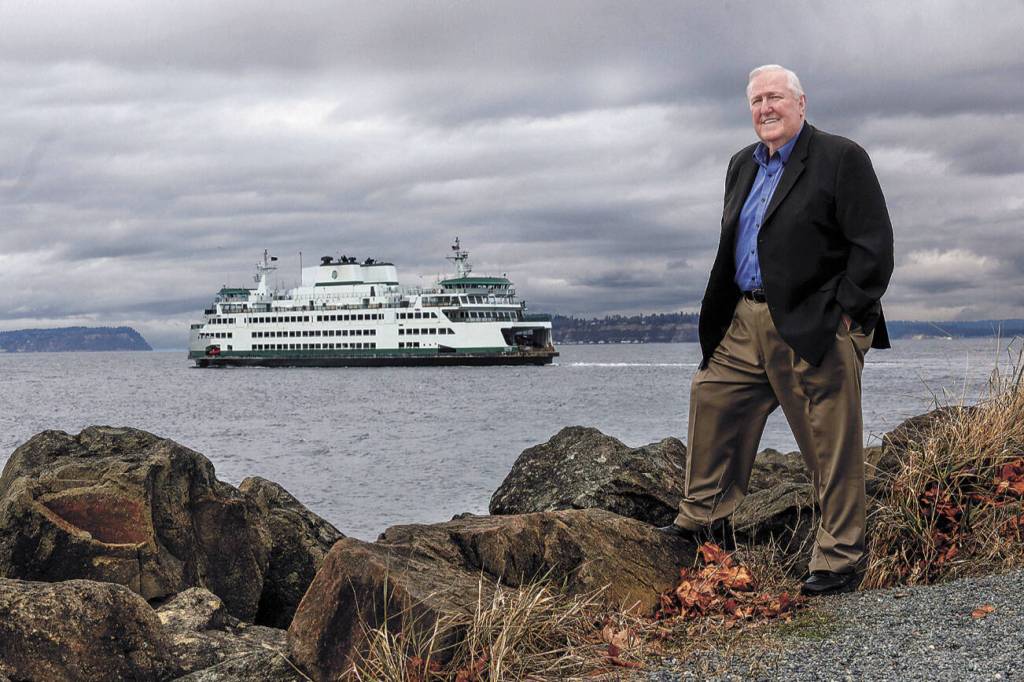



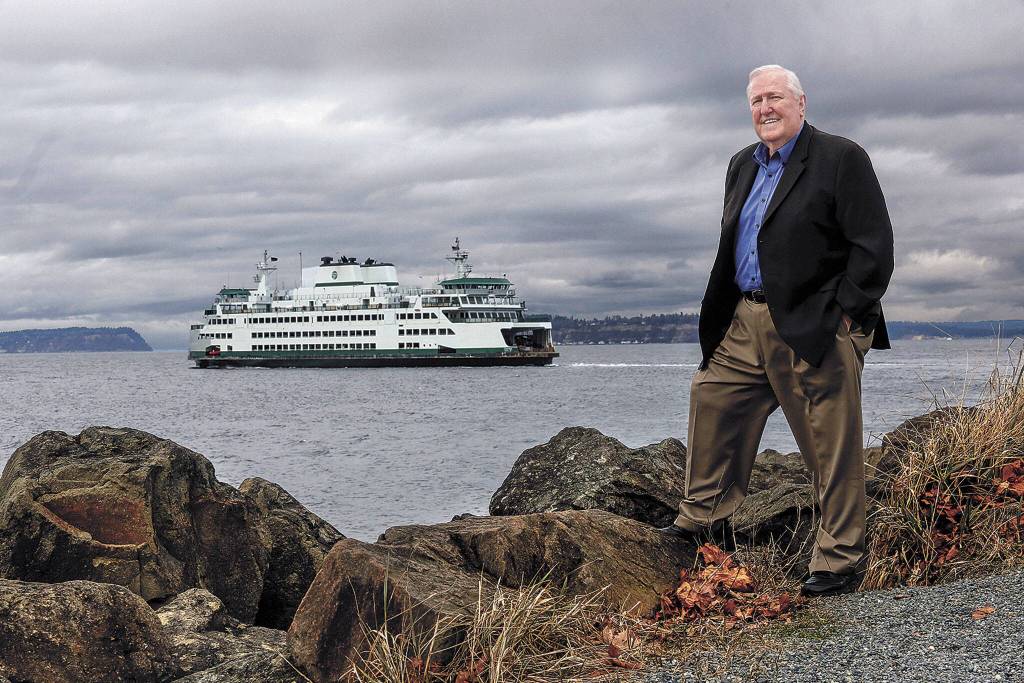
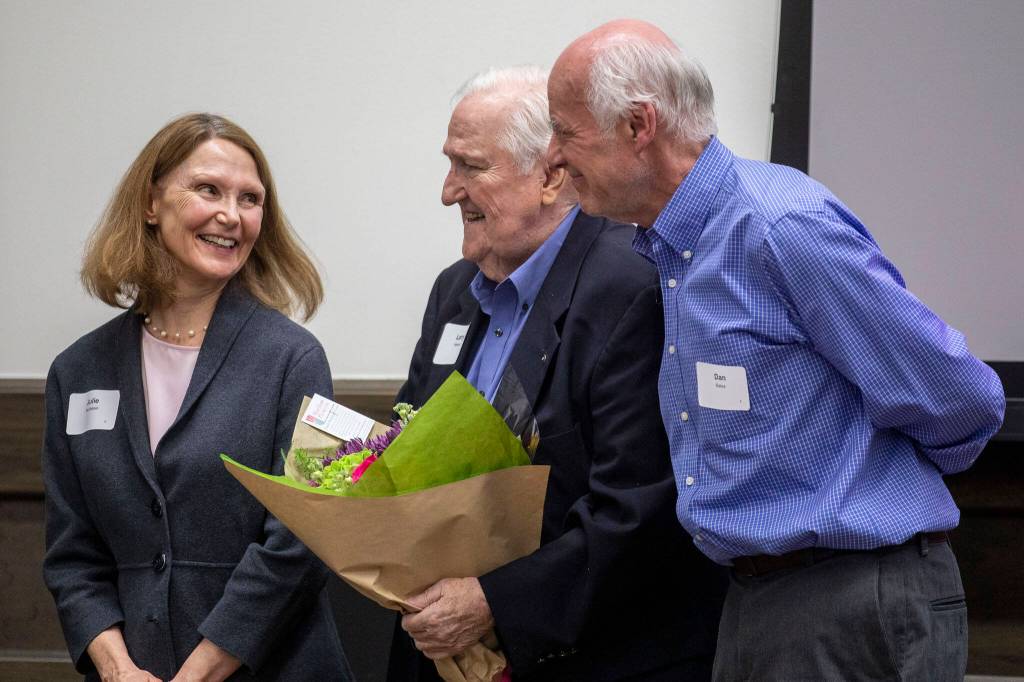
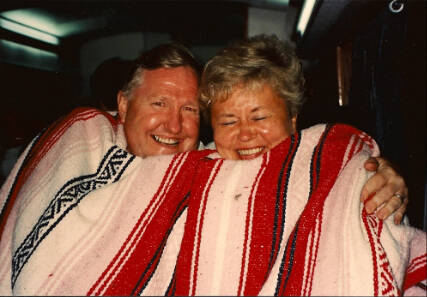


EVERETT — Nearly 70 years ago, an Everett college student happened to land a job as a messenger at The Everett Herald to pay for his studies.
The student, Larry Hanson, didn’t leave The Herald until his retirement as president, publisher and CEO 45 years later.
Working his way through nearly every department in the newsroom, Hanson led the paper through a slew of changes as technology advanced and ownership shifted.
Those who worked with him agree that Hanson made The Herald a family. He was an influential figure outside The Herald as well, volunteering and leading philanthropic efforts throughout the county and state.
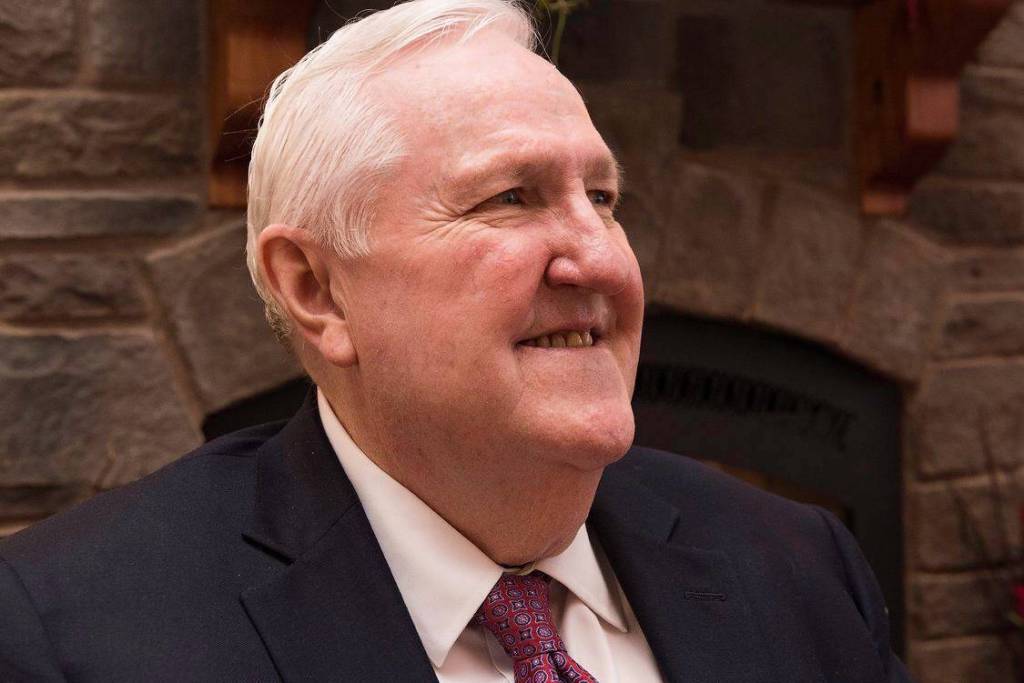
Hanson died Thursday. He was 87.
From messenger to a decades-long career
Hanson was an Everett native. Born in 1937, he grew up as the youngest of six children near the Silver Lake neighborhood, at the end of what was then Jordan Road. Hanson loved to tell stories about the “kids from Jordan Road” and growing up in the Depression era, his son, Jeff Hanson, said. In 1956, Larry Hanson graduated from Everett High School.
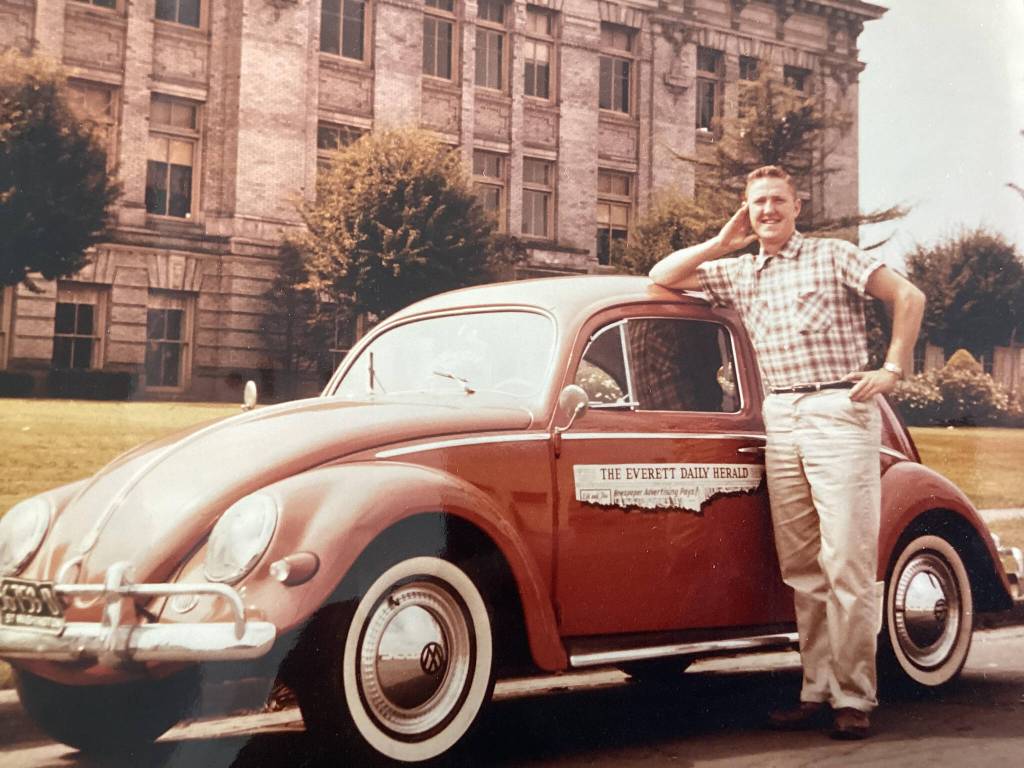
Larry Hanson’s journey at the Herald began in 1957. After six months of active duty in the U.S. Army, he was looking for a job to help pay for his studies at Everett Community College.
Robert Best, Herald publisher at the time, was in the market for a messenger after a fire damaged the old Herald building on the corner of Colby Avenue and Wall Street. So he loaned his Volkswagen Beetle — painted in Herald colors — to Larry, who would spend his days delivering items between two temporary offices. He thought The Herald would be a short-term gig as he waited for a higher-paying job, but a few months later, he landed a role as an advertising salesman. Larry remained at The Herald until his retirement in 2002.
“He stayed in one place, plugged into his community,” said Scott North, a former local news editor at The Herald. “He was somebody who grew up here, loved it and was of this place in every way that mattered.”
While working full time at The Herald, Larry took a full course load at Everett Community College. After two years, he transferred to the University of Washington, where he earned a bachelor’s degree in business administration. It was before I-5 was built, and he commuted to his classes from Everett. During his last year of college, he was also playing competitive fast-pitch softball and was engaged to his eventual wife, Raili Hanson, who he met working for the yearbook at Everett Community College. They got married in 1961. The next year, they had their son, Jeff Hanson. They had their daughter, Wendy Hanson, two years later.
In the mid-1960s, Larry became the production manager at The Herald, traveling across the country to investigate new printing procedures and technologies. It was a highlight of his career, he told Jeff Hanson. Larry recalled a trip to the East Coast, where he saw how news organizations were using computers to complete the news cycle.
In 1967, he was promoted to assistant to the publisher. Throughout his career, Larry ran almost every department in the newsroom.
Shortly after Best died in 1976, his family sold The Herald to The Washington Post Co. The Post owned The Herald until 2013, when it was sold to Black Press Media.
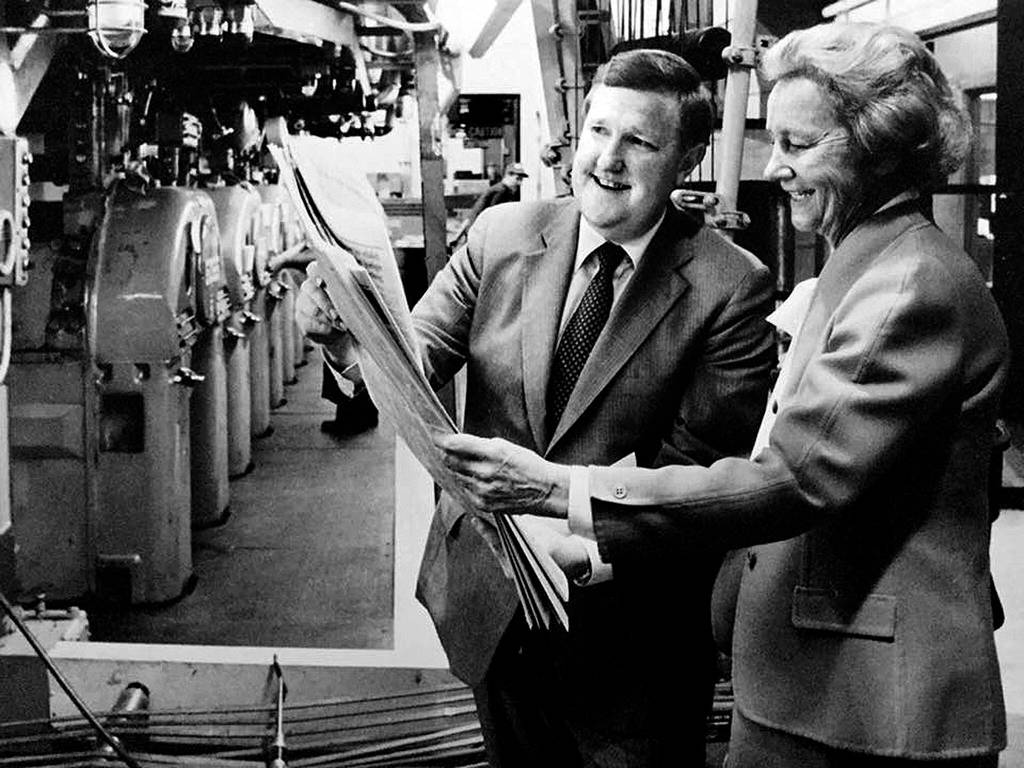
Larry worked closely with the new publisher, Chris Little, and became an intermediary between Everett and the nation’s capital. During his visits to Washington, D.C., The Post placed Larry in an office next to Ben Bradlee, executive editor at the time. Bradlee led The Post’s editorial team through some of its most iconic moments, including Watergate and publishing the Pentagon Papers. He gave Larry access to some of the paper’s key meetings, which taught him how to build trust among everyone in the newsroom, Larry told his son. The Post’s owner at the time, Katharine Graham, made many visits to Everett over the years.
“I have no doubt that Larry became a cheerleader for his hometown,” said Julie Muhlstein, a former Herald writer who wrote a column in 2018 about Hanson’s relationship with the Graham family. “He showed her all around Everett because he loved Everett. He was proud of Everett.”
In 1981, Larry was The Herald’s vice president of marketing. He oversaw the introduction of The Herald’s first Sunday edition. In addition to color comics, TV listings and a national magazine insert, the first Sunday edition was 74 pages, plus a 27-page magazine-style section. The Sunday edition lasted until 2023, when the U.S. Postal Service began delivering The Herald.
With the publication of the Sunday edition, The Everett Herald changed its name to The Herald. It became The Daily Herald in 2009.
Leading The Herald
When Larry was named publisher in 1984, he told a Herald reporter he was “undoubtedly the most fortunate person in the country: How many people have the chance to become the publisher of the newspaper in the community where they were born and raised?”
He led The Herald through a number of changes, including its switch to morning publication in 1990, using computers for design and layout, using digital cameras for photography, and creating a website. He called newspaper publishing a “daily miracle,” former assistant to the publisher Kim Heltne wrote in an email to The Herald.
“From the reporters, editors and photographers, to the sales department and accounting staff to the production side consisting of compositors, artists, press persons, insert crew, bundle haulers and circulation team, all the way to the carriers who put papers on porches and into tubes … Larry felt that every person was equally essential to our success,” Heltne said.
Former Herald reporters described being on staff during Larry’s tenure as being part of a family.
“After a couple years on the job, I decided that I wasn’t going to look for anything else, as long as Larry was the publisher,” former editorial page editor Joe Copeland said. “He was so dedicated to the community and the welfare of the public that it just seemed like something that was going to be unique in a publisher.”
Brenda Hartman, former human resources director at The Herald, remembers a project she took on with Larry where they interviewed every single employee to see how they felt about the job. At the time, The Herald had more than 300 employees, she said. Larry used the interviews to guide his decision making, which was indicative of his leadership style, Hartman said.
“His leadership didn’t come from ego or authority, it came from kindness and integrity and encouragement,” she said. “He brought out the best in people.”
As someone born and raised in Everett, Larry valued keeping local connections on staff.
“The job paid well enough that you could buy a house, have kids, raise a family,” North said. “He encouraged people to do that and stay here and be a part of that. It’s the kind of journalism I wanted to do, and he made that possible as a business leader.”
Hanson was able to support a robust staff by keeping The Herald in a strong financial position, said Bob Bolerjack, a former editorial page editor for The Herald.
“He did that because he had relationships with everyone in the community, from elected leaders to business leaders and advertisers,” he said. “The Herald was really respected throughout the community, and Larry was the face of that to a large extent.”
But Larry didn’t let his relationships get in the way of doing what he thought was right.
On Dec. 3, 1990, The Herald became one of the first newspapers in the country to publish a wedding announcement, then called “bonding announcements,” for a lesbian couple. The controversial decision, made by Larry and then managing editor Stan Strick, made national headlines and even landed Strick an appearance on “The Oprah Winfrey Show.” The decision caused some businesses to pull their advertisements from The Herald, but Larry stood his ground, Bolerjack said.
“I’ve always had a deep admiration for the courage that decision took on his part,” he said.
‘Separation of church and state’
One of Larry’s proudest accomplishments as publisher was refraining from involving himself in The Herald’s daily news coverage, he told a reporter when he announced his retirement in 2001.
“People in the community may not be aware of the importance I have placed on what I call the separation of church and state,” he said.
But the reporters who worked with Larry were aware.
“Never once did he ask me to turn my eye away from the truth,” North said.
Reporters recalled Larry having their backs after writing stories that were critical of prominent figures or institutions.
“He backed the mission and independence of the newsroom to pursue important stories, even if it meant he might field some uncomfortable phone calls, which he took without complaint,” former local news editor Eric Stevick wrote in an email to The Herald.
He was an approachable publisher, North said. At the time, The Herald office was in downtown Everett on the corner of Grand Avenue and California Street, and people weren’t afraid to enter the building and go right to his office.
“He understood the value and importance of truth,” North said. “He knew that was the major product that The Herald sold, and he jealously defended it.”
Hanson retired in 2002 to spend more time with his family. But his impact on the community didn’t stop there.
Beyond The Herald
For decades, Larry volunteered with a number of local organizations, including United Way and the YMCA. In 2004, he was appointed temporary chief of United Way of Snohomish County. He also held leadership positions in the Everett Chamber of Commerce, Everett Rotary Club, Workforce Development Council, Snohomish County Needs Assessment Task Force and the Snohomish County Unit of the American Cancer Society.
“He was very much a hometown person,” Muhlstein said.
Larry helped establish the Economic Development Council of Snohomish County, which became part of Economic Alliance Snohomish County in 2011. He was instrumental in creating the University of Washington Bothell campus in 1989 and bringing the Navy to Everett in 1994.
“If anybody worked harder to preserve the sense of community and fair play in Snohomish County than Larry, I have yet to meet them,” former Snohomish County Executive Bob Drewel said.
Larry first met Drewel at a United Way event, and their families became friends over the years. In nearly every philanthropic effort one of them worked on, the other was there. They maintained their friendship even after going weeks, or months, without talking, Drewel said.
“That’s just a measure of Larry’s belief system, that relationships, as he perceives them, that have some merit and some return to the community are those that are worth preserving,” Drewel said. “I always felt so grateful to be on his list of people he felt that way about.”
In 1991, then Gov. Booth Gardner appointed Larry to the Washington State Blue Ribbon Commission on K-12 Education Reform, which resulted in higher learning standards in schools across the state. He later served two terms on the state’s Higher Education Coordinating Board. He also participated in national, regional and local newspaper associations.
Beyond his material accomplishments, those who knew Larry remember him as a warm, humble and welcoming person.
“In all the years I worked with him, I never heard him speak badly about anyone,” Hartman said. “He always saw the good in people. He always saw the good in everything. And he helped people see that in themselves.”
Amid his busy schedule, he still made time to be there for his family, Jeff Hanson said.
“He was always there for me as a dad,” Jeff Hanson said. “As busy of a guy as he was working at The Herald and in the community, he made time for us. That’s what I really appreciated, and my sister would say the same.”
After he retired from The Herald, he became a caregiver for his wife, Raili Hanson, who had Parkinson’s disease. After she died in 2010, Larry worked to establish an award in her honor with Bethany of the Northwest, where she served as a board member.
He also excelled at being a grandfather to his two grandchildren, Derek and Anna, Jeff Hanson said. Larry worked on numerous passion projects for his grandchildren, including building a custom Thomas the Tank Engine to carry Derek, and later a caboose, to carry Anna when she was old enough.
“From the time they were very young all the way into their adulthood, ‘Pops’ was remarkable in three ways: always showing up, sharing unconditional love and being the very best cheerleader in all their pursuits,” Jeff Hanson said.
Larry was an avid baseball fan. In 1989, he filed a story for The Herald from San Francisco after a 6.9 magnitude earthquake hit during the World Series.
“As we stood there, somewhat stunned, we shared our experiences instinctively with the people around us who were strangers no longer,” he wrote. “We talked nervously as we felt the aftershocks and watched the windows on the press box waver.”
At Everett High School, Larry was the catcher on the baseball team alongside William Prochnau, who went on to become a national correspondent for The Post. Prochnau, the team’s pitcher, liked to throw the occasional knuckleball, Stevick said.
“Decades after they were teammates, Larry would point to a bump on the little finger of his right hand, smile, shake his head and say: Prochnau,” Stevick said. “The two Everett kids would go on to make remarkable contributions to journalism: Prochnau on the national stage and Larry in his own backyard.”
In 2017, Larry wrote a column for The Herald about why he loves Snohomish County.
“What’s not to love about this place we call home?” he wrote. “But do you know what I love more? It’s the spirit of the people who live here and the generations who preceded them that have made this the caring, generous, resilient community it has become. As a native of Snohomish County, I have had a lifetime to see that spirit in action.”
Correction: A previous version of this article misstated that Stan Strick was the The Herald’s ombudsman in 1990. Strick was The Herald’s managing editor at the time.
Jenna Peterson: 425-339-3486; jenna.peterson@heraldnet.com; X: @jennarpetersonn.