Everett mayor talks priorities for third term in office
Published 10:33 am Monday, December 15, 2025

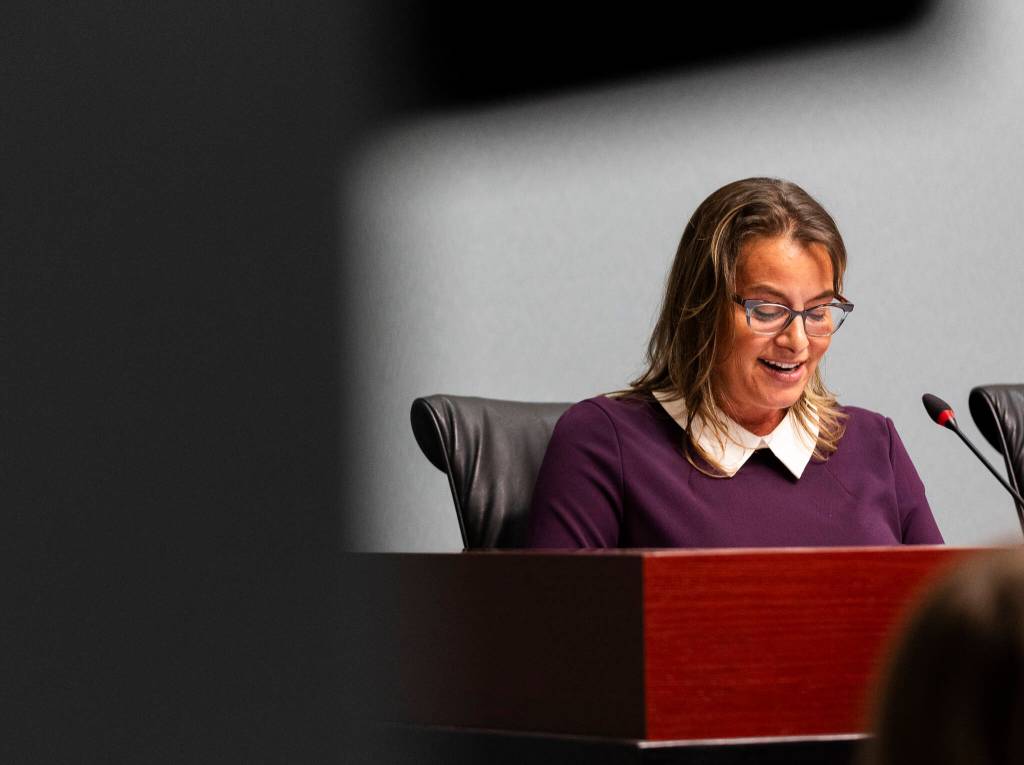


EVERETT — Everett Mayor Cassie Franklin shared her top priorities going into her third term in office during an interview with The Daily Herald on Tuesday.
Franklin said her work over the next four years will largely be a continuation of her ongoing work. During this term, she will focus primarily on public safety, housing and human services, and improving community engagement, she said.
On public safety, Franklin hopes to address youth crime over the next four years. In March, Franklin announced a new mayoral directive — her 13th issued while in office — to reduce youth violence. It tells city staff to increase the presence of school resource officers, establish a new youth safety roundtable and track progress on youth-related initiatives. It also looks to advocate for statewide changes to firearm laws and juvenile justice reform.
Franklin previously issued a mayoral directive to reduce youth violence in 2018.
On Tuesday, Franklin said she would work with the city’s youth advisory board to see what the city and outside agencies can do to improve youth safety.
Another topic Franklin hopes to address is traffic safety. She said continued work on the city’s Vision Zero Everett plan would help improve safety. The plan, still in the works, largely focuses on improving road safety design, lowering speed limits and improving post-crash care — particularly for pedestrians and cyclists, who are killed far more often in traffic collisions than those in vehicles, city data showed.
In regard to housing and homelessness, Franklin said her main goal is to increase the supply of housing and embrace density to utilize existing infrastructure and protect green space.
“Everett is an urban center, so that density belongs in a city like Everett,” she said.
Research has shown that building denser, transit-oriented development can conserve open space, reduce infrastructure costs and promote economic development.
Franklin also said the city’s work on its comprehensive plan update gave more opportunities for home ownership through allowing missing middle housing, lot splitting and accessory dwelling units across much of the city.
To address homelessness, Franklin said she would work with local organizations like nonprofits and faith groups to increase shelter capacity. She said she is also working with other mayors to create more pathways to get people into inpatient treatment, including involuntarily.
Another top priority of Franklin’s is improving engagement and access to government, she said.
“I think for a long time in Everett, it was a few people who had access to government, but not all, and we weren’t seen as one Everett,” Franklin said. “It was like north Everett was Everett, and south Everett was this extra community. And we have embraced one Everett.”
Franklin said she would work with neighborhood groups and city council members to increase engagement throughout districts and neighborhoods. She will also encourage people to join boards and commissions to make them more likely to be geographically and racially diverse in a way that reflects the community, she said.
Everett also needs to address its ongoing structural budget deficit, Franklin said. The city will need to close a potential $14 million deficit in the 2027 budget, projections show.
Franklin again cited the state’s 1% cap on annual property tax levy increases as the primary factor behind the city’s continual budget challenges. Throughout the year, she said, city staff and council members will discuss ways to close that budget gap, which could include regionalization of library or fire services, or through a targeted property tax levy lid lift toward parks, fire, public safety or libraries. She said her and her staff will also look at comparable cities to see what tools, including taxes or fees, they have implemented to meet budget needs.
The city is also looking into annexing certain parts of land in unincorporated Snohomish County south of Everett, Franklin said.
Other areas Franklin hopes to address include cutting red tape for businesses, seizing on economic opportunities like the 2026 World Cup, working to advance the Everett Link light rail expansion, and working toward economic development and quality of life improvements — including, she said, the city’s proposed downtown stadium project, known as the Outdoor Event Center.
The Herald asked Franklin a number of questions Tuesday about her work in the coming four years. Questions (in bold) and answers have been edited for length and clarity.
Question: I’ll start with talking about the budget. It’s obviously been one of the big challenges that has been a part of the city even since before you were mayor. You’ve mentioned that you had hosted an open house and launched a survey to get feedback from people in terms of what their priorities are. What are some of the results that you’ve seen from that? And what solutions will you hope to present, in terms of the 2027 budget, in order to meet those needs?
Answer: I think we have to have a lot more conversations with the public. The results of most the feedback we get is we want all the services, but we really don’t understand why we would have to help with revenue towards them. I think it’s just the way property tax works is so complicated, and so there’s just a lot of community education, and also education on how all the cities do this. Every single city in Washington state pulls different levers to pay for services. And each of those levers costs residents and businesses in their community. It’s which levers our residents and businesses want, which areas of programmatic services people are willing to invest in?
I’ll start with the library, you know? There’s three choices. You can regionalize and annex with Sno-Isle library, which will cost the residents additional taxes because they would pay for that separately on their property taxes. But it would be this guaranteed source, and all that money goes towards the regionalization of library services. And we’d have to work with Sno-Isle libraries and go through that process, and it’d be a vote of the people.
We could do run our own library levy, saying, we need money to continue to support public libraries. We want to run our own library system, for whatever reason that we decide, that that’s important for us to maintain separately as a city. But we need additional investment from our community to grow and maintain library services. And that would be a vote of the people to decide if they wanted to invest in library services.
Or, we don’t see that, and we have to continue to shrink our services, because we can’t continue to provide services that cost more every year without revenue that increases every year. Because our revenue doesn’t increase at the same rate, and we will continue to try to help educate people about that.
It’s the same with fire, right? Regionalization has costs and benefits. There’s reduced impacts to the city, but the mayor no longer appoints the fire chief. It’s appointed by a different board. Right now, I work with the fire chief and the council to decide the level of investment we want to see in fire services, and we would lose that authority. But the cost of running a fire department grows exponentially. There’s a reason that almost all cities have regionalized, because it is one of the most expensive departments to run.
Q: A lot of the services that have been cut over the past few years — the library hours being reduced, the park rangers, the swimming pool — these are really popular services. As you look at these revenue solutions, are you also looking to increase the sort of service levels that you had prior?
A: Well, if we wanted to bring back Forest Park Swim Center, for example, we would need to run a park levy. It’s a $4 million upfront cost plus a couple million in operations every year. That’s significant, and swim services have changed pretty dramatically since Forest Park Swim Center opened years ago. Our community would want to look at what type of swim center they want to reopen. Do they want a swim fitness center with swim lessons and maybe a place for swim teams or people who do lap swimming or do they want a lazy river and splash pad and that kind of full family recreation center. And what what’s that investment look like? Where is the appropriate location for that? Our city has grown quite a bit, and it grows to the south. To expand and bring back services, you need revenue for that, because we have less and less revenue each year to pay for existing services, which is why you’ve seen us cut services.
We had five amazing park rangers that helped us do park checks on our 900-some acres of parks. But the idea that five park rangers were standing guard in every park is not accurate, or providing, you know, fun kids park programming in every park. I wish that would have been what they had time to do. But if people really want programmatic park rangers and, you know, your park ranger putting on his hat and taking you through a guide through the park, I mean, that’s going to be a whole recreation department that we don’t have right now. Again, that would be a park levy paying for something like that. But when it comes to like park safety and increasing safety, that would be a public safety levy. That’s not a park ranger program. Because the park rangers didn’t have weapons, they didn’t have enforcement abilities. They would call 911. And so if we want increased safety presence in our parks, that’s very different. That’s public safety.
Q: Another thing you had previously noted, and this is touching on homelessness. You’ve talked about wanting to have sort of a region-wide approach to addressing homelessness and working towards that. What steps will you take to make sure that it’s not just Everett is working towards this, but also other people around the county are contributing to these solutions?
A: The leadership in this area always comes from Snohomish County. The funding and the leadership on how this county addresses homelessness services comes from Snohomish County, because that’s where the revenue goes. We work in close partnership with Snohomish County, I have regular meetings with Executive Somers and talk about this, but I also have conversations with the mayors around the region to talk about how their solutions, or lack thereof, impact Everett positively or negatively.
It’s important that we recognize that people don’t stay within city boundaries. They move freely between our communities and that we, as mayors, work collaboratively on that. But as the county seat, we definitely rely on the county, our neighboring cities, our faith partners, our nonprofits, the partners in this work, and working across the region with King County and our neighboring communities.
But some of the regionalization hasn’t worked. You know, there’s a regional authority in King County that has gotten mixed reviews. So, I think you really have to recognize that what works in Seattle doesn’t necessarily work in Everett, and what works in Tacoma may not work in Seattle. It’s up to all of us to understand the region and work together, but also understand the uniqueness of each of our areas and be willing to be good partners to each other. I would love to encourage other communities, for example, to embrace Pallet Shelters. They are working, they are an affordable, accessible tool that gives people the dignity of four walls and a door. That’s one of my goals when I talk about the regionalization of this work is helping other smaller cities around us learn from the great work that we’ve been doing in Everett.
And in the Tulalip Tribes, the Tulalip Tribes have done some really exceptional work in this space. They have Pallet Shelter communities. They’ve got some great human services programs and it’s really helping their community. I’d love to see some of our other surrounding communities embrace these tools, because you don’t have to have a 400-bed facility. You can have space for 10 families.
Q: On economic development, you’ve talked about a lot of the work the city has already done with the new Chamber of Commerce, supporting local initiatives like Late Shift. Were there other steps that you plan to take over the next four years to grow the economy, grow business here? What are steps you’re going to take to kind of entice that activity across the city?
A: Well, a lot of it is through partnership and continued growth and working with that Chamber, right? I know we’re looking at a leadership mission to other communities to woo and attract businesses from places you can fly to from Paine Field that might want to relocate to the Pacific Northwest. And branding and marketing our community as part of the greater Seattle area, but very different from Seattle. We are definitely our own urban center. There are businesses that likely wouldn’t be a fit for that region but that would be a great fit for the community of Everett. So, proactively reaching out and marketing and showcasing our our city and our region, working with the Chamber, working with the Economic Alliance. I also work with the Greater Seattle Partners and the Greater Seattle Chamber, because, you know, depending on the scale, people see Everett as part of that region as well.
Continued permitting reform, continued advocacy to the state for business-friendly policies and creating a business-friendlier state, because sometimes there’s some headwinds there, and I think it’s important that we work on that to be competitive.
And then, just being responsive. When a business reaches out, we get back to them. I prioritize going to ribbon cuttings. Businesses invite me, and I show up. I think that’s important, because if a new business is opening their doors in their city and they want the local government to be there, that means that it’s meaningful to them. And we want to know that when you call, we’re going to show up for you. You are important part of our economy, you are providing jobs to residents in our city. You are providing quality of life to residents and visitors in our community, and we care about you. And we’re going to do our best to take care of you.
Q: Another part of the economic development measures is the stadium. You brought that up here too. I keep hearing, there’s a lot of people who are kind of skeptical about the city spending this amount of money on a stadium, especially since you mentioned, like, the affordability challenges people are going through, the budget crisis. Even though it’s not the same pot of money, but —
A: Why would we spend money when we’re in a structural deficit?
Q: Yeah, just how do you explain that to people in terms of this big amount of spending? How do you explain that to people who are skeptical about that?
A: We have to really consider the each investment we make. We don’t get to make very many investments. I’ll use the example: People are always like, why can’t you do stuff like the port’s doing? Well, the port’s putting millions and millions of dollars there. That’s choice that they’re making, and it’s driving the economy, and it’s fantastic, and it’s working, right? They don’t have to provide all the services and all that, so it’s a lot easier for the port to do that. And that’s what they’re designed to do, is to grow the economy.
We made that choice with the riverfront. We could have just left the landfill there, and it would have just been a landfill, and there would have been some grass growing over it. But instead, we chose to invest millions and millions and millions of dollars to get that site ready, and then work on the development agreement, to build housing and community, because we saw that as a priority, and worth that investment. This is one of those opportunities. So, we either lose millions in revenue that we get from having Minor League baseball in our city, and the affordable family-friendly activity that we have, or we have to make an investment to keep it. If we invest wisely, we could actually grow the economy, grow the quality of life and family-friendly activities that we have. And it pays for itself over time because of that investment.
But that’s years of growth, right? If we invest that, does it pay for itself in year one, two, three? No. But does it pay for itself over a couple of decades? Likely. In my opinion, it’s not about baseball. And it’s not about soccer. It’s about the transformational opportunity this is for Everett. We have the opportunity to make a transformational investment that will grow and attract visitors, housing , transit-oriented development, expand our downtown footprint. It’s guaranteed an investment worth exploring. And I certainly don’t want to lose the team.
When people say, why aren’t you just putting that money towards human services? There’s people in need, why would you take the — let’s pretend it’s $80 million — why don’t you just take $80 million and do something? Well, we could, but how are we going to maintain that? There’s no revenue that that makes. So I’d love to be able to invest in all these other areas, you know, bring back park rangers. But this is one of the only things I can invest in that actually produces revenue, right? There’s not very much that cities can invest in that produces revenue. We could do that, but over time it would go away because we wouldn’t be able to afford to maintain it.
The way out of a structural deficit is to continue to broaden your tax base, and that’s by growing economic growth. So, in order to take care of people, in order to provide necessary services, investments in economic development projects are essential. This one is not a project I chose. It’s on a timeline that was chosen for me, and so we have to work within that. Yes, there’s people that are questioning it, but we’ve got a lot of people who are really still excited about it and care about it, and care about the transformation it could bring to Everett.
Q: You mentioned the timeline. I have just one more question on the stadium.
A: Yeah.
Q: We’re almost at the end of 2025 now, and there’s been no news of finished lease negotiations or design reaching the 60% mark. How are you going to make sure, if this project is approved, that it’s done on time?
A: We just had a meeting on it this morning. We have the 60% design, but there’s value engineering that has to be done before we have the guaranteed maximum price. And we can’t move anything forward to council to vote and approve until we get to that point. But as a reminder, council has approved some level of spending to date, and the purchase and sale of properties, so I’m moving forward with that to gain site control. We’re going to continue to do everything the council’s approved to date to keep this project on a timeline. And we’re looking at different tools around the building of it that will allow us to keep to this aggressive Major League-driven timeline.
We are one of two stadiums in the country that needs to get this done to maintain Minor League baseball. Every other stadium across the US has this further along. So our window is getting shorter.
You can expect council to be doing a resolution on their values around this project this week. I think we’ll do a brief update next week at council on this project. I would expect, certainly in the 1st quarter, but probably the earlier part of the 1st quarter of next year, a larger stadium decision point for the council. And that’s necessary to keep the project on time.
Q: You talked a little bit about the work of the mobile opioid team and the city’s social workers program. You know, barring challenges with funding, are there plans to expand that work over the next 4 years?
A: No. You know, that work is amazing, they are doing incredible work, and we’re always looking for grants and things, but that is not to expand. It’s to maintain it. We are doing great work. We have a strong team of social workers, we have the EMOTE team. It is working, it’s connecting people.
We need other systems outside of the city to grow and thrive, right? We need our housing and treatment programs to grow. But the team that we have to connect people to those is solid. And what we need to do as a city is continue to receive the supports and investments to maintain that very important part of our public safety network.
Q: About the federal environment, you brought that up as well. Other cities along the West Coast have seen, you know, the National Guard come out to cities. There’s been this rapid uptick in ICE activity nationwide. What will be your approach to dealing with this if we see a vast increase of federal activity here in Everett?
A: We continue to make it clear that we are subject to Washington state law, and are here to protect and serve all of our residents in the city of Everett. We do not work with federal immigration, we do not care about immigration status when it comes to providing services to our city. If you are a resident, you are a resident, and we want to take care of you. When I visit our communities in south Everett that are living under so much fear, I try to help them understand that the city is here to serve them. If they ever need help, they can call 911, and our police and fire, our first responders, will come to their aid and do everything we can to assist them. I can’t block federal immigration from coming into the city, nor can I kick them out when they’re here. But I can I direct my first responders that serve the residents to continue to serve the residents. They don’t assist ICE in their efforts. That’s a federal program.
I very much hope that the National Guard will not show up in Everett. They are not needed. We provide stellar public safety services, and I do not believe the National Guard would be helpful in any way. I believe that the National Guard should not be deployed in our communities. And I very much hope that we don’t see that. I think when I talk to residents about that, we’re at the urban center of Snohomish County, but we’re still a small town. I don’t expect to see the National Guard here. I don’t think we’re on the federal government’s radar as an area that they need to come in and clean house. We’re a well-run community that’s doing good work.
Will Geschke: 425-339-3443; william.geschke@heraldnet.com; X: @willgeschke.