Everett council to consider extending ‘no sit, no lie’ law
Published 1:38 pm Thursday, October 9, 2025


EVERETT — The Everett City Council is set to consider whether it should renew a controversial law that criminalizes sitting or lying down on public property in certain parts of the city.
The law, colloquially referred to as “no sit, no lie,” prohibits people from sitting or lying down in much of the city’s downtown core and bans individuals from giving out food, water or supplies to others in those areas without a permit.
Those areas, known as buffer zones, were put into place to address concerns over homelessness and help connect individuals with needed services, Everett staff have previously said. When the law was put into place, it received backlash from some homeless people and local nonprofits but garnered support from some business owners.
City leaders argue the buffer zones are a tool for law enforcement and city social workers to address homelessness while also meeting the needs of nearby business owners and other residents in Everett. The city has also said it focuses on education over enforcement and uses buffer zones to connect individuals with services via outreach efforts.
At the time the ordinance was approved, some homeless individuals said the “no sit, no lie” rules made them feel targeted and fearful of arrest.
A law that gave the city power to enact new buffer zones was set to sunset at the end of 2025 unless council re-approved it. In a new ordinance, the city council is set to consider whether it should extend the buffer zones until the end of 2027. It also includes new language requiring the city to provide reports at least once per year on the buffer zones.
In the two years since the law has been put into place, police have given 156 official warnings at the buffer zones and issued 11 criminal charges for buffer zone violations, said Lacey Offutt, an attorney at the city, at a City Council meeting Wednesday. Nobody has been convicted of a buffer zone violation.
Offutt also said calls for service within buffer zones have dropped since they were implemented.
A number of business owners and a nonprofit submitted comments in support of renewing the buffer zones on Wednesday. Alvaro Guillen, the director of Everett nonprofit Connect Casino Road, said the measure has made the area the nonprofit operates in — located within a south Everett buffer zone — “more tranquil and accessible to families and children,” Guillen wrote in a comment to the council.
“I want to acknowledge that when buffer zones were first proposed and implemented in Everett, there was some skepticism and opposition within our community. Many of us were concerned about the potential for over-policing, the displacement of individuals in need of services, and the perceived criminalization of simply existing in public spaces,” Guillen wrote. “However, the data and our lived experiences at our community center have prompted a reassessment. We have observed a notable and welcome decrease in overt illegal activity, particularly in the vicinity of our community center.”
Council member Liz Vogeli, who was the sole vote against the 2021 “no sit, no lie” ordinance and voted against the 2023 expansion, said Wednesday that she remains opposed to the policy. She praised police for working with a focus on empathy rather than punishment and acknowledged that buffer zones have delivered some positive visual effects, but said the zones were the wrong way to deal with a societal problem, calling them a “Band-Aid on a puncture wound.”
“Even I have seen the decrease in visible illegal activity,” Vogeli said. “However, the need for services is increasing and the city’s ability to incorporate and fund those services is decreasing. We don’t have the money, we have more needs.”
Council member Paula Rhyne, who also voted against the “no sit, no lie” expansion in 2023, asked Wednesday if the policy has led to increases in calls for service in areas outside of the buffer zones.
“I think one of the original concerns, as Alvaro had mentioned, was that this approach doesn’t solve homelessness, it just moves it around,” Rhyne said. “Context for me is really important. While we’re seeing visual improvements in these zones, we’re not seeing that homelessness overall is being solved in Everett.”
Everett Mayor Cassie Franklin said the zones were not created to solve homelessness, rather to address “nuisance crimes that plague areas around hot spots” like service providers or shelters.
“There’s no way we can guarantee it’s not pushing that into other areas. What we work to do through emphasis patrols and other efforts is to try and mitigate any of those impacts,” Franklin said. “But I can honestly say the reports I’m receiving around this are overwhelmingly positive.”
Everett first approved a “no sit, no lie” ordinance in 2021 — limited to a 10-block area east of Broadway between 41st Street and Pacific Avenue, including Everett Station and the Everett Gospel Mission — as part of a move to build a pallet shelter project. That measure outlawed sitting and lying down on city property in the area, drawing backlash from the American Civil Liberties Union and the National Homelessness Law Center.
In 2023, the City Council narrowly approved an expansion of the “no sit, no lie” law, giving the mayor and city staff new authority to create buffer zones in areas that are impacted by six or more “qualifying events” in six months. Those include trespassing, theft, harassment, assault, disorderly conduct, unlawful transit conduct, offensive littering, drug-related offenses, obstructing streets, public disturbance, or the presence of an encampment, the ordinance reads.
Sitting or lying down on public property in a buffer zone is a misdemeanor offence, punishable by up to 90 days in jail and possible fines up to $500.
The 2023 law also prohibited individuals from providing food, water, supplies or services to people in the buffer zones without a permit. That decision was met with protests from mutual aid groups, which argued they shouldn’t need a permit to distribute supplies.
In the time since the buffer zones were put into place, the city issued six permits allowing individuals to distribute goods, Offutt said Wednesday. Three of them remain active.
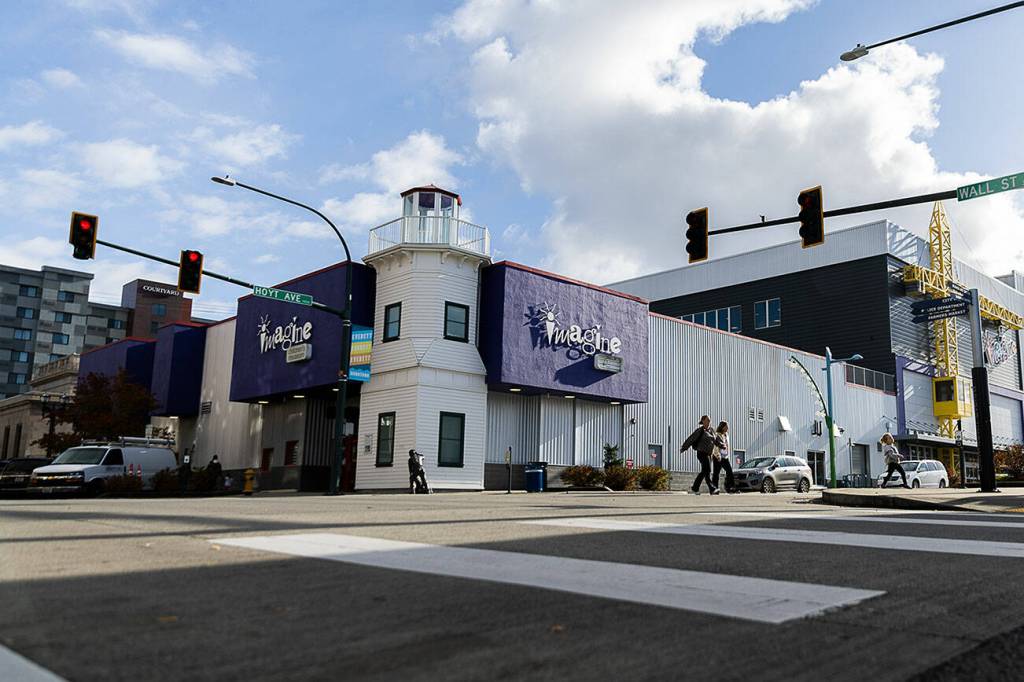
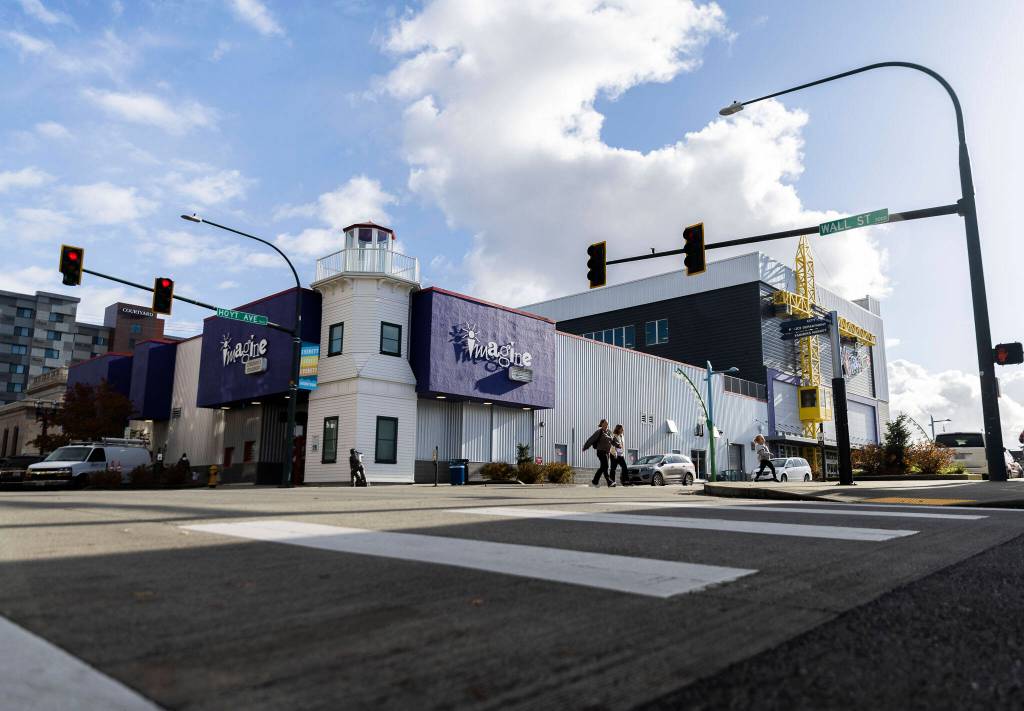
Since the 2023 ordinance was approved, Everett staff have created four additional buffer zones across the city in addition to the original “no sit, no lie” zone the council approved in 2021. Three are centered around the city’s downtown core, while a fourth is located in south Everett, near the soon-to-closed Fred Meyer along Casino Road. In November 2024, staff added the most recent buffer zone around the Imagine Children’s Museum in downtown Everett.
The city council is set to vote on the ordinance on Oct. 22.
Will Geschke: 425-339-3443; william.geschke@heraldnet.com; X: @willgeschke.