Snohomish County Council grapples with worse-than-expected budget woes
Published 5:26 pm Wednesday, August 13, 2025
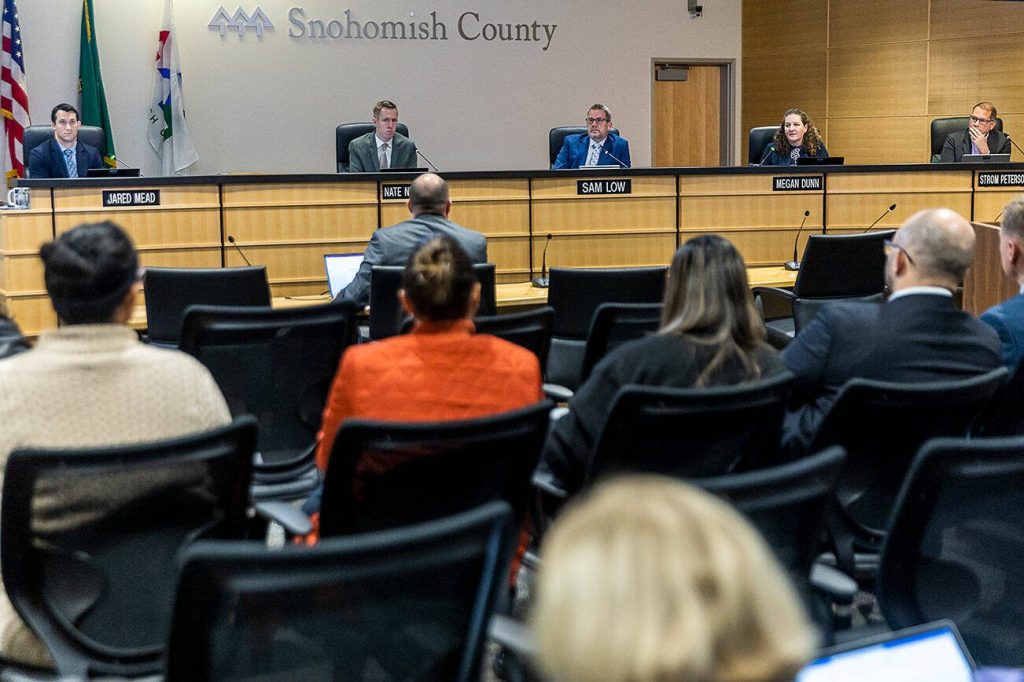
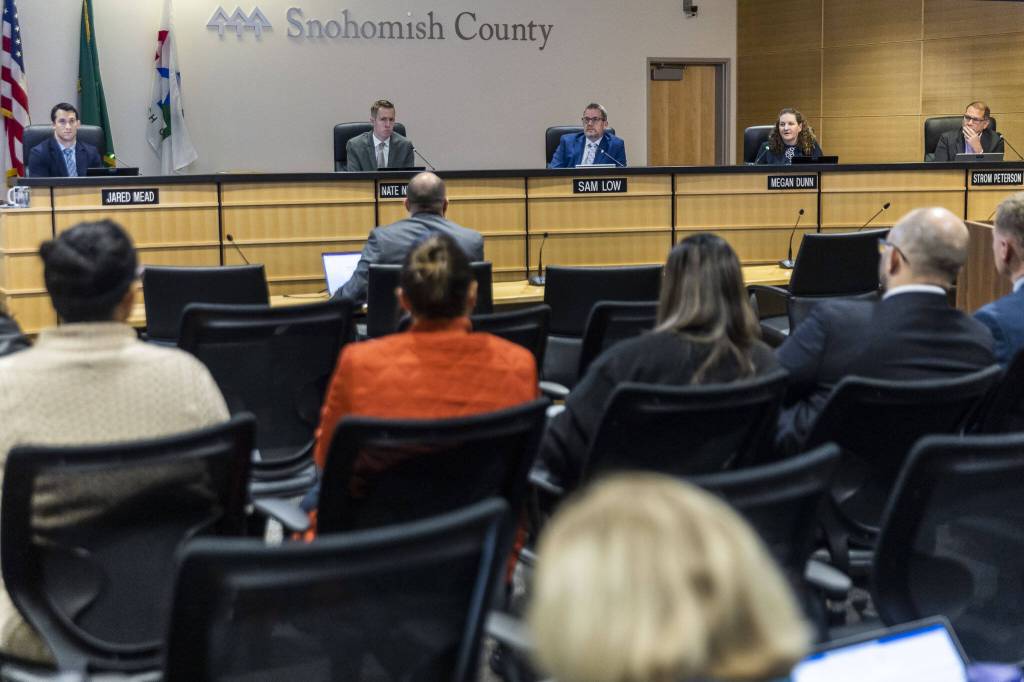


EVERETT — Snohomish County Council members walked into a budget meeting Tuesday expecting to discuss a $5 million shortfall in the county’s general fund.
During the meeting, they also learned the county could be in danger of overspending by more than $20 million over two years.
“We have about four departments where we’re facing about a $20 million overage,” council member Sam Low said after the meeting. “On top of being short $5 million in sales tax.”
The first quarter budget report cited the Sheriff’s Office, Corrections, District Courts and the Office of Public Defense as departments that are currently overspending.
Finance Director Nathan Kennedy presented a budget report for the first quarter on Tuesday. Council members received the report only two weeks prior, more than a month after they usually get it. Generally, it is provided the last week of May or the first week of June, Low said.
Additional funding requests from departments to account for overspending could grow the deficit above $20 million over two years, Kennedy said.
The first quarter report listed 2025 sales tax revenue estimated to grow 2% over the prior year. However, the budget planned for a 5% growth. This equates to a projected $5.2 million shortfall. Investment interest is projected to be about $1 million higher than budgeted.
At the end of 2024, the Snohomish County Council approved a 2025-26 biennial budget that totaled $3.22 billion. Previously, county budgets spanned only one year. The change was made to allow departments to think long-term and make more strategic investments.
In June, one member of the finance team retired and the budget manager moved into a part-time budget analyst position, according to spokesperson Kari Bray in an email. Kennedy is acting as budget manager until the role is filled.
“I lost two key staff members in my budget division,” Kennedy said. “So yours truly has had to pick up the football and actually do all the work. So, a little bit slow the first quarter but we anticipate to be back on track.”
The first quarter report listed 2025 sales tax revenue estimated to grow 2% over the prior year. However, the budget planned for a 5% growth. Combined with general fund revenue ending up $1.6 million lower than projected, it appeared to add up to a shortfall of $5.1 million, according to the report.
Less than projected revenue from the county’s law and justice sales tax and franchise fees are also factors in the budget imbalance.
Corrections requested an additional $14.7 million to balance their biennial budget, he said. The Office of Public Defense requested $4.6 million. The Sheriff’s Office and District Court were also discussed as trending toward overages, yet they have not submitted formal requests for more money.
County council member Jared Mead said overspending to that level is a “huge amount,” while Financial Committee Chair Megan Dunn was not surprised by these requests.
“We typically see higher spending in those departments because of overtime,” she said in an interview Wednesday. The Sheriff’s Office remains understaffed, public defense office needs help from outside attorneys and fluctuating incarceration numbers all contribute, Dunn said.
Dunn sees sales tax as a very volatile revenue source, she said, and these fluctuations are normal. She added that she voted for higher property taxes in 2024 because it “would have had us at a more stable position.”
At the beginning of 2025, the county’s fund balance totaled over $100 million, the quarterly report said.
“We passed a budget with a six-year outlook that had a double-digit structural deficit,” Mead said. “And then we have over expenditures of almost $20 million over two years — so $10 million a year — in addition to that because these three departments are spending more than we budgeted for. That’s much bigger than what we had passed previously.”
If nothing changes, the fund balance will drop to a negative value by the end of 2030, the report says.
In December 2024, County Executive Dave Somers allowed the budget to go through without his signature. Somers wanted an 8.3% tax increase on the county’s portion of property taxes, split over two years, included in the budget. Property taxes for an average-valued home in Snohomish County — about $665,000 — would have increased $24 a year, Bray said.
Council members Strom Peterson and Dunn agreed, yet others wanted no property tax increase at all, including council member Nate Nehring.
Eventually, the council reached a compromise, passing a 4% property tax increase with a 3-2 vote.
Somers remained displeased with the budget but allowed it to pass to avoid a temporary government shutdown.
On July 23, the council voted to create the positions, both with a 3-2 vote. An administrative position was created in the Office of Social Justice and a full-time management position was created in the Department of Information Technology for Snohomish County public television.
During the meeting, Low expressed concern about the creation of two possible full-time positions with such uncertainty for the budget.
An email to the council from Snohomish County Treasurer Brian Sullivan also expressed concern, particularly about the administrative assistant position created “without the regular budget process.” He cited the poor sales tax revenue growth and uncertainty surrounding federal funding as reasons to wait until a new budget is created in 2027 to create more full-time positions.
Low voted against creating both positions, along with council member Nate Nehring.
“I just want to express my strong opposition to this. I do think it’s fiscally irresponsible to add a mid-year general fund FTE outside of the regular budget process,” Nehring said during the July 23 council meeting.
According to Mead, the administrative position is funded through dollars already allocated to the Office of Social Justice. The television manager position is funded with money outside the general fund, so it would not affect the possible budget deficit.
“I said two weeks ago, I’d hate for us to hire somebody and then turn around three months later and lay them off,” Low said in an interview Tuesday.
On Tuesday, the council members discussed meeting with the department heads, for those that are overspending, within the next month. A date was not set.
Mead said he was in favor of reopening the budget before the end of 2025.
“That’s not typical, what we just heard,” Mead said after the meeting. “So that’s reason to open up a budget.”
Dunn was more in favor of following the biennial budget process and waiting until the end of 2026 to write a new budget.
“I don’t know that we have to take action this year because what we’re seeing so far is a normal fluctuation in sales tax,” Dunn said. “I trust our department heads and our independent electeds to spend within their means.”
Clarification: A previous version of this story did not clarify that County Executive Dave Somer’s request for a budget with an 8.3% increase in property taxes only applied to the county’s portion. That equates to less than one-half of one percent — less than 0.05% — on a taxpayer’s total property tax bill.
Taylor Scott Richmond: 425-339-3046; taylor.richmond@heraldnet.com; X: @BTayOkay