Everett temporarily pauses Flock camera network
Published 1:30 am Wednesday, February 25, 2026

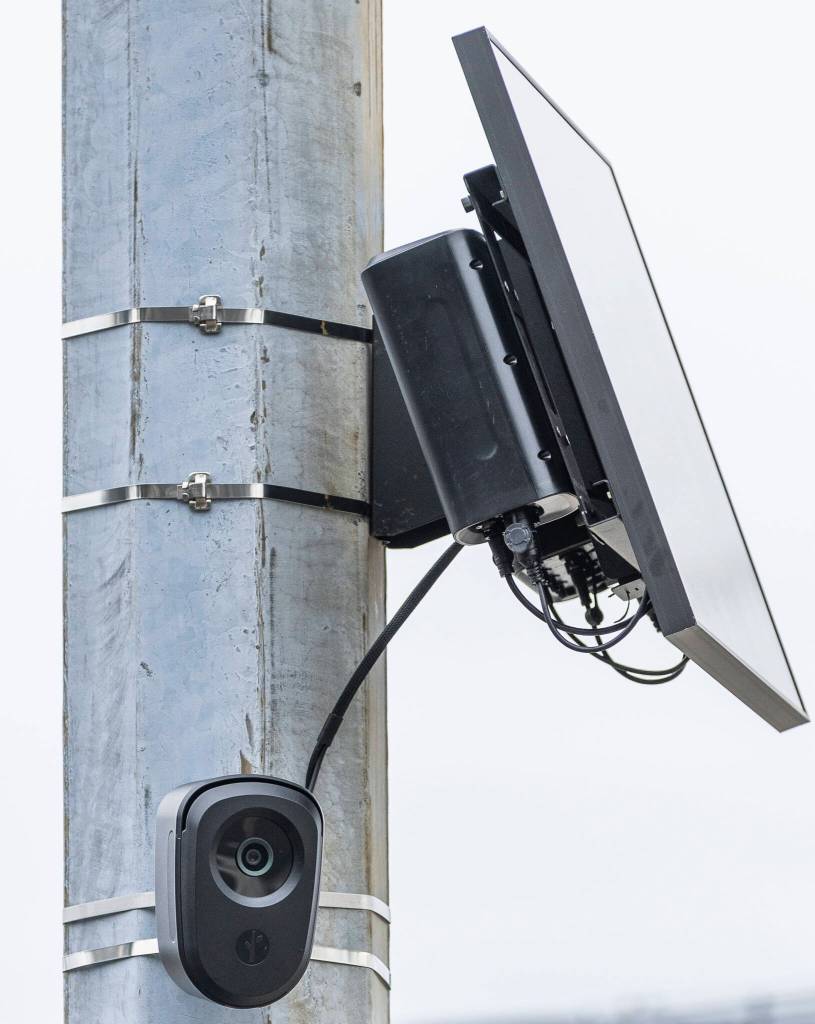
EVERETT — The city of Everett is temporarily pausing its Flock Safety camera network due to public record concerns, Mayor Cassie Franklin announced Wednesday.
On Tuesday, a Snohomish County Superior Court judge ruled that Everett’s automated license plate reader footage is considered public record under the Public Records Act. The city had argued the footage should be exempt for privacy reasons.
“We’re terribly disappointed with that ruling, and that ruling could require us to produce millions of images to anyone who asks,” Franklin said in an interview Wednesday morning.
The city is concerned that the footage could endanger crime victims, Franklin said, including victims of domestic violence and stalking. Since the images are public record, anyone could request footage from the city’s 68 cameras during a certain time period or related to a specific vehicle. The city is looking into appealing the ruling, Franklin said.
A bill in the state Legislature would exempt automated license plate reader footage from the Public Records Act. The bill, Senate Bill 6002, passed the Senate on Feb. 4 and currently awaits a House vote. The legislative session ends March 12. If the bill passes, Franklin said the city will “consider next steps.”
Flock Safety cameras use artificial intelligence to analyze vehicle footage, allowing police officers to search for a vehicle by license plate or vehicle characteristics — such as a car’s make, model or color. Many law enforcement agencies across the country have implemented the technology as an investigative tool to assist with solving crimes, including vehicle theft.
The city launched its Flock network in October 2024. Since then, the system has helped the police department make more than 250 arrests, return stolen vehicles and locate missing persons, Franklin said.
“The LPR cameras have been an incredibly valuable law enforcement tool,” she said.
At the council’s Feb. 18 meeting, some community members urged the council to end the city’s contract with Flock. In addition to public records concerns, community members were worried that the data could be used for immigration enforcement.
“Most residents would never knowingly consent to having their comings and goings cataloged and potentially made publicly available or shared with federal authorities simply because they drove through a city,” Everett resident Janice Greene said.
Local advocacy groups, including NAACP Snohomish County, Indivisible Snohomish County and Unidos Snohomish County, sent a letter to the council with their concerns, Greene said.
From April to June last year, Flock allowed federal agencies to directly access thousands of networks throughout the country. The company had engaged in a pilot program with the U.S. Customs and Border Protection and Homeland Security Investigations.
In the fall, reporting from the University of Washington and The Daily Herald found that those agencies, along with other federal agencies, accessed multiple Flock networks throughout the state, including several in Snohomish County. Many agencies, sometimes unknowingly, had enabled Flock’s “nationwide lookup” tool, which allowed any participating agency in the U.S. to search their network. In return, they could search any participating network in the country.
Everett turned off its nationwide lookup feature in July, after federal agencies had accessed local networks. Since July, there have been no inquiries from out-of-state or federal agencies, Everett Police Department spokesperson Natalie Given said in an email Monday.
“When we became aware that other agencies could query Everett’s Flock network prior to signing an agreement, we immediately turned off the nationwide lookup tool,” Given said. “This was prior to our community’s growing concerns associated with the surge in federal immigration enforcement. We have no evidence that Everett’s Flock network ever provided an affirmative response to queries from federal agencies.”
The department requires every agency that has access to its network to sign a user agreement, which states that the technology will only be used for legitimate law enforcement purposes, and not for civil immigration enforcement or free speech protected activity, former Everett Police Chief John DeRousse told the council in November. The department has also increased its internal audits of the network, including an AI-assisted audit that flags suspicious searches, DeRousse said.
Everett’s decision to pause the network comes days after the Lynnwood City Council voted to cancel its contract with Flock. Community members had been urging the council to cancel the contract due to concerns about mass surveillance and increased federal immigration enforcement.
Herald reporter Will Geschke contributed to this report.
Jenna Peterson: 425-339-3486; jenna.peterson@heraldnet.com; X: @jennarpetersonn.