EVERETT — Grandma’s pies were safe.
Ken Buretta had just helped the older woman at her stranded vehicle near the U.S. 2 trestle. He was skipping his own Thanksgiving meal with his wife and two sons to work a shift for the Washington State Department of Transportation’s Incident Response Team.
The Snohomish man stayed with the woman until her grandson came. Then he drove away in his white pickup truck, only to flip on the vehicle’s array of flashing lights as he pulled over again to help the next stranded motorist.
A vehicle behind him slowed down. The car behind that one did not.
As Buretta reached down to his radio to let dispatchers know his location, the small car careened onto the shoulder and into the back of his F-250. It smashed a rear wheel and slid down the side of the truck.
A few seconds later, and it would have slid into Buretta.
“I would have been standing just out there. It could have been a different situation,” he said.
That was 2016. But Buretta still deals with the lingering effects of the concussion he suffered in the crash. Headaches. Pain. Nerve damage. Fatigue. Sensitivity to light, noise and cold. Many times, it literally hurts to think.
WSDOT has led a campaign this week to mark National Work Zone Awareness Week.
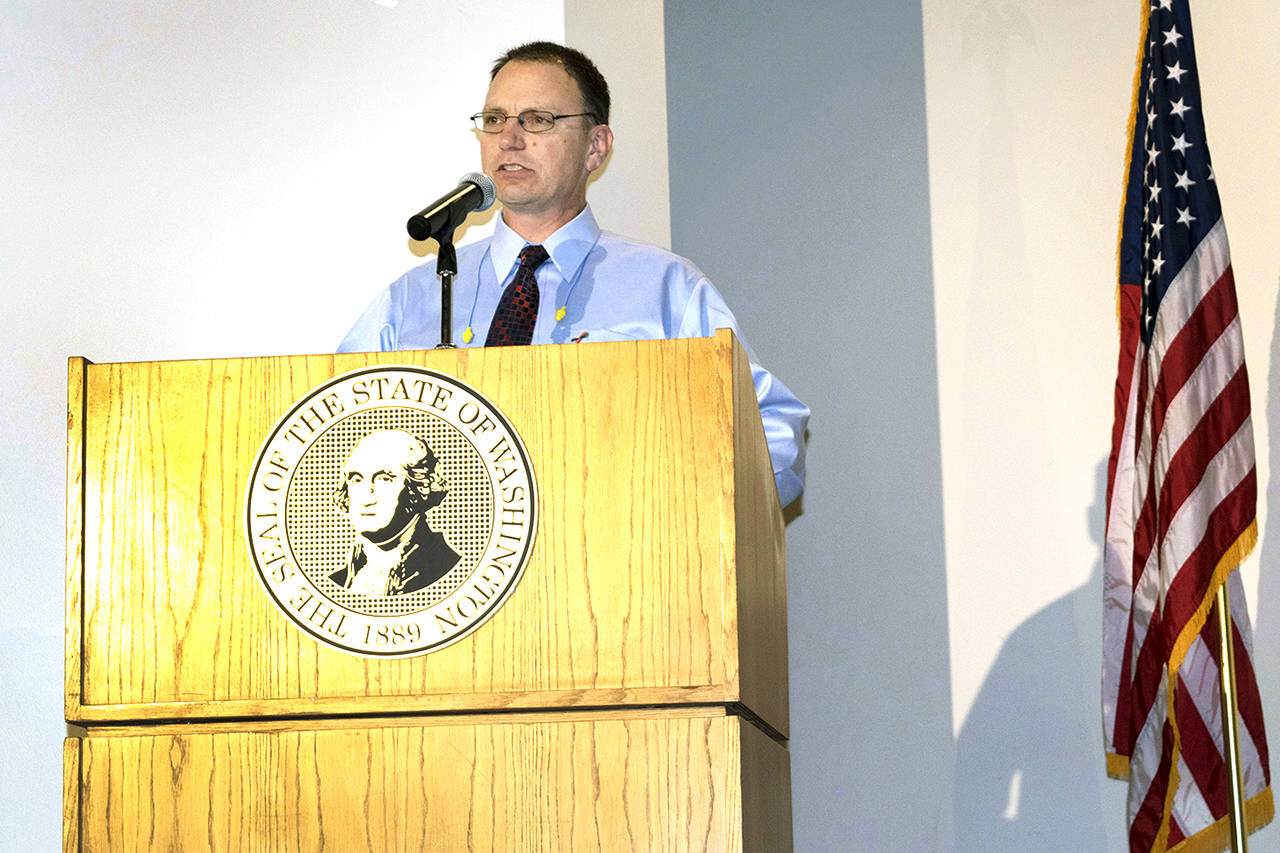
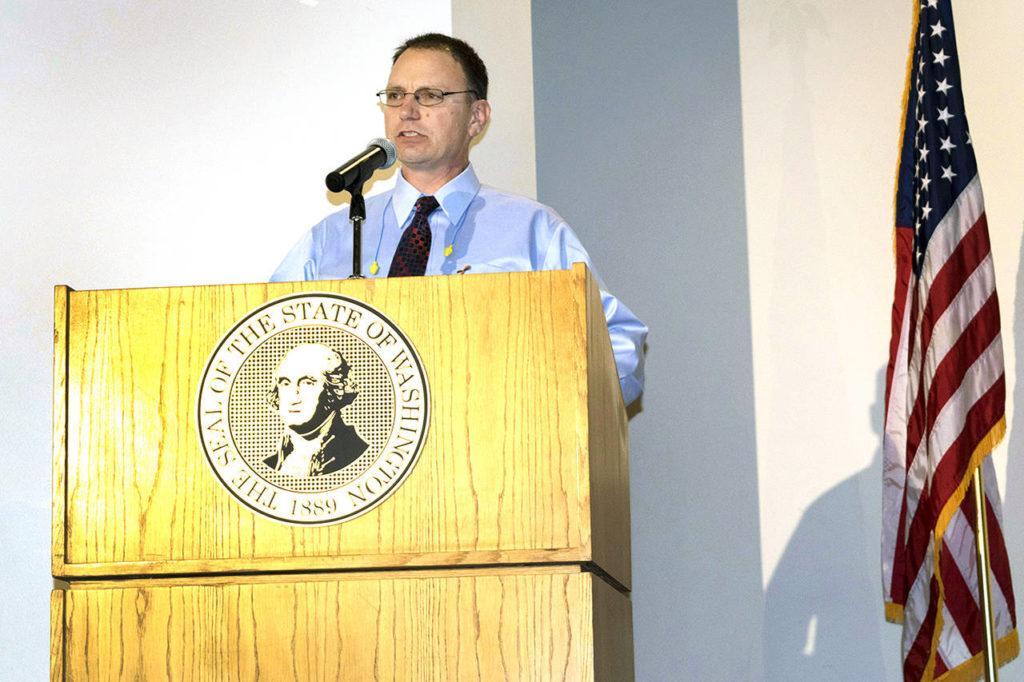
Ken Buretta speaks at a Worker Memorial ceremony April 4 in Olympia. (WSDOT photo)
Buretta and his colleague Trent Galusha, who also lives and works in Snohomish County, are sharing their stories of brain injuries suffered on the job to help raise awareness.
The goal is to get folks to think about workers like them and take extra caution through the areas where people are working.
“We’d just like people to slow down and give us room,” Buretta said.
It’s not just about Incident Response Team drivers, Galusha added.
It’s state patrol troopers, sheriff’s deputies, police officers, firefighters, ambulance technicians.
It’s also tow truck drivers, surveyors, construction crews, and those in PUD hard hats.
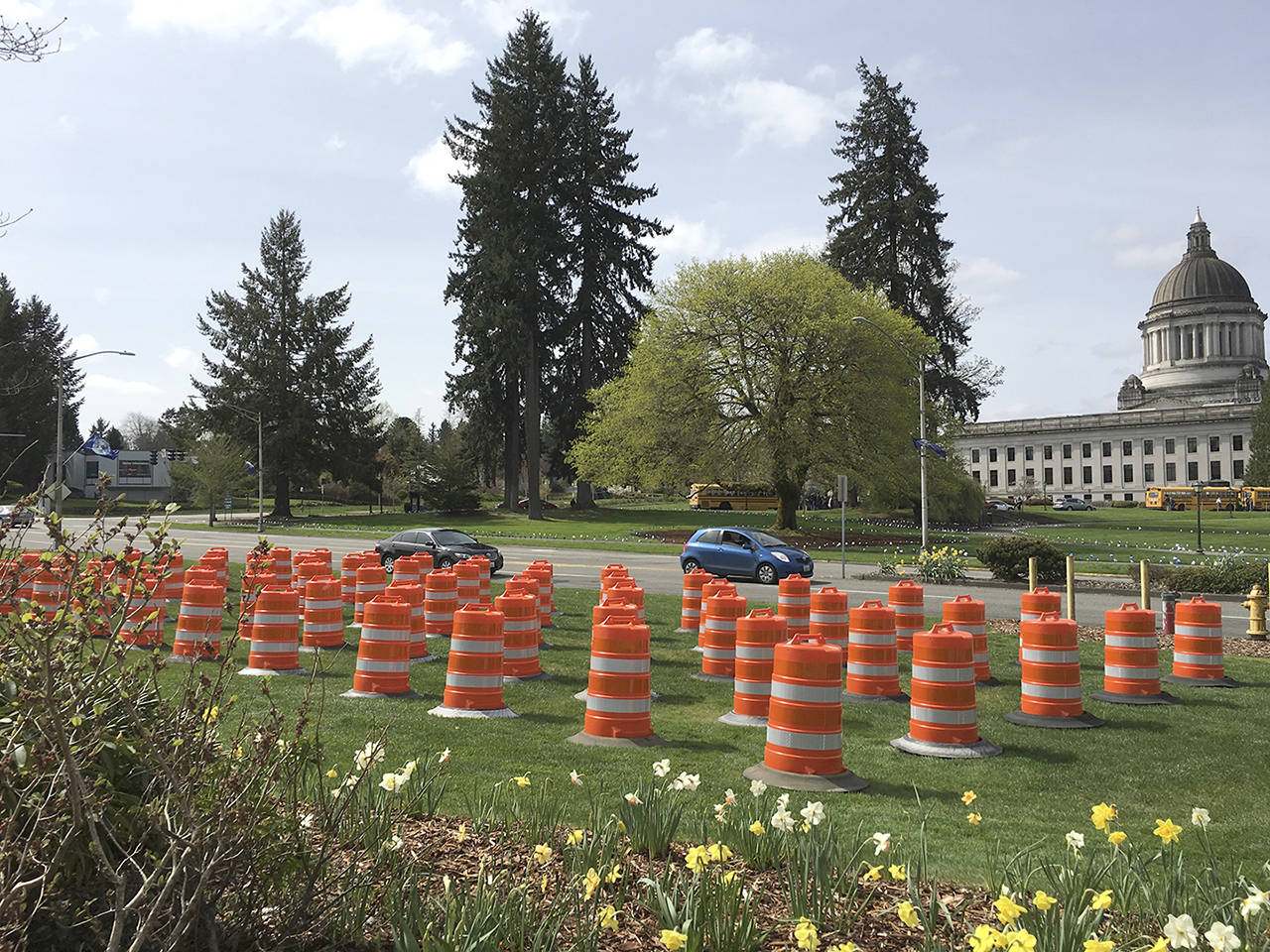
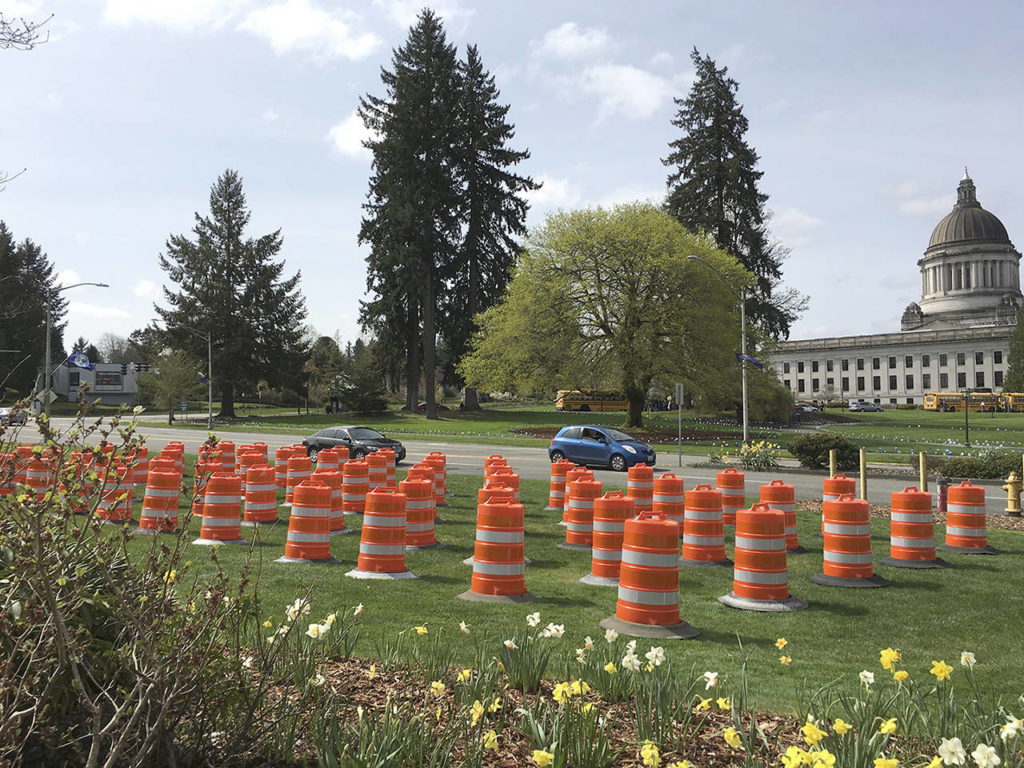
Orange work zone barrels fill a lawn near the capital in Olympia on April 9 to kick off National Work Zone Awareness Week. In all, 60 barrels were placed on the lawn, representing the 60 WSDOT workers killed on the job since 1950. (WSDOT photo)
“It’s a huge group of people that want to go home every day. And it’s such a small percentage of drivers that, for whatever reason, choose to make bad decisions,” Galusha said.
A new law recognizes that and aims to help.
The traffic rules and offenses that apply to emergency zones will soon be expanded to work zones.
Under the so-called “Move Over, Slow Down” law, drivers are already required to move into another lane when approaching emergency zones, such as a trooper at a traffic stop or an Incident Response Team pickup truck helping a motorist. If there’s no room in the adjacent lane to move over, they are required to slow down.
Those who break the law face fines up to $788. In more serious cases, it could be $1,000 and jail time.
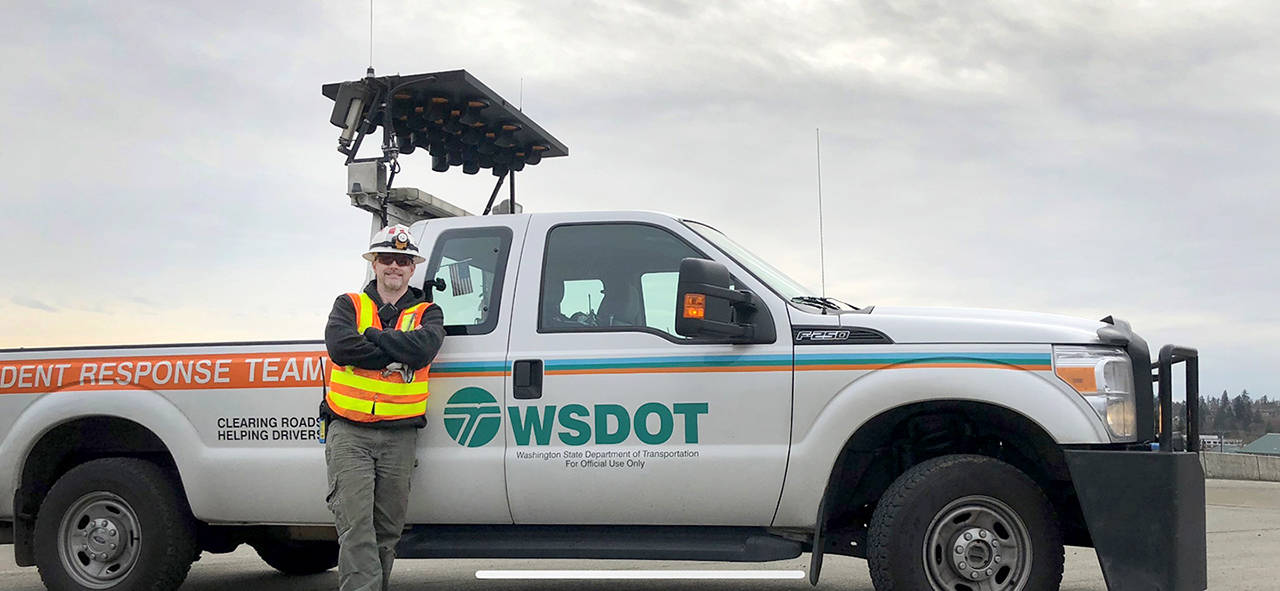
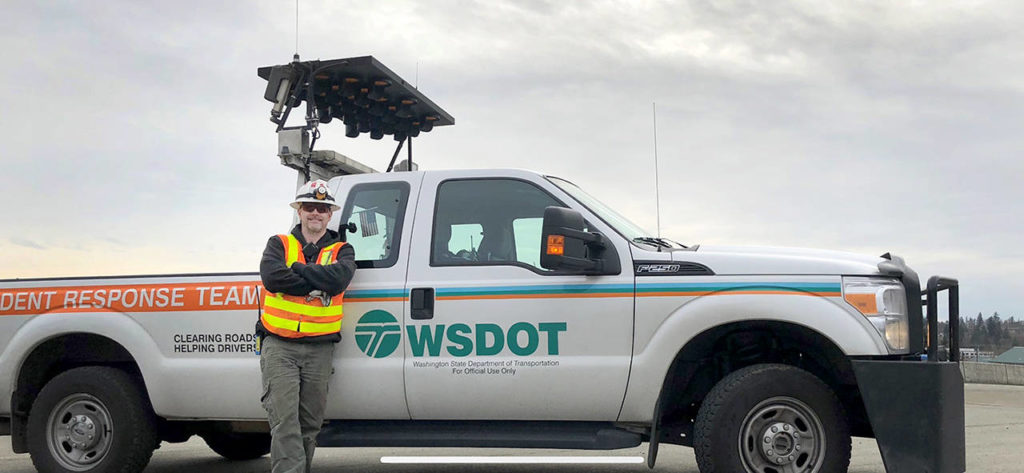
Trent Galusha stands next to the Incident Response Team truck he drives for his job with the Washington State Department of Transportation. (WSDOT photo)
Starting June 7, drivers must also move over or slow down when approaching slow-moving or stopped highway maintenance and construction vehicles, garbage trucks and utility vehicles that are flashing their lights while on a job.
Galusha asks folks to imagine they’re the one in the vehicle with flashing lights. “I just think people don’t understand that every day I get in my truck and am 18 inches or less — in some areas of Snohomish County, in some areas you’re talking less than 5 inches — from a vehicle doing 60, 70 mph. Would you like that in your office area?”
Galusha’s own injury came Memorial Day weekend 2012.
He pulled over onto the side of I-5 and was outside the truck, helping a stranded motorist who had run out of gas.
“From that time on, I can’t tell you (what happened),” said Galusha, of Arlington. “I remember seeing white lights. The next thing I remember was waking up in my bed at home.”
A man driving by had thrown a 64-ounce Slushee out his window at Galusha. The drink came flying out of the car at high speed, striking Galusha in the head with 300 pounds of force.
If the cup had hit just two inches away, at Galusha’s temple, he likely would have died, doctors told him.
In the months that followed, he would work with doctors and therapists to deal with the traumatic brain injury. He experienced unusual bouts of anger. He’d ask someone to pass the ketchup and then cry. At one point, he drove to work and ended up, somehow, at the Everett boat ramp. He called his wife in tears.
Things are better now, “as normal as I’ll ever be,” he said. He appreciates his wife even more. He hugs his kids a lot. And he still works at a job he continues to love, despite what happened. He was among those able to help Buretta through his own recovery.
The driver who threw the drink was caught and sent to prison. The man had been driving impaired and with a suspended license.
When an IRT worker is pulled over for a job, whether to help at a crash scene or help a stranded motorist, other drivers are required to move over or slow down because of an expanded emergency zone law that went into effect in 2011. Between 2006 and 2009, the Washington State Patrol alone had 80 collisions involving passing vehicles striking trooper vehicles parked along the highway.
The new law extends that to more areas. In work zones, Washington averages almost 850 injuries each year, according to WSDOT. In 2017, seven people died in work zone crashes. Most of those deaths were non-workers — drivers, their passengers, or pedestrians.
Distracted driving is the top reason for work zone collisions. Other top reasons are following too close and excessive speed.
“We just need you to be patient and have a little bit of understanding,” Galusha said. “I know you’re trying to get home to your family, and that’s important to me. But I want to get home to my family too. … We all want to go home.”
Safety tips
Slow down: Drive the posted speeds, and if you can’t move into another lane when approaching a work area, slow down.
Pay attention: Focus on driving. Respect workers and their directions. Put down the phone.
Be patient: Expect delays and stay calm as you drive through a work zone. If you can, leave early or take an alternate route.
Talk to us
> Give us your news tips.
> Send us a letter to the editor.
> More Herald contact information.
Gallery