
By The Herald Editorial Board
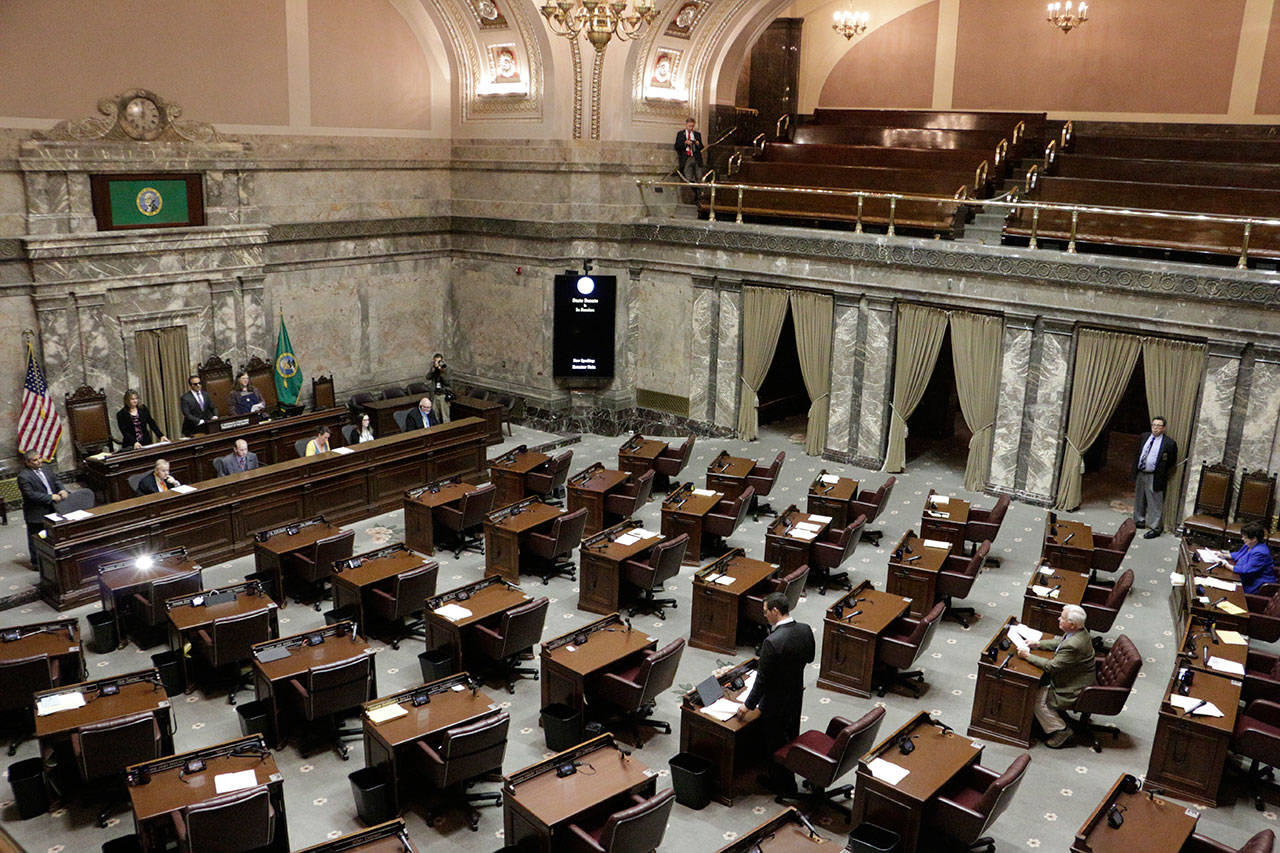
As the Legislature slid from the end of a second special session Wednesday into a third, Gov. Jay Inslee warned: “The clock is running out.”
Actually, the alarm has rung three times now, and three times the governor has had to hit the snooze button for lawmakers. But this time lawmakers don’t even have another 30 days to get their work done. They have less than a week.
And Inslee has promised that he won’t sign a 30-day stop-gap measure while budget talks continue.
House and Senate have to reach an agreement on K-12 education funding and the state’s operating budget before this Friday to avoid a partial government shutdown that would temporarily lay off 32,000 state workers, close state parks — right before the July 4 holiday — end community supervision of offenders on probation, limit meal services to the elderly, close state offices and freeze other services.
Lawmakers know this, and don’t have to be reminded that a government shutdown would be a horrendous historical first for the state. They’ve toed the cliff’s edge most recently in 2013 and 2015, each time barely meeting the June 30 deadline. But this year there are varying levels of confidence among legislators that they will get a deal done in time to avoid a shutdown.
And there’s only limited detail on where negotiations stand on how much to spend to fulfill a state Supreme Court mandate to allocate ample funding for education and from where that revenue will come.
The Democratic-led House has approved a $44.6 billion budget, while the Republican-controlled Senate passed a $43.3 billion spending plan. Reportedly, Democrats and Republicans are edging closer on the amount to be spent on education, but disagreement remains over how to cover as much as $2 billion annually in additional education funding and how best to end the state’s over-reliance on local school district levies to pay for teachers’ salaries and other elements of basic education.
Gov. Inslee has indicated that Democrats have shelved a proposal for a capital gains tax on the state’s wealthiest residents and may be warming to a Senate proposal to “swap” some of each school district’s property tax levy capacity to increase the state’s portion of property taxes.
The Republican proposal is expected to increase property taxes in cities such as Seattle, Bellevue, Mercer Island and other areas where the cost of living is higher, but will also increase taxes for some in smaller rural districts.
But agreement to a levy swap by Democrats ought to come with some concessions from Republicans on what and how much local school districts can request from district voters. Those levies were established to give voters the ability to provide enhancements for their schools. It was only state lawmakers’ neglect in providing adequate funding for teacher salaries that forced school districts to fund an increasingly larger share of the costs of basic education through their school levy elections.
Local school districts shouldn’t be heavily limited in what enhancements they can request from voters, such as extracurricular activities, athletic programs, technology upgrades and more. As mandated by the Supreme Court, basic education can no longer come from local school levies, but district voters should be in control of the level of enhancements for basic education.
One of the reasons that the Legislature has to concretely define “basic education,” is so local school districts know what they can and can’t seek from their voters as an enhancement.
Agreement on education funding and the larger operating budget will be the heaviest lift, and has to be done before Friday, but the impasse over those issues has left other important issues unresolved. Lawmakers can’t reach a budget deal, bang the gavel and get out of town.
Still waiting for action are an expansion of mental health services, reforms to the state’s corrections system, creation of a new agency serving children and family needs, paid family leave funding, a water rights agreement for private development and education-related issues such as teachers union bargaining, a salary scheduled, how state education funding will be allocated and how tests are tied to graduation requirements.
Lawmakers know what they have to get done between now and Friday. Come November of next year, voters aren’t likely to forget if it doesn’t get done.
Talk to us
> Give us your news tips.
> Send us a letter to the editor.
> More Herald contact information.
























