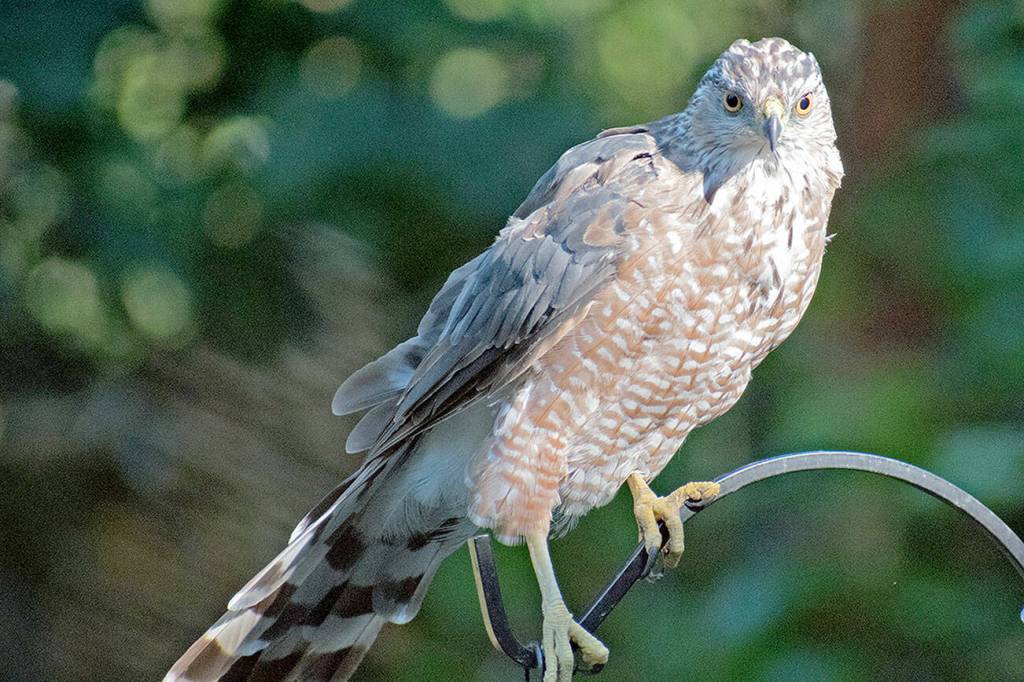
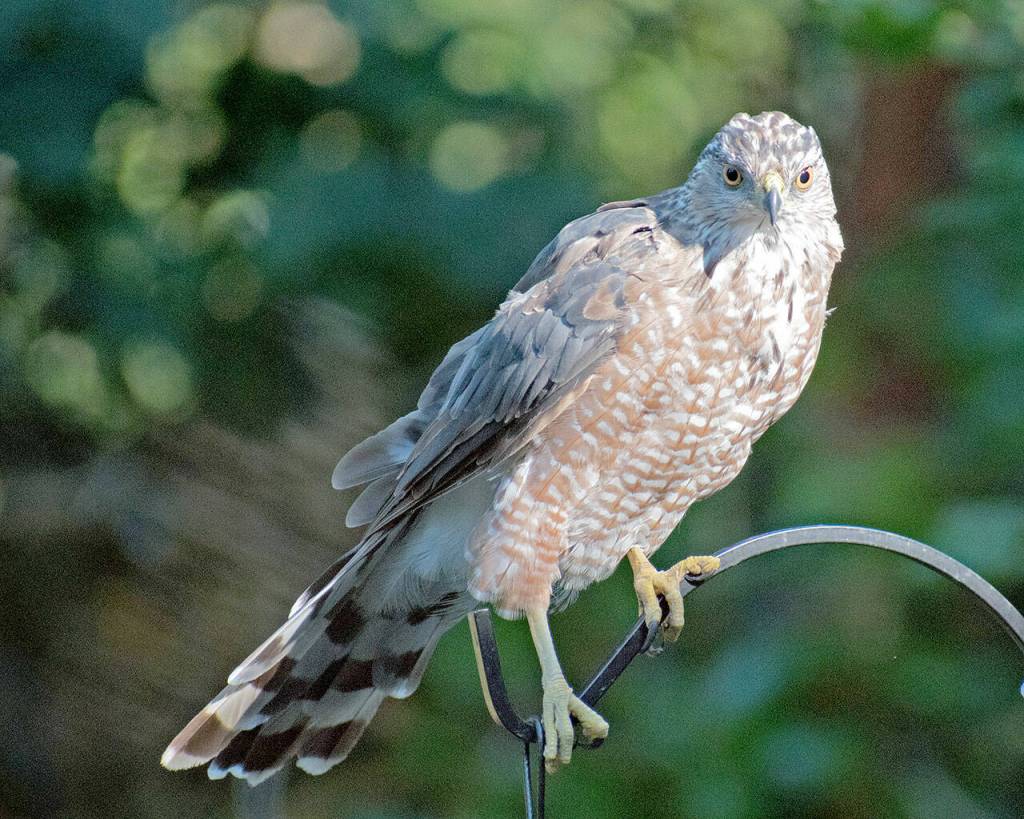
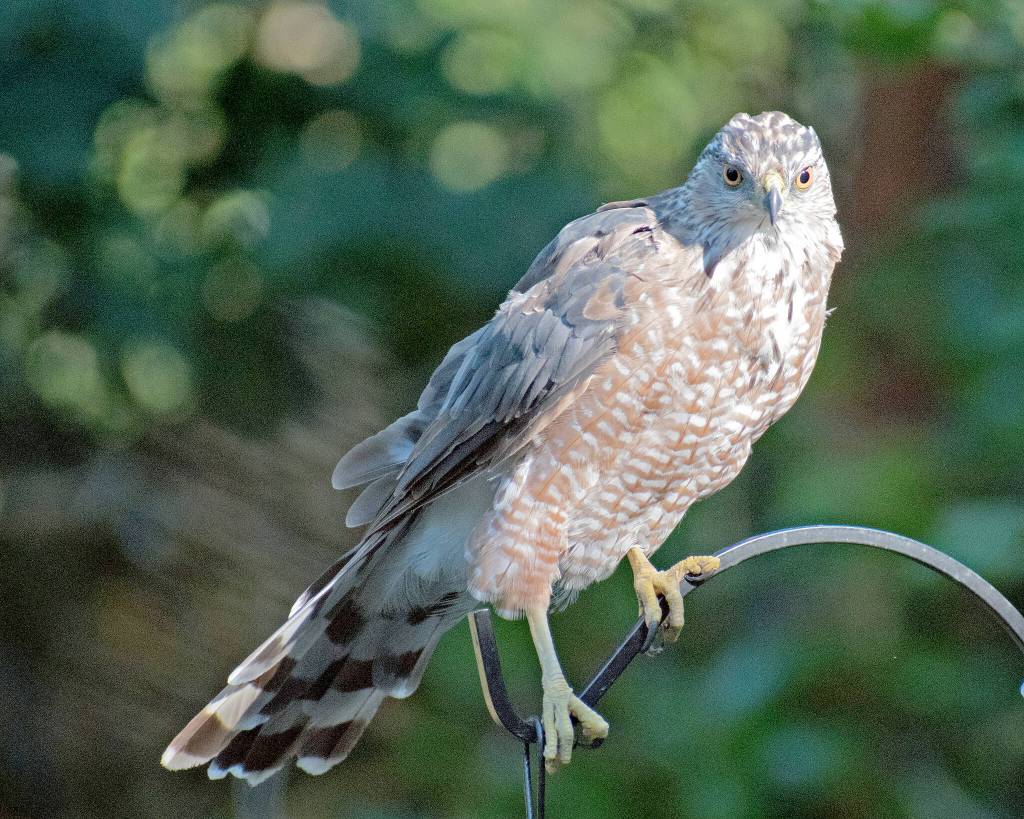
Backyard wildlife habitats attract birds of all kinds, from tiny songbirds to predators like the Cooper’s hawk. (William McClain)

Backyard wildlife habitats attract birds of all kinds, from tiny songbirds to predators like the Cooper’s hawk. (William McClain)

Bringing nature home is healthy for you — and the planet

Transforming your yard into a wildlife-friendly place is a vital piece of restoring the environment.

  • By William McClain Special to The Herald
  • Friday, April 1, 2022 1:30am
  • Life

By William McClain / Special to The Herald

Editor’s note: This is the first in a series of five articles during April, Native Plant Appreciation Month, about the importance of native plant landscaping in the Snohomish County garden.

If you’re like most people, you may be feeling the impact of too much negative news — from pandemics and climate emergencies to political conflict at home and abroad. Finally, here’s something positive and non-partisan that you can do to improve both your physical and mental wellbeing, while at the same time helping the planet. It’s waiting for you right in your own back yard (and front yard!)

During April, I’ll be writing about how to transform your home space into a wildlife-friendly haven, something people everywhere are doing in small steps or big leaps, and in small or large yards. And it’s not simply a nice thing to do to generate good feelings. We will explore why this growing movement is a vital component of our environmental restoration.

Most of us are aware of the therapeutic value of nature. In fact, studies have found that exposure to nature is associated with better physical health and higher mental functioning, especially among children. While trips to national and state parks are great, why not enjoy those benefits every day, right where you live?

That’s been our experience in transforming our property from a typical suburban landscape to a space that is more ecologically productive, beautiful and engaging. Visits from flickers and from downy, hairy and pileated woodpeckers have become everyday treats, instead of occasional occurrences. Evenings are enhanced by calls from great horned and long-eared owls. We’ve also seen a marked increase in raptors, native bees and frogs.

Backyard wildlife habitats attract birds of all kinds, from tiny songbirds to predators like the Cooper’s hawk. (William McClain)

Backyard wildlife habitats attract birds of all kinds, from tiny songbirds to predators like the Cooper’s hawk. (William McClain)

There’s no disputing that nature needs our help. North America has experienced a net loss of 3 billion birds (29%) since 1970. And it’s not just birds. A 2020 study concluded that terrestrial insects are declining at the alarming rate of 9% each decade. Similar declines in both density and diversity are playing out across the plant and animal kingdoms.

It is our insects that play the central role. Even if you’re one who appreciates these tiny creatures from a distance, they are critical to your survival. Within the complex web of interactions between species, they are the main conduit between energy collectors (plants) and energy consumers (primarily mammals, birds, amphibians and reptiles). Without healthy insect populations, the entire environmental web collapses. To bring this closer to home—without the pollination services of insects, much of human agriculture would grind to a halt.

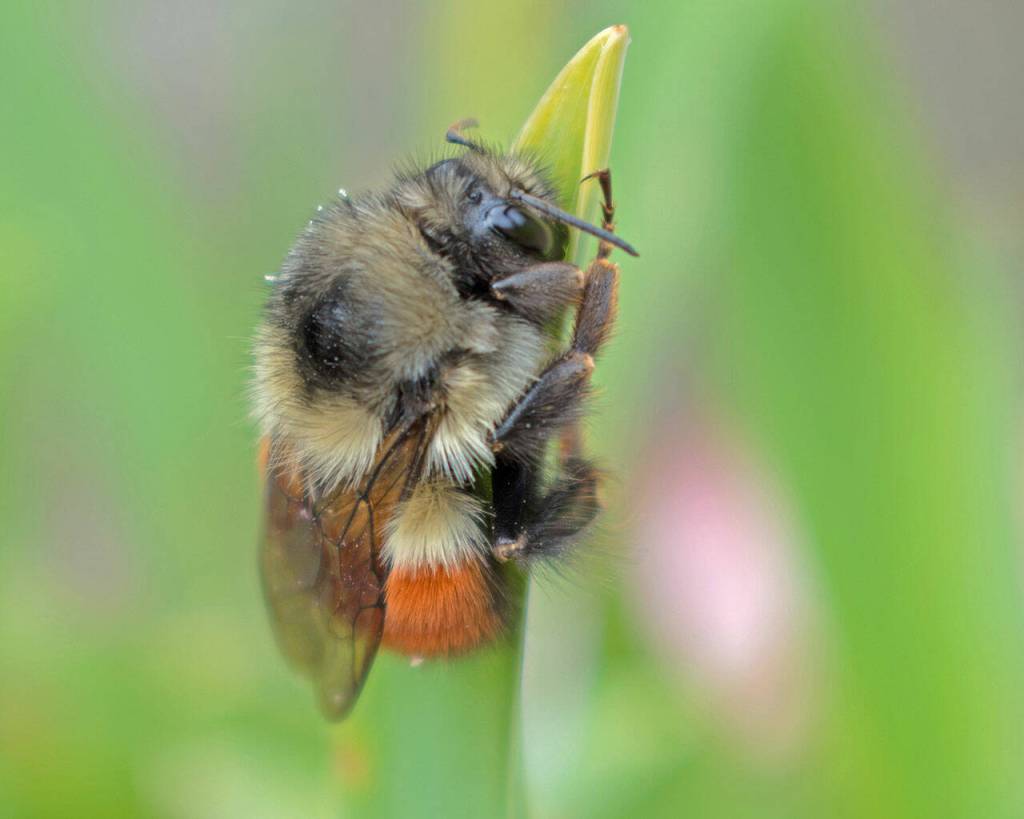
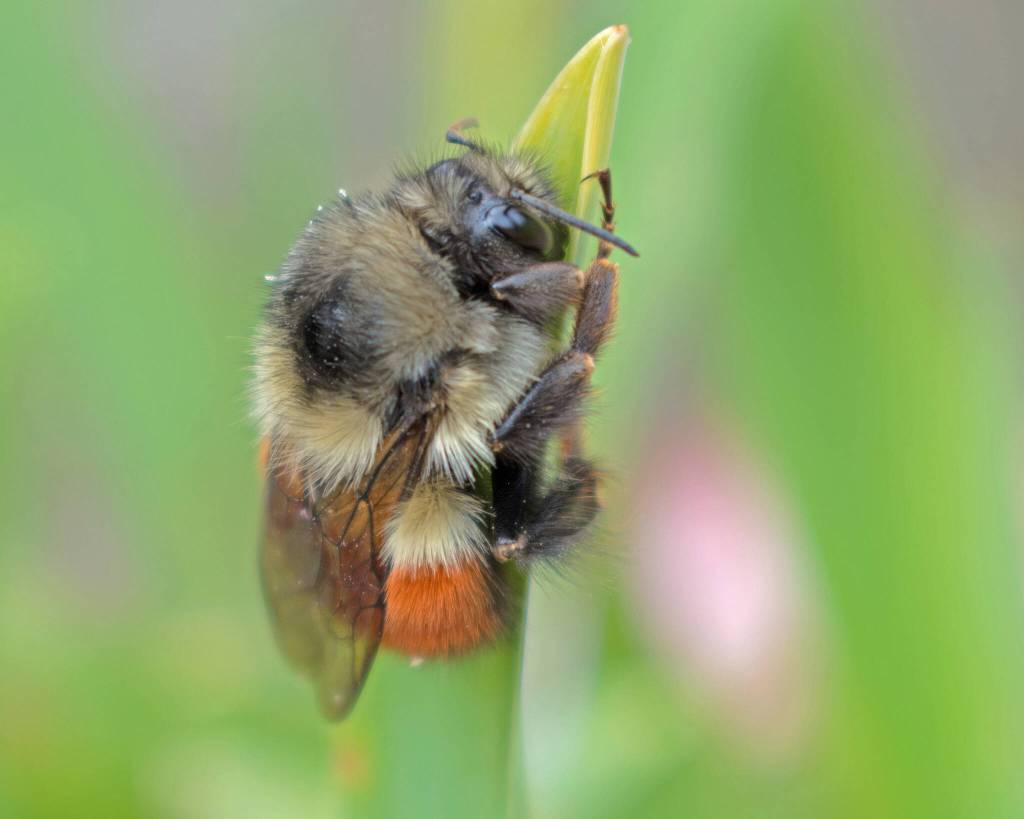
A 2020 study found that pollinating insects like bumblebees are declining at an alarming rate. (William McClain)

A 2020 study found that pollinating insects like bumblebees are declining at an alarming rate. (William McClain)

Land conservation in the form of national and state parks, land trusts, conservation districts and wilderness areas plays a hugely important role in protecting our planet. However, there are limits in what can be done through land conservation. Simply put, the areas set aside are two small and too disconnected to do the job.

How can we address this problem? There is a limit to how much we can expand land conservation. Some 83% of the U.S. is privately owned. Most of this land is taken up with housing, retail, business, farming and resource extraction. Much of the publicly owned land is used for important roles such as education, recreation and resource extraction as well.

While it’s important to continue conserving land where possible, our solution must also include the spaces where we work, live and play. The idea that nature should remain where nature exists — that people are here, and nature is somewhere else — separates us from nature. This is not healthy for our planet and it’s not healthy for us. Our modern society has disconnected us from the nature that nourishes both our bodies and our souls.

William McClain

William McClain

William McClain of Lynnwood is a member of the Pilchuck Audobon Society. A native Washingtonian, he published his first novel, “The Risk in Crossing Borders,” in 2020 after retiring from a career in benefits consulting. He hopes to publish a second novel set in England during World War II in 2023. HIs interests include hiking, nature photography and playing soccer.


Talk to us

> Give us your news tips.

> Send us a letter to the editor.

> More Herald contact information.

More in Life

PHOTOS BY Olivia Vanni / The Herald
Dwellers Drinkery co-owners and family outside of their business on Sept. 25 in Lake Stevens.
Welcome to Dwellers Drinkery in Lake Stevens

Make yourself at home with family-friendly vibe and craft brews.

Jana Clark picks out a selection of dress that could be used for prom on Wednesday, May 14, 2025 in Snohomish, Washington. (Olivia Vanni / The Herald)
A basement closet in Snohomish is helping people dress for life’s biggest moments — for free

Call her a modern fairy godmother: Jana Clark runs a free formalwear closet from her home, offering gowns, tuxes and sparkle.

Sheena Easton, 9 to 5, fiber art, and more

Music, arts and more coming to Snohomish County

Ray’s Drive-In on Broadway on Sept. 4 in Everett.
Everett’s Burger Trail: Dick’s, Nick’s, Mikie’s – and Ray’s

Come along with us to all four. Get a burger, fries and shake for under $15 at each stop.

Jonni Ng runs into the water at Brackett’s Landing North during the 19th annual Polar Bear Plunge on Thursday, Jan. 1, 2026 in Edmonds, Washington. The plunge at Brackett’s Landing beach was started by Brian Taylor, the owner of Daphnes Bar. (Olivia Vanni / The Herald)
Photos: Hundreds take the plunge in Edmonds

The annual New Year’s Polar Bear Plunge has been a tradition for 19 years.

Backyard in the fall and winter. (Sunnyside Nursery)
The Golfing Gardener: The season of the sticks

Now that winter has officially arrived, I thought it would be the… Continue reading

People wear burger-themed shoes for the grand opening to the Everett location of Dick’s Drive-In on Thursday, June 12, 2025 in Everett, Washington. (Olivia Vanni / The Herald)
The top 10 most-read Herald stories of the year

Readers gravitated to articles about local businesses, crime, and human interest throughout 2025.

A selection of leather whips available at Lovers Lair on Friday, Dec. 19, 2025 in Everett, Washington. (Olivia Vanni / The Herald)
What’s behind the tinted windows at Everett’s ‘#1 Kink Store’

From beginner toys to full-on bondage, Lovers Lair opens the door to a world most people never see.

Ari Smith, 14, cheers in agreement with one of the speakers during Snohomish County Indivisible’s senator office rally at the Snohomish County Campus on Wednesday, Feb. 5, 2025, in Everett, Washington. (Olivia Vanni / The Herald)
The best photos of 2025 in Snohomish County

From the banks of the Snohomish River to the turf of Husky Stadium, here are the favorite images captured last year by the Herald’s staff photographer.

Patrons view the 787 exhibition Thursday morning at the Boeing Future of Flight Musuem at Paine Field on October 8, 2020. (Kevin Clark / The Herald)
Everett Boeing factory tour offers a birds-eye view of jet-making

Our business reporter, who happens to be an airplane buff, offers his take on the popular tour.

Outside of the Marysville Opera House on Sept. 16, 2025 in Marysville, Washington. (Olivia Vanni / The Herald)
Now showing: The 114-year-old Marysville Opera House reclaims the spotlight.

Under the city’s direction, the theater offers music, art and bingo.

Water from the Snohomish River spills onto a road on Thursday, Dec. 11, 2025 in Snohomish, Washington. (Olivia Vanni / The Herald)
How we covered the record-breaking flood

A special edition of Eliza Aronson’s newsletter detailing her and photographer Olivia Vanni’s week of flood coverage.

Support local journalism

If you value local news, make a gift now to support the trusted journalism you get in The Daily Herald. Donations processed in this system are not tax deductible.