
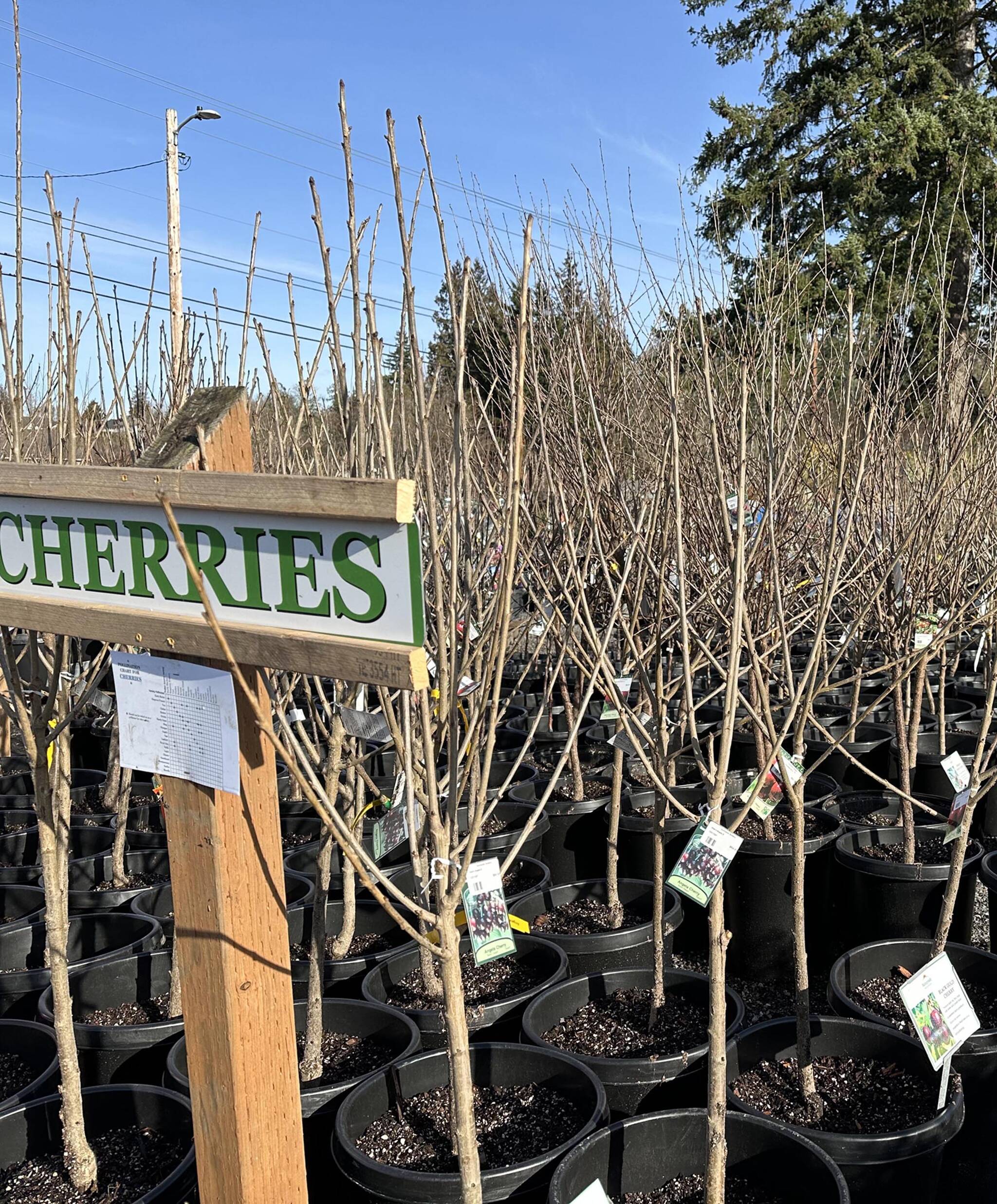
As we continue to work through the home orchard, sweet and delicious cherries are up next. Almost everyone enjoys popping cherry after cherry into our mouths once they’re ripe, of course being careful not to overindulge. To me these tasty treats are a harbinger of summertime as they ripen just about when we are REALLY getting into summer mode.
The history of cherries and humans dates back thousands of years. They are thought to have originated in Mesopotamia (present-day Iraq), thriving on the banks of the Euphrates and Tigris rivers. From there they spread into the ancient Roman and Green civilizations, utilized for their taste, nutritional benefits and medicinal properties. The French brought the first cherries to North America in the 1600s, kicking off a cherry craze on our continent that has never ceased. During the 1800s, they really began to thrive as a US agricultural crop. Americans have almost adopted cherries as our national fruit in my opinion, as it seems they are intertwined with summer, family and children like no other. Michigan in particular produces a bunch of cherries, but then so does our fine state of Washington. Eastern Washington dominates local commercial growing, but there are plenty of useful cherries that thrive in Western Washington as well.
Just for fun, think back to your childhood… Perhaps spitting the pits out is your thing, after all, it was kind of fun, right? It should be as an adult as well, but perhaps a bit more discretely. I mentioned Michigan above, and in Eau Claire, Michigan, an annual cherry pit spitting competition commences each and every summer, crowning a grand champion. The record belongs to the legend they call Brian “Young Gun” Krause, who expelled one pit over 93 feet back in 2004. First off, if you have a nickname as an official cherry spitter, good on you mate. Second, seriously? 93 feet? That is some serious distance! Perhaps in another millennium or two after man has mastered genetics even more they will “make” us a pit-less cherry. Maybe, but what fun would that be?
Alright, enough of frivolities about cherries, time to get down to business. The first decision with cherries is kind of a restaurant question, like when you are ordering pork or prawns. Say what? Seriously, just like some dishes you might find on a menu, do you want sweet or sour? Sour, or what most call “pie cherries”, are not as sweet but when we add some sugar we can create a scrumptious cherry pie. These also bloom early and tend to bear young, in all honesty one of the best specimens to attract early mason bees (pollinators!) into your garden. Even if you do not like sour cherries, you will benefit from the bees coming in fast and furious to visit your pie cherry tree, which of course means your other trees are pollinated properly too. The most common sour options I see available in our area are ‘Montmorency’, ‘Morello’ and ‘Surefire’ – all excellent varieties. The vast majority of cherries are sweet, and can simply be picked fresh and enjoyed. From roadside stands to local farmer’s markets to the grocery store, when sweet cherries are in season they get swooped up quickly. There are numerous kinds of high quality sweet cherries out there that are great for Western Washington, including ‘Glacier’, ‘Rainier’, ‘Black Gold’, ‘Royal Anne’, ‘Lapin’, ‘Sweetheart’ and many others. I will mention ‘Bing’ as well since many recognize this popular variety, but in all honesty it does much better in Eastern Washington than here. ‘Glacier’ would be the go to “Bing-like” cherry for us here in Western Washington.
When choosing the right cherry for you, like with other fruits we have discussed, consider pollination. Pie cherries are always self-fertile and can serve as a universal pollinator option for all other cherries. Sweet cherries are mostly self-fertile (although there are a couple exceptions, mainly ‘Rainier’), but like the plums from last week, more than one pollen source will always result in larger crops. I will also bring up another home orchard term in this space, the word “combination.” Many fruits (including cherries, apples, pears and plums) are available in combo form, meaning that more than one variety (typically 4 or 5) are grafted onto the same tree. This obviously covers any cross-pollination needs for one, but also results in a nice variety of flavors to sample. In modern landscapes space is limited for many of us, so utilizing combination trees can save some room as one tree takes the place of two or more in the home orchard.
Modern cherries are grafted on vastly superior rootstocks, specifically Gisela© brand stock. This useful understock has taken over the world, by far the best for both commercial orchards and homeowners alike. It is resistant to virus, diseases, is more tolerant of wet and offers superior cold hardiness. This root stock really does keep trees at about 50% of standard size. In the world of cherries, this means we now have manageable specimens of roughly 15-feet tall and wide, much better than the old fashioned 30 to 40-foot monsters that were hard to pick. With this rootstock, you can pick everything and avoid using a fire truck ladder to reach the top, leaving far less for the birds. And speaking of birds, try to remember that sharing is acceptable on some, but really watch your tree and try to beat the birds to the harvest. I am not a huge fan of bird netting personally (although it may work for some) as a protective covering on the tree. Flash tape might help, or I typically use old CD’s hanging on a string here and there. Both will flash light and colors in the sun/breeze, hopefully deterring some of the bird activity in your tree.
Feeding and planting site are the same as the peaches and plums that we discussed the last couple of weeks. Planting in mostly sun, with good air circulation and well-drained soil works perfectly, and utilizing an organic granular fertilizer each March and June around the drip-line will keep your specimen thriving. Pruning will follow the same rules as well since cherries produce bloom and thus fruit on one year old, just like the plums, peaches, nectarines and apricots.
I invite you to discover cherries and marvel at their wonderful bloom, fall foliage and delicious fruit. It is the perfect time of year to visit the garden center and take advantage of bare root sales and maximum varietal selection. Speak with a Certified Professional Horticulturist and allow them to help you select the best cherries for you and then teach you how to care for and prune them. Cherries bear fruits quite quickly and continue to get better and better year after year. Get them in the ground now to start enjoying them as soon as possible and before you know it, you will be hosting your very own cherry pit spitting competition in your very own home orchard.
Trevor Cameron is a Certified Professional Horticulturist (CPH) and serves as General Manager for Sunnyside Nursery in Marysville, WA. He can be reached at sunnysidenursery@msn.com.
























