Fewer single-family homes on the horizon
Published 1:30 am Sunday, July 8, 2018
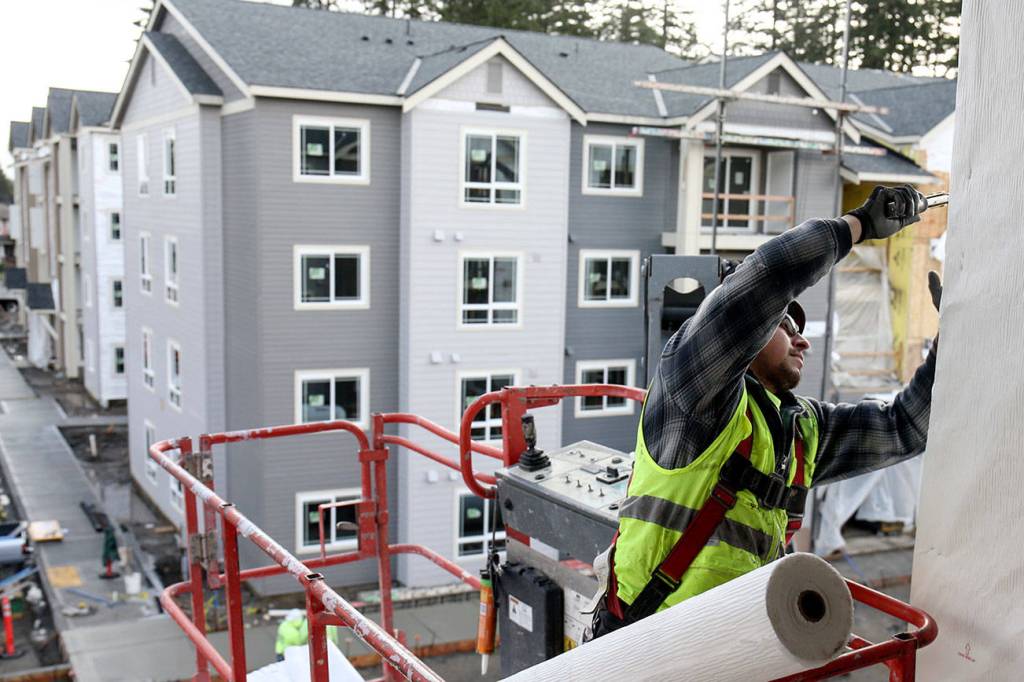


EVERETT — City living is spilling beyond city limits.
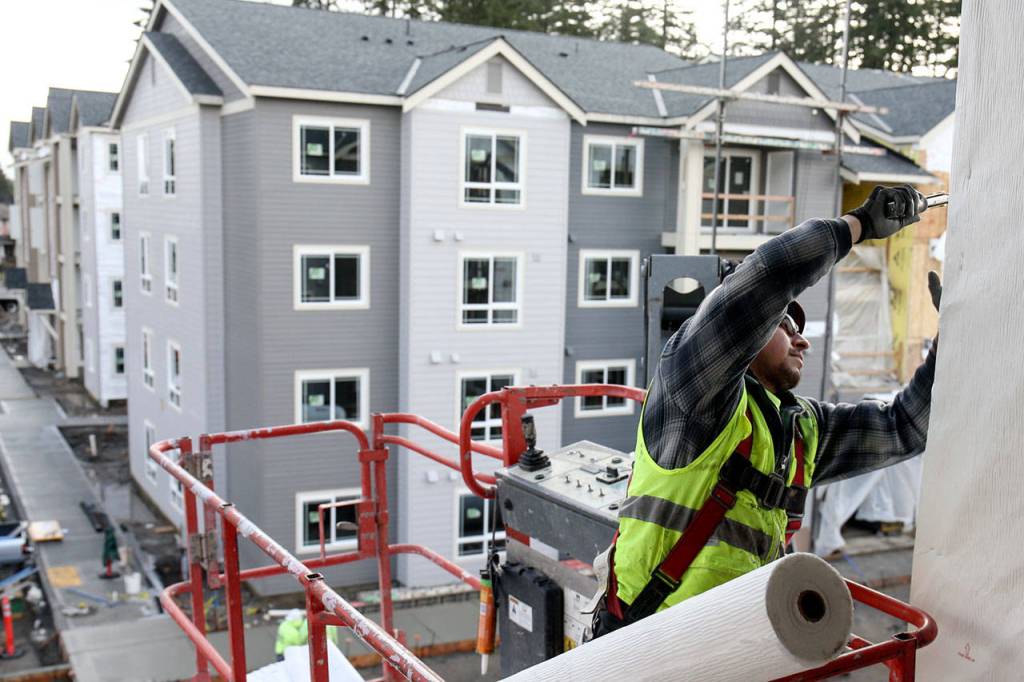
Snohomish County passed an urban milestone this year. The planning department is now issuing more permits for multifamily housing than for stand-alone homes. Apartments, townhomes and duplex permits are on the rise, as single-family applications head the other direction.
With undeveloped urban land increasingly scarce and expensive, there’s reason to think the trend is more than a blip.
“Single family is no longer available because of the number of people who are coming,” said Ken Klein, an executive director for the county. “We have a scarcity of land available. So we’re having to pack more and more people into a constrained space. What people want more than anything is home ownership. And townhomes help people to own real estate in a constrained space.”
The county government is the building authority for unincorporated areas.
Townhouse permits had been in the double-digits for several years, but jumped to 264 in 2016. They have remained steady ever since.
Through May of this year, county permitting officials had approved 502 apartment units. That’s already more than any year-end total since 2014. The 48 duplex permits by that point already surpassed 2017.
Single-family home permits, meanwhile, were down 38 percent compared to the same time a year earlier. There were 429 of those.
Filling up, filling out
Snohomish County’s unincorporated areas account for less than half of its overall population of 805,000. Yet, they have been growing nearly twice as fast as local cities since 2010: 15.4 percent compared to 8.2 percent.
When long-range planners developed growth policies more than a decade ago, they imagined more people moving to Snohomish County’s larger cities. In reality, local development for years has favored largely single-family neighborhoods, such as those that have taken shape in the North Creek area, east of Mill Creek and Bothell, or around Lake Stevens.
“Demand for single-family homes is still strong — people want to build equity,” said Kat Sims, executive director for the Master Builders Association of King and Snohomish Counties. “I think people are moving to Snohomish County because they want to have a single-family home, by and large. What I really mean is that they want to own a piece of real estate. They don’t want to rent.”
Their options are becoming more limited. Today’s housing market, with bidding wars, all-cash offers and waived inspections, may have rendered that component of the American dream less realistic. Instead, many buyers are opting to commute to more-distant neighborhoods, or looking to live in tighter quarters.
Hence, more urban living.
For the first time since 2010, state population figures this year show Snohomish County’s cities adding more people annually than its unincorporated areas.
“We are starting to see a sizable increase in city population, especially in Everett and Lynnwood, with all of the multifamily permits they’ve issued,” said Stephen Toy, Snohomish County’s principal demographer.
Everett was tied with Renton for 12th among all Washington cities for most people added during the past year, with 1,400. State population estimates released last month showed Lynnwood 14th, with 1,310 additional people, and Marysville 19th, with 1,140.
When it comes to living arrangements, Everett’s recent growth pattern is an exception. Unlike the county, Everett is issuing more permits for single-family homes than for apartments and condos.
The city has steadily issued more single-family home permits every year since 2013. The total rose to 261 last year, almost quadrupling from five years ago. Multifamily permits went down most years during that span.
Marysville, the county’s second-largest city, has issued a similar number of permits for stand-alone houses and apartments this year. All of the apartment units permitted in Marysville this year — 96 — have been for a phase of the Lodge complex in Smokey Point. Through May, the city issued permits for 90 single-family homes, four duplex units, three townhomes and two mobile homes.
More changes coming
Lynnwood may be the best example of what to expect in coming years. The cityscape has evolved rapidly in anticipation of light rail and bus rapid transit, both expected about six years from now.
Planners predict the city will swell to more than 54,000 by the mid-2030s, up from about 38,000 now.
“We put in plans that can accommodate that,” said Paul Krauss, Lynnwood’s community development director. “Those plans leave our single-family neighborhoods untouched. All of the growth we’ve planned for is in City Center, or around the (Alderwood) mall or along Highway 99.”
Lynnwood is seeing some single-family infill development, Krauss said, but much of last year’s population increase can be attributed to just two apartment complexes along 196th Street SW, west of I-5.
More apartment buildings are coming. That includes an 18-story highrise recently approved near Alderwood mall. Two additional projects near the mall could bring about 500 apartment units each.
“We’ve been expecting this for a long time,” Krauss said. “This is, frankly, just the tip of the iceberg.”
Noah Haglund: 425-339-3465; nhaglund@heraldnet.com. Twitter: @NWhaglund.