A daughter of immigrants aims to shape education policy
Published 1:30 am Monday, January 30, 2017
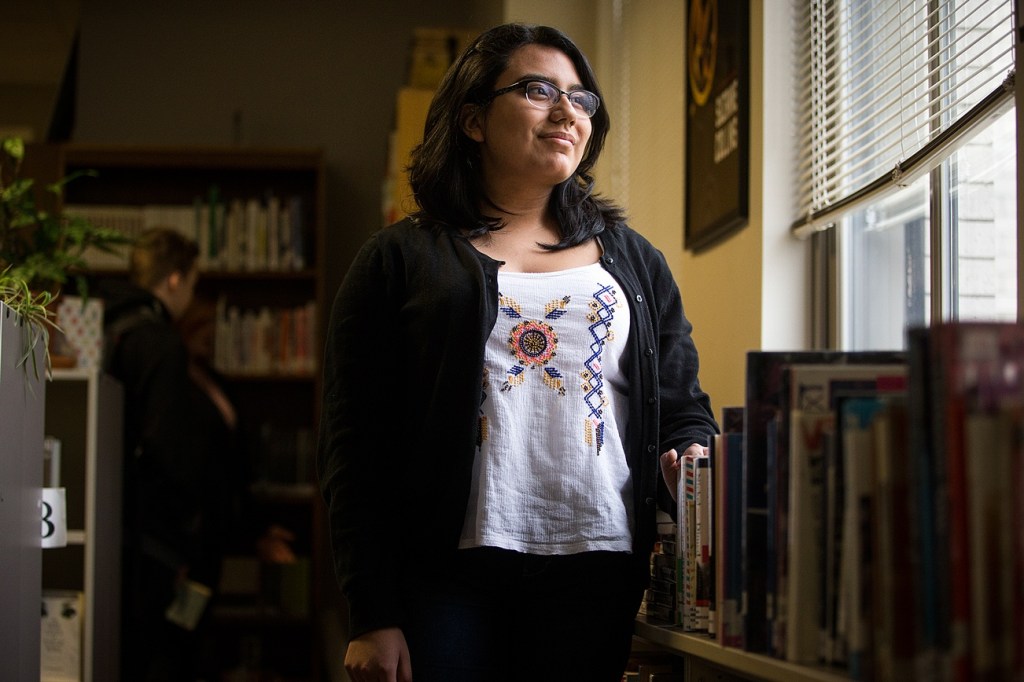
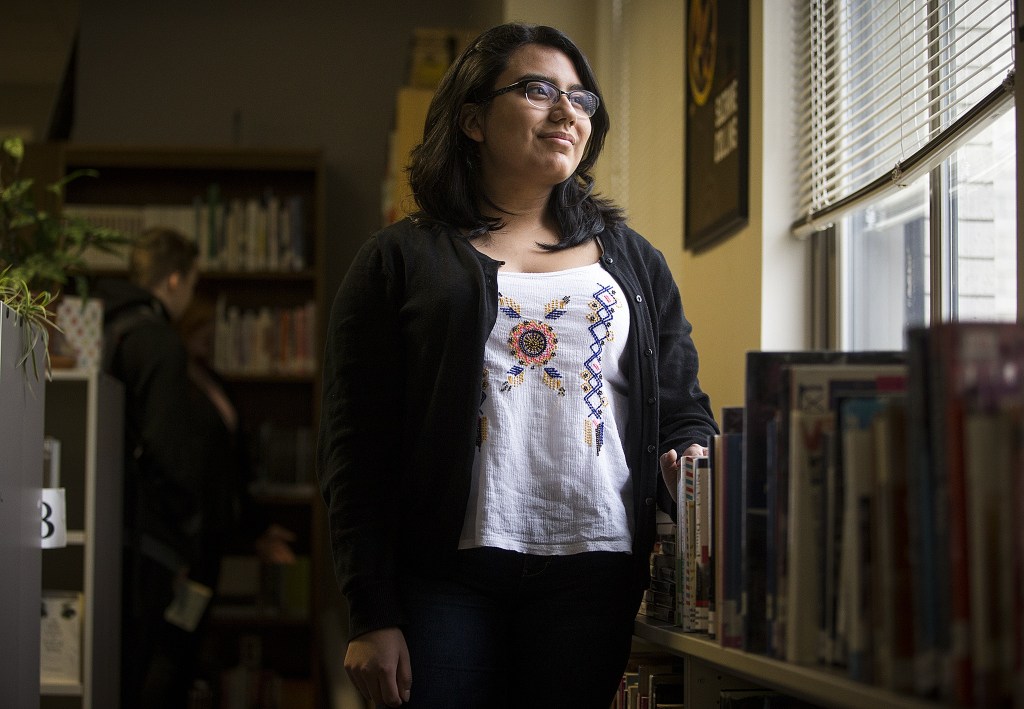


EVERETT — Aymee Carrillo, 17, is a senior at Everett High School, where she is taking five AP classes, the AVID college-readiness course and is looking forward to being the first person in her family to attend college. She’s already been accepted to Washington State University. She also is a longtime volunteer at Hawthorne Elementary School and is one of the Everett School District’s student representatives to the school board, which has triggered an interest in government and policy making.
Question: What are your career goals right now?
Answer: At first I wanted to be an elementary school teacher. But then I took a lot of AP classes, and it’s sort of changed my view. Right now my favorite class is AP Government, so it’s kind of changed my plans as far as my future goes. My favorite science class is biology, so maybe it’s something I want to go into. I like doing experiments and knowing how things function, and how cells are made. I like knowing what’s going on in my body.
Q: What about studying government interests you the most right now?
A: I get to read a lot of policy papers. It’s through the school board, we are on a panel that reads the policy papers. It’s really interesting that there’s a policy for everything and how it affects the students. A lot of the policies are very different and some of them could be changed a little. Education is very important to me and everyone deserves a good education, so it’s something I hope to have an impact on.
Q: How has being a student representative on the board shaped your view?
A: It’s different being a student and not knowing anything going on in the school district and being a part of it. I’m impressed by all the teachers and people who put so much time and effort into the schools. For instance, the levy and bond issues, the one-to-one technology plan, and with the 24-credit program, Ms. (Deborah) Payne, the librarian, will send other students to me to explain it.
Q: Where do you want to go to college?
A: I’ve looked at a couple, three in-state and three out-of-state. My choices are WSU, or if I get accepted, Vanderbilt University or Northwestern University.
Q: Tell me about your experience in the AVID program.
A: AVID has just helped me so much. It’s paid for a lot of my college in high school classes. Since I’m a first-generation student, my parents don’t know about all the college processes. My parents didn’t know about the FAFSA (Free Application for Federal Student Aid), I didn’t know about FAFSA. Also, with five AP classes it’s good to know how to take notes and use them, and how to study them properly.
Q: Where are your parents from?
A: They’re from Mexico. My dad is from Puebla, my mother is from Oaxaca. My brother, sister and I are all from here.
Q: What kind of expectations did your parents give you?
A: They told me education was really important, that I had a big opportunity here in America. And the fact that I’m a natural-born citizen is a big help. I think my goals are similar to anyone else’s, although growing up Mexican-American there is a language barrier. I went to Mexico for a year, and when I came back to start kindergarten, I’d forgotten all my English. I could understand it but I couldn’t speak it.
Q: Has your background influenced how you work in school?
A: It really has, because in elementary school I didn’t know much English and my mom, she couldn’t help me with my homework because she couldn’t either. We would sit down with several English-Spanish dictionaries, and try to figure out the exact definitions.
I came from an elementary school where they speak over 20 languages, so I’m very aware that it can be very hard for some students. It was hard for my parents to learn English so I know it can be hard.
Q: How often do you volunteer in elementary schools?
A: Last year I did it a lot. I was a T.A. for a teacher at Hawthorne Elementary in summer school, and it was like being a teacher because I had a reading group. They call me Miss Aymee or “teacher.” It was very exciting because I thought this is what being a teacher is like.
Q: What advice can you offer the elementary school kids from other cultures that you work with?
A: I guess I encourage them to take the opportunities given, because I know people who learn another language get a lot of help. I say, “Try your hardest.” For any student, any year is hard. This feels like a very teacher thing to say, but if you don’t understand what you’re learning, the grade doesn’t really matter. In science, in biology, I’ve only been able to get a B or less. I’m trying to learn and progress, even if I don’t get that A at the end of the semester.
Q: Do you have any other activities outside of school?
A: I try to volunteer as much as I can. During football season I was a football manager. Mostly it’s with water, but there are a lot of times we had to do something like set up. Because I have a lot of AP classes, I had to stop coming to after-school clubs. But I still volunteer at Hawthorne because I know all the teachers and a lot of the parents, and I still go to the school board meetings. I’m going to have to start looking for a job but I’m not sure I have time.
Chris Winters: 425-374-4165; cwinters@heraldnet.com. Twitter: @Chris_At_Herald.