
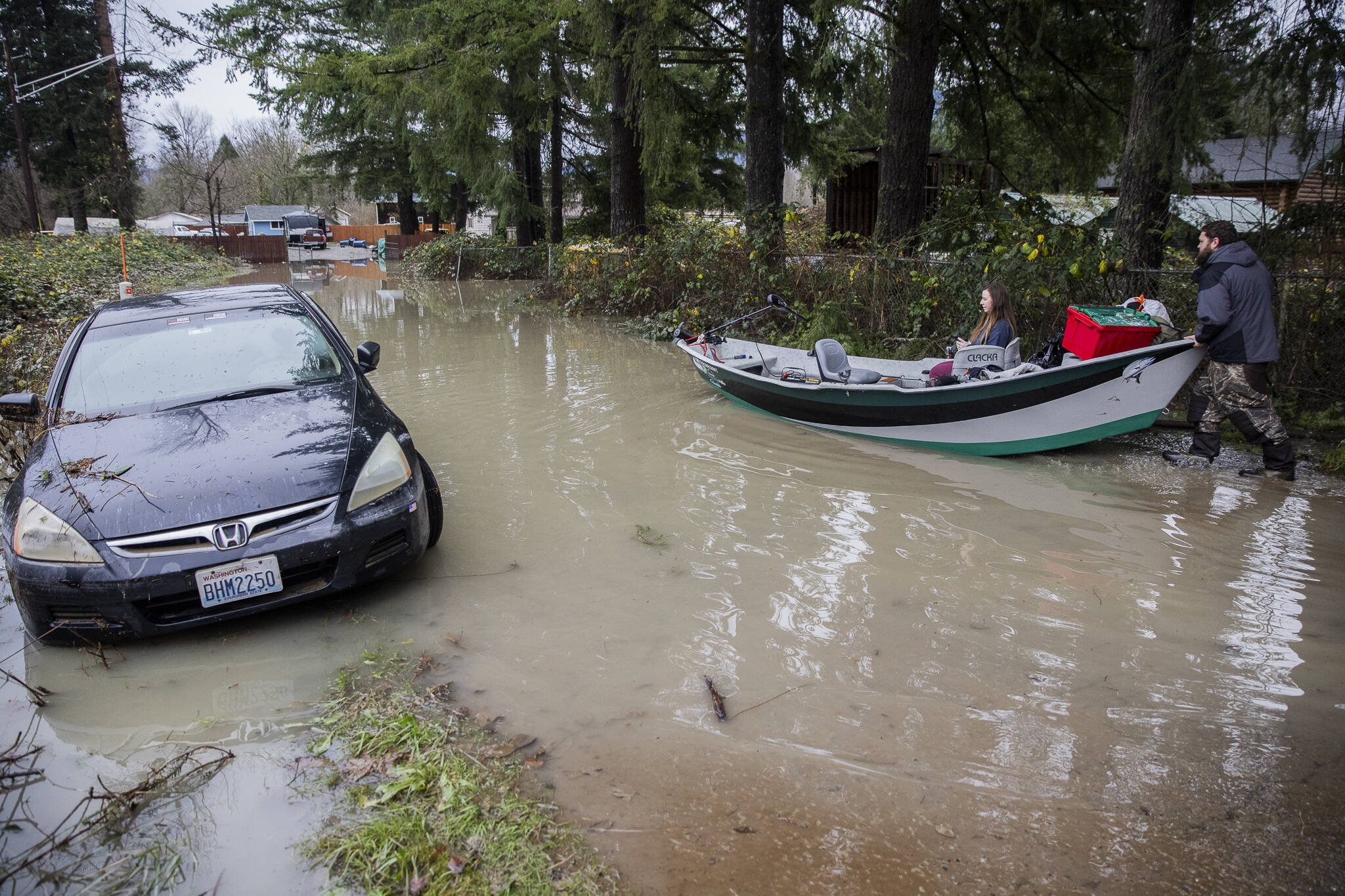
EVERETT — The Snohomish County Health Department is encouraging residents who are returning home after this week’s historic flooding to follow health and safety guidelines.
Floodwater can contain hazards that pose long-term safety and health risks, including sewage, chemicals and mold, the department said in a press release Tuesday.
“We urge residents to take precautions and protect their health as they repair their properties,” said Kim Van Pelt, director of the Snohomish County Health Department, in the release. “Safe cleanup today prevents serious health problems in the future.”
Before entering their property, residents should look for structural damage, gas leaks and downed power lines. Residents should turn off gas and electricity or propane and notify the gas company, police or fire department if they suspect a leak.
Officials advise avoiding contact with floodwater. Residents should assume all standing water is contaminated. Floodwater exposure can lead to skin rashes, wound infections, gastrointestinal illnesses and other diseases, the release said. It can also hide lumber, sharp objects or other debris.
Mold starts forming within a day or two and can trigger asthma and allergies, the release said. Residents can protect themselves with waterproof boots, heavy gloves and N95 masks.
Flooding could contaminate drinking water supplies, officials said. Those who have a well or are on a water system impacted by flooding should use bottled, treated or boiled water. Wells should be disinfected after floodwaters recede. Those on a public water supply should check their local water district for current conditions. Water that smells funny or is discolored should be boiled for a full minute before drinking.
Foods, medicine or cosmetics that were not in watertight packaging should be thrown out, as well as perishable items if refrigeration has gone out for more than four hours. “When in doubt, throw it out,” officials say.
Restaurants and other food businesses impacted by flooding should reach out to the health department directly at 425-359-8730 or food.safety@snoco.org.
The health department also provided tips for cleaning a home after a flood:
• Air out your building by opening all doors and windows.
• Use soap and water to scrub surfaces made of wood, metal, glass or other hard substances, including walls, counters and hard floors.
• Disinfect surfaces with a solution of one cup of bleach per gallon of water.
• Wash all clothes and linens in hot water.
• Throw out soiled mattresses and couches.
• Discard all food that has come into contact with floodwater. Thoroughly wash cans of food before opening.
• “Don’t forget yourself,” Health Officer Dr. James Lewis said. “Wash your hands thoroughly and often while cleaning or handling items that have been in flood waters, and wear protective equipment when possible, like N95 masks, gloves and goggles to prevent injury and illness.”
Flooding can also impact septic systems. To minimize damage, stop non-essential water use and flush toilets as little as possible. If the drain field is covered with water, do not use the system and avoid contact with any standing water. If your septic system is damaged, try to find other toilets. Do not have the septic tank pumped under flooded conditions, officials say, as it could cause the tank to float off the ground.
As flood waters recede and conditions return to normal, officials say to continue limiting water use until it’s confirmed the system is functioning properly. Residents should have their system inspected for sediment and debris and have tanks pumped if necessary.
The county is encouraging residents to report flood damage as soon as possible on the county’s online survey, which can be found at bit.ly/SnoCo-Damage-Report.
Jenna Peterson: 425-339-3486; jenna.peterson@heraldnet.com; X: @jennarpetersonn.
Talk to us
> Give us your news tips.
> Send us a letter to the editor.
> More Herald contact information.
























