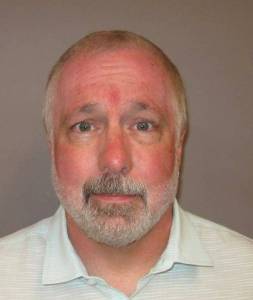
Jury picked in 1987 cold case double murder trial
Published 5:50 pm Thursday, June 13, 2019
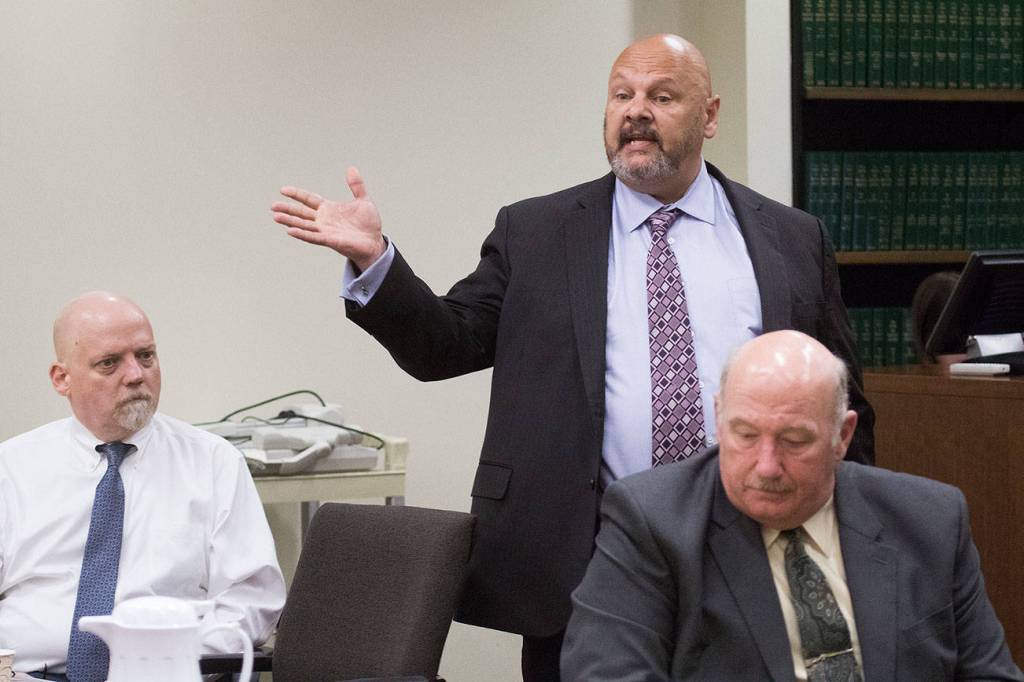
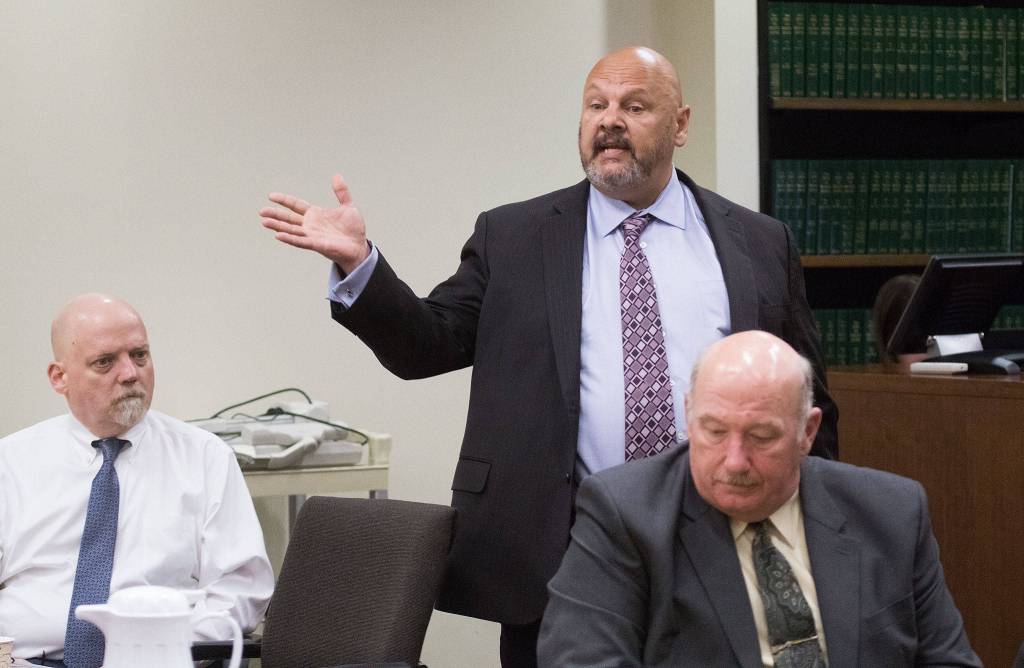


EVERETT — On the third morning of jury selection, defense attorney Rachel Forde put a question to the audience in the courtroom, who may soon decide if the defendant is guilty, or not, of a long-unsolved double murder from 1987.
“Who here,” Forde said, “thinks that a young woman, on a road trip with her boyfriend, would never have consensual sex with a stranger?”
One juror’s hand inched up, then lowered.
“Anyone here think that probably wouldn’t happen?” Forde asked.
Many hands shot upward in the courtroom, where 40-plus Snohomish County residents were seated Thursday morning in downtown Everett.
For an hour, Forde ran through hypotheticals with the jury pool, giving a possible glimpse at what kind of defense the attorneys have in mind for William Talbott II.
It has been 31½ years since the bodies of a Canadian couple, Tanya Van Cuylenborg, 18, and Jay Cook, 20, were dumped about 65 miles apart, in Snohomish and Skagit counties. They had been on a road trip from Vancouver Island to south Seattle.
Prosecutors believe Van Cuylenborg was sexually assaulted. Defense attorneys have filed notice to call an expert witness to “rebut testimony, if offered, that forensic examination … indicated any physical evidence consistent with a sexual assault.”
Talbott, 56, a trucker from SeaTac, is on trial for two counts of aggravated first-degree murder.
If convicted, he faces life in prison. He was identified as a suspect in 2018, because of a groundbreaking forensic tool known as genetic genealogy.
Genealogist CeCe Moore built the suspect’s family tree, when a private lab uploaded crime scene DNA into the ancestry site GEDMatch.
This was one of the first criminal cases to use the technique, and after a wave of dozens of arrests in cold cases nationwide, this is the first to go to trial.
According to a trial brief filed by prosecutors, two samples of DNA later confirmed that Talbott’s DNA matched genetic evidence at the crime scene. One sample was obtained from Talbott when a paper cup fell from his work truck in Seattle, while detectives had him under surveillance. Another sample was taken after he was arrested, when a judge approved a search warrant.
Privacy advocates have raised concerns about unchecked use of DNA ancestry sites by police. But the technique itself is not expected to be challenged — at least not at the outset of this trial. In this case, it was semen on Van Cuylenborg’s pants that was used to trace to Talbott.
Forde presented a hypothetical scenario to the jury.
“We have a dead woman,” Forde said. “Naked from the waist down. Semen, from somebody, on her pants. Let’s say you have nothing else. Is that going to be something where you fill in the gaps for the state, or overlook the gaps, and say: ‘That’s enough for me?’”
Several jurors answered that they needed more context. Some said there could be far-fetched, but possible, explanations for how the semen got there. They had not yet been told about the circumstances of how Cook and Van Cuylenborg went missing for days.
Jurors have been instructed to avoid reading about the case in the news. The trial will be closely watched across the country by genealogists, police and the public, largely because of the role played by cutting-edge technology and the controversy around it. But what’s on trial will be the strength of the evidence in this particular case.
So deputy prosecutor Matt Baldock began by asking the potential jurors about evidence.
What kind of exhibits did the jury expect to see?
How might the passage of time affect those exhibits?
Would they tend to put more weight on science and data, or witness testimony?
“I just think in life, there’s very, very few things that are 100 percent,” replied Juror No. 70. “So I think, with technology how it is nowadays, it’s pretty darn close.”
At the start of the week, more than 110 people made up the jury pool.
One man was excused because his job could call him, at a moment’s notice, to respond to an emergency oil spill somewhere else in the country.
Another man, a firefighter, had served on search-and-rescue teams, and often worked closely with sheriff’s deputies, and that could make him favor the side of law enforcement.
And another was let go because back pain made it hard for her to focus, and another because religious beliefs could lead “my gut instinct to override the law,” and another because the heaviness of the proceedings made him feel distressed and queasy.
By Thursday afternoon, the pool had been pared to 15. Three of those are alternates, who won’t be dismissed until perhaps two weeks from now, when the state and defense expect to wrap up.
On the witness stand, memories of those close to the case will be put to the test.
As an experiment, Baldock asked the jury pool if anyone could remember some event that happened 30 years ago.
“I saw the Beatles in concert,” Juror No. 99 said. “I can remember the dress I wore. I can describe it. I can remember the color of the ticket and where I put it in my clothes. … I can remember seeing girls fainting and screaming, and most of the songs that they sang.”
“Do you remember what you did three days after that concert?”
“No,” she said.
“Why is that?”
“The salience of what occurred,” she said.
Talbott sat flanked by his public defenders, Forde at his left, Jon Scott at his right. He wore a dark blue tie against a white dress shirt.
Opening statements are set for Friday.
Caleb Hutton: 425-339-3454; chutton@heraldnet.com. Twitter: @snocaleb.