Manure recycling plan moves ahead
Published 9:00 pm Sunday, January 30, 2005
MONROE – A partnership that could help save Snohomish County’s dairies and help clean the county’s rivers for salmon is moving ahead.
Construction could start as soon as this summer on something called a biogas digester, a device that captures the methane gas given off as cow manure decomposes. The gas could then be burned to generate electricity with fertilizer as a byproduct. Both could be sold to pay for the operation.
If it works, dairies could eliminate the cost of treating the vast amount of manure their cows create, one of the most expensive parts of operating a modern dairy.
The goal is to help the declining industry rebound, preserving a way of life for many longtime Snohomish County families while also making sure the farm land doesn’t get converted into housing tracts, something that could be deadly to salmon.
“We’re about ready to rock and roll on this,” said Andy Werkhoven, whose family owns Werkhoven Dairy Inc., one of the dairies that plan to send their waste to the biogas facility. “It’s truly a good deal that’s going to bring something to our bottom line.”
Four Skykomish Valley dairy farmers, including the Werkhovens, the Tulalip Tribes and a local environmental group, are among those only weeks away from formally creating a limited liability corporation that will run what they’re calling the Snohomish Basin Biogas Partnership.
The partners are also nearly ready to select the company that will provide the digester, said John Sayre, executive director of Northwest Chinook Recovery and a member of the partnership.
“We have spent a lot of time learning about biogas and the different systems that are out there,” Sayre said. “We’ve narrowed it down to four companies.”
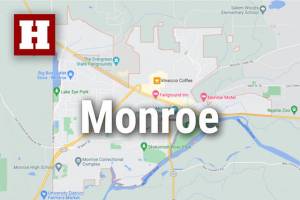
Finally, the Tulalip Tribes are closing in on formally taking ownership of the old Monroe Honor Farm from the state. The farm is where the biogas plant will be built. The partnership is right now preparing to open an office at the site.
The 277-acre former dairy is located in the heart of the Skykomish Valley. Locals know it as the farm once operated by prisoners from the nearby Monroe Correctional Complex.
Some of the land can be used for stream restoration and other environmentally friendly uses as long as it maintains its agriculture roots, Sayre said.
The Tulalips have been pushing for a biogas plant because the tribe’s leaders want to restore the health of the rivers that salmon depend on and have in turn fed generations of Tulalips.
“If this works for farms, what we see is continuing this kind of work in other places,” said Terry Williams, the Tulalip Tribes’ commissioner of fisheries and natural resources.
The biogas plant will cost $1.5 million to $2.5 million to build. A feasibility study shows that the electricity and compost it generates will pay for the operation, and even could generate revenue that could be poured back into the venture.
Reporter Lukas Velush: 425-339-3449 or lvelush@heraldnet.com.