
EVERETT — In Shelly Waller’s classes at Everett High School, students arrived uncertain but soon learned that they can create the kinds of apps they love to use on their smartphones.
Waller teaches college-level AP Computer Science Principles, a new course this year. She planned to offer one class, but that quickly filled and now she has two classes of 31 students each. She wishes she had room for more. She covers internet use, digital information, programming, privacy and security, and related careers.
There’s a misconception that computer science only is for the mathematically inclined. That’s not true, she said. There’s ample room for creativity.
“Kids get to spend time creating their own apps and using apps their classmates made,” she said. “So you might be sitting in class and playing a game on your phone that your friend made. For me, it’s really exciting because kids come in nervous and unsure, and then they excel.”
State Superintendent Randy Dorn last week signed off on Washington’s first set of formal standards for teaching computer science. They’re based on a draft of national standards by the Computer Science Teachers Association.
Though schools are required to teach computer use and digital literacy, they are not required to teach computer science. For schools that do offer classes, though, the standards allow them to be recognized as science credits. That means students can take computer science to meet graduation requirements that typically have called for biology, physics or chemistry.
“That’s the difference I think people have to kind of get their head around,” Dorn said. “There’s computer use, and then there’s computer science, which is the knowledge of how you build it and how you do it yourself.”
The standards list dozens of learning goals. Between kindergarten and second grade, students would start coding programs, learning about passwords and how computers have changed the way people live. By the end of elementary school, they’d be able to use and give credit for code and other online information. Students also need to describe and explain the basic parts of a computer and use programs to analyze data.
Middle school students would learn to justify the hardware or software they choose for tasks and translate data into different codes. They’d discuss issues such as hacking and plagiarism.
High school freshmen and sophomores would design something computerized and responsive, maybe a robot that responds to a sensor. They’d learn to debug a program and debate the consequences of software piracy, malware and “hacktivism” — when people try to bring about change through hacking.
By the time students graduate high school, the standards suggest they should have learned how to create programs for the web, desktops and mobile devices.
Waller urges students to take their passions — music, art, business, medicine, entertainment — and find a way to apply computer science. There’s no telling who might create the next big thing in this fast-paced digital age.
Standards that let students use computer classes for science requirements are overdue, she said.
“I think it’s exciting and I think it’s about time,” Waller said. “Computer science is science. We’re creating. We’re developing. It’s the science of the future.”
Only about 11 percent of schools in the state offer courses that fit the standards, Dorn said. The goal is to get that to 50 percent over the next two years. “The only way to do that is to provide more resources,” he said.
His eye is on state budget decisions next year. Many schools, especially those in rural or low-income areas, do not have funds to update technology.
Snohomish County districts already have turned their attention toward improving computer science education. Earlier this year, Edmonds and Everett schools announced more than $75,000 total in grants for their programs. Marysville schools have offered elementary students weekly 40-minute computer science classes. Volunteers who work in the technology industry have visited Monroe schools to speak about tech education.
In a letter to the editor last year, Mariner High School teacher Auliilani De La Cruz wrote that teachers need support, especially in schools with high numbers of low-income or minority students who tend to be underrepresented in science, technology, engineering and math.
“Even in a state like Washington that creates so many STEM jobs, students like mine will never be exposed to computer science unless we can expose them during the school day,” she wrote.
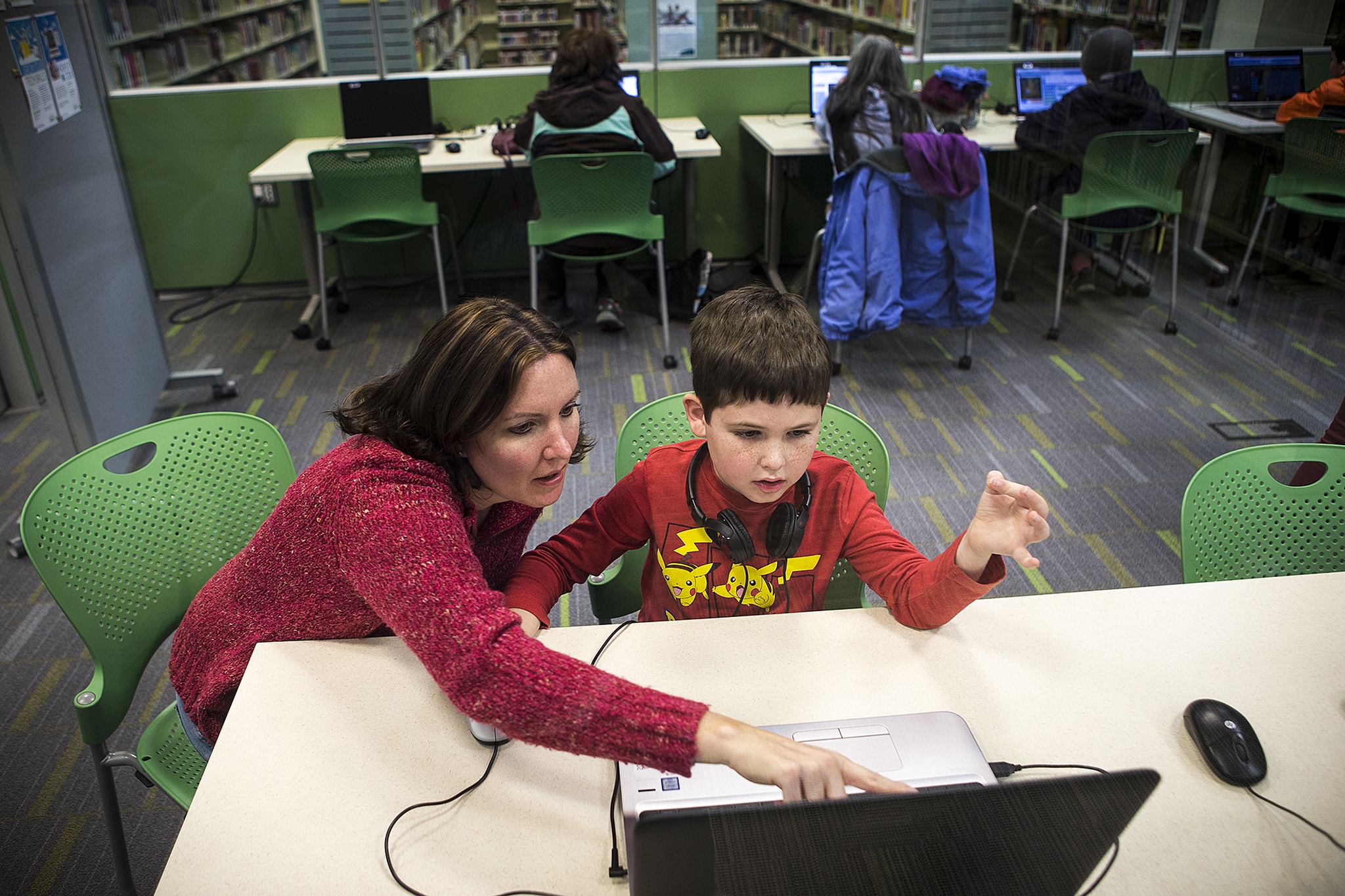
At Lynnwood Library, a group gathered Saturday for an international event called Hour of Code, where they pledged to do coding or learning.
Brian Horrocks with the library’s creative tech center helped run the event, which nationally has been supported by tech giants such as Amazon, Microsoft and Facebook.
“For me, I think looking into the future, computers are going to be — well they already are — used in every profession,” Horrocks said. “If you have even a little bit of background in coding, it gives you an advantage in the job environment.”
Over the next nine months, OSPI officials plan to look at what schools need to use the new standards.
“Ten years ago, if you asked if computer science or digital learning is part of basic education, I think most people would have said ‘No,’” Dorn said. “But it’s not an extra anymore. This is basic education.”
Herald writer Melissa Slager contributed to this story.
Kari Bray: 425-339-3439; kbray@heraldnet.com
Talk to us
> Give us your news tips.
> Send us a letter to the editor.
> More Herald contact information.
























