
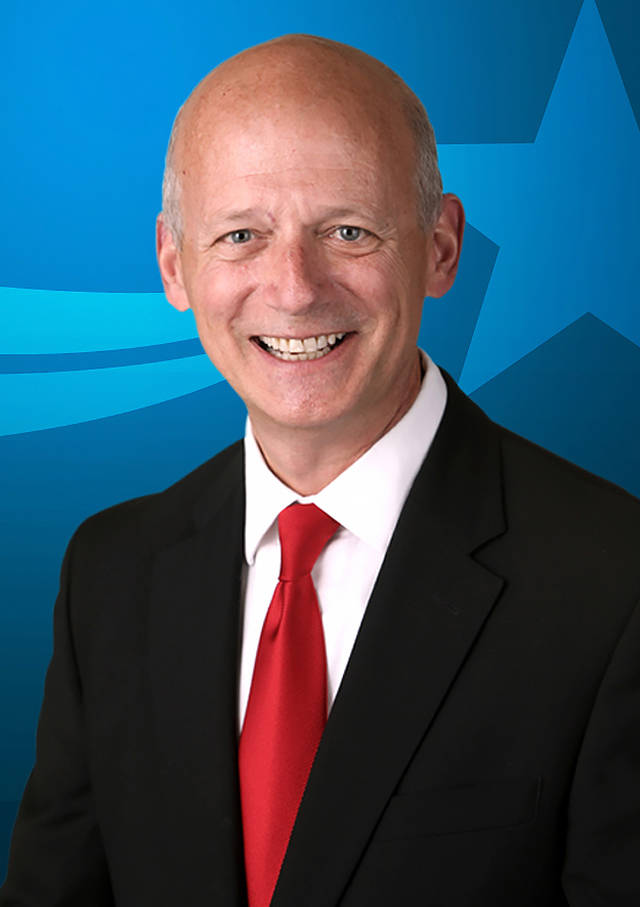
By Kristin M. Kraemer / Tri-City Herald
KENNEWICK — A Superior Court judge who is an avid outdoorsman off the bench had his gun rights restored Wednesday in a Kennewick courtroom.
The request by Yakima County’s Judge Doug Federspiel came 1½ years after he was ordered to undergo involuntary inpatient treatment at a Richland counseling center.
Federspiel, 57, appeared before one of his peers in Benton-Franklin Superior Court.
“It has been over one year since those events, and I have successfully managed the stress related to the original order (under state law),” Federspiel wrote in his petition to the court.
During the two-minute hearing, Judge Sam Swanberg concluded there is no evidence at this time of Federspiel being a substantial danger or committing serious harm to either himself or others.
Swanberg noted that he had “extensively reviewed” the file and, given that a professional mental health evaluation of Federspiel had been done, it was appropriate to sign off on the order.
Benton County Deputy Prosecutor Eric Andrews said his office was in agreement with the request after reading Federspiel’s two-page petition and an attached doctor’s letter.
Dr. Robert Fallstrom of Yakima wrote the court in November that Federspiel “has been successfully managing his depression ever since the events of last summer, (and) has returned to work with no restrictions of which I am aware.”
The doctor said Federspiel is not taking any psychiatric medication for depression.
He added that, in his opinion, “the severity of (Federspiel’s) depression leading to the concerns of self-harm evidenced by the events of last summer are not reasonably likely to recur.”
The order applies to Washington state law, but not necessarily federal law.
The Yakima County judge’s gun rights were taken away in July 2018 after he was found pacing at the edge of the I-82 bridge north of Yakima.
Federspiel, who’d left his courthouse chambers some time during the lunch hour that day, told the first Washington State Patrol trooper on scene that he was “just trying to decide whether to live or not,” according to video obtained by the Herald under the open public records law.
Presided over Hanford lawsuit
Federspiel was elected to Yakima County District Court in 2010, then to Superior Court in 2012 when a judge retired. His seat is up for election this year.
He has presided over a number of cases in the Tri-Cities that local judges have been unable to hear, including the recent divorce filing between Benton County Sheriff Jerry Hatcher and his estranged wife, Monica Hatcher.
Federspiel also was on the bench when a Benton County jury ordered a Hanford contractor to pay $8.1 million for discrimination, retaliation and wrongful firing.
The judge later upheld that ruling against Mission Support Alliance and then-manager Steve Young, who also was the former Kennewick mayor.
MSA has appealed the verdict, saying it was “truly shocking” and Federspiel was unfair by refusing to allow certain testimony in favor of the contractor while letting in other testimony that was against it.
That case was argued Tuesday before the Washington state Court of Appeals in Spokane.
I-82 bridge incident
Federspiel’s incident on the Fred G. Redmon Memorial Bridge outside Yakima came about six months after that civil trial in Kennewick.
Federspiel told Trooper Joe Campbell on July 9, 2018, that he was “having a bad day.” He later added, “I just give up.”
People who are contacted by police out of concern they may harm themselves can be ordered held by a judge in a mental health facility for up to 72 hours to be evaluated by a doctor.
Then, in a follow-up civil commitment proceeding, a judge can order inpatient treatment for a set length of time if they find the person is severely disabled or a serious threat to themselves or others.
Federspiel ended up having a mental health hearing that July before a Tri-Cities judge because it would have been a conflict for one of his judicial colleagues to make that decision.
That’s when he was ordered into a treatment center for two weeks. He was released after 1½ weeks and back on the bench two months later.
Under Washington state law, a person who has been involuntarily committed for mental health is prohibited from possessing a gun.
The person then must petition to have their rights restored by showing there no longer is an active court order for inpatient treatment and have successfully managed their mental condition.
They also must show they are no longer a substantial danger and that they don’t have symptoms that are reasonably likely to recur.
Talk to us
> Give us your news tips.
> Send us a letter to the editor.
> More Herald contact information.
























