
By The Herald Editorial Board
If there’s one pandemic symptom that seems universal and now rampant — regardless of vaccination status and mask use — it’s frustration; seething, consuming and infectious frustration.
Those who have refused jabs for one of three vaccines for covid-19 and chafe at advice and mandates for masks have had it with the rest of us — including their own family members — over the coaxing and cajoling, the shaming and the guilt, the warnings and the threats.
They are not impressed. They are not swayed. They are certain they are right; they — after all — have done their own research. And they are not going to listen; not to statistics; not to medical experts; certainly not to public officials and editorial writers; not even to those who once agreed with their antivax stance but now have made deathbed appeals — gasping for each breath — that they, please, get vaccinated.
But the rest of us are fed up, too. And this isn’t a guilt trip; it’s anger. Anger borne out of months of personal sacrifice; separation from friends, family and church; loss of businesses, of income, of savings; restrictions on our travel and our pastimes; and fatigue from workarounds like remote learning, working from home and Zoom meetings. (Yes, I know I’m on mute! I don’t want you to hear me swearing.)
We’re angry mostly because we were all given ways to get past all of that, and we were enjoying a slow return to something close to what we remember as normal: first with social distancing, hygienic habits and masks; then, blessedly, with not one but three safe and effective vaccines, one of which now has full approval from the Food and Drug Administration for all, 12 years of age and older.
At last, we thought earlier this summer, we are going to beat this.
But covid-19 — and the delta variant that took advantage of vaccine hesitancy — had other plans for us.
Now we’re angry because we’re afraid that we may be quickly losing what we’ve gained. That fear — although the antivaxxers will deny that, too — is justified.
We’re afraid for the health and lives of all Americans.
With only 54 percent of Americans fully vaccinated, covid’s delta variant — far more infectious than the first strain — has led to the most recent surge; in many ways worse than earlier surges. As many as 1,500 Americans are now dying each day. To give that number fresh context, that’s roughly equivalent to a Sept. 11 terrorist attack every other day.
We’re afraid for our hospitals, medical staff and patients.
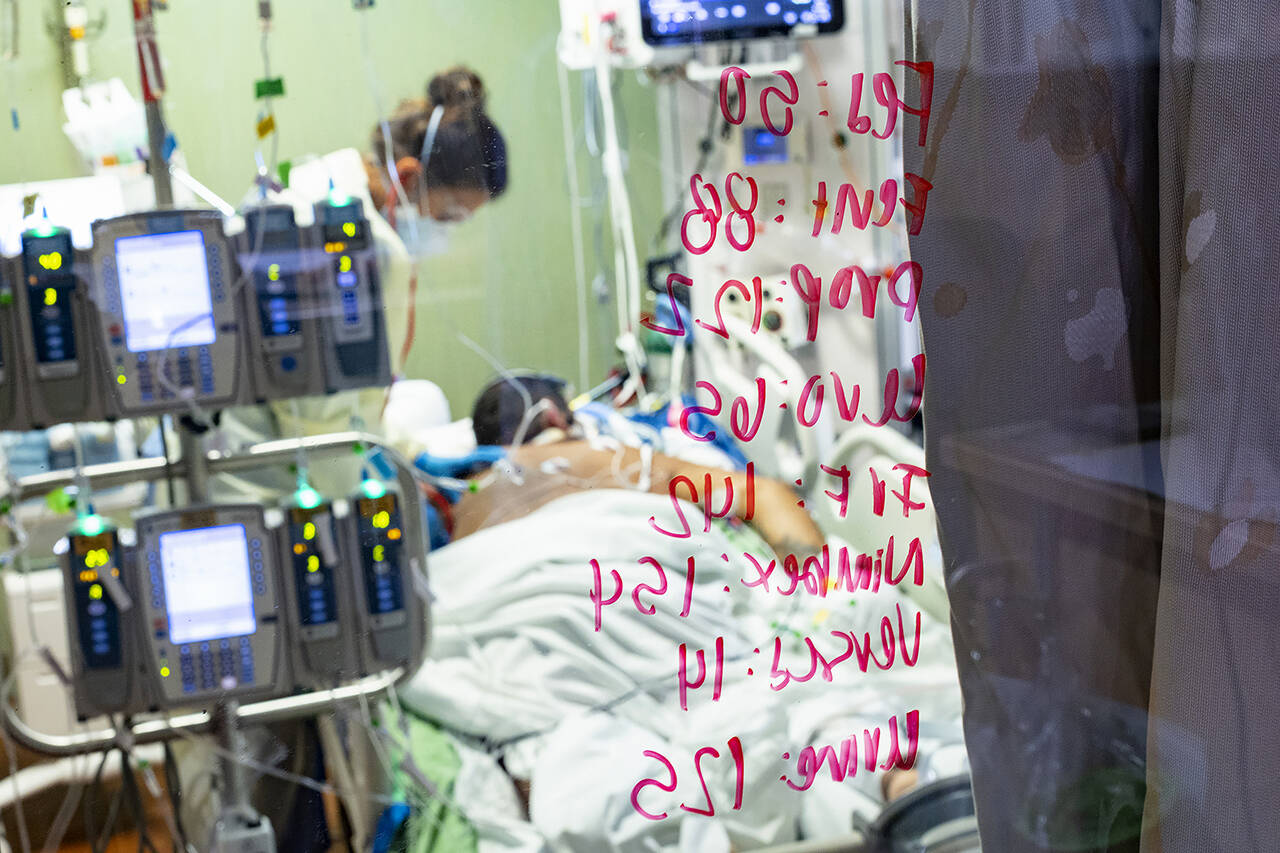
Hospitals in our state — where one-quarter of residents over 12 years of age have yet to receive one dose of vaccine — are stressed, overworked, short-staffed and are nearing or at capacity for hospital beds and beds in intensive care units. The state Department of Health announced it is working with hospitals to assure normal operations but is planning for a level of care that includes a “crisis response” and plans for “scarce resource management.”
“The goal,” a DOH release said, “is to prevent ever having to utilize crisis standards of care anywhere in Washington.”
Already, however, hospitals are canceling non-covid-related surgeries and medical care, including heart surgeries, cancer surgeries and other “elective” procedures that will not seem “elective” to the patients involved.
Providence Regional Medical Center Everett admitted more than 320 covid-19 patients last month, 72 of whom needed ICU treatment. Of those, 96 percent had not been vaccinated. The influx of patients forced the Everett hospital to open one eight-bed satellite ICU, then a second 10-bed unit, though the hospital has had difficulty in hiring the trained nurses necessary to staff the units.
We’re afraid for a school year that has just begun.
As parents and grandparents, we were excited for a return to classrooms and a more normal and physically, emotionally and scholastically healthy routine for students, but we can’t ignore the reports about increasing rates of infection among younger children, especially those who cannot yet count on the protection of a vaccine.
So, yes, we’re angered when adults storm school board meetings protesting the mask mandates that are one of the few safeguards on which our youngest children can rely.
And we will be particularly ticked off if — because outbreaks make it necessary for their health and safety — school buildings again have to be closed and children again have to make do with remote-learning at the kitchen table.
So we are not impressed and we are not swayed by the objections to state and federal mask and vaccine mandates. And we are certain that we are right, a certainty backed by medical science and by the sheer numbers of Americans who are healthy after taking the vaccine and are now vastly less likely to face serious illness and death from covid-19.
If the choice as to whether to wear a mask or get the vaccine truly was only a personal decision, one that affected only the individual, we could let it go. But it’s not only your business; it’s not only your body. The refusal of masks and vaccines — and the increased likelihood of infection that results, the opportunity for an even deadlier variant to develop and the costs and burdens on our hospitals, schools and communities — make it everyone’s business.
Talk to us
> Give us your news tips.
> Send us a letter to the editor.
> More Herald contact information.
























