Editorial: Court majority weakens church, state separation
Published 1:30 am Thursday, June 30, 2022



By The Herald Editorial Board
We’re going to need a bigger football field, what with the world’s myriad religions now apparently eligible for a spot at the 50-yard line for a post-game prayer.
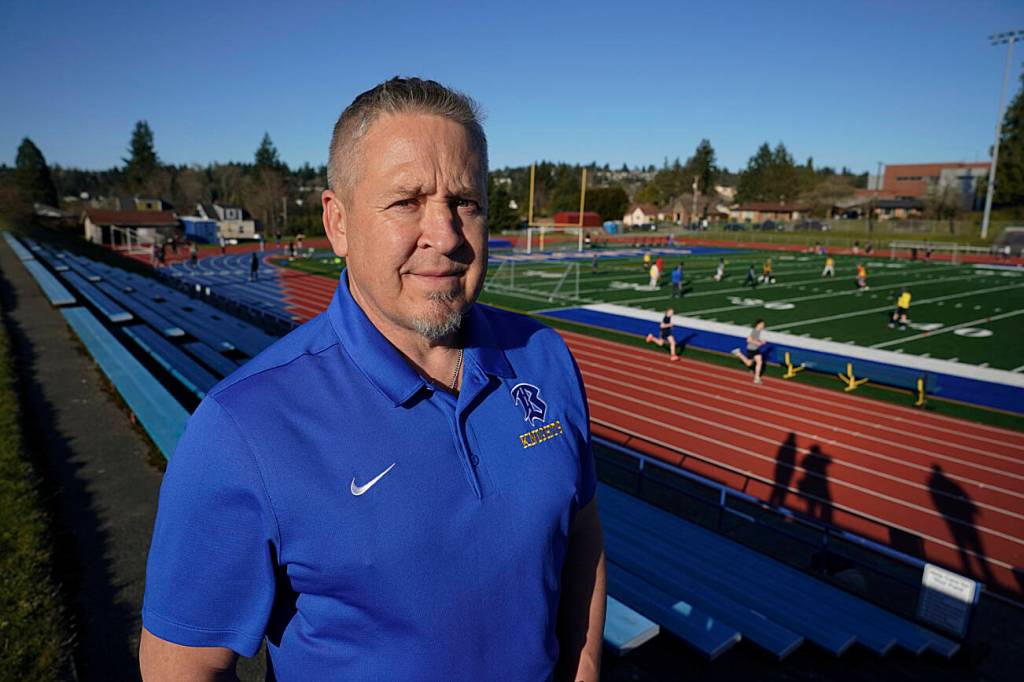
The U.S. Supreme Court on Monday sided with a former Bremerton High School football coach who sought to kneel and pray after games, muddying the field of play for the separation of church and state found in the U.S. Constitution.
What started as brief, quiet prayers at midfield by coach Joe Kennedy grew to post-game motivational sermons on field and in locker rooms involving players and coaches from both teams, fans, media and at least on one occasion a state lawmaker. In a court brief, the Bremerton School District described the scene at a homecoming game that brought the issue to a head: “Spectators jumped over the fence to reach the field and people tripped over cables and fell. School band members were knocked over.”
The week after homecoming, the Seattle chapter of the Satanic Temple — which truthfully practices “owning the cons” more than worshiping Beelzebub — demanded equal time on the field for its own “religious” observance.
Seeking to avoid further spectacle and protect students from feeling coerced into a religious expression, the school district suspended the coach with pay and eventually recommended that he not be rehired as coach. Kennedy sued to get his job back.
Seemingly ignoring some details, the court’s 6-3 majority preferred to rule on generalized First Amendment ideals: Justice Neil Gorsuch wrote that the Constitution “and the best of our traditions counsel mutual respect and tolerance, not censorship and suppression, for religious and nonreligious views alike.”
Yes, certainly. But later, the opinion chides the school district for seeking to “punish an individual for engaging in a brief, quiet, personal religious observance doubly protected” by the Constitution.
Some 500 people rushed the field to pray with Kennedy after one game. Were Gorsuch and the five other justices absent from the locker room when “game film” of the case was played?
Justice Sonia Sotomayor, in her dissenting opinion, wrote that the court’s majority “elevates one individual’s interest in personal religious exercise, in the exact time and place of that individual’s choosing, over society’s interest in protecting the separation between church and state, eroding the protections for religious liberty for all.”
The Bremerton coach’s case was one of several Supreme Court cases this term to address the First Amendment’s protection of free speech and religious exercise. Earlier, the court found that the state of Maine could not deny tuition aid to religious schools that it had provided to private secular schools; that a death-row inmate had a right to a spiritual adviser at the time of execution; and that the city of Boston could not reject a Christian group’s request to fly a flag above city hall.
All of these involve legitimate debates about the gray areas that are encompassed in the First Amendment’s protections, particularly regarding religious liberty and the separation of church and state that protects that liberty.
Which is why such momentous decisions require greater consideration than the court majority seemed to apply in finding for the football coach; because the majority’s too-eager defense of constitutional protections that here benefit the Christian faith — even where justified — are too easily misinterpreted.
As U.S. Rep. Lauren Boebert, R-Colo., will now testify.
Speaking at a church service Sunday in Colorado, Boebert, the conservative congresswoman who won her primary race Tuesday, professed: “I’m tired of this separation of church and state junk that’s not in the Constitution. It was in a stinking letter, and it means nothing like what they say it does.”
Explicitly, no, the words “separation of church and state” do not appear in the Constitution; nor do principles such as the separation of powers, judicial review, executive privilege and others, says Steven Green, a professor of law, history and religious studies at Willamette University and author of “Separating Church and State: A History.” Yet those principles have long been accepted by the court as inherent in the Constitution.
Boebert’s “stinking letter,” as a Washington Post story relates, appears to refer to an epistle to the Danbury Baptist Association from Thomas Jefferson, author of the Declaration of Independence and a leading advocate for the Constitution’s Bill of Rights, including the First Amendment.
Wrote Jefferson: “I contemplate with sovereign reverence that act of the whole American people which declared that their legislature should ‘make no law respecting an establishment of religion, or prohibiting the free exercise thereof,’ thus building a wall of separation between Church and State.”
Boebert further pursued her interpretation of constitutional law: “The church is supposed to direct the government. The government is not supposed to direct the church. That is not how our Founding Fathers intended it.”
This is the point where one wishes for Jefferson and other founders to come up from behind and tap the congresswoman on the shoulder, remarking, “You know nothing of our work.”
What Boebert and others who insist incorrectly that the United States was founded as a “Christian nation” fail to recognize — and what the court’s majority now risks in protecting a religious spectacle as a “quiet, personal religious observance” — is that this “separation of church and state junk” is a fundamental protection of all Americans’ individual faith and collective religious liberty. And without it, we haven’t got a prayer.