Editorial: Honor 100 years of suffrage with your ballot
Published 1:30 am Sunday, August 23, 2020

By The Herald Editorial Board
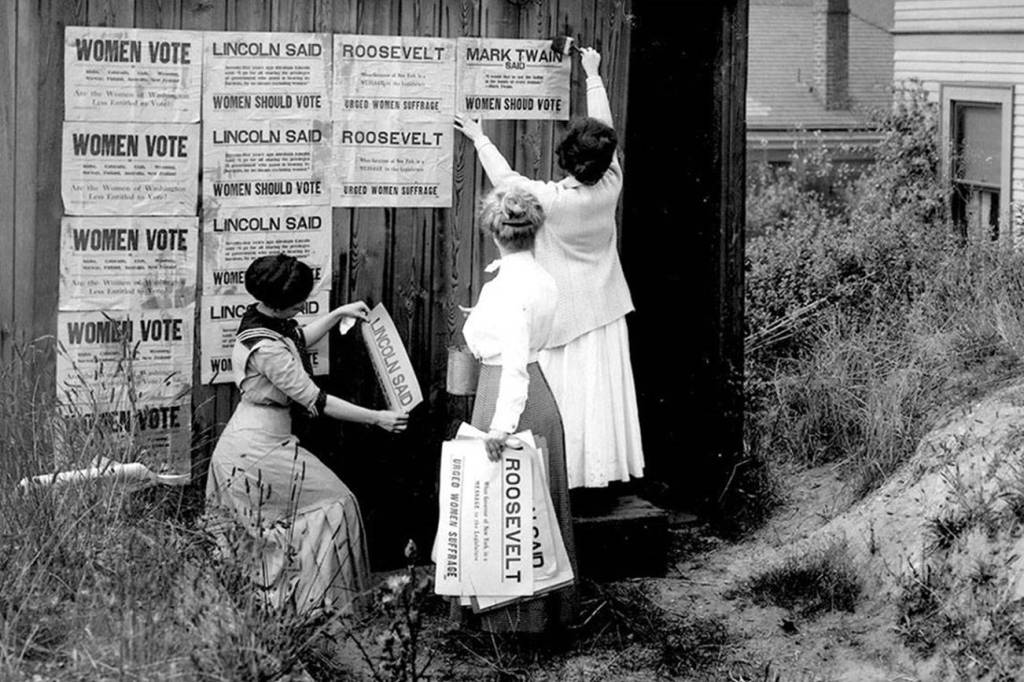
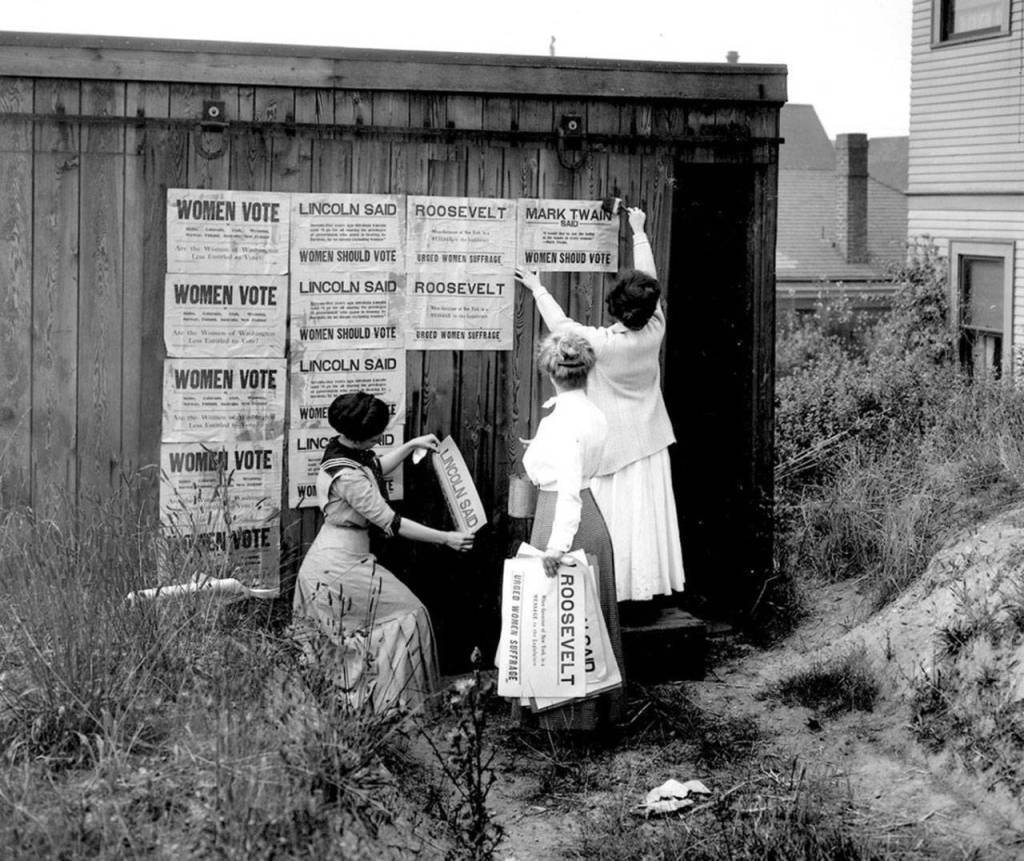
It’s one of those quirks of history that even though Washington state had recognized women’s right to vote 10 years previously, the state’s Legislature was the 35th state — next to the last necessary for adoption — to ratify the 19th Amendment to the U.S. Constitution, which opened voting booths to most women across the country.
Last week, the nation marked 100 years since a vote in Tennessee’s legislature on Aug. 18, 1920, provided the 36th and final state approval needed for the amendment’s ratification.
As hard fought as the struggle for women’s suffrage was in the decades before the vote in Nashville, the century since has seen a long, difficult effort to extend recognition of those rights to Black Americans, Native Americans and young Americans between the ages of 18 and 21. As well, the work continues to fully employ that right to vote to achieve equity and equality for women and minorities in their lives and in their representation at all levels of government.
And it was a right available to women in Washington state 10 years before the 19th Amendment was ratified, when voters — all men, of course — recognized women’s right to vote in elections within the state on Nov. 8, 1910.
As told in a Herald feature by reporter Gale Fiege in October 2010, women in Washington Territory had the vote much earlier; in 1877 when first allowed to vote in school board elections. That right was expanded briefly in 1883, then denied by the territorial Supreme Court, a year before statehood in 1889. The vote wouldn’t be restored — except for a 1892 vote on the state flower — until the 1910 election.
Fittingly, the amendment’s centennial has arrived during an election year of great consequence and one of increased voter interest and participation.
“It is historic,” said Carolyn Weikel, who retired in 2019 after serving 12 years as Snohomish County auditor, the county office responsible for elections.
“Even after women have had the vote for 100 years, it’s telling that in our society women have just recently been coming more into power, playing a role they should have played all along,” Weikel said in a phone interview. “People are recognizing that women make good decisions when they vote.”
And when they are in office.
Progress has been frustratingly slow to increase the number of women serving in political office, said Weikel, who was the first woman to win election to the county auditor’s office, but the trend of more women serving in locally elected positions now appears to be extending into higher offices.
While representation in elected bodies such as the state legislatures and Congress is far from a 50-50 level of parity, Washington is — as it was 110 years ago — a leader among the 50 states.
Nationwide, women make up nearly 29 percent of state legislatures and about a quarter of the membership of the U.S. House and Senate. For Washington state, 41.5 percent of state lawmakers are women; and both U.S. senators and five of 10 House representatives are women; a number that is likely to increase to six with the election of either Beth Doglio or Marilyn Strickland to Rep. Denny Heck’s vacated 10th District seat.
Nationwide, there’s been increased interest among women — Democrat and Republican — in running for Congress. More than 583 women filed for House or Senate posts, including a record 227 Republican women. With most primaries complete, 211 Democratic women and 98 Republican women remain in the running for November’s congressional elections.
Even 100 years on, there’s still an effort required to raise awareness about the history of women’s suffrage and their achievements.
Vicki Roberts-Gassler, immediate past president of the League of Women Voters of Snohomish County, described how her college-age daughter recently took a history course that covered the scope of World War I and related world events, but the course made no mention of the efforts to recognize women’s right to vote at that time. Her daughter took up the issue with the professor, she said, and made sure suffrage was included in the curriculum.
“I didn’t raise any shy children,” Roberts-Gassler said.
As with most aspects of our lives, the coronavirus pandemic has forced changes in the centennial’s recognition by the League of Women Voters’ local chapter, said Roberts-Gassler. Commemorations, before public gatherings were limited, included a readers’ theater production of a play Roberts-Gassler wrote, “Interview with Our Foremothers,” but more recently much of the league’s work has moved to the Zoom arena, including its annual membership meeting offered this weekend.
While the pandemic has required adjustments, it hasn’t kept the league from some of its most important work to promote voter registration and election participation. Rather than in-person voter registration efforts at local libraries, those efforts have moved online and to posters to encourage registration and voting.
Turning out voters — women and men — has long been a leading focus for the league, Roberts-Gassler said.
Efforts in recent years in the Legislature and by officials, including current Secretary of State Kim Wyman, to streamline voter registration and election participation have helped; turnout for the primary election earlier this month hit a 50-year high of 53 percent in county elections and Weikel and current Auditor Garth Fell expect a record turnout for the general election.
Still, there’s hesitancy to vote among some.
“The only reason not to vote now would be that people may not understand the issues well and don’t want to cast an ignorant vote,” Roberts-Gassler said, which is why the league has hosted election forums in years past.
Again, the pandemic has forced adjustment to plans for this year’s forums. Now being organized, the forums will be offered online via teleconferencing apps, she said.
“That’s where the league comes in, in helping people to figure out which candidate shares their values,” she said.
Elections — as evidenced by the efforts expended to win recognition of that right for women, Black Americans and others — are of immense consequence to our nation and our lives, most especially the election that is now just a couple of months away.
Register to vote, learn about the candidates and issues, watch for your ballot in the mail, then make full use of it. More than a right, it is a duty.
“My old saying was: Just vote.” Weikel said. “Remember that a lot of blood, sweat and tears went into what happened 100 year ago. We can honor that by voting.”