Editorial: Trades program building students’ careers and lives
Published 1:30 am Sunday, May 8, 2022
By The Herald Editorial Board
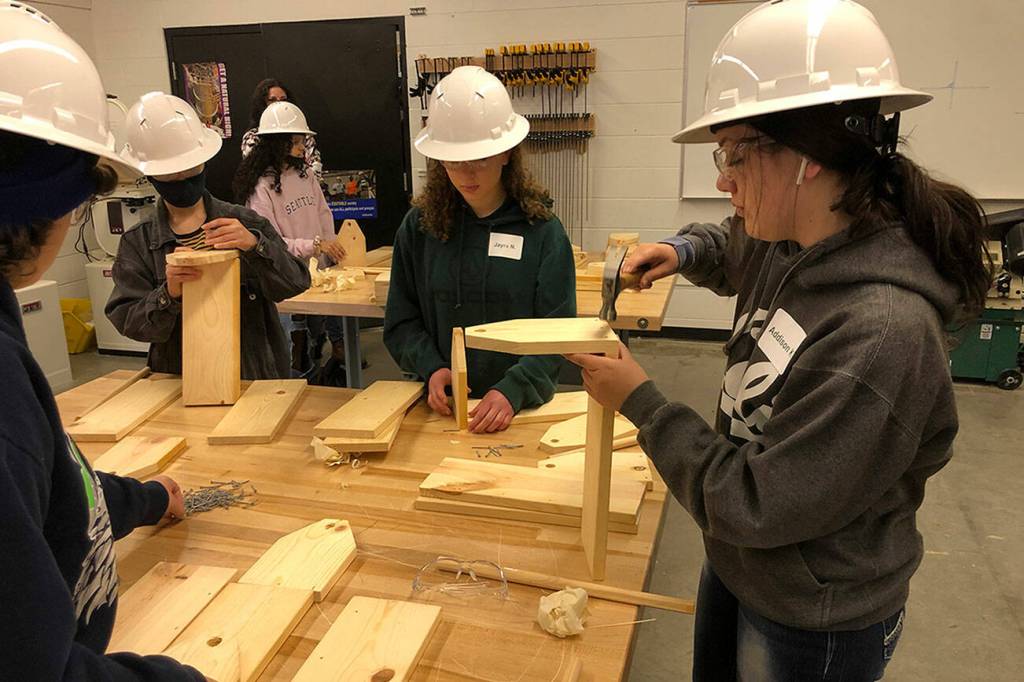
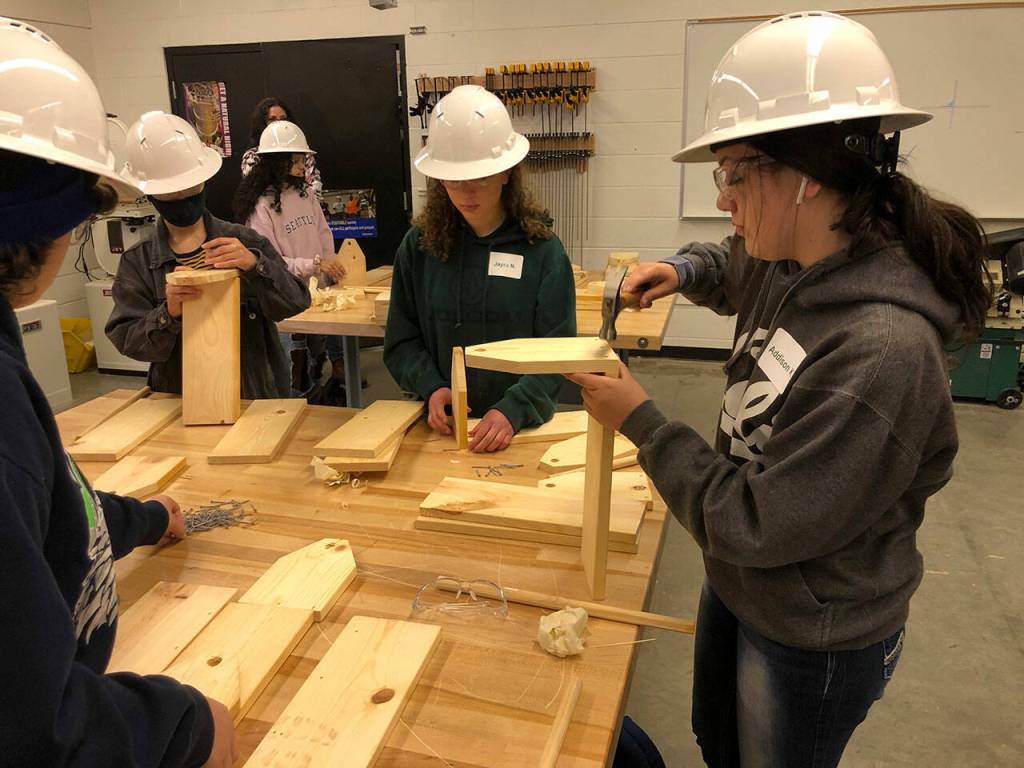
Dempsey, a freshman at Marysville Getchell High School who prefers to go by her last name only, launched into her wooden toolbox project even as other students were laying out the pieces and getting instructions on assembly.
“No. Yeah, I do this stuff all the time with my dad, so I pretty much knew what to do,” she said as she inserted a dowel handle into the toolbox’s end-pieces before nailing on the bottom and sides. She’s grown up with a father and other family members who work construction, so Thursday’s Girls Build field trip to the Regional Apprenticeship Pathways classrooms at Marysville Pilchuck High School was as familiar as it was forward-looking for Dempsey’s coming years in high school.
Other girls weren’t as familiar with the woodworking project and needed more coaching, but that was the point of Girls Build, which brought several freshman and sophomore girls from high schools across the county to the RAP center, encouraging them to consider a program that introduces high school students to the building trades — including carpentry, plumbing, sheet metal, masonry and other construction fields — while earning both high school and college credits and encouraging a deeper look at lucrative and fulfilling careers in construction.
Like its sister vocational education program, Sno-Isle TECH, near Paine Field in Everett, the RAP program intends to interest high school students in construction trade apprenticeships and certification programs available after high school. A public-private endeavor urged by Snohomish County Council Member Nate Nehring and state Rep. Mike Sells, D-Everett, the program got its start in 2019, said RAP Director Anne Carnell, and held its first Girls Build day in January 2020, only to have the covid-19 pandemic slap a stop-work order on the hands-on educational program.
“We’ve worked hard to grow the program, despite those challenges,” Carnell said, and after resuming with a morning class of 25 students, RAP is adding an afternoon class of 25 students from participating high schools in the county.
Partnering with Everett Community College and several trade unions and construction associations, the program offers a multi-hour course that earns students math, English, physical education and other credits toward high school graduation as well as college manufacturing course credits and helps them develop a resume and skills to connect with representatives in the industry, Carnell said.
“Students are able to get their hands on a lot of different trades,” she said. “So that when they finish the program they’ll have a good sense of themselves, what their skill set is and where their passions are for career paths.”
Thursday’s focus was more finely honed to encourage girls to consider construction as a career, so representatives of trade unions and building associations — women and men — shared their work and life experiences.
Sarah Patterson, a workforce development director for the state Associated General Contractors, appealed to the girls’ sense of purpose and asked them what they considered to be “helper” jobs, and heard answers for doctors, social workers and other professionals.
“But all of those jobs require construction in order to do those jobs,” she said. “Construction is a job about helping other people. It’s a job that helps build a civilized society.”
Others made the case by pointing to the excellent pay available in construction. Marianna Hyke, with the Northwest Carpenters Institute, actually went to college first, earning a nursing degree — and amassing $76,000 in student loan debt — before finding her passion in promoting and encouraging construction trades. The financial security — and the health insurance and other benefits available — Hyke said, is a big draw for many. But so is a sense of accomplishment.
“It’s the most empowering thing I’ve ever seen, to be able to drive down I-5 and say, ‘I built that. I did that,’” Hyke said, and it’s something that is encouraging the entry of more women into construction. “The teamwork is empowering, and I would love to see more sisters get in and do something that is nontraditional.”
Aubrey Russell, 32, in her fourth and final year of her apprenticeship, agreed. “You feel damn good about what you’ve done when you drive by and see the places you’ve worked on,” she said.
But Russell also has a more personal sense of accomplishment. After high school in Bellingham, Russell struggled for years with addiction and even spent time in prison, but now as an apprentice she lives comfortably and is saving up to purchase her first home with her wife.
Russell was eager to share with students what her apprenticeship, its training and the work has meant to her, and sees great potential in the Regional Apprenticeship Pathways program.
“If I had had that in high school, maybe that would have made a difference,” in avoiding some struggles, she said.
Washington state has made a huge investment — $16.8 billion — in transportation infrastructure over the next 16 years, joined by billions more from federal infrastructure spending. As well, there’s a huge need to increase the availability of housing in Snohomish County and the rest of the state. It’s no surprise that transportation, housing and other infrastructure needs will require trained workers to complete those projects.
Job growth, despite the pandemic, has remained strong in Washington state, and its estimated that the state economy will add 373,000 family-wage jobs during the next five years. Yet, 70 percent of those jobs will require more than a high school diploma, such as a college degree, a post-secondary credential or an apprenticeship.
But before those public and private investments can build the transportation systems and housing we need now and in the future, a continued commitment is needed to invest and support the education, training and development of those who will do the building for us. Programs like Sno-Isle TECH and Regional Apprenticeship Pathways are building those skills and lives.
More about RAP
The Regional Apprenticeship Pathways program is taking applications for its morning and afternoon courses next school year. The program is open to juniors and seniors at high schools in Arlington, Darrington, Everett, Granite Falls, Lake Stevens, Lakewood, Marysville, Stanwood-Camano and Sultan. For more information, go to www.msd25.org/page/rap.