Editorial: Work to replace what was taken from those in need
Published 1:30 am Saturday, August 30, 2025

By The Herald Editorial Board
It’s enough to make you lose your lunch; in both senses of the phrase.
A little more than a month after President Trump signed the so-called One Big Beautiful Bill into law, states and communities have only started their scramble in attempting to make up for far-reaching losses in federal funding for food assistance and health care for those in need.
The basic exchange in the legislation was an estimated $4.45 trillion in tax cuts — heavily weighted toward the wealthiest Americans and corporations — paid for in part with more than $1.1 trillion in cuts over the coming decade to federal aid programs including Medicaid and the Supplemental Nutrition Assistance Program, formerly known as food stamps; not to mention the more than $3 trillion added to the national debt and future generations. Nationwide, that pullback of funding will deny health care services to 10.3 million people and food assistance for 22 million families.
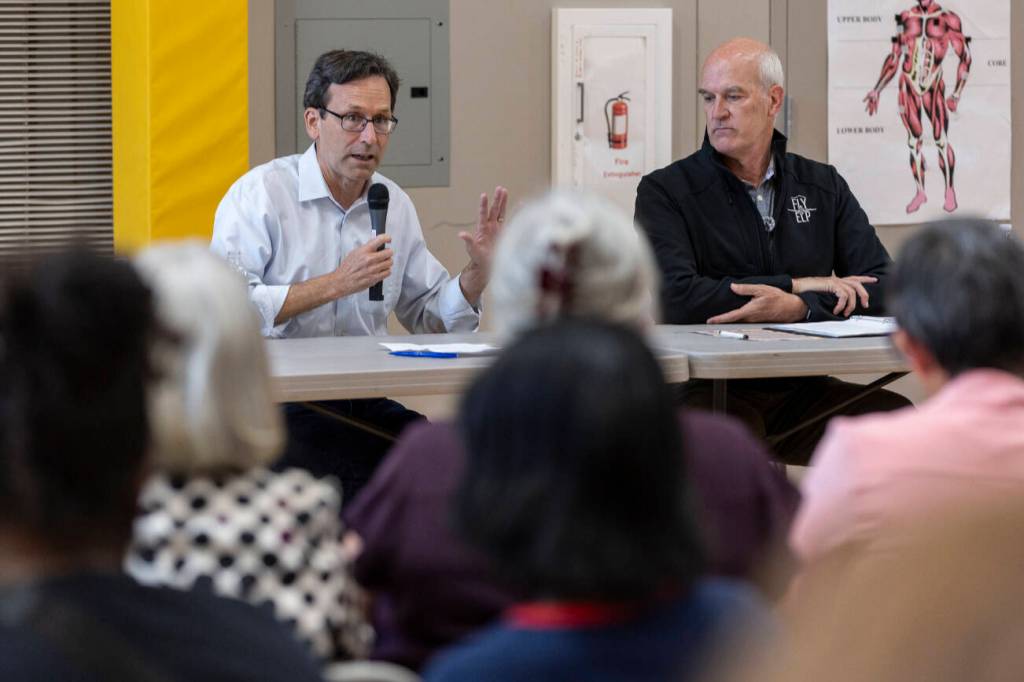
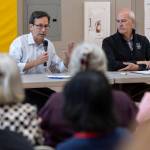
“That’s just the math,” said U.S. Rep. Rick Larsen, D-Wash., last week at a joint listening session with Gov. Bob Ferguson at Lynnwood Elementary, as the Edmonds School District wrapped up its summer free lunch program. “I don’t mean that as a political statement. It is literally just the math of the big ugly law here in Washington state.”
For the state, the cuts to SNAP will mean that 137,000 people will need to meet additional paperwork requirements to prove they are working to keep their benefits. Another 33,000, Larsen added, who came as refugees to the U.S. fleeing political persecution will be denied food assistance altogether.
In the same vein, school nutrition programs and food banks across the U.S. since March have lost $1.5 billion in support — $8.5 million for Washington state — hitting the schools and nonprofits that run those programs as well as the farmers who have supplied them.
The state Department of Agriculture reports that 1 in 4 state residents relied on food banks and similar programs, with 13.4 million visits in 2024, a 70 percent increase over 2021.
As reported by The Herald’s Jenna Peterson, the cuts come as demand for food assistance is increasing across the county, including double-digit percentage increases in visits to area food banks, as shared during the session by officials and staff with some of those programs.
Deborah Brandi, executive director for the Foundation for Edmonds School District, said it is expecting a 30 percent increase in demand for food assistance because of the loss of SNAP benefits.
“We’ll be looking for other resources to fill in our gaps because, for us, it’s just not an option to not feed our families,” Brandi said. “If our kids are hungry over the weekend, they can’t come back to school on Monday morning and be ready to learn, and that’s their primary goal and purpose, is to be ready to learn.”
Larsen warned that, even as local communities struggle now to meet demand, the bulk of the cuts to assistance have yet to fall, as they are being rolled out slowly, trying to keep “the frog in the frying pan” from noticing the change in temperature. Even as some in Congress look ahead in coming years to restore assistance programs, the job of meeting demand will fall ever increasingly to those at the state and local level.
“We’ve got some challenges as a state to deal with these cuts,” Ferguson said to program staff and parents in attendance.
One potential solution Ferguson said he hopes to push during next year’s legislative session as lawmakers consider a supplemental budget is a universal free meals program at all public schools in the state, similar to a program adopted in Minnesota. The program provides breakfast and lunch to all students, regardless of family income level, skipping the means-testing that attempts to target aid to those in need.
The benefits of such universal programs include savings from avoiding administrative costs and extending the benefit to families that are on the cusp of qualifying, while at the same time eliminating social stigma from participation in the program.
The hitch, Ferguson said, will be finding funding for the program. The governor said he’ll need to see what upcoming state revenue forecasts will show before assembling his budget request to the Legislature.
“But at this time I plan on moving forward with that,” he said. “It’s an important initiative.”
Even as lawmakers still struggle to meet the state constitution’s “paramount duty” to amply fund basic education, that definition of basic education should include the nutrition necessary to assure attentive and healthy students.
There will be other considerations for state lawmakers, as well. The work requirements for both Medicaid and SNAP will require the state to develop processes for reporting employment and work hours so that participants can continue to receive the benefits they qualify for.
And nearly all do.
For example, of 26.1 million Medicaid recipients nationwide, according to KFF, 44 percent work full time, 20 percent work part-time; 12 percent are care-givers; 10 percent are ill or disabled; 8 percent are retired and 7 percent are attending school.
Again, the administrative costs to the state of confirming employment and hours will require taxpayer funding, putting an onus on state officials to develop a low-cost process that makes reporting as simple as possible for participants so that those who are working don’t lose benefits because of glitches and reporting hassles.
But state lawmakers also should recognize that there’s a role to play in softening the blow of Congressional Republicans’ and the president’s largess to the wealthy.
Of the tax cuts in the Big Beautiful Bill — a name that President Trump already is backing away from because of the law’s unpopularity — 69 percent of its $4.45 trillion will benefit the richest 20 percent of Americans, while only 10 percent will go to the middle fifth and 1 percent to the poorest fifth, considered the largest transfer of wealth from poor to rich in the nation’s history.
The state should not shy from seeking a portion of that windfall so it can restore some of the benefits denied those most in need.
And in the meantime, we as members of our communities, should not shy from making sure that our local food banks have well-stocked shelves and enough volunteers to serve our neighbors.