This is one of several stories about essential workers during the COVID-19 outbreak. They might not be true first responders, but we couldn’t live without them.
LYNNWOOD — It caught her eye in a course catalog — “a fun class that looked like an easy A”: American Sign Language.
“I was in the Running Start program at Everett High School, and I could take anything I wanted,” said Marissa Foley. The program allows high school students to take college classes for free.
She was half right. The Everett Community College class required hours of work and study. But fun? Definitely.
“Sign language is fun. Interpreting is fun. It’s so three-dimensional, writing with your hands,” said Foley, now 33.

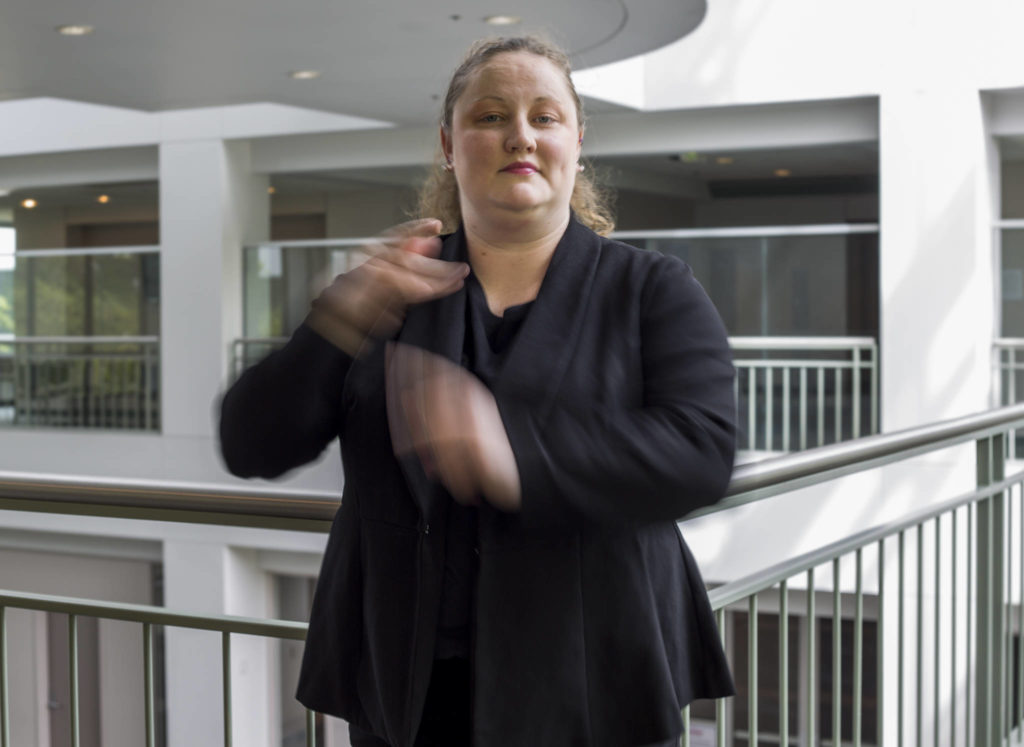
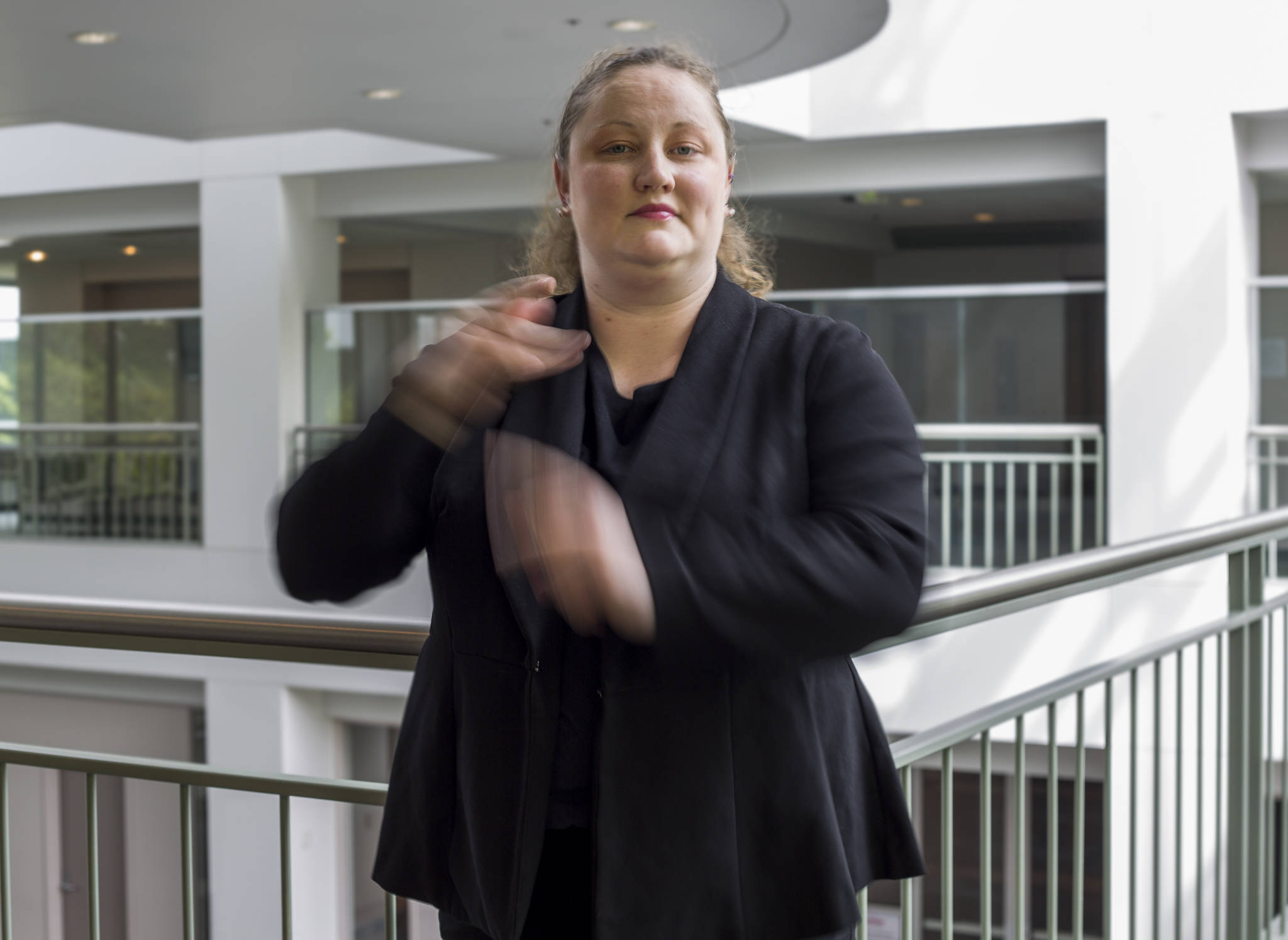
Today, Foley is an interpreter for the deaf and owns Talk-2-My-Hands interpreting service, based in Lynnwood.
Back in school, she kept following the fun — one class led to another. “I said, ‘Let’s see what happens.’ That’s kind of how I got into this,” said Foley.
Her job takes her to essential businesses and factories, including local aerospace companies like Boeing, Triumph Group and toolmaker Fluke.
In Snohomish County, the deaf community has made a strong showing in aerospace. Many hope their presence won’t disappear as the airline industry craters, leaving airplane manufacturers struggling to stay in business.
The COVID-19 outbreak has changed the way deaf and hearing people converse. If someone is wearing a mask or standing farther away, that can mean muffled voices or missed cues.
“When you’re interpreting, you have to look at the deaf person and pay attention to their eyes and face. In sign language, all the grammar and tenses are in the facial expressions,” she explained.
With a mask, the translation can suffer, and words and nuance can be lost.
The pandemic has forced a huge change in how those in the deaf community function, said Foley. “There’s no historical precedence. It’s unnerving,” she said. “On the emotional side, it’s weird and scary.”
When Foley began her studies, she knew of no one in the deaf community.
“My mom was interested in sign language and taught me the alphabet when I was about five. That’s it,” said Foley, who graduated from Western Oregon University with a bachelor’s degree in American Sign Language (ASL). “I’m what they call a NERDA — not even related to a deaf anything.”
ASL has its own dialects, accents and regional vocabularies.
“They say there are 712 signs for birthday,” said Foley.
Which sign do you use, then?
It depends on your client and the setting, she said.
“You take into consideration the person, where they come from and how they want to be perceived,” she said.
Are they younger, older? Do they use language from another era, like “groovy” or “far-out”?
If they’re more hipster than mainstream, that informs your choice of signs, Foley said.
And just as you’d speak to your boss differently than your pals, interpreters have to be aware of word choice when they translate in formal versus informal settings, she said.
And the No. 1 rule: “No fixing things,” said Foley.
It’s not your place as an interpreter to edit angry words or soften the tone, she explained.
“If I’m interpreting for a kid that’s being really disrespectful to a grandparent on the phone, I can’t filter it,” she said. “I have to use their words.”
“I don’t have access to their history — maybe grandma said something really snarky yesterday and this is their response.”
Foley’s first job was working for a video relay service, which serves telephone callers.
“You sit in a cubicle in a room with 25 other people. If someone calls for help, you jump in,” she said. In the same hour, I could get language from everywhere — a mom and grandma in Washington, a pizza order in New York, or somebody talking to somebody in Alabama.”
After 11 years as an interpreter, she has her preferences. “I don’t like doing medical interpretation,” she said. “I have told people they have cancer, and I don’t like it.”
“I like interpreting for live theater productions, school kids and motorcycle groups,” said Foley, who recently acquired a motorcycle instruction certificate.
Foley’s three sisters followed in her footsteps and learned sign language. None are interpreters. It’s handy, though. “My family has always been soft-spoken and quiet,” said Foley. “Now we can talk across the room.”
Janice Podsada; jpodsada@heraldnet.com; 425-339-3097; Twitter: JanicePods
Talk to us
> Give us your news tips.
> Send us a letter to the editor.
> More Herald contact information.
Gallery