
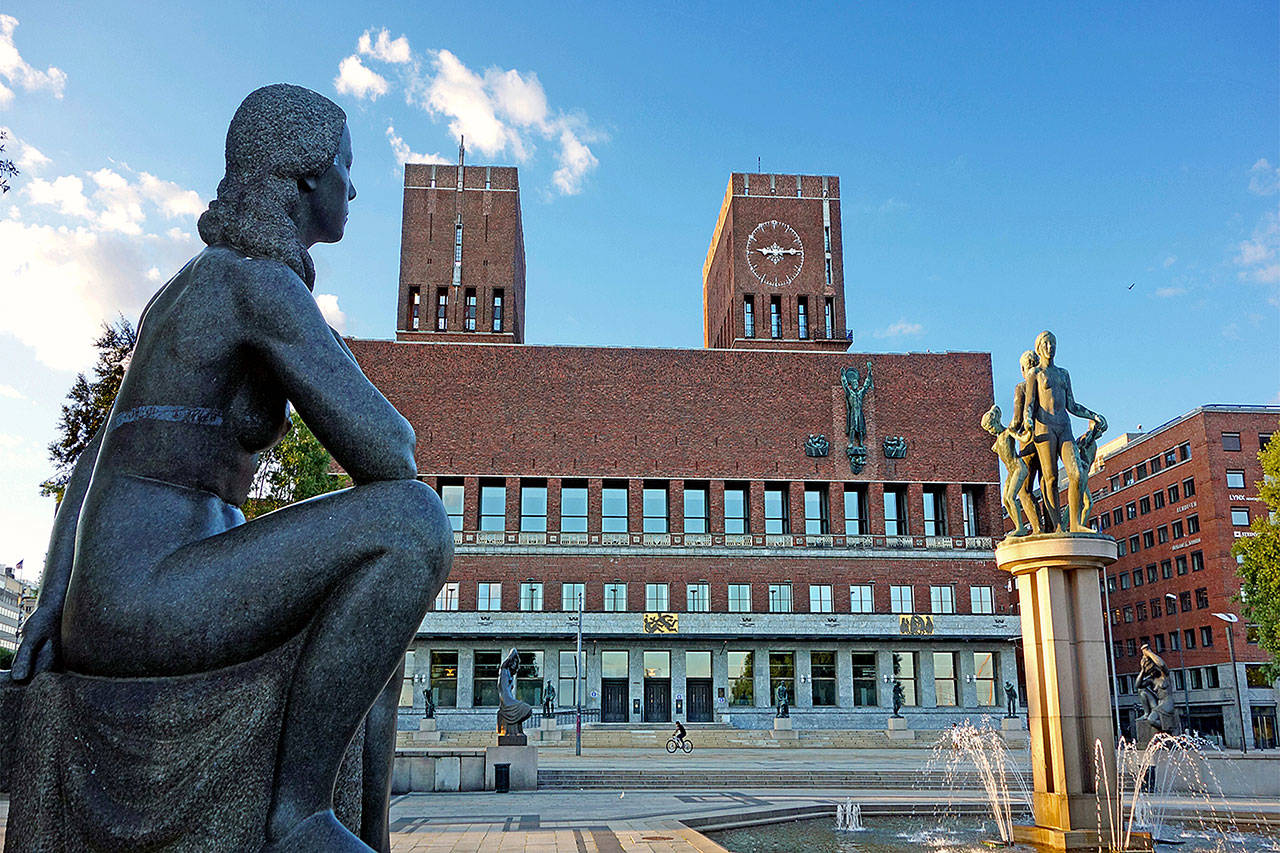
As we’ve had to postpone our travels because of the pandemic, I believe a weekly dose of travel dreaming can be good medicine. Here’s one of my favorite European destinations, Oslo — and a reminder of the fun that awaits us at the other end of this crisis.
I’ve been visiting Oslo since I was a kid, thinking about it as both the home of my forefathers and as a model modern city that I wish could inspire my hometown.
I’m at the harborfront dock, where my old haunt, a Hurtigruten steamer, was once moored. In its prime, the romantic old postal boat linked Oslo with remote communities along the fjords and islands all the way north to the Arctic. Later it became a hotel. My favorite room was its “writer’s cabin,” the only room on that old ship that lacked plumbing and was, therefore, affordable to me. This same dock also marks the spot where my grandparents embarked for the U.S. They traded the old country for a new one, hoping to swap a dead-end economy for a land of promise.
Standing here today, I survey the modern, people-friendly promenade and think about how life has changed. I can now afford a room with a shower, but the ship is gone. And the relatives who stayed behind in Norway are now living better than many of the ones who left.
I’m surrounded by the white noise of pedestrian bliss. I can hear people talking and laughing, the birds, the breeze — but no cars. A popular “congestion fee” keeps most cars from the center of town. An efficient tunnel diverts nearly all the traffic under the city. The old train station facing the fjord boat dock has become the Nobel Peace Prize Center, thanks to a visionary man who dedicated the wealth he earned inventing dynamite to celebrate peacemakers. And towering high above the harbor action is Oslo’s stately brick City Hall — where Nobel prizes are awarded. It stands like a cathedral to good civic values, decorated inside and out with statues and murals featuring stoic Norwegians who seem more than willing to pay their steep taxes.
Norway is expensive for tourists — and also for Norwegians. The society is designed in a way that encourages people to consume less, to chew more slowly and to sip rather than gulp. A glass of beer costs $12. A cup of coffee can cost $8 — and free refills are unheard of. I think Norwegians know they could make more money if they embraced the “big gulp” and started supersizing. But the collective decision is not based purely on what would be good for the economy. A big-box economy would just not be Norwegian.
In Scandinavia, tourists are sometimes put off by the many young beer-drinking revelers they see out on the streets, canalside and littering the parks. But alcohol consumption is no greater here than it is farther south. It’s just that while pubs in Britain and beer halls in Germany are affordable, Scandinavia’s bars come with extremely high alcohol taxes. So people start their evening with a drink at home or a friend’s house before hitting a bar. Or they just B.Y.O.B. — buying cheap beers at a convenience store, then finding a pleasant perch outside for an impromptu gathering. For young Norwegians, “going out” means literally “going outside.”
Walking through a light mist along the new harborfront development, I stop by a shrimp boat to buy a small bag of shrimp, pulled out of the fjord by a weather-beaten fisherman just hours ago. It’s been my happy ritual at this very spot since my mom first brought me to this little boat when I was a kid.
The commotion of a festive celebration draws me farther along the harborfront. A hundred Norwegians are swing-dancing on the sturdy boardwalk, which glistens as if pleased to be the city’s dance floor. Sometimes, good-looking, self-assured Norwegians annoy me with their perfection. But these strike me as extremely normal people — a little overweight, a little wrinkled, dancing in content twosomes in front of yacht club bars and restaurants most of them likely can’t afford. It’s mostly American-style two-step to recorded oldies — familiar tunes with unfamiliar Norwegian lyrics — like a line dance without cowboy hats or much of a line. Girls look up at their tall guys with big smiles.
Walking back to where my “writer’s cabin” used to be, I get nostalgic for the long-ago joy of settling into my humble stateroom, gathering the experiences of the day and weaving them into an article — hoping to share new insights into this capital city, a city that still charms and challenges me all at once.
Rick Steves of Edmonds writes European guidebooks, hosts travel shows on public TV and radio, and organizes European tours. This article was adapted from his new book, “For the Love of Europe.”
Talk to us
> Give us your news tips.
> Send us a letter to the editor.
> More Herald contact information.
























