Rothenburg’s night watchman a dangerous job in medieval times
Published 1:30 am Sunday, July 25, 2021
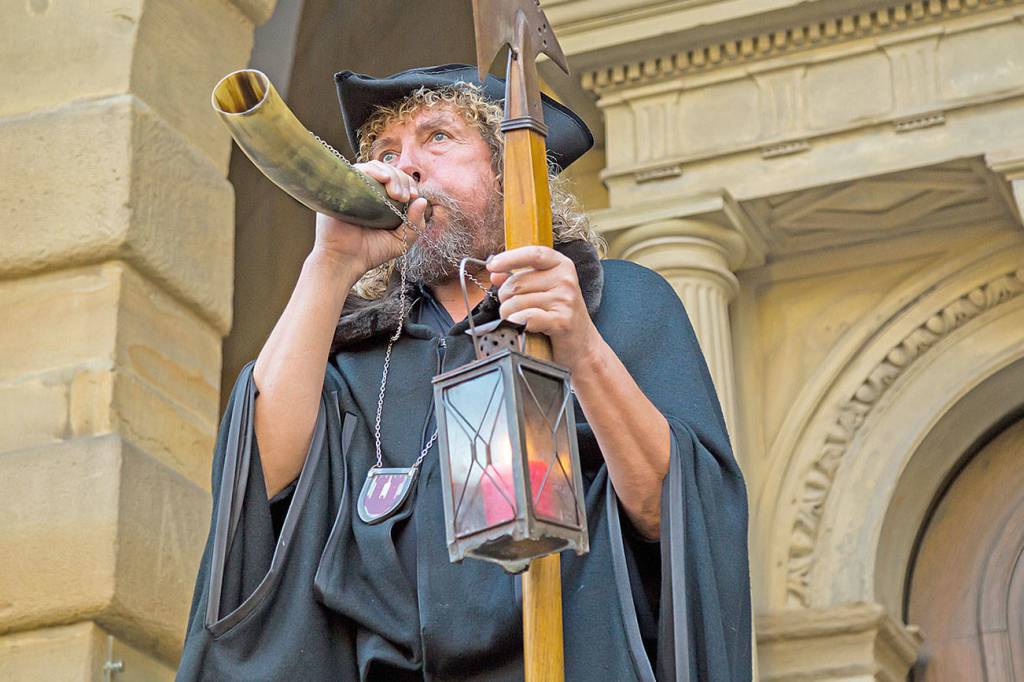
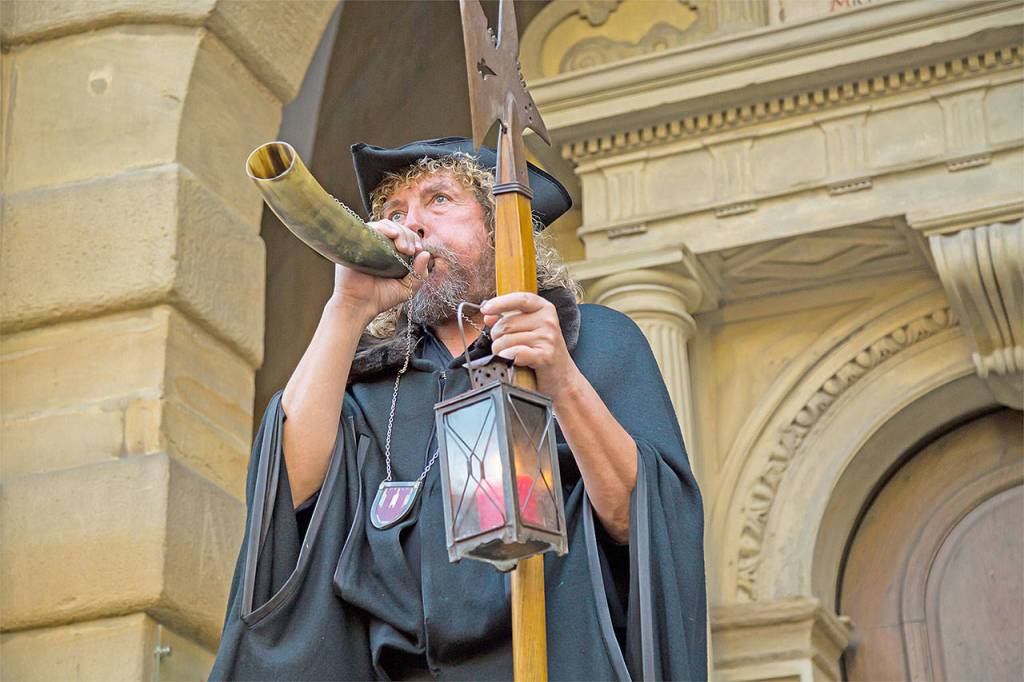


The walled town of Rothenburg, midway between Frankfurt and Munich, offers the best look possible at medieval Germany. And in this theme park of a town, the best ride is the night watchman’s town walk.
Each night during the tourist season, with his eyebrows frozen in a raised position, the night watchman listens to the clock tower clang nine times. Then he winks, picks up his hellebarde (long-poled ax), and lights his lantern. Welcoming the English-speaking group gathered in 15th-century Rothenburg, he looks believably medieval in his black robe, long curly hair and scraggly beard. But the twinkle in his eyes admits, “I’m one of you.”
With an insider’s grin he begins: “It was a bad job, being medieval Rothenburg’s night watchman — low esteem, low pay, dangerous work. Only two jobs were lower: the grave digger and the executioner. Yes, this was a dangerous job. All the good people were off the streets early. He would sing the ‘all’s well’ tune at the top of the hour through the night. You didn’t want to hear the night watchman at three in the morning, but you were glad he was still alive.
“These days, the job’s more respectable: People take photos of me,” he continues. “And it’s no longer dangerous, because you’re all coming with me.”
The night watchman’s camera-toting flock of 30 tourists, already charmed, follows his bobbing lantern down the narrow, cobbled lane.
Stopping under a sign announcing Kriminal Museum, we watch the rusted, old dunking cage swing in the breeze. The night watchman walks over to the stocks that stand empty next to the museum door and says, “In the good old days, death sentences started with your basic execution and then got worse.”
The legal concept of “cumulation” meant a criminal’s punishments would multiply with his crimes. While that petty beehive thief might simply be hanged, an adulterous beehive-thieving murderer could be dragged to the place of execution with painful stops along the way for pinching with red-hot tongs.
A town’s gallows, a medieval symbol of justice, was placed high for more spectacle. The most important criminals were hanged on higher platforms in anticipation of greater crowds. Bodies of particularly dishonorable criminals were left out to rot. Some were left in a cage so birds could get to their bodies… but relatives couldn’t.
Looking suspiciously at all of us, our guide turns abruptly and walks down the street. Mesmerized, we follow.
He stops under an old-fashioned streetlight and says, “It was a dirty time.” Pointing with his boot to a gutter in the cobbles, he continues, “All the garbage — from the people and from the animals, too — it went into the road. They had this ditch in the middle of the street. People tried to hit the ditch. This was not a good system. Summer was stinking. The rich left for countryside homes. Back then it wasn’t the Romantic Road. It was the Filthy Road. And this filth gave us the plague. The plague was a big killer. In one terrible year, in Rothenburg… one out of every three people died.”
We follow him farther to the ramparts at the edge of town. Overlooking the valley, the watchman says, “Rothenburg was never conquered until 1631. There was a siege. The armory, which was along this wall, blew up. Double disaster: We had a hole in the wall and no ammunition to make a defense. To be looted by 40,000 mercenaries was no fun. They were Catholics, so it was even worse.
“Our town was broken. And for the rest of the Thirty Years’ War, Rothenburg lay wide open, undefended. We were sacked many times. Between lootings we suffered plagues.”
Popping from an alley back onto the main square, our hooded friend concludes, “From 1648 — when the war and plagues stopped — time stood still in Rothenburg. Centuries of poverty… and nothing changed. Rothenburg’s misfortune put the town into a deep sleep. And that is why you are here today. Now I must sing the ‘all’s well.’”
After finishing his short melody, he blows a long haunting tone on his horn. Then he ends by saying, “You, my friends, should hurry home. Bed is the best place for good people at this hour.”
Edmonds resident Rick Steves (www.ricksteves.com) writes European guidebooks, hosts travel shows on public TV and radio, and organizes European tours. This article was adapted from his new book, “For the Love of Europe.” You can email him at rick@ricksteves.com and follow his blog on Facebook.