Adopt A Stream volunteers build analog beaver dams in North Creek
Published 1:30 am Saturday, August 9, 2025
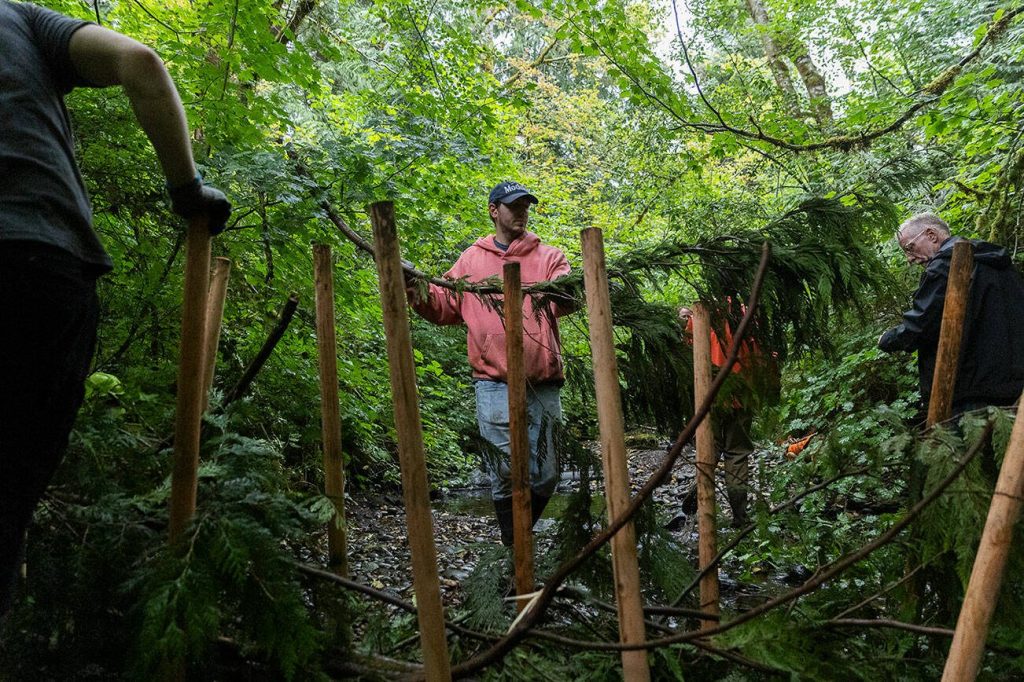
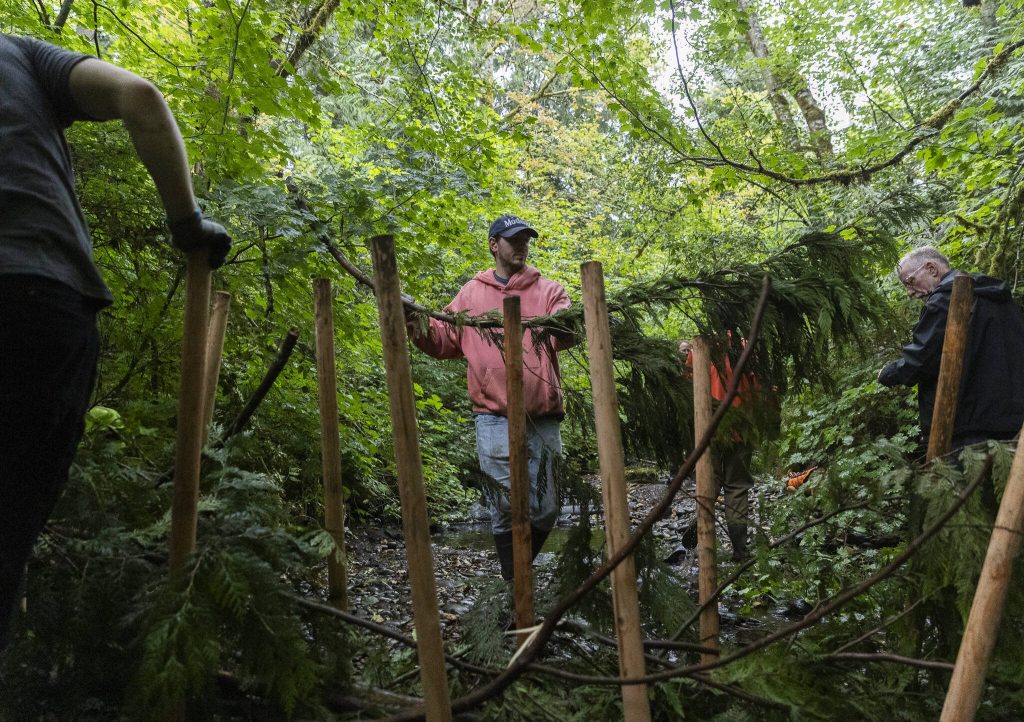
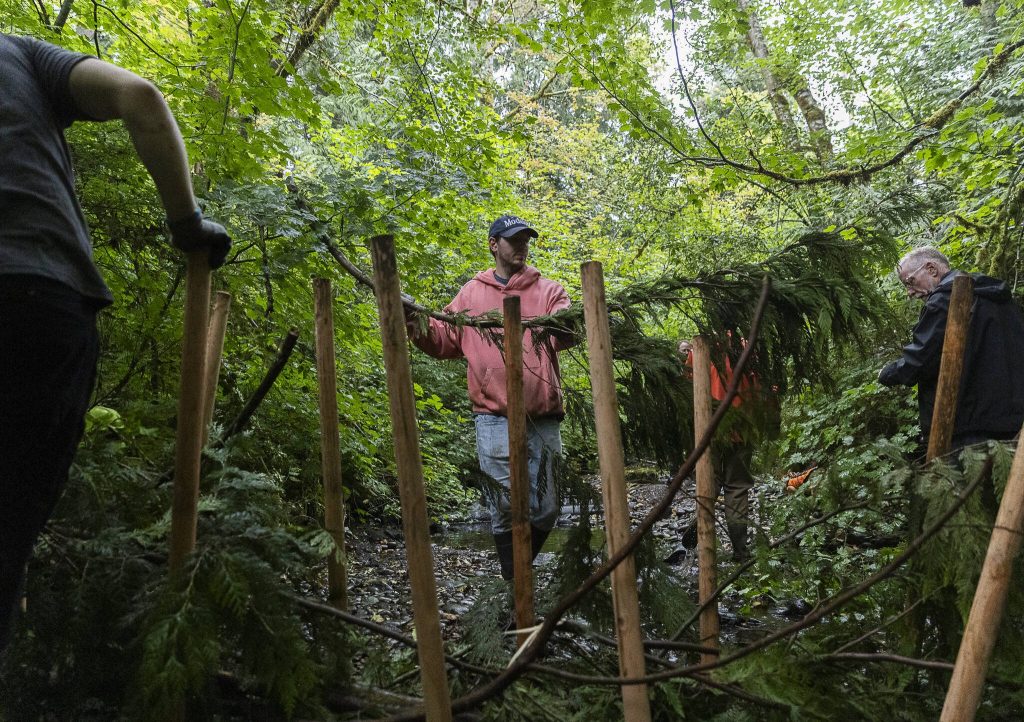


EVERETT — The air filled with the smell of cedar as volunteers weaved branches through wooden poles in North Creek near McCollum Park in Everett.
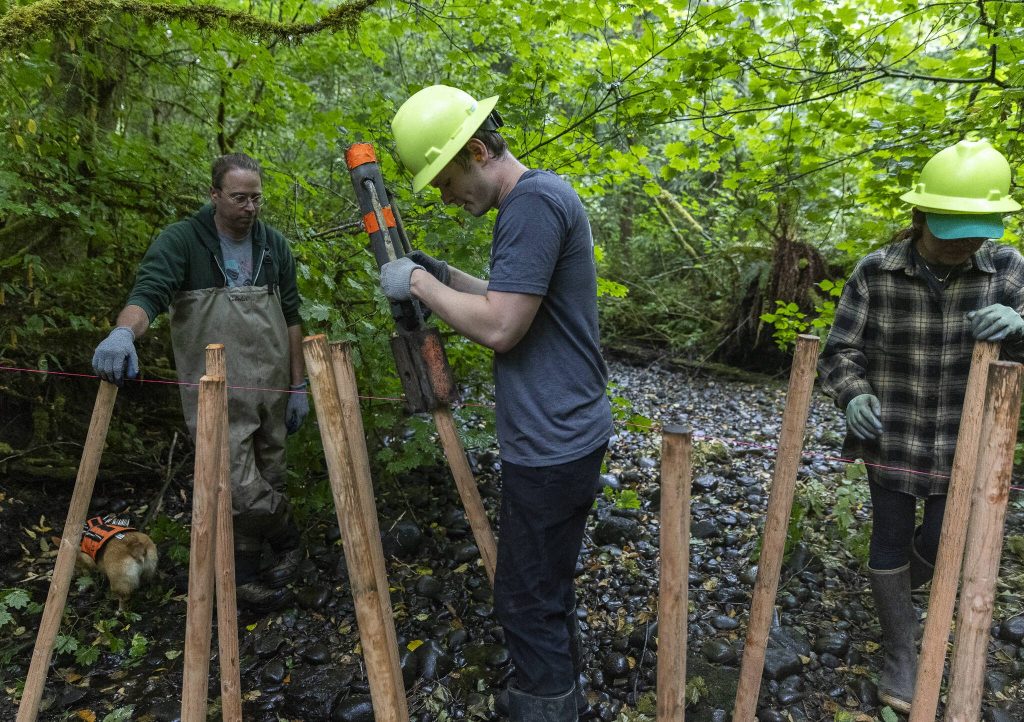
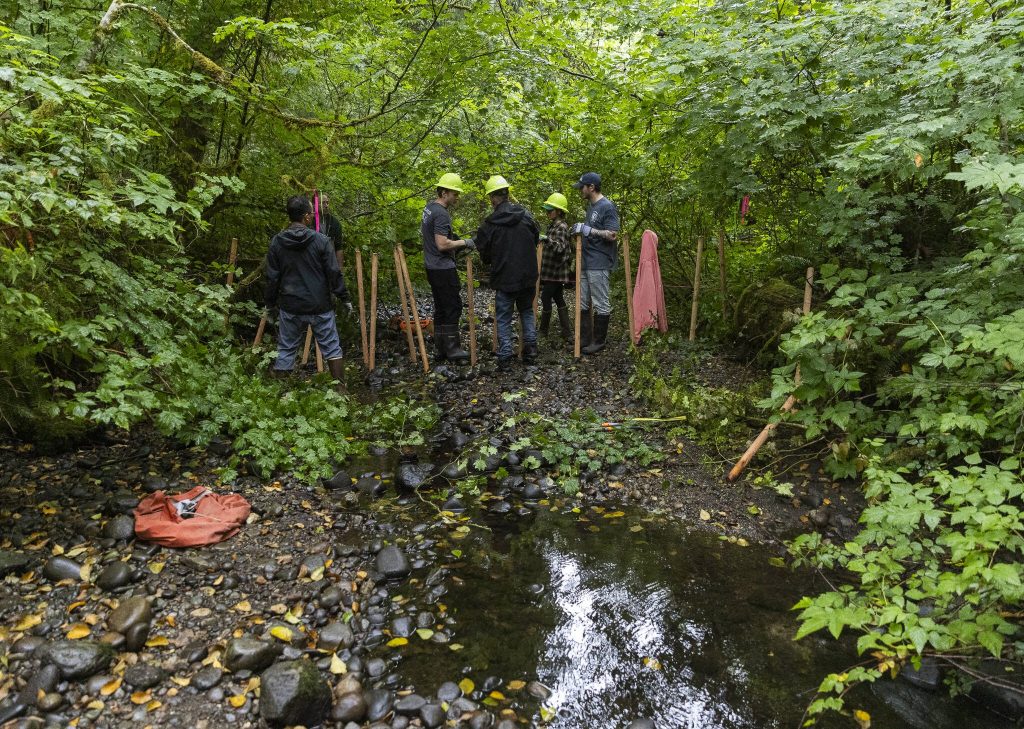
Volunteers from Crane Aerospace & Electronics worked on one of 14 planned analog beaver dams on Wednesday that the environmental nonprofit group Adopt A Stream Foundation is coordinating throughout the North Creek watershed to create critical fish and riparian habitat in an increasingly urbanized area.
The project is supported by a $200,000 grant from Washington’s Department of Ecology streamflow program and will fund work through August 2027. Snohomish County, the city of Everett and the Orca Conservancy also partnered with the foundation for land use and outreach.
North Creek’s headwaters are located adjacent to the Everett Mall, from which it then flows 12.6 miles through the town of Mill Creek before draining into the Sammamish River near Bothell.
Historically, the watershed supported Chinook, sockeye and coho salmon in addition to steelhead and coastal cutthroat trout. But now roughly 85% of the stream lies in developed areas, according to King County data, which has led to increasingly degraded water and habitat conditions.
“Think of things like concrete rooftops, parking lots; water hits those hard surfaces and runs off horizontally really quickly,” said Anna Gilmore, a senior ecologist for Adopt A Stream.
So instead of having the ability to soak into absorbent earth, water rushes through creek beds to Puget Sound, eroding winding side channels into narrow shoots and picking up and carrying sediment out of the system.
Spawning salmon use gravel to make beds for eggs, Gilmore said, and juvenile fish need slow-moving water to rest and hide before they migrate to the ocean.
Hard, solid surfaces like cement also block water from seeping into aquifers, which historically fed the stream in the dry summer months.
In May, Adopt A Stream founder Tom Murdoch documented the stream going dry from Evergreen Way to McCollum Park. Murdoch, who has observed and worked along the stream since 1978, said it was the earliest he’s seen the creek go dry, and that it used to flow all year round from its headwaters.
In an effort to slow down and capture water within the North Creek system, Adopt A Stream staff and a rotating group of community volunteers are mimicking the work of beavers.
“These dams are going to help build up some of the sediment that’s been scoured away over time,” Gilmore said. “That will improve the health of spawning grounds, but also will help contribute to longer-term horizontal spreading out of water.”
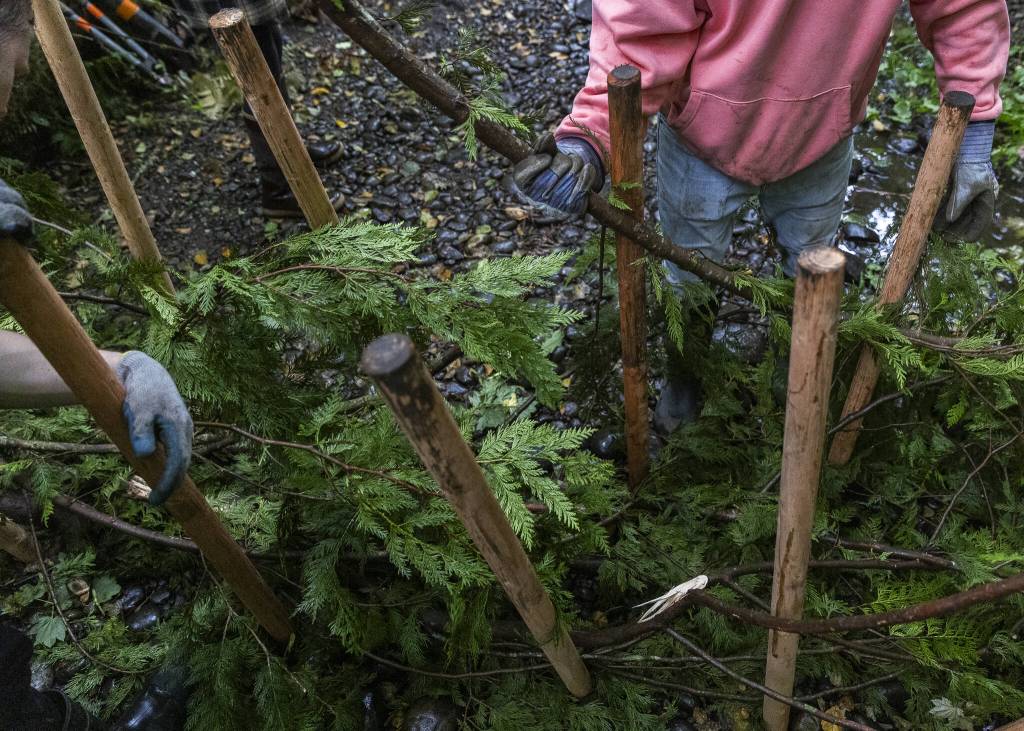
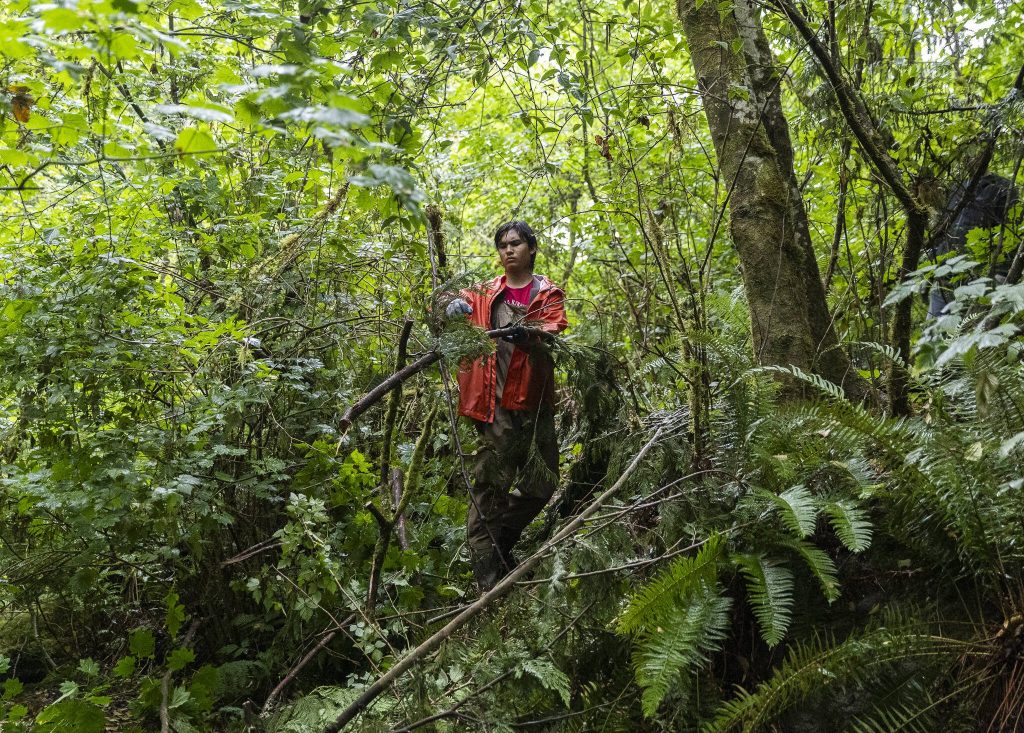
Volunteers from Crane Aerospace crisscrossed cedar and fir branches in between 6-foot wooden poles hammered into the creek bed and adjacent banks. The airline and defense manufacturing company encourages its employees to volunteer, giving workers paid time to give back to their community.
Over the summer, Trevor Crumrine, an operations manager for Crane Aerospace, has volunteered with a rotating group of employees at North Creek.
“I think for everybody at the site, this is the first time doing this type of outdoor activity, building something like this,” he said. “It’s been really cool learning about it.”
Crumrine grew up in Snohomish and used to race dirt bikes around McCollum Park, he said, unaware of the stream he’s now worked on four times this summer 100 yards away.
“I’m really excited because this just started this summer,” he said. “We haven’t seen this fill up with water, so coming out in September, October, once we start getting some rain, will be really interesting.”
While staff and volunteers continue to construct dams, Adopt A Stream Fish and Wildlife Manager Walter Rung said low-impact designs should be written into county code so future development doesn’t continue to degrade the watershed.
Low-impact designs aim to preserve natural hydrological functions, like rain water being able to seep into the ground instead of building up on a concrete parking lot or creating rain gardens so vegetation can filter runoff.
Rung also encouraged people to volunteer on restoration projects like the analog beaver dams.
“Especially right now, there are things you can do,” he said. “You can get out and help your local environment.”
Eliza Aronson: 425-339-3434; eliza.aronson@heraldnet.com; X: @ElizaAronson.
Eliza’s stories are supported by the Herald’s Environmental and Climate Reporting Fund.