Court orders state response to prisoner health after protest
Published 1:30 am Saturday, April 11, 2020
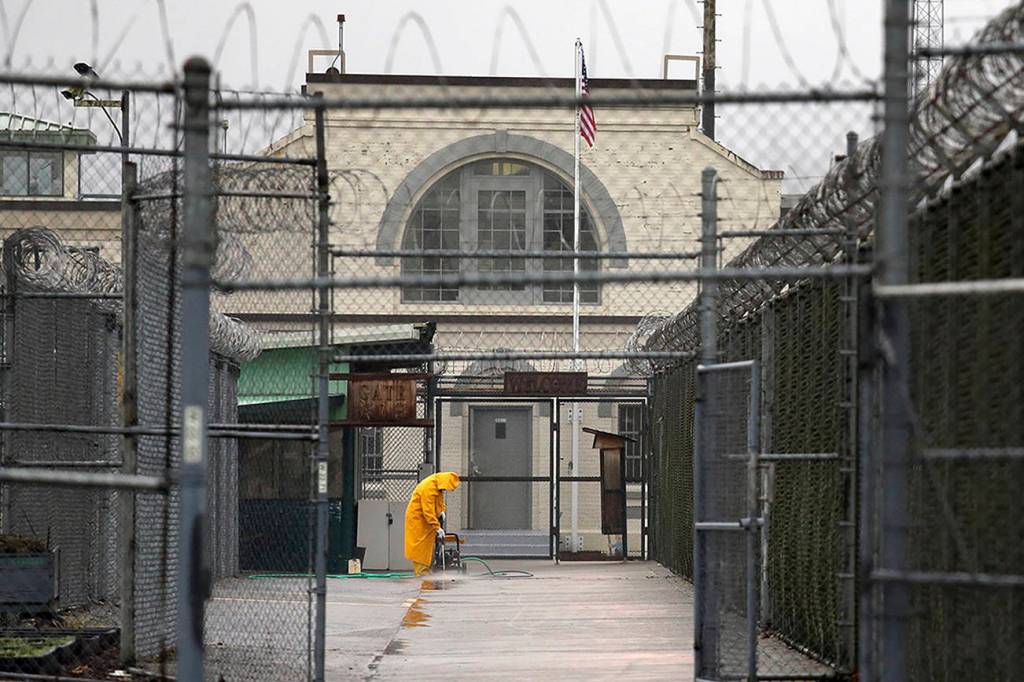
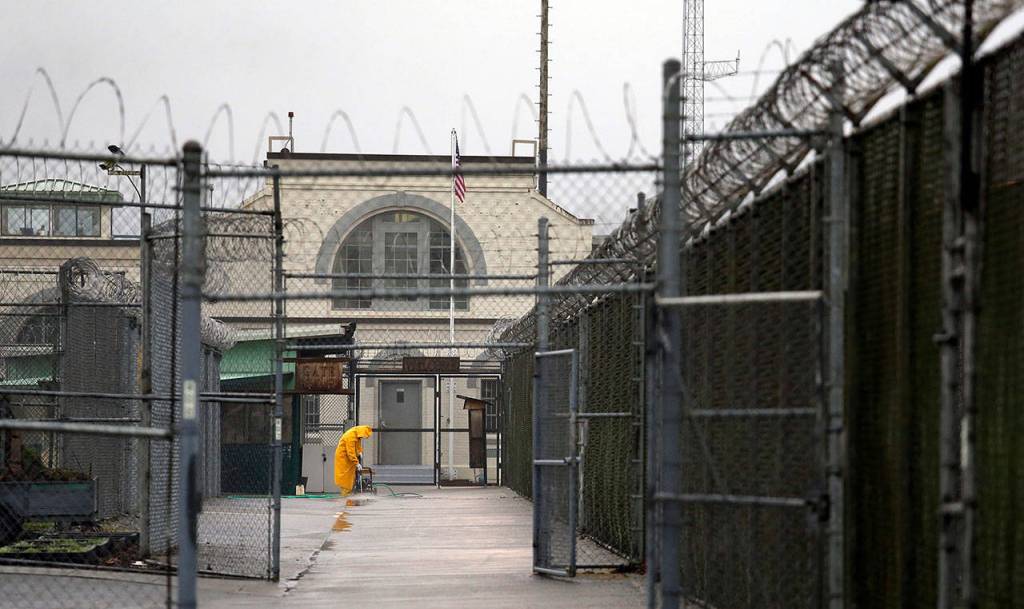


OLYMPIA — Two days after more than 100 inmates staged a protest at the Monroe Correctional Complex, Washington Supreme Court judges directed the state to immediately “take all necessary steps to protect the health and safety” of prisoners during the COVID-19 pandemic.
The order doesn’t identify any specific actions sought by the group of inmates who petitioned the court, including two currently housed at the Monroe prison, where coronavirus has begun to spread. In an emergency motion filed on Thursday, the inmates had called on the court to test all inmates and release those who are either medically vulnerable or nearing their release date. They also asked that a special master be appointed to oversee the prison system’s response to the pandemic.
Instead, Friday’s order requires Gov. Jay Inslee and Secretary of Corrections Steve Sinclair to report to the court with an emergency plan no later than noon Monday. An updated report is then due Friday. Oral arguments regarding the inmates’ petition, filed last month, are scheduled to be heard April 23.
In a concurring opinion signed by three judges, Justice Sheryl Gordon McCloud wrote she would have gone further and released the inmates who petitioned the court, citing the extraordinary circumstances presented by the COVID-19 outbreak that has infected at least 10,244 people across the state as of Saturday, killing 491. Corrections officials reported that eight prisoners have tested positive for coronavirus, seven of whom are incarcerated in Monroe. At least 14 employees statewide have contracted the virus, including five in Monroe.
Nick Allen, one of the attorneys representing the inmates with Columbia Legal Services, said in a statement Friday night that he looks forward to the state’s response.
“Our clients and their families are extremely grateful that the Court has recognized the extreme urgency of this matter and that it appreciates the danger that COVID-19 presents to all people living in Washington’s prisons,” he wrote.
At a Thursday press conference, Inslee said he was considering releasing some prisoners in the coming days, though he didn’t say how many. So far, the state has shown resistance to the scale and urgency of the petitioners’ request, which attorneys say will result in the freeing of thousands of inmates, or roughly two-thirds of the state’s prison population. In a response filed Friday morning, the state painted a bleak picture of what could happen, using Wednesday’s protest as an example.
According to court papers, the Department of Corrections’ infectious disease physician was talking about coronavirus at the Monroe prison around 6 p.m. when inmates broke quarantine and went into the recreation yard. Soon, there was a “mob gathering.” Prisoners pulled fire alarms, set off fire extinguishers, vandalized property and claimed they would take hostages. For protection, they flipped bunks over to use as barricades, wrapped towels around their faces and stuffed magazines in their sweatshirts.
About half of the men in the unit complied with orders to stop, according to the prison agency. An emergency response team used pepper spray and sting balls — which release light, noise and rubber pellets — to quell the riot. Monroe police, Snohomish County sheriff’s deputies and Washington State Patrol troopers responded to set up a perimeter around the complex. The incident lasted nearly three hours.
“The actions of these prisoners, even if an understandable emotional response, show the Department has concerns that these individuals pose the risk of engaging in the same behavior, or worse, if released to the community without proper release plans and supervision,” state attorneys wrote.
If the newly freed prisoners don’t engage in criminal behavior, attorneys suggested they could disregard the governor’s stay-at-home order and risk further spreading of the virus.
State attorneys said the Department of Corrections “has taken significant action to mitigate risk to the incarcerated population,” including social distancing; screening everyone who enters the prisons; and testing, treating and isolating symptomatic individuals. Sinclair said face masks will soon be mandatory for all prison staff, and once the resources become available, prisoners will be given masks, too.
In a reply, the inmates’ attorneys wrote that the Department of Corrections’ response has so far led to “disastrous results.” In regards to the Monroe Correctional Complex, the facility’s layout makes it impossible to comply with social distancing guidelines, and medical care is already lacking even without the pandemic, they argued.
Last year, the prison’s medical director was fired after a state investigation found at least six inmates, including three who died, were neglected and had received improper care, leading to the deterioration of their health. One man reportedly had begged for breast cancer treatment while in prison, but instead was left to die, according to findings released in December by the state Office of the Corrections Ombuds. In 2019, the Monroe prison had the third highest rate of complaints per 100 inmates of any correctional facility.
The inmates’ attorneys honed in on comments Sinclair made at Thursday’s press briefing, that he “hoped” to limit the number of positive COVID-19 cases.
“Hope is not one of the strategies public health and correctional experts recommend implementing to effectively protect against the spread of COVID-19 in prisons, and it has not been effective at preventing transmission and the spread of the virus at (the Monroe Correctional Complex),” the attorneys wrote in court papers. “Those hopes have already been dashed. There has been an outbreak.”
Zachariah Bryan: 425-339-3431; zbryan@heraldnet.com. Twitter: @zachariahtb.