After Roe falls, local abortion clinics already feel strained system
Published 1:30 am Wednesday, July 13, 2022

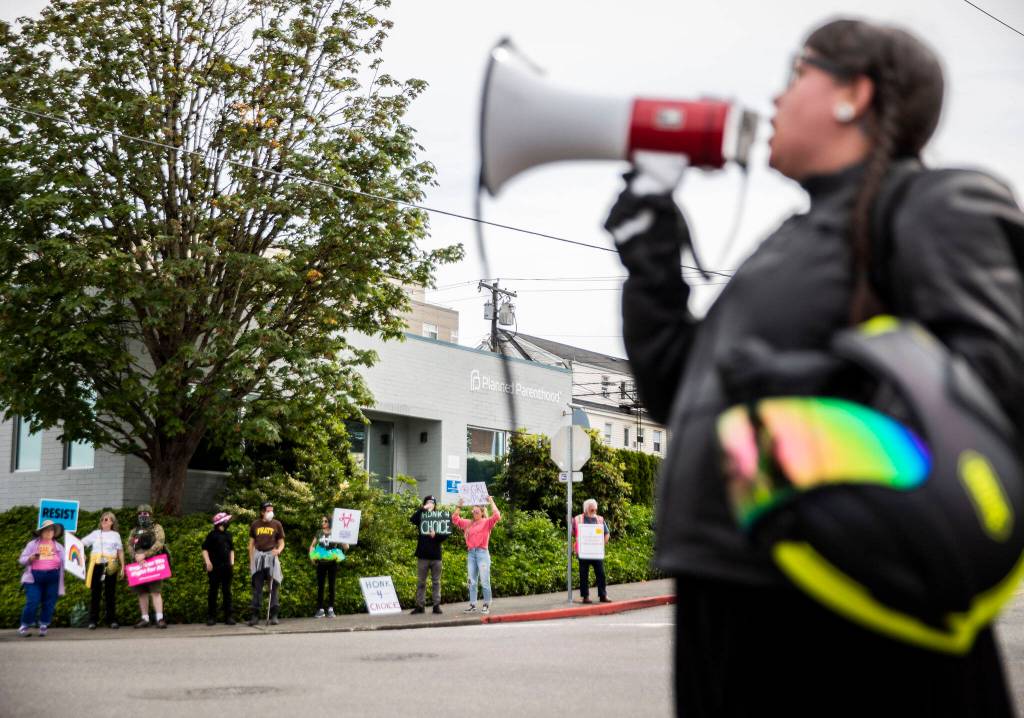
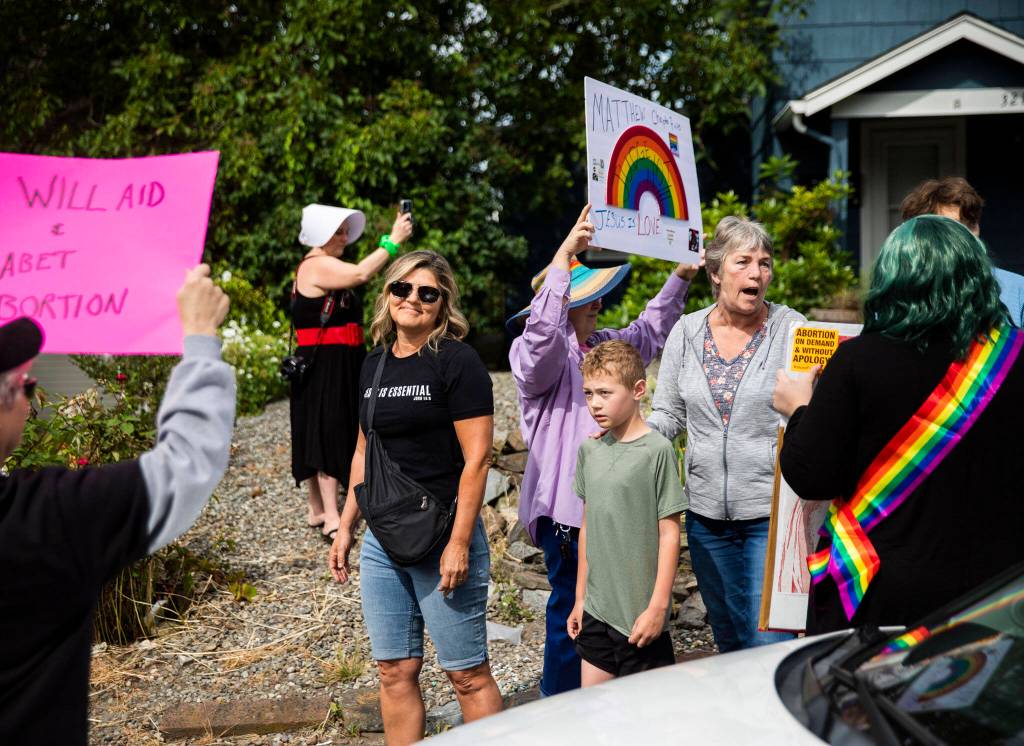


EVERETT — Police barricades separated the two groups on the corner of Hoyt Avenue and 32nd Street this month.
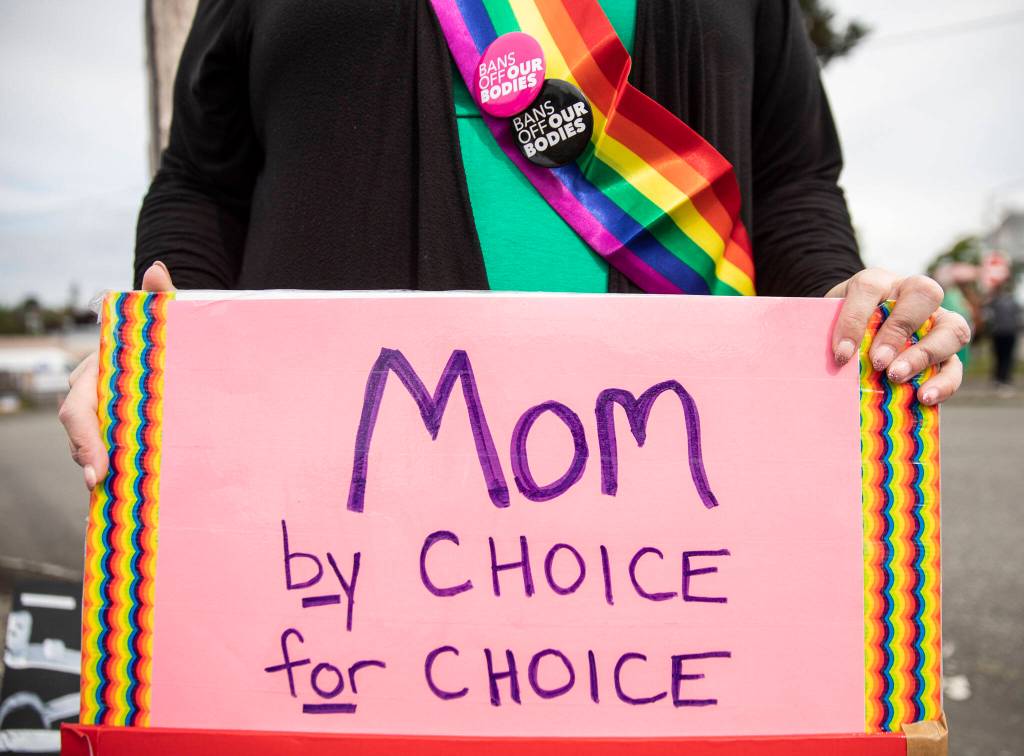
One woman walked into the Planned Parenthood, bypassing a crowd waving anti-abortion signs. A dozen pro-abortion rights counter-protesters screamed at them from about 20 feet away with their own signs: “Honk 4 Choice” and “Bans Off Our Bodies.”
Tensions have been high since the U.S. Supreme Court’s overturn of Roe v. Wade. And as Washington gears up for a projected influx of thousands of abortion patients coming from out-of-state, this could be a common scene that greets them. The Everett intersection is home to two organizations with vastly different approaches to pregnancy resources: the Planned Parenthood clinic and the anti-abortion nonprofit Two Hearts Pregnancy Aid.
Protests have been a regular occurrence at the downtown intersection for the past two years, Everett police officer Kerby Duncan said. Police have not noticed an increase in conflict on the corner since the historic 6-3 decision in Dobbs v. Jackson on June 24, when the U.S. Supreme Court ended the constitutional right to abortion in place for nearly 50 years.
Roughly half the states in the United States have already banned abortions, or are likely to ban them, according to the Guttmacher Institute, a research organization that supports abortion rights. In neighboring Idaho, a trigger ban passed in 2020 is set to make nearly all abortions illegal.
Washington is one of 16 states with laws protecting abortion. The state could see an increase of up to 385% of patients whose nearest abortion provider is in Washington, Guttmacher predicts.
Dr. Charlie Browne, director of All Women’s Care, said his clinic has already increased its hours of operation in response to a 20% increase in patients calling from out-of-state seeking abortions since the high court’s ruling. Patients from states as far as Louisiana have been calling the clinic to schedule appointments. Wait times for appointments are getting longer.
He expects that Washington’s health care system will be overwhelmed with patients from other states.
“We’re not anywhere near the peak of what it’s going to be,” Browne said.
The Planned Parenthood clinic in Everett is one of three in Snohomish County offering abortions and other forms of reproductive care, such as ultrasounds, Pap smears and testing for sexually transmitted infections.
Courtney Normand, Washington director for Planned Parenthood Alliance Advocates, said clinics across Western Washington are already seeing patients who have flown or driven thousands of miles for the medical procedure.
“We’re expecting 26 states to ban or severely restrict access to abortion this year,” Normand said, “and that will affect 35 million women and people who can become pregnant. So we’re looking at 24 states trying to absorb as many patients as we can.”
This year, a national poll indicated the majority of Americans believe access to abortion should be legal. Sixty-one percent of U.S. adults support abortion in all or most cases, while 37% believe the procedure should be illegal in all or most cases, according to Pew Research Center.
Matt, an anti-abortion demonstrator who declined to give his last name for privacy, said he has protested in front of Planned Parenthood for months.
“I think abortion should be abolished,” he told The Daily Herald. “It is the taking of a human life.”
Diagonal from the Planned Parenthood sits a local nonprofit that offers non-medical support — such as car seats, baby clothing and diapers — for pregnant people and families with children under 5. Two Hearts Pregnancy Aid offers referrals to social services and medical providers, as long as they do not provide abortion.
Jean Hughes, development director for the organization, said “most” of the people who seek support from the nonprofit know that Two Hearts does not provide or refer people to abortions.
“If they are coming from out of state,” Hughes said, “I’m pretty much sure they already know where to find those services.”
On the night of June 27, Two Hearts Pregnancy Aid was vandalized. Someone broke a window and threw a Molotov cocktail inside, police said, but the bomb did not ignite. Nobody was injured, and no suspects had been identified as of Tuesday.
This month on the sidewalk in front of the anti-abortion nonprofit, Hannah Webecke stood in a group of three people protesting in support of abortion rights. Webecke, 20, of Everett, said she was there to give the organization a “taste of their own medicine.”
“They say they save babies,” Webecke said, “but they don’t really do anything after birth. It’s the difference between being pro-birth and pro-life.”
!function(e,i,n,s){var t=”InfogramEmbeds”,d=e.getElementsByTagName(“script”)[0];if(window[t]&&window[t].initialized)window[t].process&&window[t].process();else if(!e.getElementById(n)){var o=e.createElement(“script”);o.async=1,o.id=n,o.src=”https://e.infogram.com/js/dist/embed-loader-min.js”,d.parentNode.insertBefore(o,d)}}(document,0,”infogram-async”);
‘Increase exponentially’
Washington has long served as a sanctuary for abortion access. In 1970, Washington became the first state to legalize abortion, conditionally upon a husband’s approval.
Voters passed a state initiative in 1991 to guarantee the right to abortion until the fetus’ viability, or ability to survive outside the uterus.
Even before Roe was overturned, people from states with limited abortion access would drive overnight or fly to places such as Western Washington, said Kate Cole, a spokesperson for Northwest Abortion Access Fund.
“That’s in part because there are more clinics out here,” Cole said. “And just because of gestational age limits for abortion care, many of the clinics in Eastern Washington just didn’t have as many appointments for folks who were further along.”
In Washington, a pregnant person has the legal right to have an abortion until about their 24th or 25th week of pregnancy — the time where a fetus typically becomes viable. The time constraints worry Cole, she said.
Since the Dobbs ruling, Western Washington health care providers have seen an uptick in out-of-state patients seeking abortions, Cole said.
“We anticipate that’s just going to increase exponentially as Roe falls,” she said.
In the days following the Supreme Court ruling, Gov. Jay Inslee approved $1 million in emergency funds to help reproductive care clinics handle the influx of out-of-state patients.
Even though abortion remains legal in Washington, the court decision will have a significant impact on local access to health care, said Browne, the Seattle doctor. Rates of pregnancy-related injuries and deaths will increase in much of the country, he said. More patients traveling longer distances for abortions will likely result in more delayed procedures.
Delaying an abortion further into pregnancy can sometimes turn what would have been a one-day procedure into a two-day process, Browne said. And delays may pose serious health risks for patients with pregnancy complications. The doctor said delayed care can be fatal in the case of ectopic pregnancy.
The abortion pill is only an option for most people in the first roughly 70 days of pregnancy, according to the state Department of Health. After that, a surgical procedure is needed.
The doctor estimated at least 90% of the out-of-state patients who call for an abortion appointment can’t afford the cost of travel or the procedure itself. He said the clinic refers those patients to organizations like Northwest Abortion Access Fund and reduces appointment costs when needed.
“The last thing we want is for a patient to show up and not be seen,” Browne said.
Abortion bans disproportionately affect those who are Black, Indigenous or people of color. In the U.S., the abortion rate for Black people is nearly five times that of white people.
“Those of privilege will access care and get the care they want,” Browne said, “and those not-so will not get the care that they want or need.”
Last year, Northwest Abortion Access Fund distributed nearly $1 million to support abortion access but was unable to cover travel and medical costs for everyone who called the hotline. Since the Court’s decision was announced, Cole said, the organization has seen a dramatic increase in donations, including a total of $750,000 in donation commitments from King County and the City of Seattle.
Despite the spike in funding, Cole expects it will be difficult for the organization to meet the increased need.
“It’s going to be, I think, much more dire in the coming weeks and months and years,” she said.
!function(e,i,n,s){var t=”InfogramEmbeds”,d=e.getElementsByTagName(“script”)[0];if(window[t]&&window[t].initialized)window[t].process&&window[t].process();else if(!e.getElementById(n)){var o=e.createElement(“script”);o.async=1,o.id=n,o.src=”https://e.infogram.com/js/dist/embed-loader-min.js”,d.parentNode.insertBefore(o,d)}}(document,0,”infogram-async”);
‘Even if it’s not a crime’
Browne said he is “absolutely” concerned that states where abortion is banned will try to take legal action against patients who come to Washington for abortions or their abortion providers.
Following the Supreme Court’s decision, Gov. Jay Inslee issued a directive that prohibits Washington State Patrol from cooperating with other states in such cases.
Meanwhile, anti-abortion groups and lawmakers in states where abortion is banned are discussing ways to criminalize interstate travel to get abortions. The Thomas More Society, a conservative legal organization, was drafting model state legislation that would allow people to sue anyone who helps someone travel to another state for an abortion. The draft legislation aims to skirt federal law by leaving enforcement up to private citizens. It’s based on the legal strategy Texas lawmakers used to enact a six-week abortion ban last year.
On Tuesday, U.S. Senators Maria Cantwell and Patty Murray were among a group of 33 Democrats who introduced the Freedom to Travel for Health Care Act of 2022, a bill to protect people who travel out of state for abortions and their providers.
Nikaya Natale, a lawyer and deputy director of the abortion rights advocacy group We Testify, said only time will tell how abortion will be criminalized.
“There are a lot of folks who think you can’t prosecute somebody for helping somebody get across state lines to do something that is illegal in their state,” she said. “But even if it’s not a crime that’s on the books, a really zealous prosecutor could come after someone who works at an abortion fund, somebody who helps transport someone, or an abortion provider who does the procedure for someone from out of state.”
Natale said pro-abortion rights activists are urging people who live in states with abortion bans to install Virtual Private Networks (VPNs) and delete menstrual cycle trackers from their phones.
“People don’t realize the ripple effect something like this has on states where abortion is totally legal,” Natale said. “This one is so huge, because it was a constitutional right that was taken away from the entire country overnight.”
And for local abortion providers like Browne, the ruling has put a bigger target on his back for violence.
“There are many people who want to do me harm,” the doctor said, adding that he gets threats from abortion-opponents. The week following the Supreme Court decision, Browne received “probably the most threatening death threat” he had ever gotten.
In 2020, 16,050 Washington residents had abortions, according to data from the state Department of Health. That’s more than one in six of the total pregnancies in the state that year.
Department of Health spokesperson Katie Pope said the state agency anticipates the biggest surge of abortion patients will come from Idaho.
“Capacity of abortion providers may be an obstacle,” Pope wrote in an email. “… In addition, people are confused about abortion access in general.”
Ellen Dennis: 425-339-3486; ellen.dennis@heraldnet.com; Twitter: @reporterellen.
Natalie Kahn: 425-339-3430; natalie.kahn@heraldnet.com; Twitter: @nataliefkahn.
Jacqueline Allison: 425-339-3434; jacqueline.allison@heraldnet.com; Twitter: @jacq_allison.