ARLINGTON — Before it was Arlington, the land was known as stiqa’yuʔ, Haller or “wolf” by the Stillaguamish people.
“We had many villages around the Arlington area,” said Tracey Boser, Stillaguamish elder and cultural resource specialist.
The largest was Skabalco, at the fork of the Stillaguamish River in the northeastern corner of the city, she said. It’s where neighboring tribes gathered to trade and visit relatives.
Today, the ancestral village is farmland and home to baseball and soccer fields. But the land still elicits feelings of connection with the ancestors.
“It’s not how I see it visually,” Boser said. “It’s how I feel when I’m there.”
This month, Arlington City Council members unanimously adopted a land acknowledgement recognizing the city as the homeland of the Stillaguamish people.
“It’s really tangible evidence of the step forward that the culture is able to take,” said Sam Barr, a Samish tribal member and Stillaguamish tribal historic preservation officer. “For years and years and years, it’s been something that we’re supposed to hide. That’s why our reservations were created: … Indigenous folks are supposed to hide and they’re supposed to be able to forget about us.”
Arlington’s land acknowledgement will be read at city events like groundbreakings and on Indigenous Peoples’ Day annually, Mayor Barb Tolbert said.
A plaque inside City Council chambers will give the acknowledgement a permanent place.
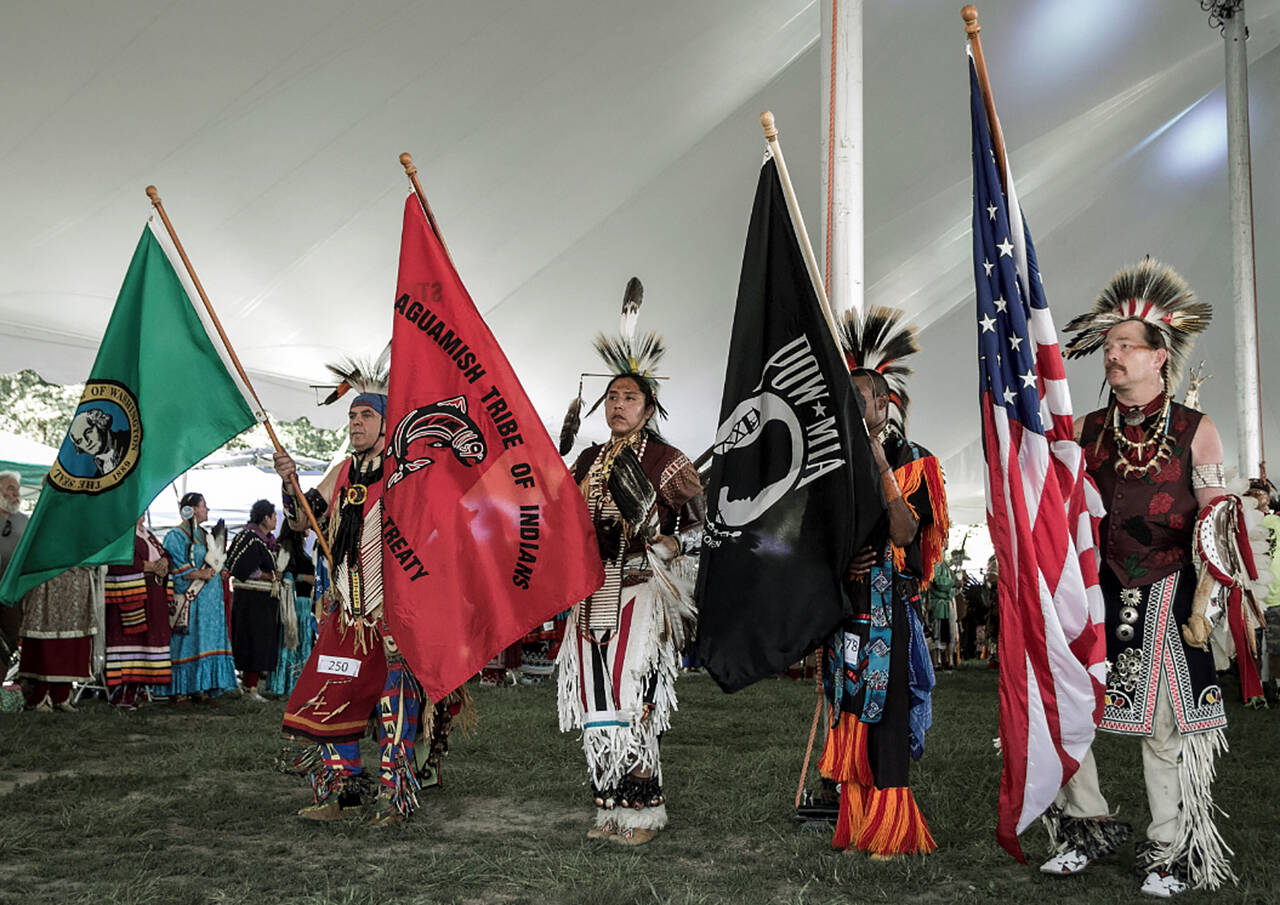
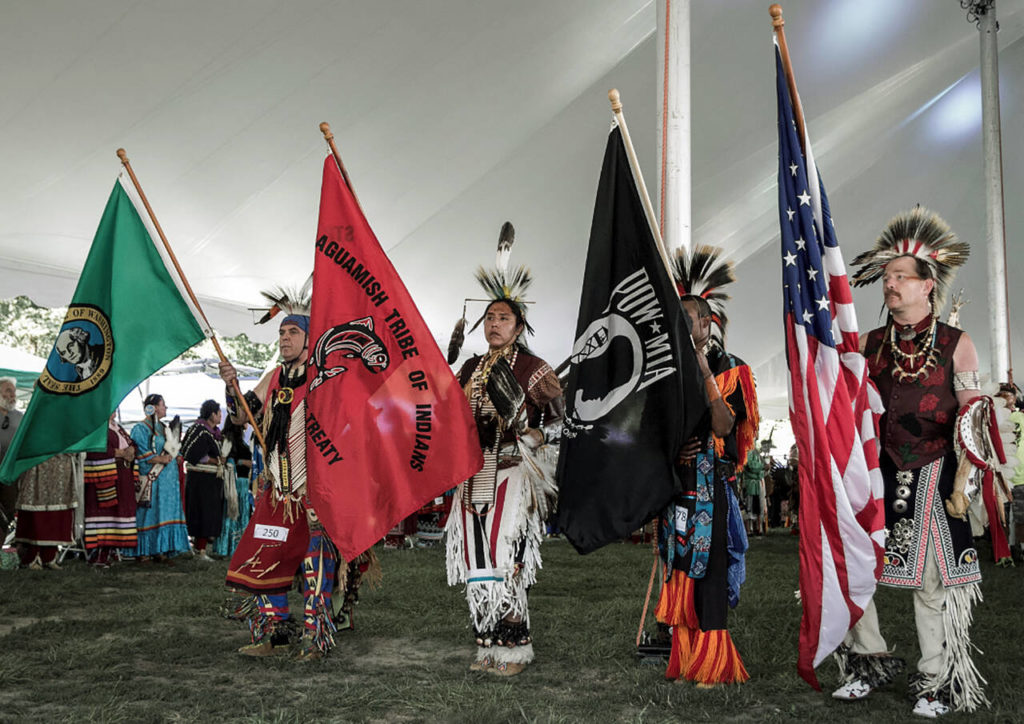
Stillaguamish tribal members hold flags during a powwow. (Contributed photo)
“I never expected Arlington to ask to acknowledge the tribe,”said Jeremy Smith, vice chairman of the Stillaguamish Tribe. “So when I heard that they did, I thought it was a great thing.”
Some other cities in the county have added land acknowledgements as part of their city council agendas, including Edmonds and Everett. Acknowledgements serve as a reminder of the Indigenous people who stewarded the lands long before white settlers arrived.
In Arlington, the acknowledgement “is just another tool to add to the city’s respectful relationship with the Stillaguamish Tribe,” Tolbert said.
Tolbert said the tribe and the city signed a memorandum of understanding almost a decade ago, solidifying a commitment to respect one another in land use decisions and the preservation of natural resources.
Smith said the tribe and the city have a great relationship, and the tribe often donates to schools and organizations that give back to the community, like the local food bank.
In October, Arlington City Councilmember Mike Hopson introduced the idea of writing a land acknowledgement to be read at all council meetings, similar to the Arlington School District. He connected with Kerry Lyste of the tribe’s cultural resources department to draft the acknowledgement.
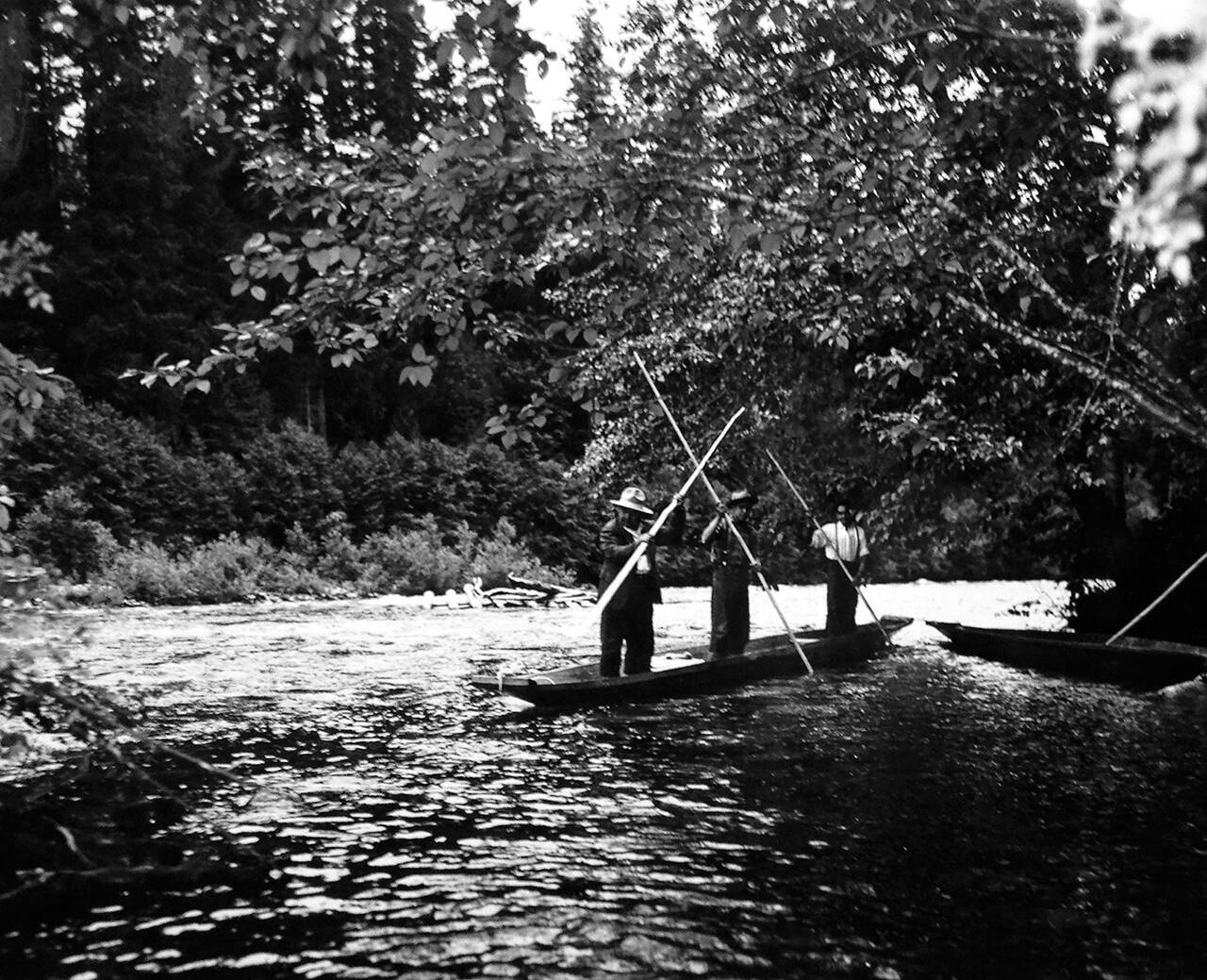
Stillaguamish people fish on the Stillaguamish river. (Contributed photo)
“This was their area where they fished and where they lived,” Hopson said. “They were swept aside just like the rest of the Indian Nations across the whole country.”
Some council members initially said they would oppose reading the acknowledgement. Council member Marilyn Oertle said she opposed the notion that it would be read after the Pledge of Allegiance.
Hopson said he’s disappointed the acknowledgement will not be read at every council meeting, “but something is better than nothing.”
“It’s simply to recognize or acknowledge that they are the Indigenous people of the area,” Hopson said. “And we want to show them respect for that.”
The Stillaguamish people remained on ancestral land and lived mostly undisturbed until the 1870s, Boser said.
They hunted mountain goats for food, clothing and use in ceremony; gathered native berries and plants for food and medicine; and paddled canoes along the river.
In 1855, they were signatories to the the Point Elliot Treaty as the “Stoluck-wa-mish.” Oral tradition suggests the ancestors did not know what they were signing when they were presented the treaty, Boser said. The treaty established the Suquamish, Port Madison, Tulalip, Swinomish, and Lummi reservations. The Stillaguamish people were told to go to Tulalip, but not everyone left their ancestral home for the reservation, Boser said.
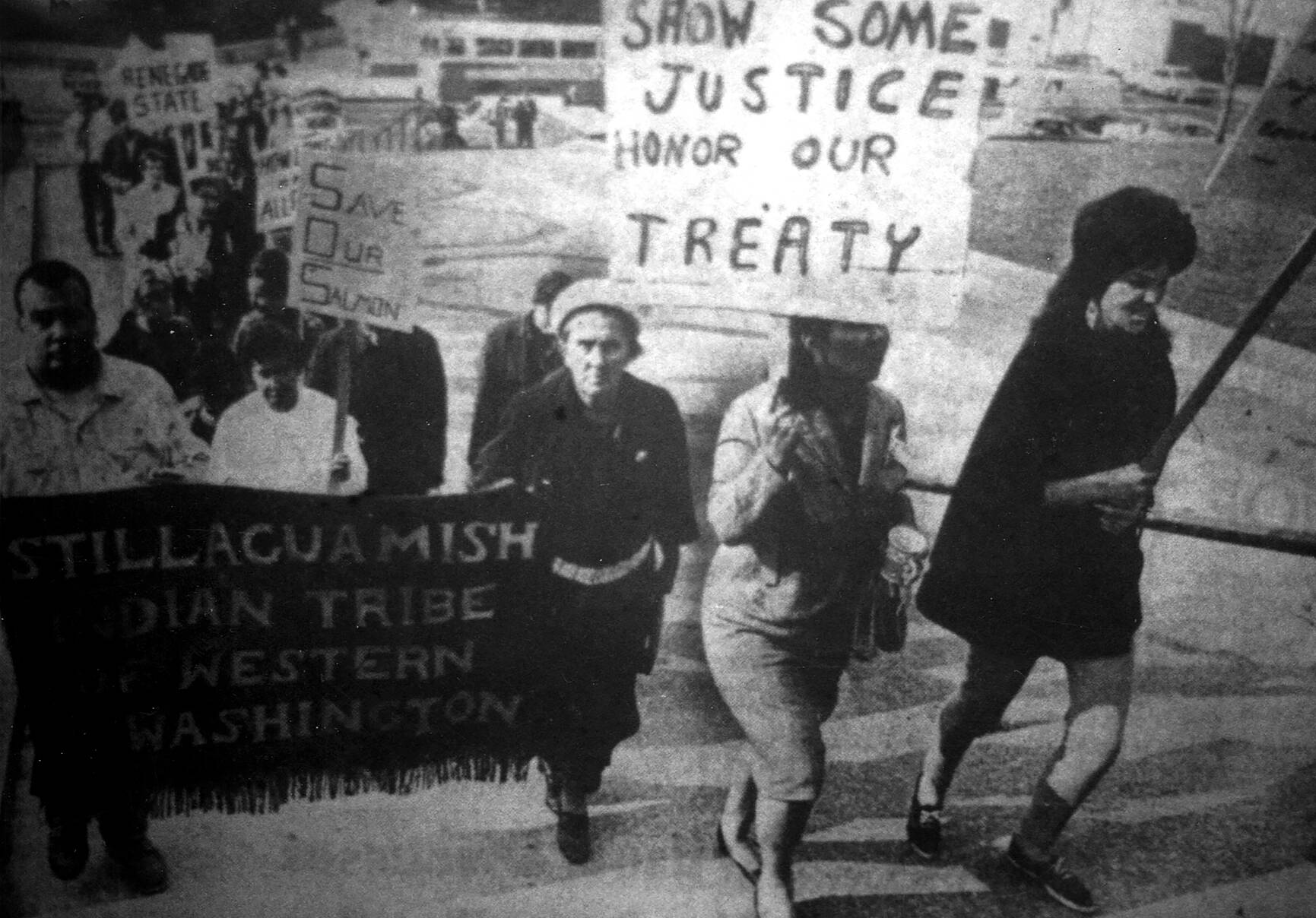
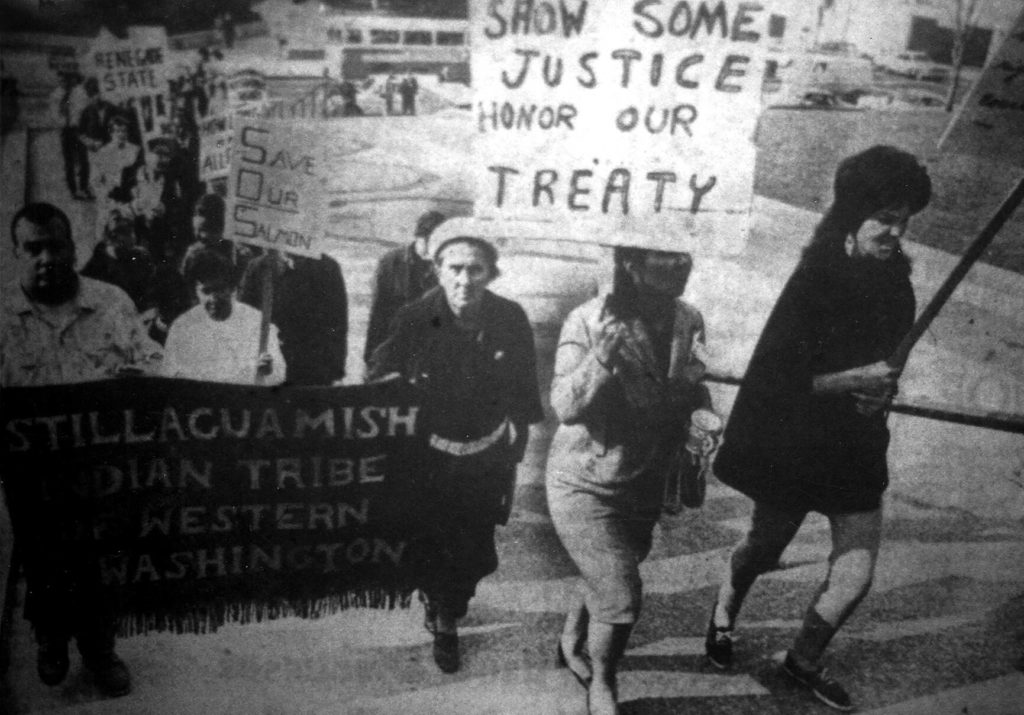
Members of the Stillaguamish Tribe demonstrate in Seattle in 1965. (Tom Brownell/Seattle P-I/Stillaguamish Tribe of Indians)
Many Stillaguamish people moved north along the river as more white settlers came into Arlington. In the 1920s, tribal members began a movement to get federal recognition, and partial land restoration.
Boser said if it was not for the hard work of the Stillaguamish people that came before her, the tribe would not have the cultural wealth it has today.
“I will tell you, it is amazing where we are today,” she said. “Even 30 years ago, we weren’t so accepted … and now everybody remembers that we’re still here.”
Esther Ross, former tribal chairperson, spent decades fighting for federal recognition. In 1976 the stuləgʷábš, or People of the River, were federally recognized as the Stillaguamish Tribe of Indians.
In 2014, the Stillaguamish Tribe was finally granted a reservation.
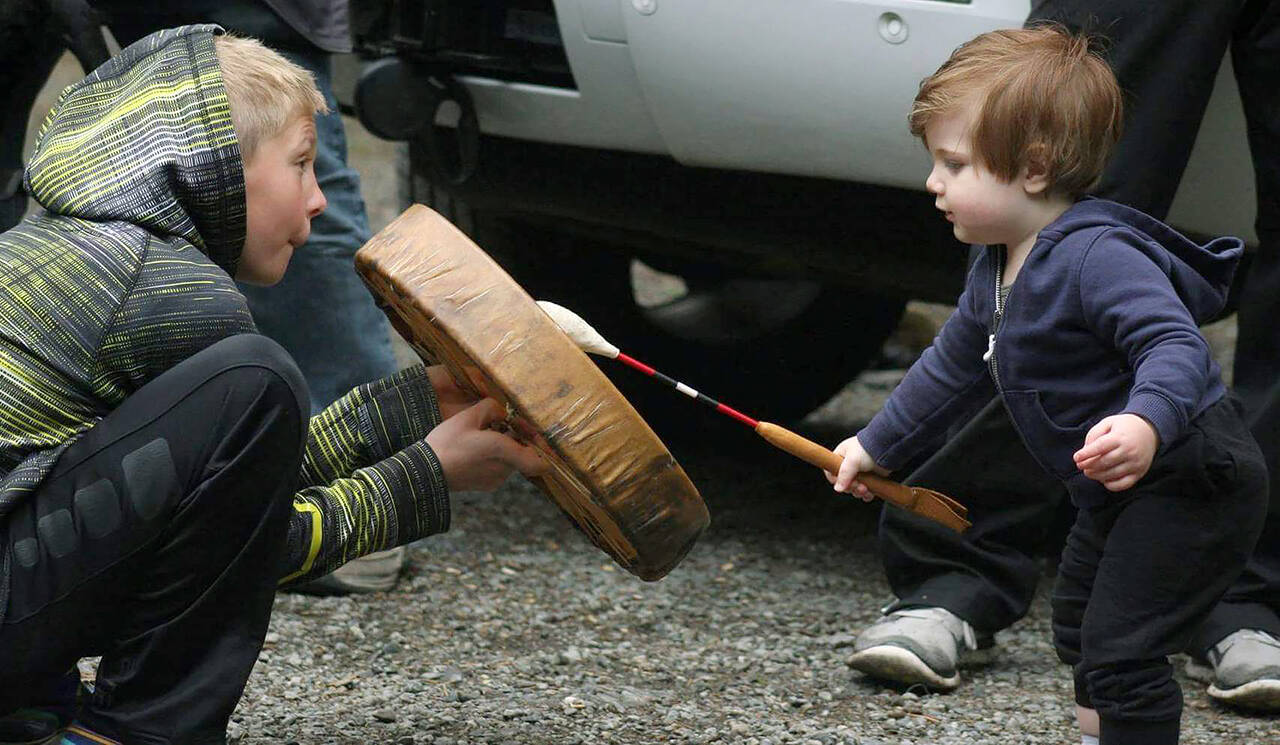
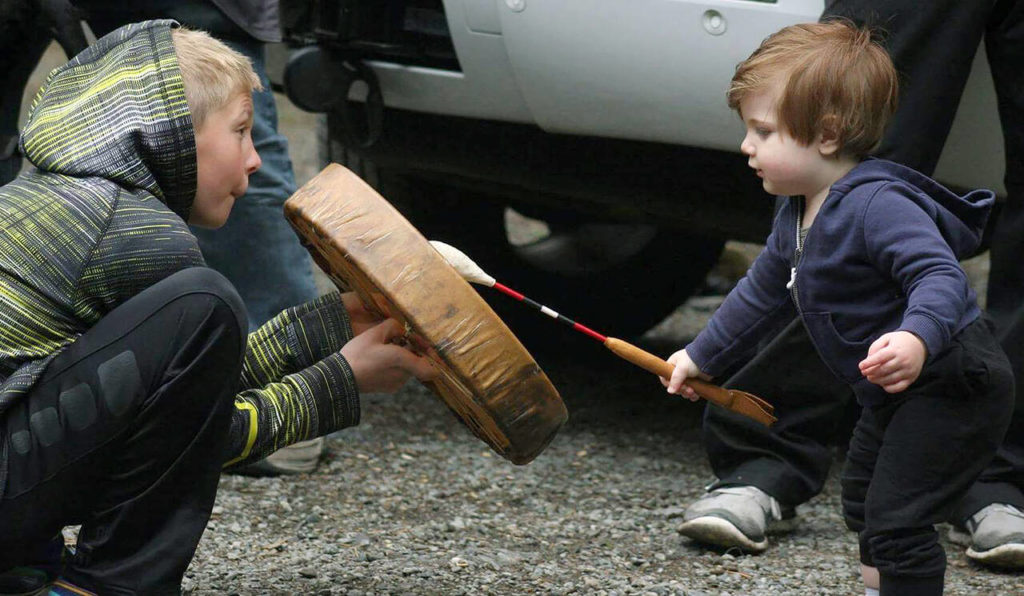
Stillaguamish tribal youth Gage and Kallen Boser drum together. (Contributed photo)
The youngest generations are being raised alongside the culture and tradition their ancestors fought so hard to preserve. Starting in day care, Stillaguamish kids are learning to drum and sing traditional songs.
And when tribal members “wake up” their canoe for the annual paddle, “our children assist us,” Boser said.
“So when they are older, they can go on and continue to teach their children, and so on.”
Isabella Breda: 425-339-3192; isabella.breda@heraldnet.com. Twitter: @BredaIsabella.
Talk to us
> Give us your news tips.
> Send us a letter to the editor.
> More Herald contact information.
Gallery