WARRENTON, Ore. — A psychologist predicted last year that Kathryn St. Clare would be back to hoarding cats if she didn’t receive proper mental health treatment.
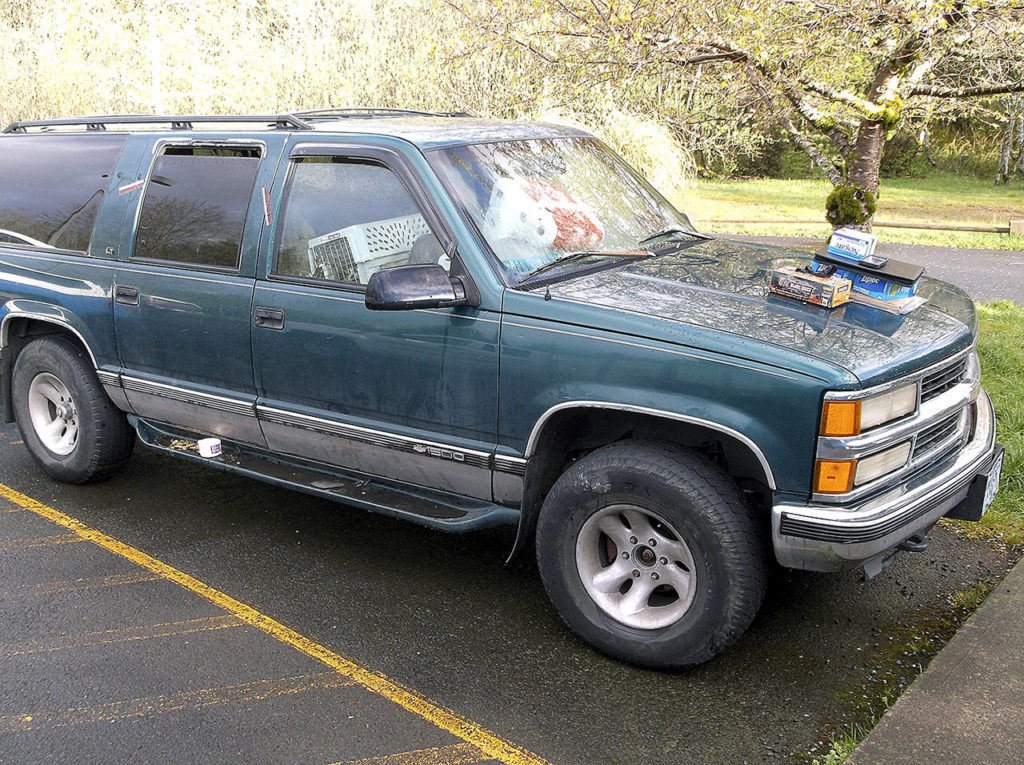
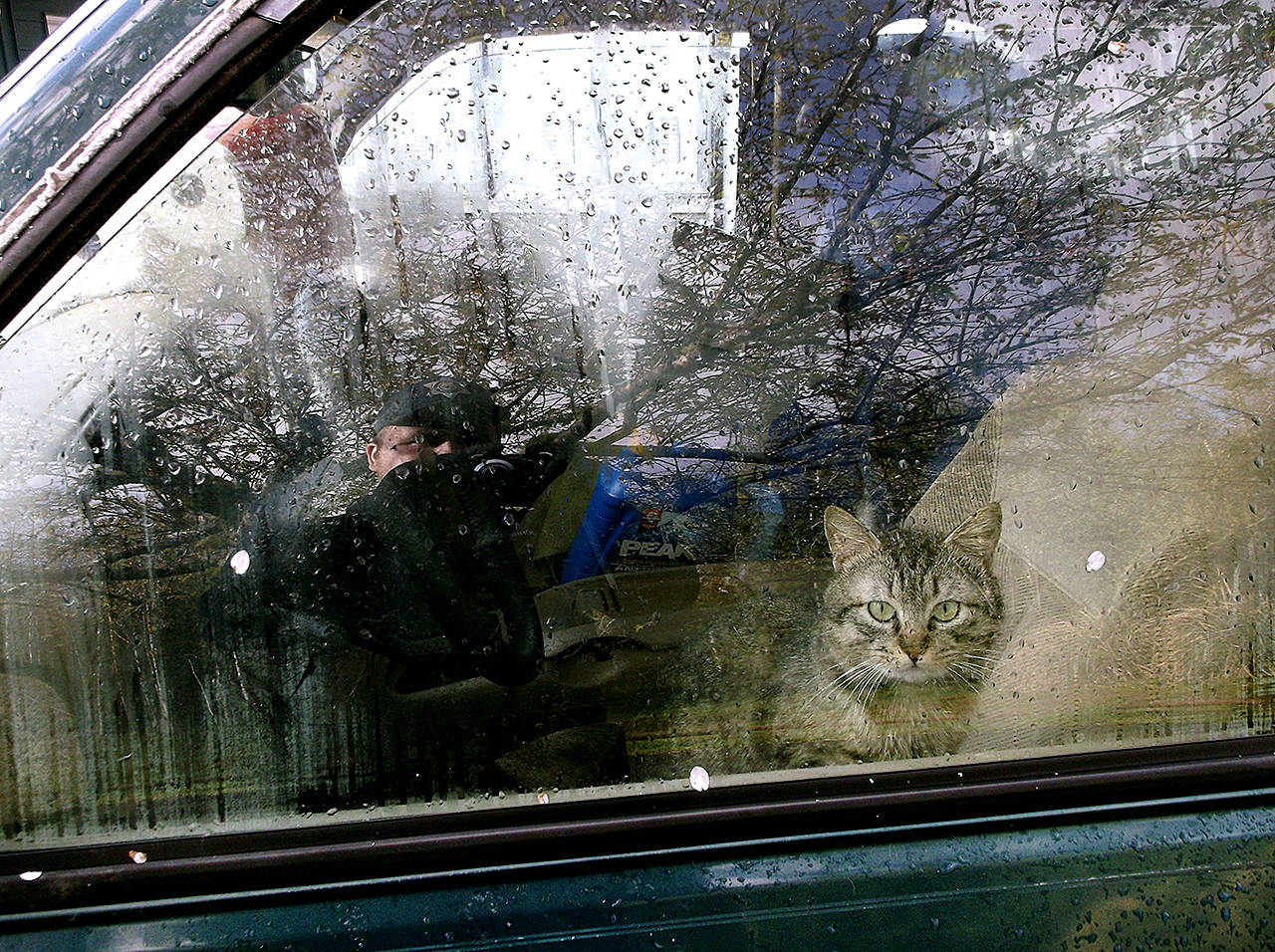
The former Lake Stevens woman, who was convicted last year of animal cruelty for collecting 111 cats in a recreational trailer, was arrested Monday in a small Oregon town for investigation of animal neglect. A police officer allegedly found 41 live cats and a dead one in St. Clare’s car.
The officer noted that the car reeked of cat urine and feces.
St. Clare, 58, also was wanted on Snohomish County warrants. She failed to appear for a hearing in April 2016 to determine how much she would be ordered to pay Snohomish County for costs associated with investigating St. Clare two years earlier.
There also were concerns that St. Clare wasn’t following through with mental health treatment, and prosecutors had received word that she might be hoarding cats again, Snohomish County deputy prosecutor Michael Boska said Tuesday.
St. Clare’s case highlighted the complexities facing the criminal justice system when dealing with people living with mental illness.
Snohomish County Superior Court Judge George Bowden raised questions about why St. Clare ended up in front of a jury instead of in a county-funded program billed as a way to divert some mentally ill people out of the courts.
The defense had argued that St. Clare, a homeless woman, wasn’t allowed into the program because she couldn’t pay back the more than $18,000 the auditor’s office claimed the investigation cost.
“None of that makes sense,” Bowden said at a Feb. 2, 2016, hearing. He presided over St. Clare’s trial.
The prosecutor’s office maintained there were other reasons St. Clare wasn’t eligible for its Therapeutic Alternatives to Prosecution program. There was no certainty she was going to admit her guilt, Boska had told Bowden. It also was important that she be ordered to stay away from cats.
The TAP program is supported by a sales tax earmarked for mental health and addiction programs. Clients sign a three-year contract and agree to seek appropriate treatment to address their mental disorders or substance abuse. Three counselors manage the cases and meet with clients to monitor progress. Participants must follow through with treatment and abide by other conditions. If they complete the program, the criminal charges are dropped.
Bowden pointed out at the 2016 hearing that St. Clare obtained a mental health evaluation despite her reservations. The $18,000 bill from the auditor’s office “made the issue a nonstarter,” he said.
The county claimed it couldn’t waive those costs. It was billed more than $13,000 by Everett’s animal shelter for impounding the animals, euthanizing them and disposing of their remains. The county had to pay a veterinarian to examine the cats and a tow truck driver to haul off the travel trailer. The auditor’s office also tried to recover about $3,300 for the time officers spent on the case.
In the end, St. Clare was ordered to pay $14,457.22 at 12 percent interest.
St. Clare was a software tester for 20 years before being laid off in 2009. She couldn’t find another job in the industry and became homeless. Those changes and other traumatic life events likely led her to collect cats, a psychologist concluded.
Because of her disorder, the judge was told, she lacked insight into the reality of her situation. She went so far as to live in unsafe conditions so as not to be separated from her animals.
The cats became her family. “They are not some disposable item you dump at a shelter,” she told the psychologist.
St. Clare didn’t believe her cats were as sick as described by animal control officers, the psychologist wrote.
Snohomish County animal control officers worked for months in 2014, trying to persuade St. Clare to relinquish dozens of cats she was keeping in an Airstream travel trailer. Officers received numerous complaints from people who saw sickly cats locked up in the trailer without proper ventilation. St. Clare declined to turn over her cats and moved the trailer multiple times without notifying animal control officers.
“I hope you can see it through her eyes. She felt like she was being asked to march her family to the gallows,” her attorney, Robert O’Neal, said in 2016. “She didn’t mean to do the wrong thing.”
Eventually animal control officers raided St. Clare’s trailer and removed 111 cats. The animals were in various stages of dehydration and malnutrition. All of the animals were euthanized because of their untreatable and infectious conditions.
St. Clare was charged with three felony counts of animal cruelty. Prosecutors tacked on seven additional counts when St. Clare opted to go to trial. A jury found her guilty and that conviction was recently upheld on appeal.
Bowden granted St. Clare a first-time offender waiver, sparing her jail time. He said warehousing her didn’t make sense. He ordered her to do community service and obtain mental health treatment, and banned her from owning cats.
The psychologist who evaluated St. Clare noted that treatment for animal hoarding is in the early stages of research.
“What is known is that this behavior, absent any mental health intervention, has nearly a 100 percent recidivism rate,” she wrote.
It was unclear Wednesday if St. Clare has been living in Warrenton, Oregon. Police there reported that they’d been looking for St. Clare earlier this year, according to a Tuesday news release. They knew she had warrants from Washington.
A Warrenton police officer found St. Clare on Monday in a Fred Meyer parking lot. St. Clare allegedly told police about 30 cats were in her vehicle. She also admitted there was the body of a cat that died a couple of days ago, according to the news release.
St. Clare was arrested and booked into the Clatsop County Jail. She has been charged with more than two dozen counts of animal neglect.
The cats were given water and food and “a total of 41 live cats were safely removed from the vehicle,” according to the news release.
St. Clare likely will be extradited to Snohomish County once the Oregon case is resolved.
Diana Hefley: 425-339-3463; hefley@heraldnet.com.
Talk to us
> Give us your news tips.
> Send us a letter to the editor.
> More Herald contact information.
Gallery